Stargazers

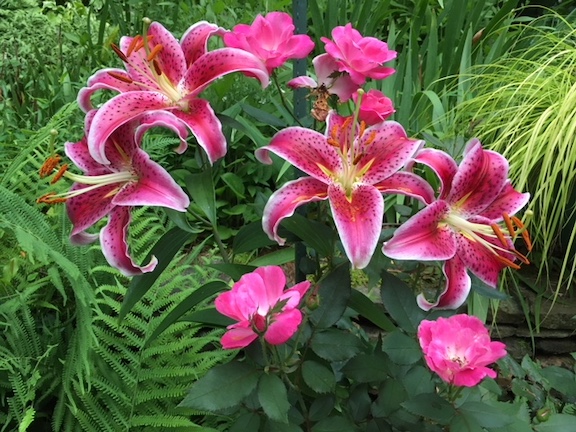
I love native plants. I am actually quite passionate about our natives. But in mid-summer, when my stargazer lilies are in peak performance, I am very grateful for these cultivated beauties from Asia.
An English superstition suggested that if a pregnant woman preferred a rose, she would have a girl. If she chose a lily, she would have a boy.

There is nothing shy or subtle about these lilies. Once they begin to bloom, usually around the middle of June in Atlanta, they simply take center stage. After growing for the past 15 years, the bulbs must be the size of melons, as they continue to bloom exuberantly.
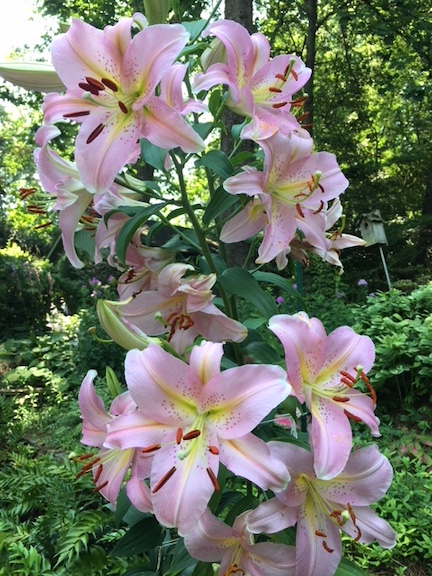
I know that these Asiatic hybrid lilies are supposed to have at least 8 hours of sun, which would then produce stout stems that would top out at 4 feet. But, I planted them in the back where it’s a little shady and they stretch for the sun. Some of them are almost 6 feet tall now. But, being so tall and spindly, they need staking, particularly when they are laden with blossoms as they are now.
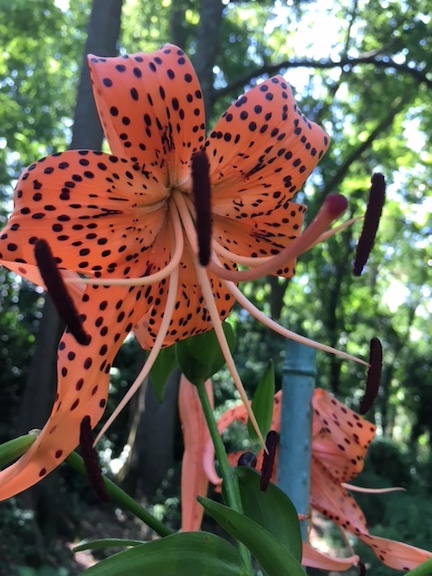
The gorgeous tiger lily from Korea was considered a symbol of war.

Lilies are native to the Tigris Euphrates Valley where they have been cultivated for over 5000 years.

Lilies were considered the symbol of Venus, the Roman goddess of love and beauty and, according to the Victorian language of flowers, the lily is a symbol of majesty.
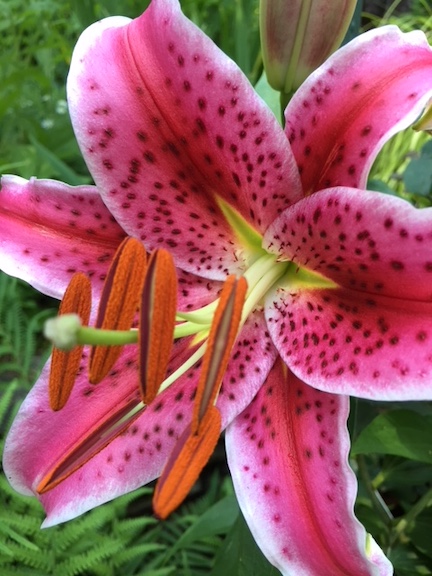
In my own garden, the lilies are a symbol of joy unleashed, of an exuberance for life that can’t be contained. When I go out at night to gaze at the stars, their scent fills the evening air, reminding me that that the garden, truly is a miracle.
Ancient cures for the plague

In the eleventh century a great plague swept through Europe killing thousands of people. There were few medicines available and little knowledge about what caused such a sickness.
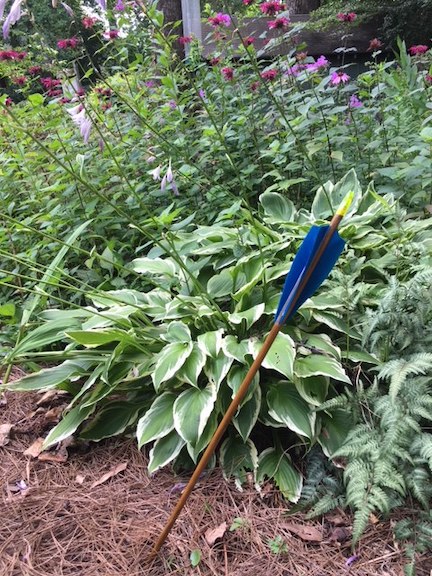
Legend tells us that King Ladislaus I of Hungary (1040- 1095) was not only a beloved king but also a great healer but not even he could determine how to stop the plague. In desperation, he shot an arrow into the air and prayed to God that it would land on a plant that would stop the plague. The arrow landed on a gentian plant and because of this, gentian was used for centuries to treat symptoms of illness.

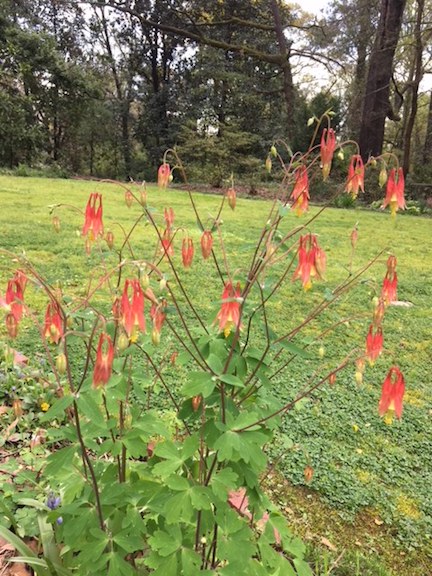
Not only gentian, but a host of other flowers were used to treat the plague. In 1373 Columbine was used with seven other herbs as a cure for the “pestilence”.

And Angelica, a tall, imposing plant native to Northern Europe was called ‘herb Angelica‘ or Angel’s herb because it was believed to protect one against contagion – and ward off evil spirits and bestow a long life!

Before you dismiss all this as superstition and pure legend, consider this. According to a PBS NOVA episode, a full 40 percent of all prescribed medicines today come from plant extracts or synthesized plant compounds, including aspirin (from the Willow tree) and quinine (from the Cinchona tree.) Plants and flowers have not only brought us incomparable joy because of their beauty, they have also provided us with the basis of a countless number of vital medicines.

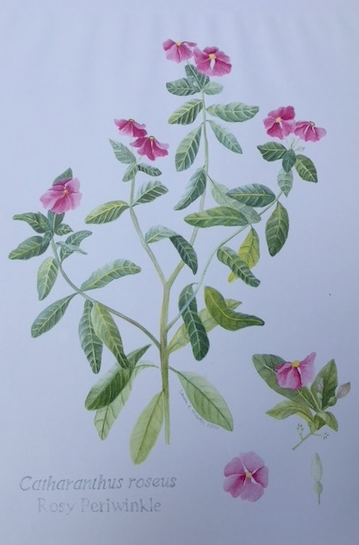
Rosy periwinkle is the original source for the cancer drug vincristine and vinblastine.
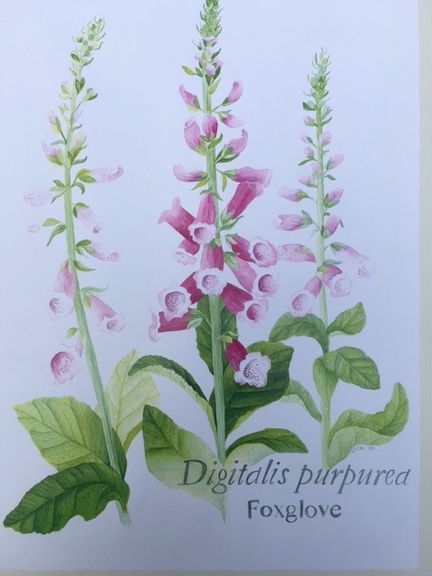
Foxglove is the source of the heart medication known as digoxin or digitalin

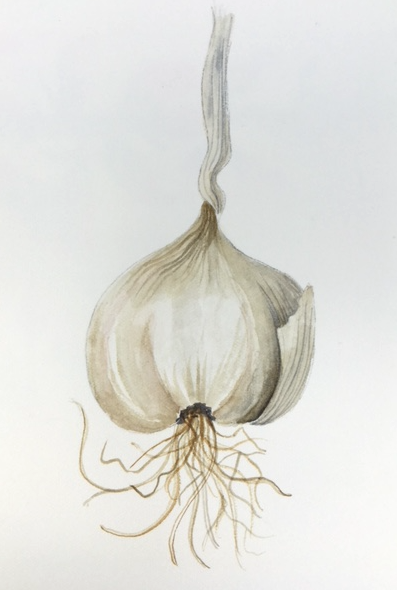
In the world today, with a scramble on to find prevention and a cure for our current “plague”, we might do well to look at some of the ancient “cures.” For example, in England during a 17th century plague, it was advised that everyone eat a big dose of garlic daily. If we did that and we all had garlic breath, perhaps that 6 foot social distancing would be a little easier to maintain!

But in the meantime, anyone have an arrow? I’m ready for a cure!

Laura

If you don’t like puns, just leaf this alone

I’m not going to beat around the bush, I’m getting right to the root of the matter. If you don’t like puns, just act like a tree and leaf it alone. Turn off your computer and check back next week when this blooming idiot may have come back to her senses. But celebrating Father’s Day yesterday made me think of my dad. He was a very punny guy. So this is in memory of Ken Coogle – and apologies to the rest of you.

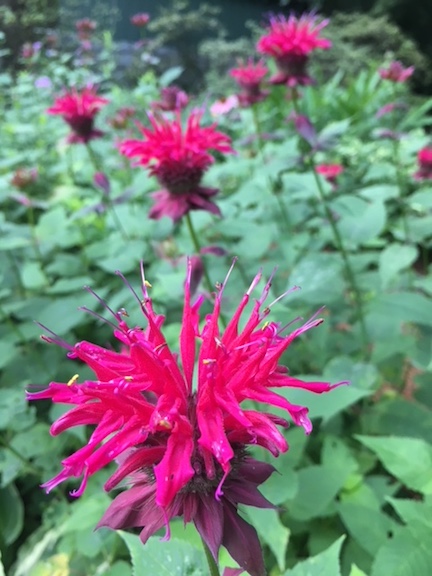
In this age of the virus I am so gladiolus for my garden. From morning glory to four o’clocks, I’m outside with my flowers. It helps make me less impatiens and reminds me not to be such a snapdragon. I just try to “Bee balm and carry on.”

Bee balm and carry on!

This whole season has been such a caladium.

When my best bud, Black Eyed Susan came to see the garden, I aster what she was doing to stay sane. “Well, I’m quarantined with Sweet William and we’re doing more gardening,” was her sage advice. “It’s good medicine, almost like an ivy of happiness every dais-y.” I’d say she really rose to the occasion!

I’m not sure you would spend all day in my garden with me, but my dogwood. Actually, I have lots of company. Phlox of birds and insects enjoy it as well, though scorpion weed, spiderwort, and tickseed are not nearly as welcomed as turtle flower, cat-nip, monkey flower, and tiger lily.

Even so, when things get back to “normal” I’ll be so happy I maypop.

By this time you’re probably pine-ing away to be anywhere except here. Well, lucky you! Ring the bellflowers! I’m signing off, once and flor-al,

Hosta luego.

An abundant and beautiful harvest

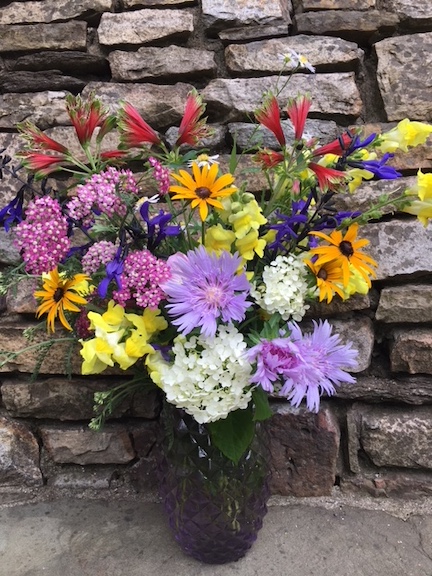
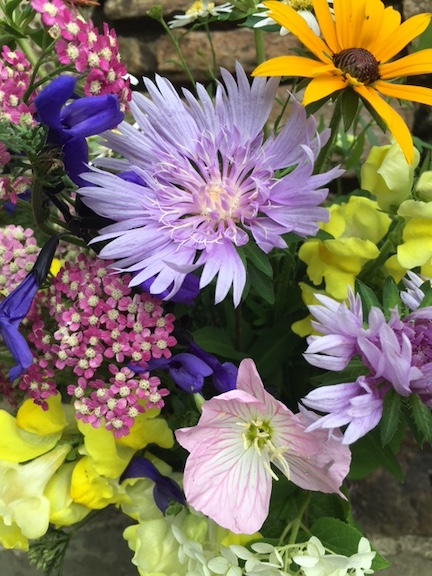
In stark contrast to the challenging times in which we’re living, the flowers this season have been absolutely beautiful. Or maybe the just appear so because of the times. In any case, picking flowers to bring indoors or to share with family and friends has been one of my favorite things to do during the past couple of months.

From to top to bottom: Alstroemeria, pink yarrow, Black-eyed Susan, blue salvia,
Stokes aster, yellow snapdragon and white hydrangea.

I’d like to offer you this virtual bouquet, with the hopes that one day soon, I can hand it to you in person.

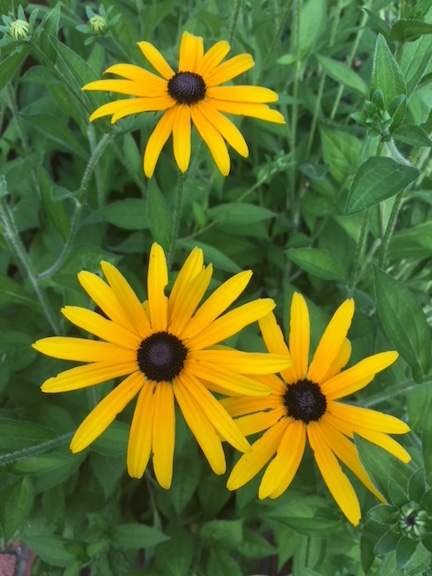
Black-eyed Susans are unfailingly cheerful – in and out of the garden.
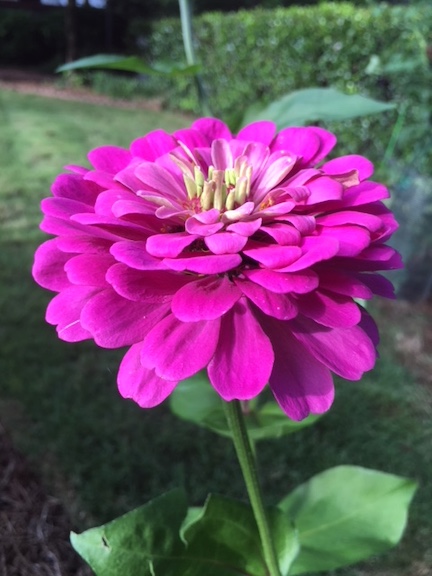
Zinnias are a favorite cut flower and come in all kinds of bright and beautiful colors.
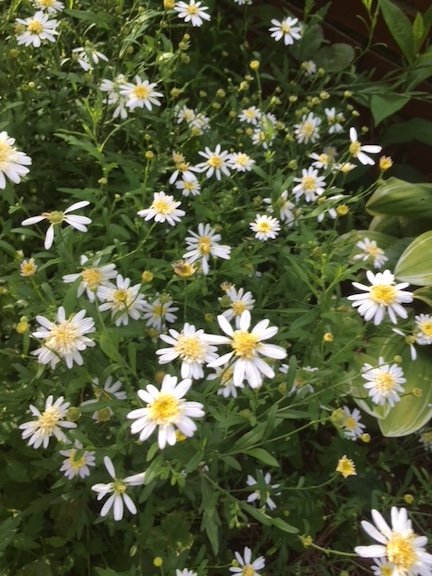
Small Japanese asters provide bloom for months. As a cut flower, they’re great to use as a “filler” much like florists use baby’s breath.
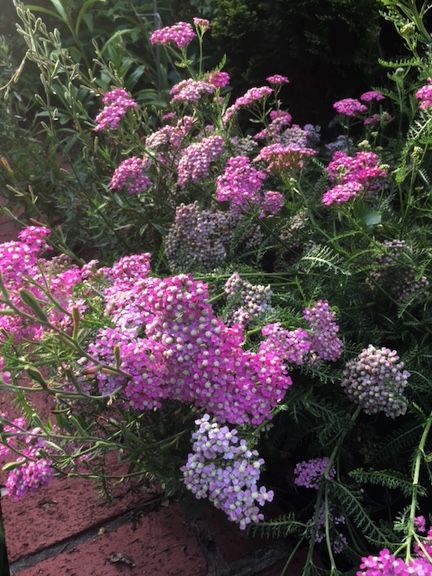
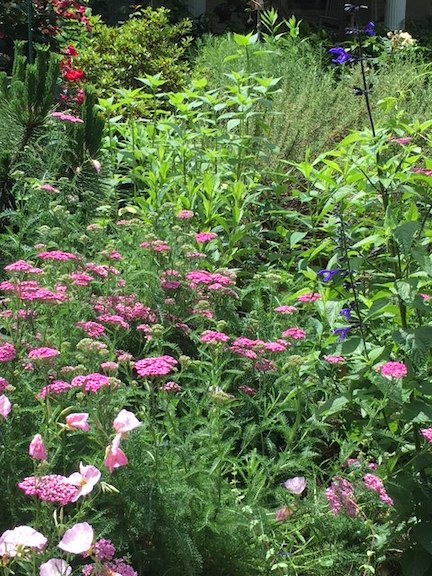
Pink yarrow can get a little aggressive, especially in full sun, so don’t let it take over, but it’s a great, easy to grow cut flower.
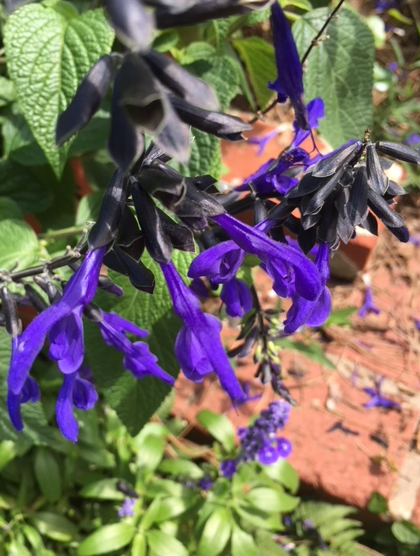
Dark blue salvia is beautiful not only in the garden but also in the midst of an arrangement.
Enjoy the flowers. Remember that there is always beauty in the world. Stay healthy.
Happy Gardening!

Laura

Queen for a day

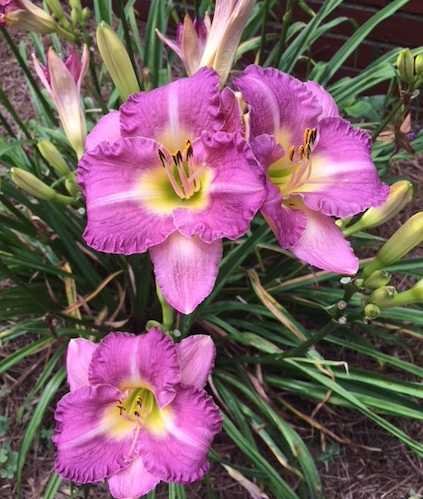
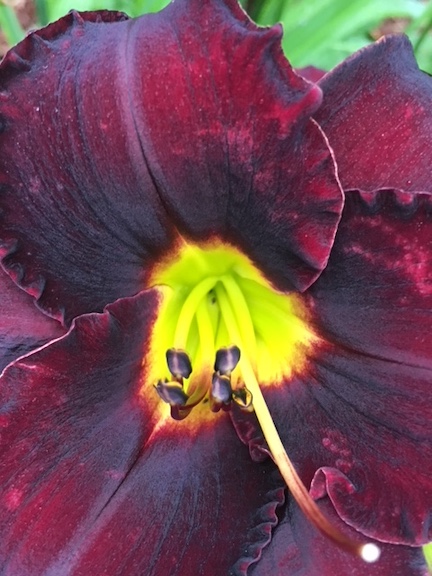
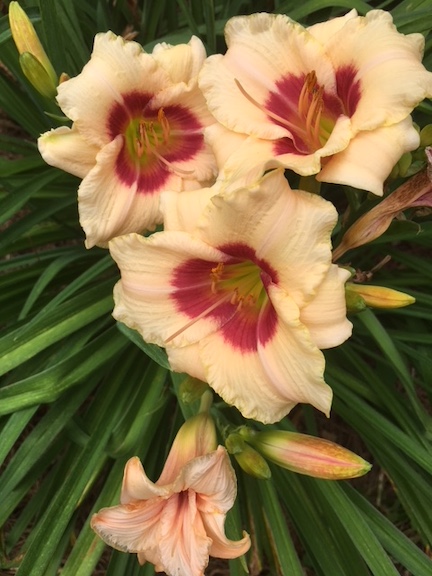
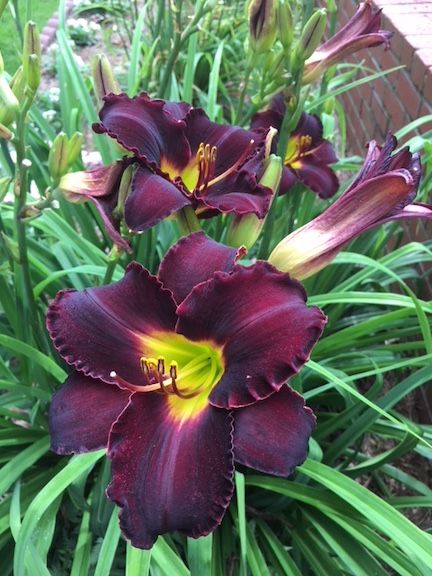
Every morning I run outside to see what wonders my garden has produced and every day I am thrilled to see a whole new batch of beautiful day lily blooms. Day lilies are the quintessential “carpe diem” plants as each blossom lasts only a single day. But maybe because of this, each blossom seizes the day with intense colors and stunning blossoms.

Day lilies are ancient plants that have been cultivated for 4000 years in China. The original tawny or orange day lilies (Hemerocallis fulva) were grown not for their beauty but as food and medicine. Day lily buds were (and still are!) considered delicious, either fresh stuffed with cheese or shrimp salad or dried and used in soups.

In China it was called hsuan t’sap, or “the plant of forgetfulness”. It was said to cure sorrow by making one forget troubles. Day lily images were often embroidered on pillows, invoking the peace of forgetfulness. If worn during pregnancy, dried day lily buds were thought to cause the birth of a son.

Day lilies are actually botanically closer to asparagus and agave than to true lilies, which are poisonous. Tawny, or orange, dallies are native primarily in Asia, but not in North America. Today, these orange lilies have escaped cultivation and are naturalized along roadsides and in ditches throughout the country.

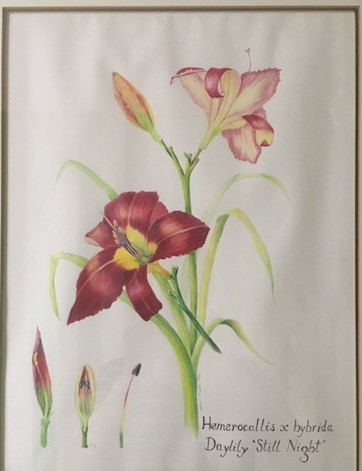
painting by Laura

These flowers were first introduced to Europe from the Ottoman Empire in the late 16th century but it wasn’t until the mid 19th century, when China opened up to the West that many of the beautiful hybrids were seen. Today there are hundreds of named cultivars, though the common orange is still considered the best one to eat.

Day lilies like a lot of sun and well drained, rich soils. For years I had these plants in a partially shaded area and they produced only a few blossoms each year. It wasn’t until I moved them into a place with abundant sunshine that they bloomed prolifically. Apparently, to seize the day, you have to seize the daylight first. Carpe Diem!

Happy gardening.

Laura

‘Peace’ rose

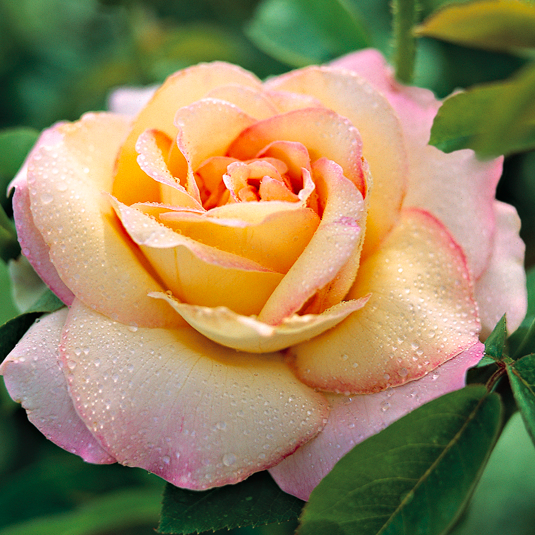
One of my favorite flower stories is the romance and drama of the ‘Peace’ rose. It was 1935 and Francil Meilland, a third generation French rose breeder noticed a seedling that looked particularly promising. For four years, he worked to improve the cultivar, to make it more beautiful and hardier.

But just as he was getting ready to introduce it to the gardening world, it became apparent that France was on the brink of war. With the possibility of harm or devastation to the nursery, he sent cuttings of the cultivar to friends in Italy, Turkey and Germany. At the last minute (legend says on the very last plane out of France to America) he was able to send some to the United States.

All during World War II, Meilland had no contact with these friends. But the rose had created a sensation wherever it was grown. Breeders in the U.S. were so enthusiastic about it that the American Rose Society launched it on April 29, 1945 and renamed it with this statement: “We are persuaded that this greatest new rose of our time should be named for the world’s greatest desire: ‘Peace.’

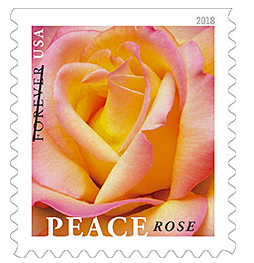
The U.S.Postal Service was so taken by the rose that they created a stamp from the image.

In nine years, 30 million ‘Peace’ roses were sold all over the world. In his diary, Francis Meilland wrote “How strange to think that all these millions of rose bushes sprang from one tiny seed no bigger than the head of a pin, a seed which we might so easily have overlooked, or neglected in a moment of inattention.

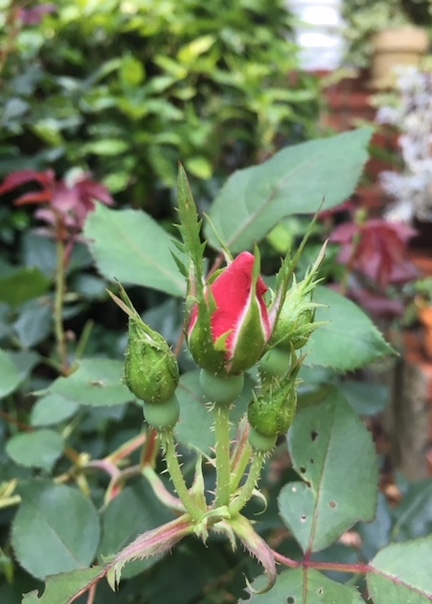
Most of my roses are “carefree” but even these bring the promise of beauty.

Although I’m not much of one to plant hybrid roses that need a lot of care, I’ve bought a ‘Peace’ rose to plant in the front yard. I want it as a reminder in the years to come that even though 2020 has brought many challenges, there was still beauty and the world’s greatest desire is still ‘Peace.”

Don’t let your attention waver for a moment these days and don’t neglect to look for peace and beauty everywhere, it may be no bigger than the head of a pin.

Laura

Haircutting – not the same as pruning

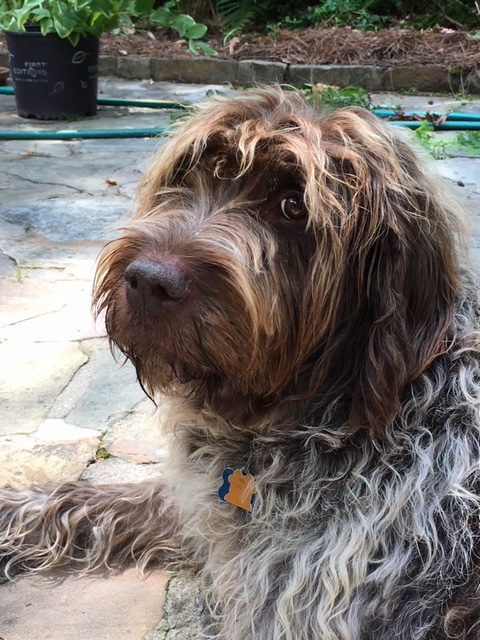
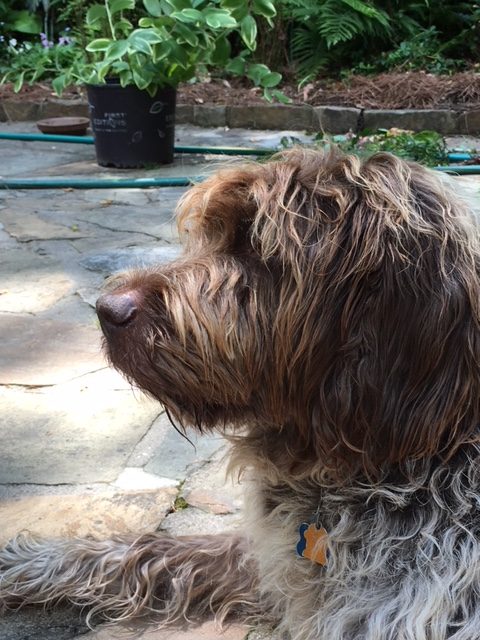
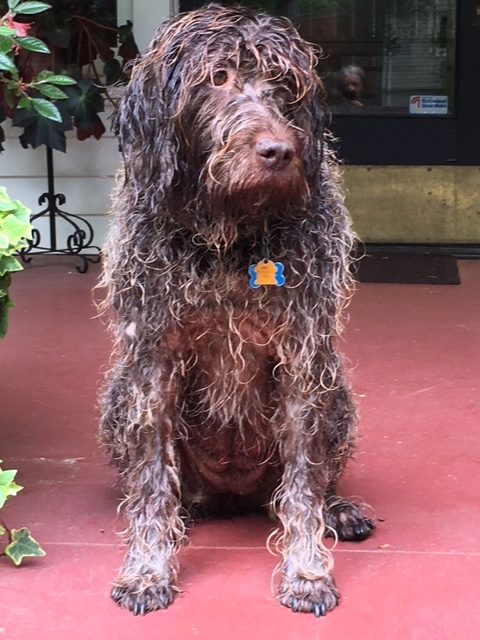
My dog, Sadie, asked if she could write the blog this week. Reluctantly, I handed over my computer.

Nature Based Blog: By Sadie Martin-Burch

I know these are truly magical times. When else do I get 5 or 6 walks a day? When else have my people been around ALL day long? When else have they not left me to go travel to parts unknown (well, they’re unknown to me, I never get to go!).

But even I have faced a few challenges during the past few months. For example, last week my woman-person decided to switch from pruning shrubs to cutting hair. When I saw her exchange the clippers for scissors, I began to get nervous.

She got to my Man-person first and I heard her say, “Relax! I’ve pruned lots of shrubs, I know what I’m doing!” And he JUST SAT there, a towel around his neck, meek as a lamb. I groaned.

She jumped right in and began clipping and pruning. “All you have to do is just cut until you get the shape you want,” she explained to my Man-person. He mumbled something about not being a boxwood but just continued to sit patiently.

I’ll have to admit, it actually didn’t look that bad when she finished, but then, she turned and looked at me and my heart stopped. I started to run but she grabbed me before I could bolt. I’m not really a vain dog but I do have great hair and lots of it. And, frankly, I LIKE my shaggy look, but apparently, SHE does not. Thank goodness she practiced on HIM first.

The first thing she did was to give me a bath. I hate cold water. Then she spent a long time just studying me. When she finally began cutting, she was very slow and very careful, much more so than when she was working on HIM. She clipped and cut and combed with only an occasional “oops.” At this point, I knew my best strategy was to sit as still as possible and hope for the best.

She finally finished. I thought. And it actually looked okay, not like my regular hair – dresser does it, but I know – these are special times and you have to make allowances. But now, sometimes when I’m just minding my own business or even half -dozing, I’ll hear her say, “oops, missed a spot,” and she’ll get the scissors and begin cutting away again.

As I said, I have LOTS of hair and I wonder how long this is going to go on. It all makes me feel kind of sorry for the boxwoods.

Thanks for reading. I hope she’ll let me write again some time. I know A LOT about digging in the garden. Stay safe and keep your tail wagging.

Distancing in the garden – plants, not people

The first time I heard it, way back a lifetime ago in March, I thought “social distancing” was a clever phrase, little did I know that it was going to become a way of life. But all this talk about keeping a healthy and respectful distance from each other has made me look at my garden in a whole new way.

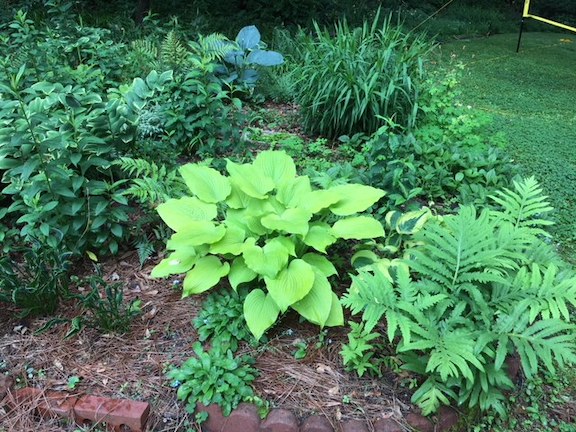
Now when I look at some of my garden beds, I want to shout – spread out! Please, distance yourselves! oh, if they only would do it themselves. But of course the plants are only where I put them and where they could grow from there. The problem is, I have VERY happy plants and this year thanks to luck and the forces of nature, my plants have gone crazy and leapt the bounds of good social distancing.

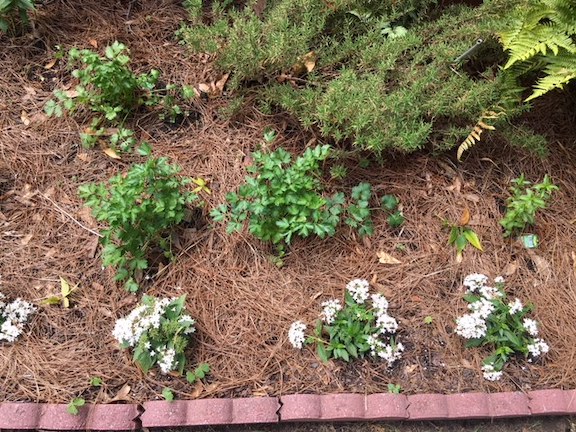
I have to admit that a little space between the plants let’s each one shine.

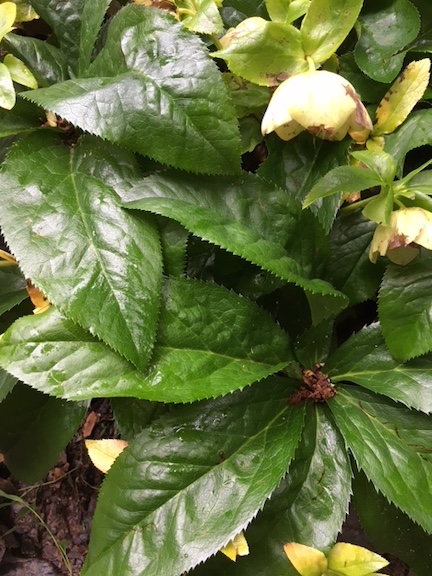
Even though I know it’s best for all involved, creating distance in the garden is often hard to do. Lenten rose, for example, has multiplied so much that the roots are entwined like knots. To separate them, I’m literally cutting as much as I can and pulling with all my strength (who needs to go to the gym?) So I have dug up, divided, given away, thrown away and finally composted many of my perennials this year, just to provide them with breathing room and space to thrive.

But it’s not just the old, established plants that need space. When you plant things from seed, the instructions are to thin the seedlings (usually) 6 inches apart and I hate doing that! I’m just supposed to pluck out these tiny little beautiful plants that I’ve cared for and nurtured for weeks and put them on the compost pile? Oh, life is so cruel. But I know that if I don’t, none of the plants will have enough space and nutrients to grow into sturdy, happy, productive plants. So, I do. It’s tough love in the garden.

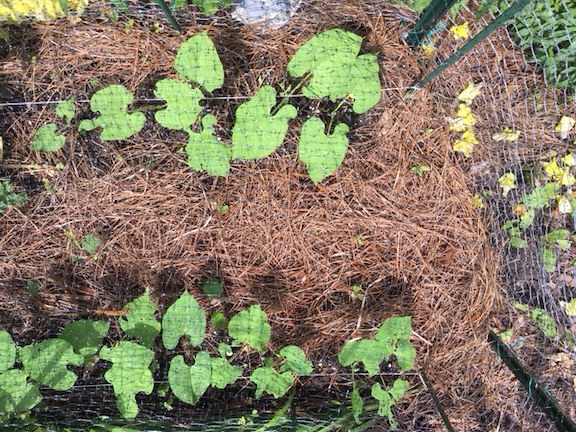
My bean seedlings, under their protective netting, need thinning. Arghhhh.

So, I’ve been tough this year and provided lots of space between my plants so that they’ll be happy. But of course, nature abhors a vacuum and gardeners hate it even worse. So now, when I look at all those beautiful, empty spaces in the garden, all I can think about is what I can plant in them to fill them up!

“The” basket, a little magic on the doorstep

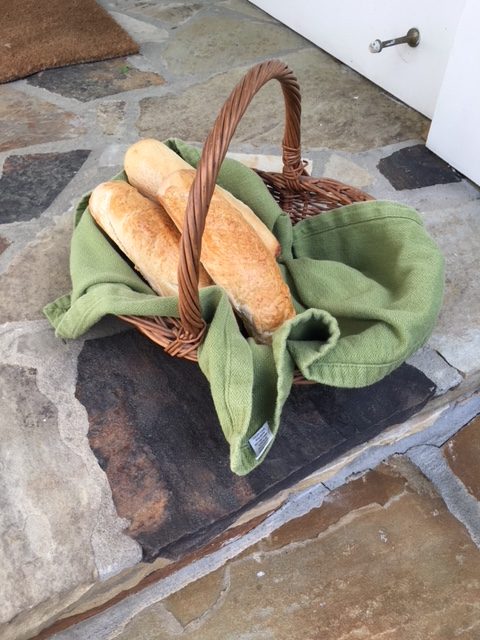
At the beginning of the quarantine, I wanted to do something for my grandchildren Rivers (12) and Ellie (10). We weren’t seeing one another at that point so I decided to bake one of their favorite treats (banana bread muffins) and leave them on their doorstep. As I looked around for something to put them in, I happened to think about “the” basket.

This basket has quite a history. One day years and years ago, I was stuck at home with a cold and my Mama, bless her heart, brought me chicken soup and a small vase of flowers, nestled down into a rather ordinary looking basket. I recovered quickly and a week or so later, I wanted to do something to thank her so I baked a loaf of bread. Looking around for something to put it in, I saw the basket she had used and it seemed about the right size so I put the bread in it and took it to her house. She wasn’t home so I just left it on the doorstep.

A week later I came home one day and on MY doorstep was the basket this time filled with some trinkets that she had painted for me. Well, it became a game, and then a habit and then a cherished tradition. That basket went back and forth between us for almost thirty years, until she died. Sometimes it would be weeks between baskets. Sometimes it would be a matter of days, but it was always a thrill to find the basket and we loved having this special way to send treasures to one another.

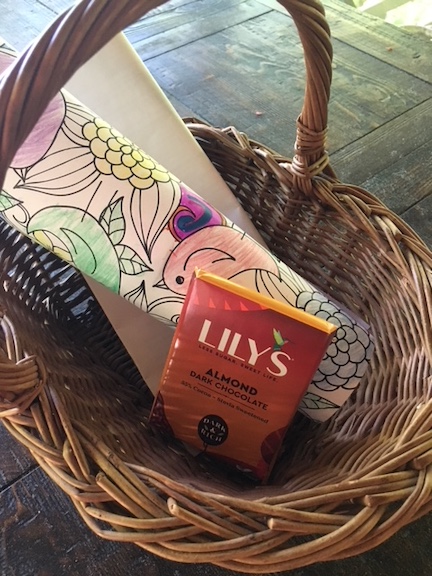
So, when I thought of the basket, I dusted it off, put the muffins inside with a note to Rivers and Ellie, explaining the history and the importance of this basket and suggesting that maybe we could renew the tradition. It was only a few hours later that my doorbell rang and on MY doorstep was the basket filled with hand drawn thank you cards from the kids and a bar of my favorite chocolate.

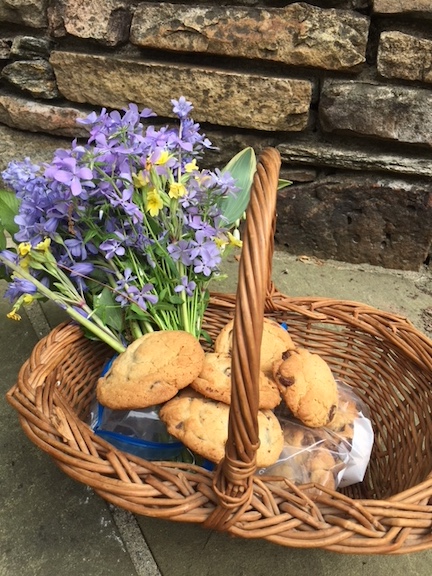
Though I think they like the flowers, I KNOW they love the cookies!

Since then the basket has gone back and forth quite a few times. Occasionally, there are strings attached. One evening I found the basket with a string attached to a full take out meal!

I have to admit to a few tears. It’s so meaningful to me to renew this tradition. Not only is this a special and fun way to interact with my daughter and these grandchildren, it’s also a wonderful way to remember my mother and the love that we shared. I love to think that when Ellie is a mother, she’ll be leaving treasures in “the” basket for her children and telling them about LaLa and how in the middle of the 2020 epidemic, we exchanged this magical basket.

Would this have happened in a “normal” year? I don’t know but I suspect not. Strange times have created new opportunities. And now, sandwiched between memories of my mother and dreams for my grandchildren, I’m taking advantage of the these times to renew a custom that has brought me joy for so much of my life. But that’s what tradition is all about, right? Remembering the past while bringing joy to the present – and thinking about the future! Besides, it’s just fun and who doesn’t love to find a little magic on the doorstep?

The best (and oldest!) gardener I know

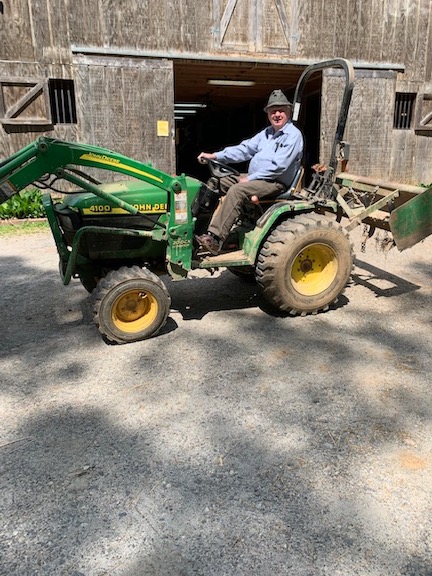
When I had a question about vegetable gardening, I knew just who to turn to. My very good friend Bob Hicks is not only the best gardener I know he’s also the oldest. When I called for advice, his lovely wife, Micheline, told me he’d call me back as he got off the tractor, he was currently busy grading the driveway. Did I mention that Bob is a very happy and active 94 years old?

It didn’t take much encouragement to get Bob talking about gardening. When I asked when he had his first garden, he laughed and said that when he was six years old, his mother gave him a small garden plot for his own and he’s been gardening since.

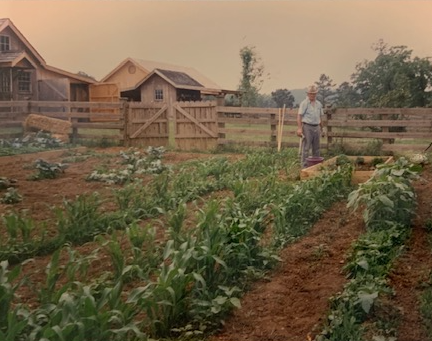
Bob’s most extensive garden was at his farm in Lyerly, Georgia where he and Micheline had cows and horses as well as a beautiful vegetable garden .

Bob grew up in Dublin, Georgia with his parents and 6 brothers and sisters and lived in this childhood home until he joined the service in 1943. His mother, he says, was a wonderful gardener and grew all kinds of vegetables including butter beans, field peas, green beans, collard greens, okra, onions, sweet potatoes and of course, corn and tomatoes.

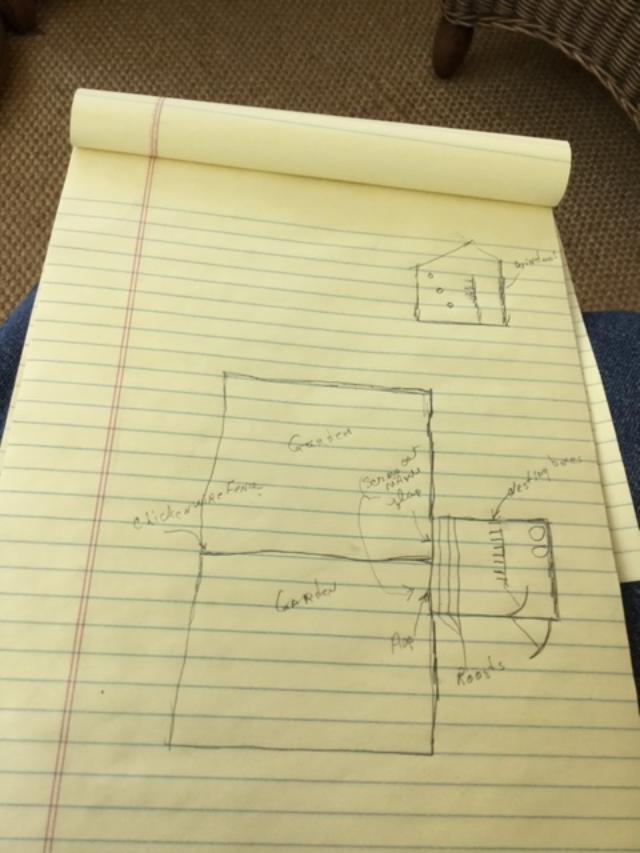
“Most of our fertilizer came from chickens. My mother had an ingenious design for a chicken house and yard that actually fenced in two different garden plots. She’d garden one for one year and let the chickens in the other, then switch the next year.” (See Bob’s drawing below.)

The chicken house, to the right, was connected to two different garden plots that were planted on alternating years.

When I asked if his mother preserved the garden harvest, Bob’s eyes lit up. “We had a wall about 14 feet long, 9 feet tall and by the end of July it was filled with mason jars that had been canned with everything from tomatoes to okra to butterbeans. It was the prettiest thing you’d ever see.”

Bob’s love of gardening, begun as a six year old, has lasted almost nine decades. And maybe this love of the earth, this life-long habit of finding simple satisfaction in caring and nurturing for something has kept him active, interested and interesting all these years.

The vegetable garden at the Lyerly farm.

In his”real” life, Bob was a successful and very well respected lawyer. In 2009, he won the Georgia Bar Association Tradition of Excellence Award. When Justice George H. Carley introduced him at the award ceremony, he said that Bob was “a lawyer’s lawyer.” Well, I can’t testify to that, but I can tell you that Bob is a “gardener’s gardener,” who successfully blends knowledge, experience and pure joy in growing things. His thumbs are green and he still has garden dirt under his fingernails. May I be so lucky when I’m his age! My I be so lucky to someday BE his age!

Stay safe and sane and keep gardening!

Laura