Saved by a stranger

Today my garden was saved by a stranger.
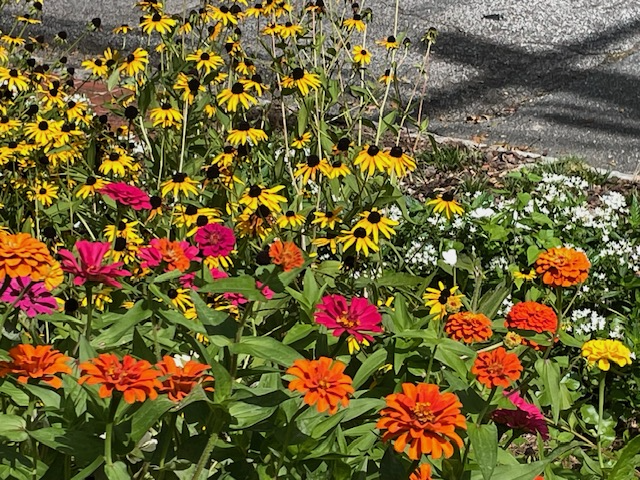
Most of the time I love my garden but there are some days (like today) that I would like to just mow it all down. And the thought occurs to me that I’m just not going to do all this next year. Instead maybe I’ll put in a nice, neat Japanese style garden with a few rounded evergreens and precisely raked sand.

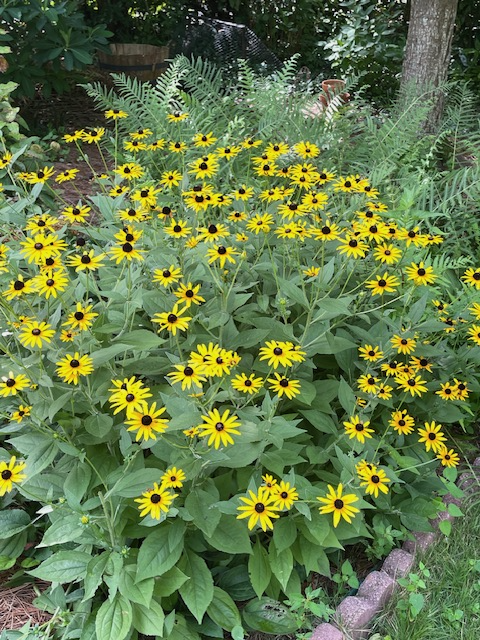
But, at the moment, I’m looking at a mass of Black-eyed Susans going to seed, powdery mildew on my zinnias, leafhoppers on my rosemary, horn worms IN my biggest tomatoes and weeds everywhere. It’s been extremely hot and humid with alternating periods of drought and floods. In short, the garden seems like a disaster and I really don’t want to brave the elements to go out and fix it.
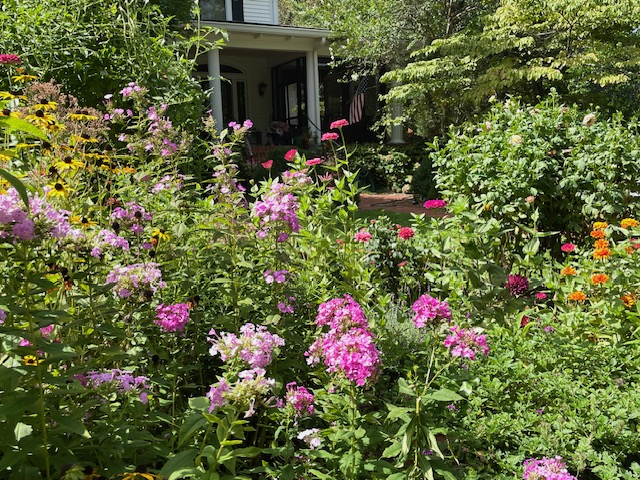
But, after weeks of travel and then more weeks of entertaining out-of-town family, I have complete neglected the garden and it’s time to pay the piper so I waded into the weeds and began pulling. I began at the street garden and was working my way toward the house when a white pick up truck stops in front of my house.

I almost didn’t turn around because I’m dripping with sweat, swatting at mosquitoes and not exactly in a neighborly mood. Besides, I know my neighbors and this was not one of them. But the truck just sat there so I finally turned, putting on my best fake smile.
The man in the truck leaned out the window and says, “Thank you for bringing such beauty into the world. For the last month, I’ve been driving by your house and every time, I just slow down because I just love your house and garden and love what you have done with it. It makes me smile. Every time. Thank you.”
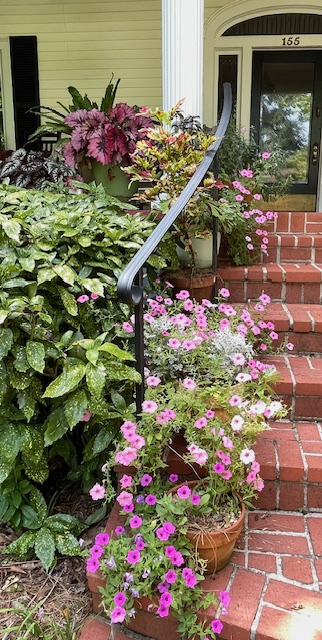
Oh, if he only knew what those words meant to me. I almost asked him if God had sent him down to talk to me but instead, I just thanked him. Profusely.

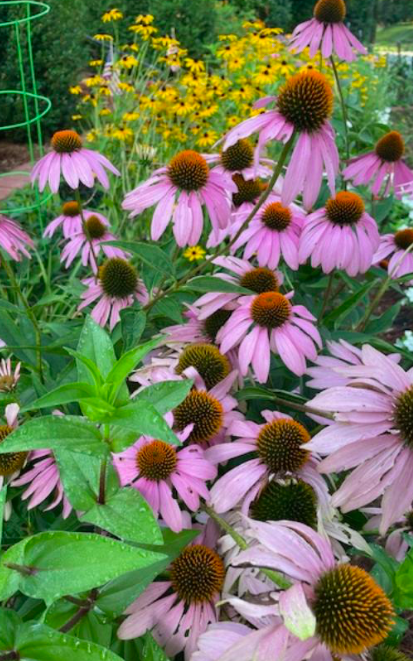
It was absolutely the best thing to happen at just the right time. After he drove off, I tried to look at my garden through a stranger’s eyes. And suddenly it seemed to look pretty good. Bees and butterflies are swarming, the blossoms are gorgeous and the entire thing looks profoundly alive.
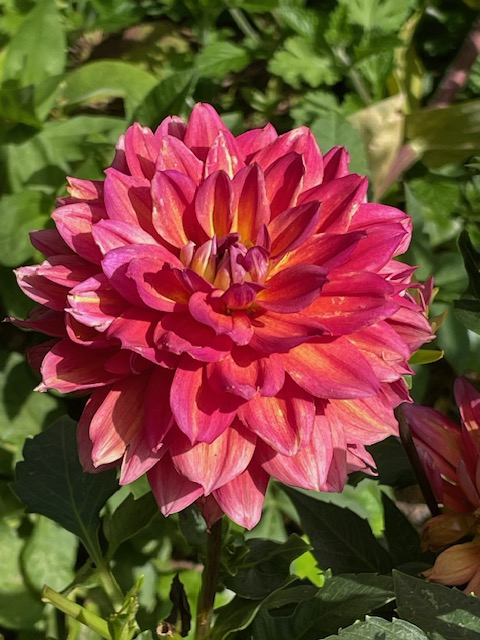
Thank you, stranger. I hope I see you again so I can tell you that you saved my garden because you reminded me of why I garden. It’s not really for blossoms and tomatoes. I garden because if I can bring a little beauty into the world, then by God, I’m going to do it. Heat, humidity and mosquitoes seem like a small price to pay.

So, as soon as I finish pulling the weeds and tidying up the garden, I’m going to start looking at seed catalogs. One thing is for sure, it’s never too early to start planning for next year.
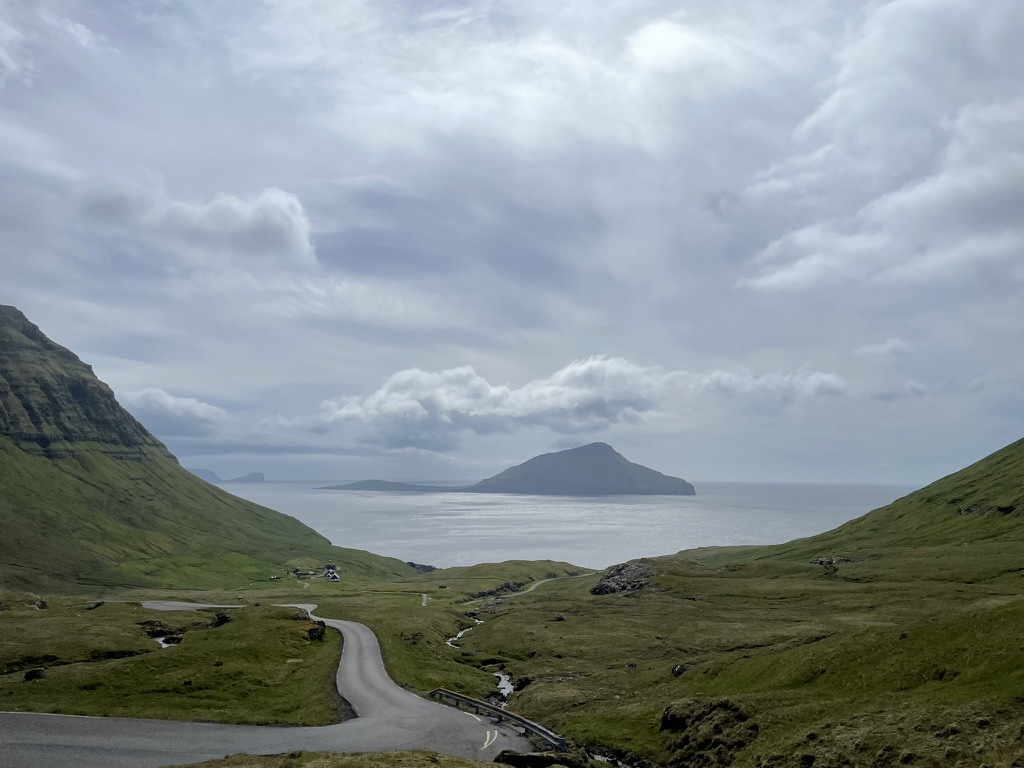
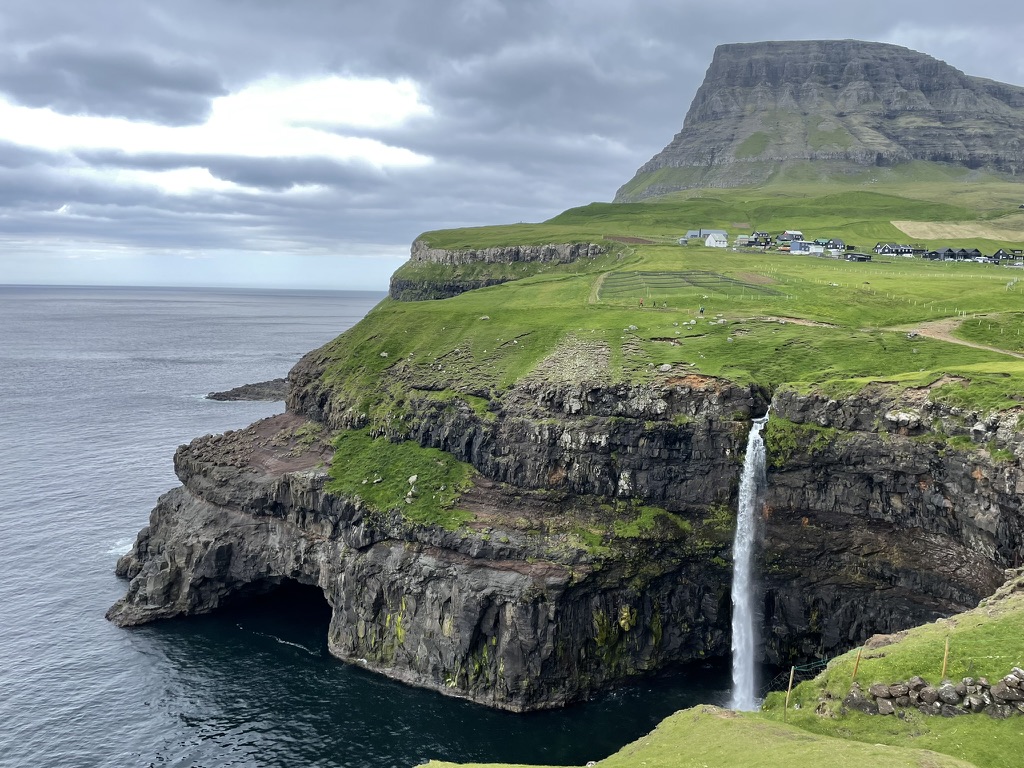
Faroe Islands

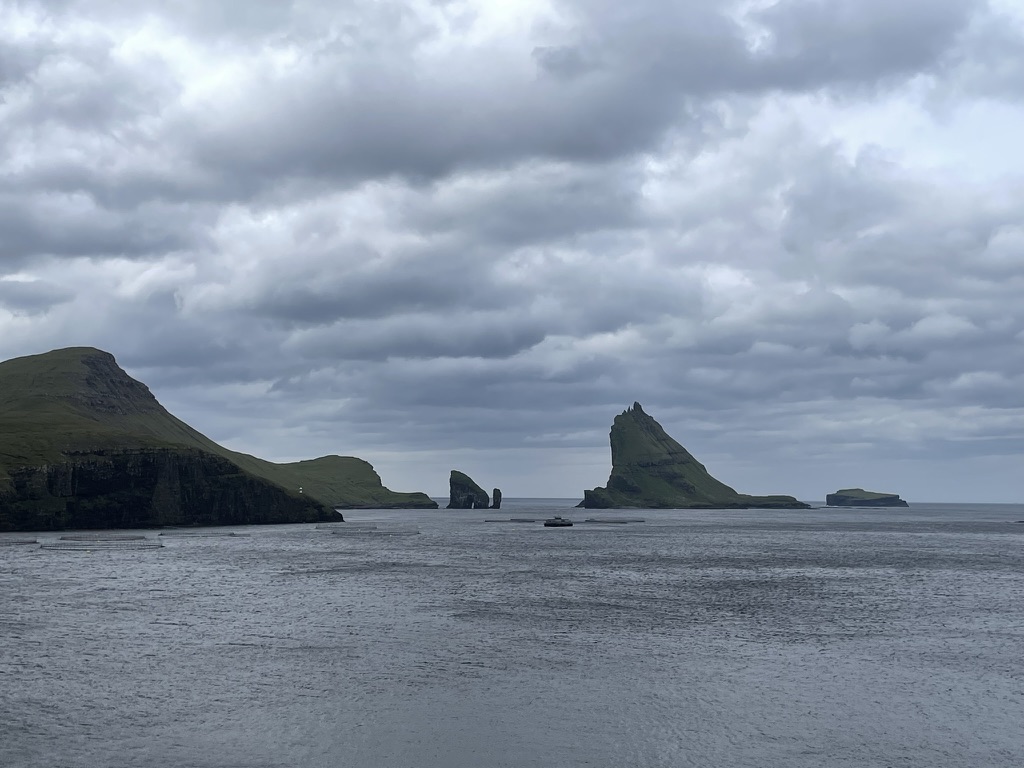
At the end of our splendid trip viewing the fjords in Norway (by bus, train, car, plane, taxi and funicular!) my husband Jack and I spent three days on the remote and stark Faroe Islands. Part of Denmark, the Faroe Islands (in total square miles, smaller than London) are located halfway between Norway and Iceland, 200 miles north, northwest of Great Britain. In other words, they are pretty much in the middle of nowhere.

And, when you deplane and look around, it’s LOOKS like you’re in the middle of nowhere. The landscape is as rugged and harsh as I’ve ever seen.

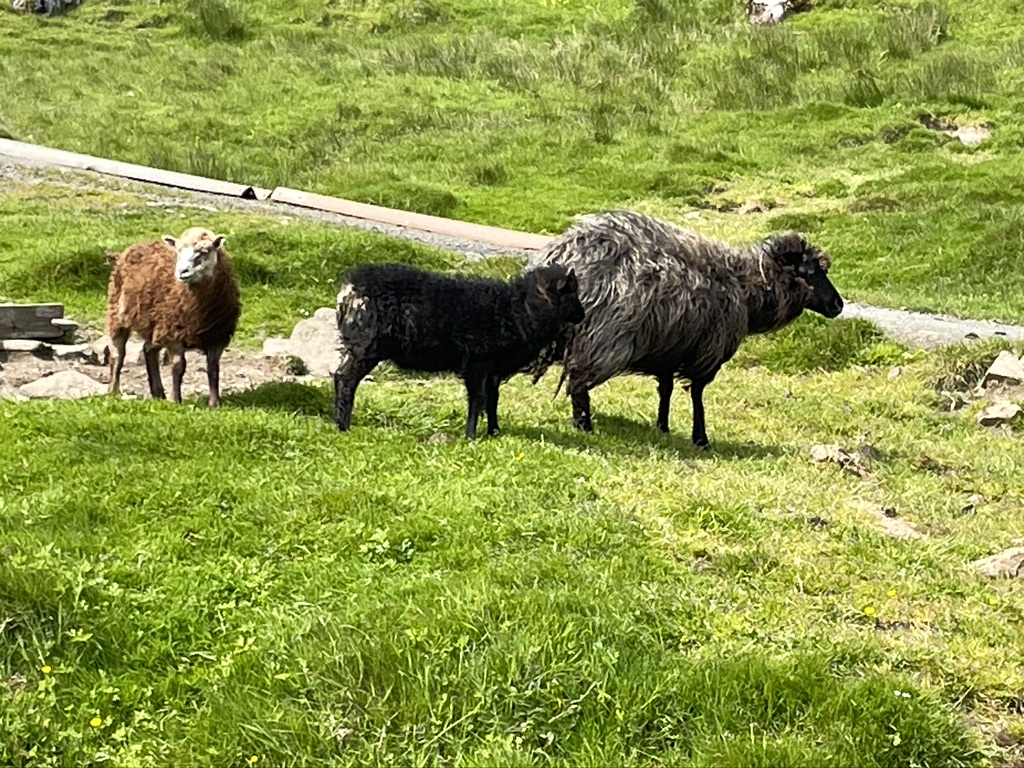
Huge rocky cliffs plummet straight into the ocean and everything is covered with grass. The only trees in the entire country are the ones planted and maintained in gardens in the towns and villages. Trees don’t thrive here because the soil is thin but also because the fierce winds carry a huge amount of salt spray from the oceans, making it hard for trees to thrive. For a forest lover like me, it was disconcerting. Every time I thought I spotted a small tree or shrub, closer inspection proved that it was only another sheep, of which there are multitudes.

The population of the Faroe Islands is 54,000 people and has an estimated sheep population of 80,000. If you want to know what the Faroe Islands looks like from the sheep’s point of view, click on the link below or google Sheepview360.

https://www.youtube.com/watch?v=ywdqiyoQNgQ

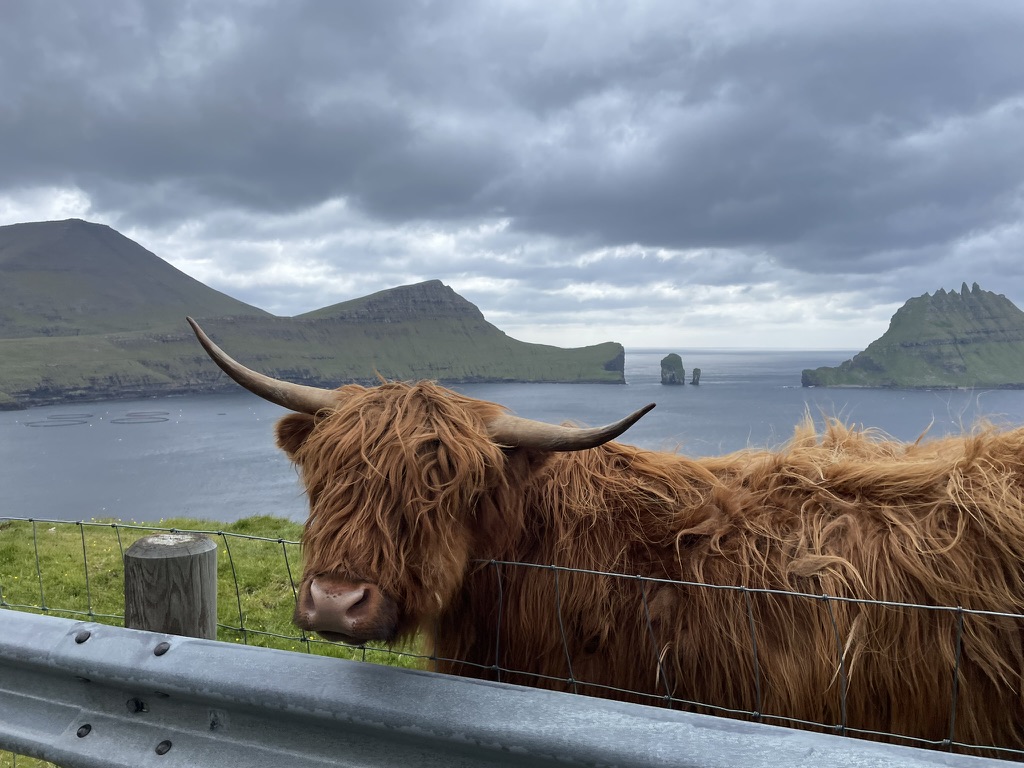
The Faroe Island tourist group strapped a 360 camera to the back of a sheep and let her go. It’s a VERY accurate view of what the islands look like. There were also a smattering of the beautiful Highland cows.

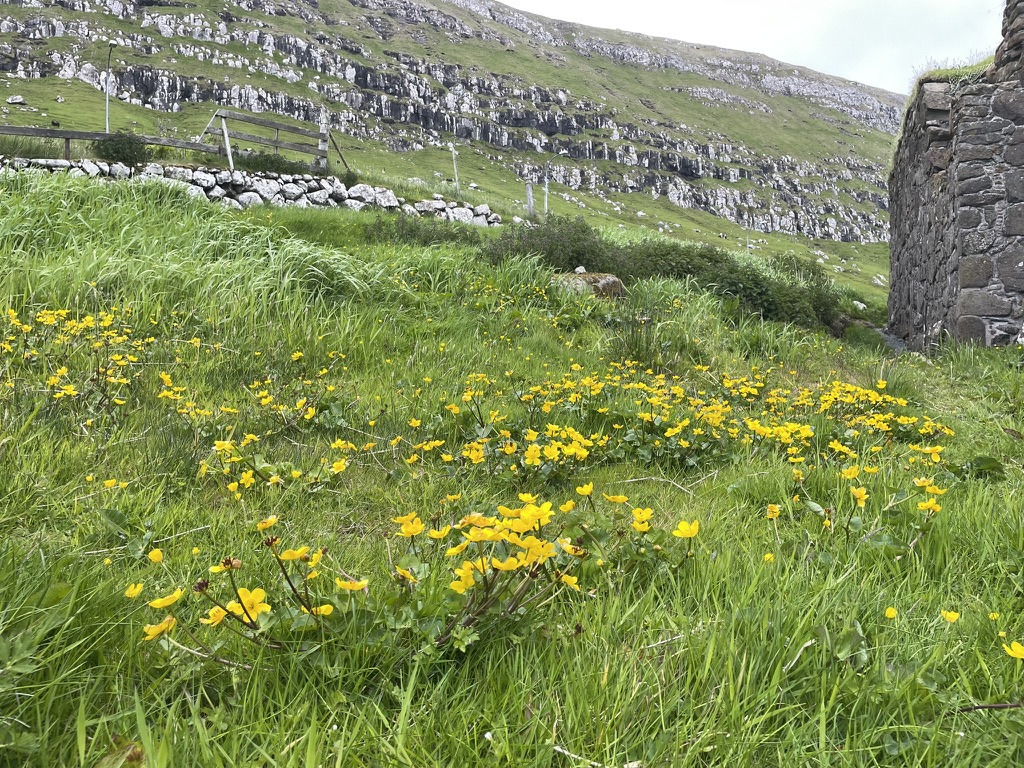
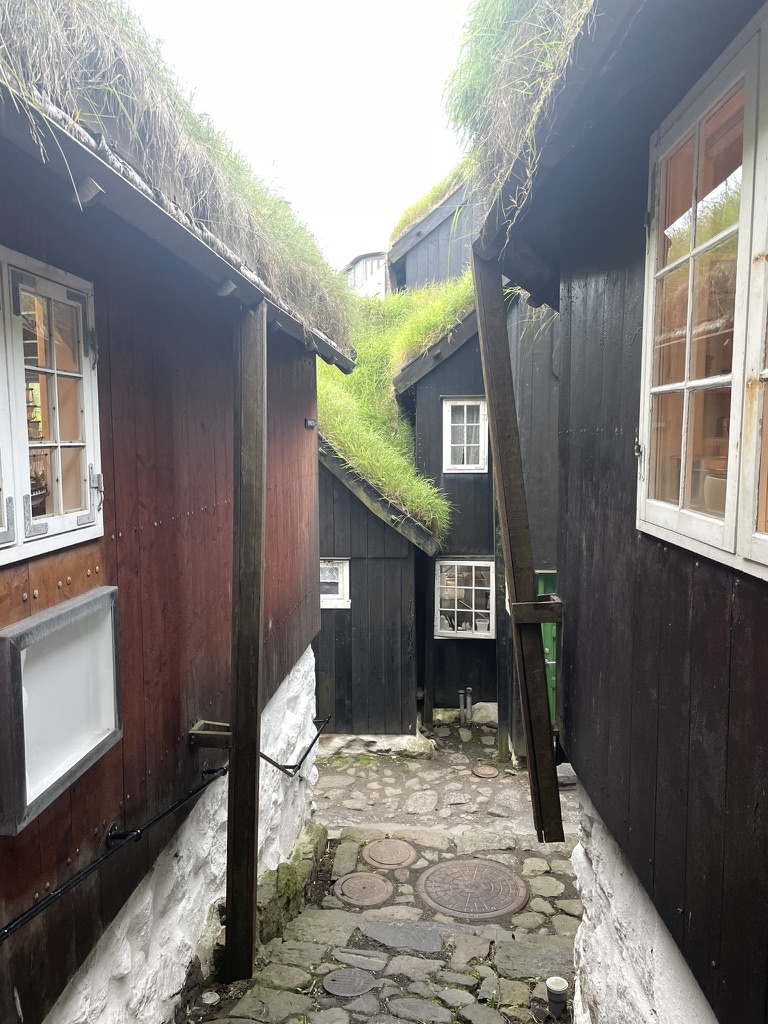
Actually, once I got over the fact that there were no trees, I began to appreciate the lush, exuberant grass. With 300 days of rain, which we experienced first hand, the grass is amazingly green and very abundant. During the Viking days of the 9th century, the roofs of most of the buildings were covered with turf. Today, with a revival of traditional ways of doing things, many of the newly constructed, as well as many of the older houses have grass roofs. It provides protection from the rain and wind and has an insulation rating of R-19.

The sod for the roofs comes from good pasture land. Pieces of sod are cut one square foot and about 3 inches thick. Once on the roof supports, they are watered in and nurtured like any good lawn. Generally speaking, extra irrigation is not necessary due to the abundance of rainfall. But, the weather can change at the drop of a hat. Locals say that the weather is so volatile, Vivaldi could have composed The Four Seasons in a single day on the Faroe Islands.

We are, I think, a product of the land and environment from which we come. For me, a child of forest and flowers, the Faroe Islands seemed to be harsh and barren. But perhaps some of the Faroese would find my world crowded and claustrophobic. But that’s what travel is all about, right? discovering and learning to appreciate worlds that are not our own, expanding our horizons and learning to love the Other.

Volunteer co-ordinator

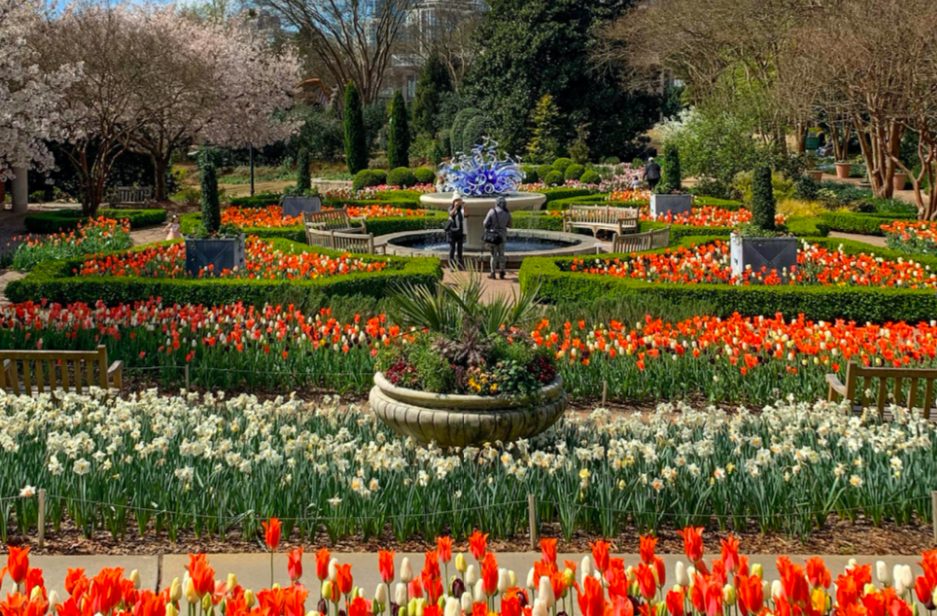
Josh Todd has a tough job. He is volunteer coordinator for the Atlanta Botanical Gardens and is responsible for keeping over 500 volunteers happy and busy throughout the year. It must be a challenging job but volunteers are essential for keeping the gardens looking beautiful and we’re all grateful to Josh for doing his job with such grace.
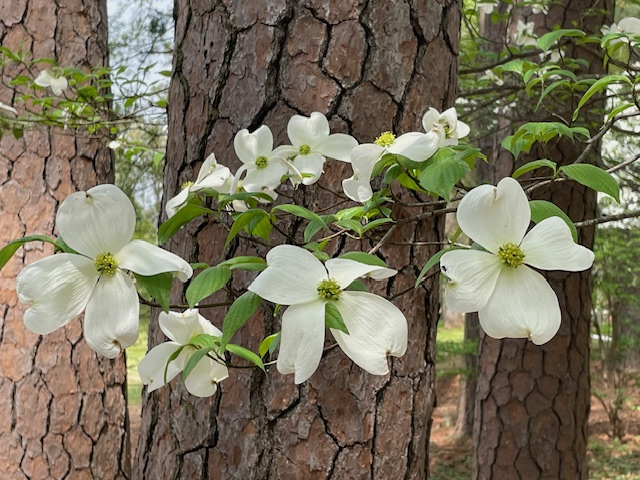
It takes over 1000 people working to keep ABG looking beautiful and over half of them are volunteers.

I think about Josh, sometimes, when I’m working in my own garden because I, too, deal with a lot of volunteers and coordinating them is sometimes a little overwheming. Unfortunately (or maybe fortunately) my volunteers are not of the human kind but are the profusion of “volunteer” plants that make it into my garden. From sprouting seedlings to creeping runners, many of the plants in my garden offer new, free plants.

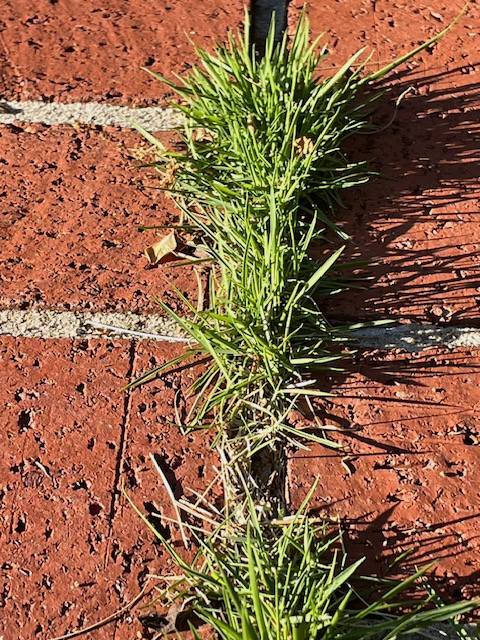
Trying to keep volunteers in their place is a constant job. For the life of me I can’t get grass to grow in the lawn but in the cracks of the walkway, it seems to thrive.

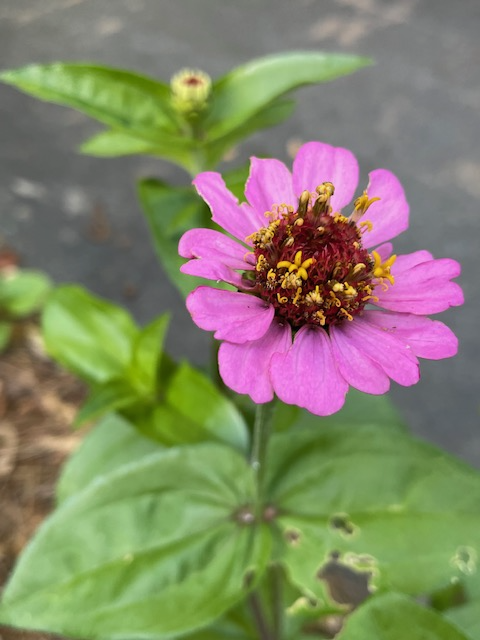
Coordinating all these volunteers takes constant attention. I appreciate the offerings and know that without them, my garden will look a little thin, but gosh! sometimes they just want to take over (I feel for you, Josh.) Deciding what plant is best suited for what job is a juggling act. Some are no brainers. The zinnias that reseeded from last year are welcomed with open arms, even though they are not exactly where I would have wanted them! But who wouldn’t love a zinnia at the edge of the driveway?

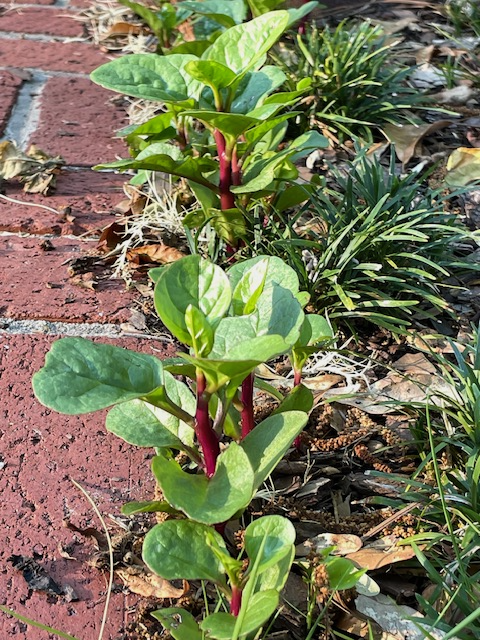
It was no surprise that the Malabar spinach, which produced thousands of berries last summer, has reappeared IN MASS this year, most of them downstream from where they were planted. I have pulled most of them up but have left a row (probably way too many) at the edge of the walkway. My plan is to get a short trellis or something for support. In my mind’s eye, it’ll make a charming entry into the garden. Sometimes, though, my mind’s eye and reality don’t exactly look the same.

In the back, I’ve begun to let a few select tree seedlings grow. Knowing the importance of trees to the native wildlife, I’ve decided more trees are better. Oaks, maples, redbud, and tulip poplars seedlings are now three or four feet tall and growing. But I can’t let them all grow or none would receive the space and nutrients to thrive, so I continue to weed out the vast majority.

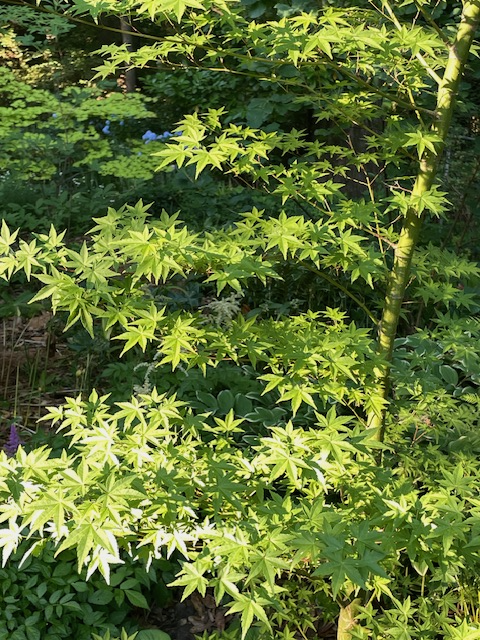
One of my most cherished volunteers – a Japanese maple, now 10 feet tall, started life as a volunteer many years ago.

Some volunteers are so invasive that I get rid of them as soon as I see them, or at least try. Arum, English ivy, vinca, privet…….unfortunately, it’s a long list.

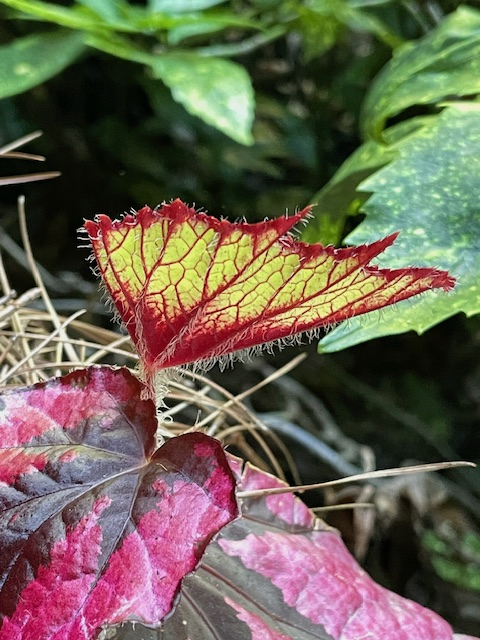
But some volunteers I have to work with and coax along but their contributions are so magnificent that it’s well worth the extra effort. My begonias are an excellent example. I put leaves in water last fall and the stems produced an abundance of roots. This spring, I planted these and by now they are thriving. Okay, they are not technically “volunteers” but they are free plants.

So, here’s to volunteers everywhere – to my friends and co-volunteers at the Atlanta Botanical Gardens, to my husband who volunteers for the Red Cross, to all those who spend their time and effort helping other people! But here’s also to the volunteers in my garden which make it a rich and lovely and wonderful place to be.

Oregon sunshine

When my sister, Diana, asked me to come to her home in southern Oregon this spring, she suggested that we might hike a bit. Diana knows of and shares my deep enthusiasm for wildflowers and she said she’d try to find some trails where there were some wildflowers.

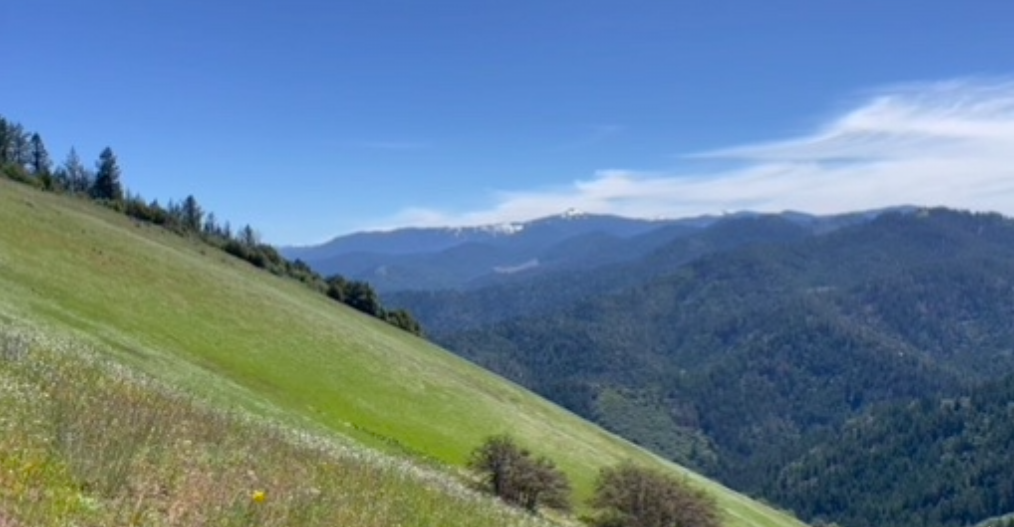
The view from Baldy Peak

Well, the thing about my sister is that she doesn’t do anything half-way so when I arrived last Friday, she had done weeks of research and had hiked a dozen or more trails to find THE BEST flowers for me. And, being Diana, she had chosen ones in all different directions and different areas of the beautiful region she calls home. The region includes both the Siskiyou and the Cascade mountains and she wanted to me to see it all. In four days.

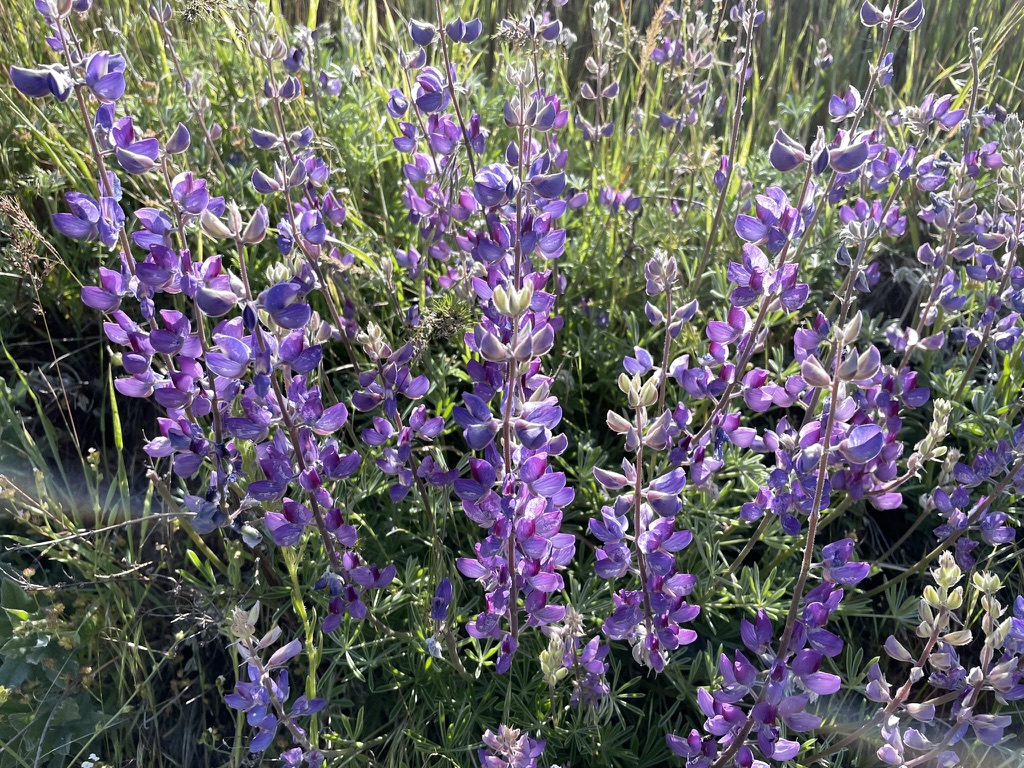
The wild lupine was in full and glorious bloom, carpeting the mountain slopes with deep purple. I came at the height of the low elevation wildflower season.

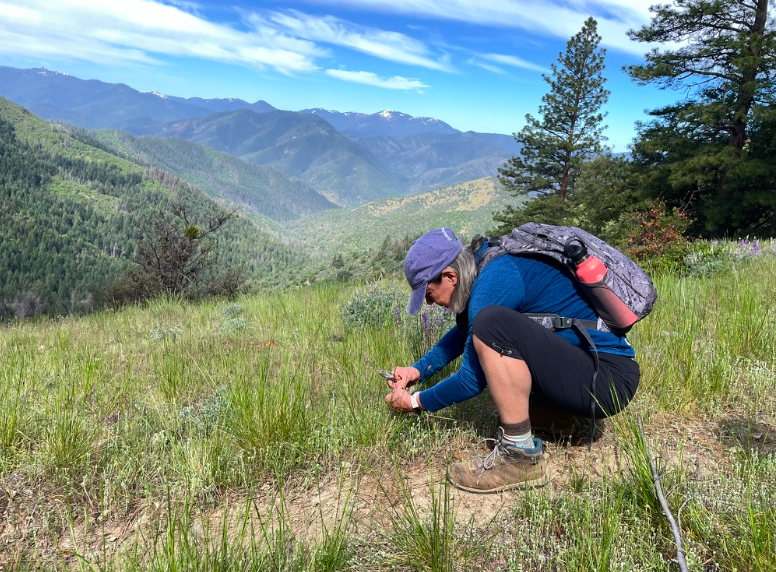
I wouldn’t exactly call what we did “hiking.” It was more wildflower sleuthing. And, we spent more time in the “botany squat” than we did walking. But oh my! if you love wildflowers like Diana and I, the days were heavenly.

We sometimes (literally) were using a magnifying glass to determine the number of stamen of a species for a definitive identification.

The stats? We walked four days, 22 miles and identified. (drumroll, please) ………….98 different species of wildflowers. There were more that we haven’t been able to identify, yet. Diana wrote down the flowers as we saw them on the trail and each day we saw between 40 and 50 different kinds. Obviously, there were some flowers that were on all the trails – and some that were unique to only one of the trails.

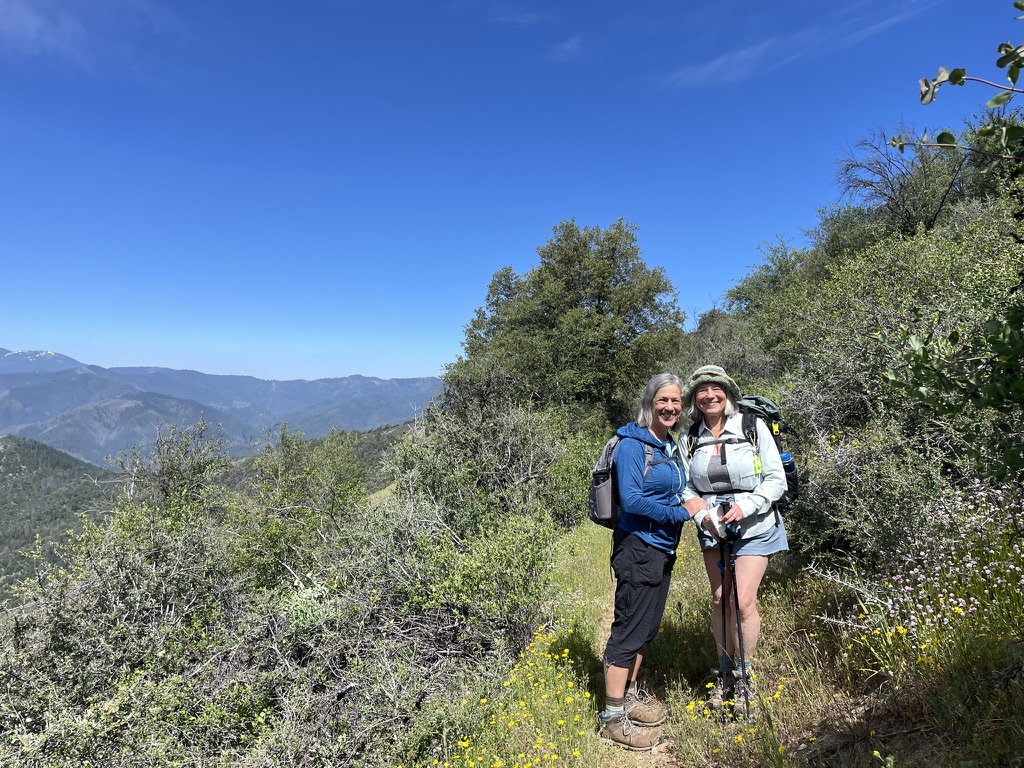
Diana and I on the trail to Baldy Peak. Diana, who will turn 80 in July, is training for a backpack trip and was carrying a 24 pound pack! I trailed behind her carrying a water. bottle.

I know my southern native plants pretty well but Diana was the expert on the native southern Oregon plants. Many of the plants I could identify down to the genus but then would have to turn to her for help. But no one knows them all, so each evening we’d kick off our hiking boots and dash to the books and the computers to spend hours late into the evening to get a positive I.D. for all the plants we had found. You may think I am exaggerating. I assure you, I am not. I know few people who would do this with me, how lucky I am that one of them is my sister.

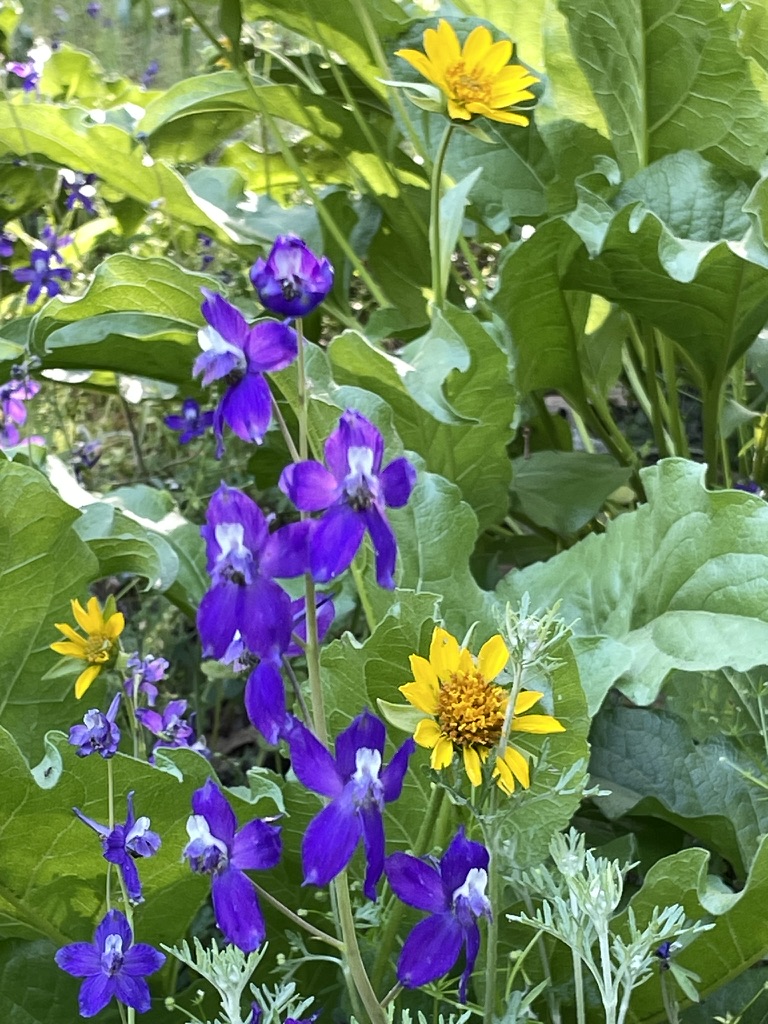
The color combinations were stunning. Here, mule’s ear and Larkspur create a wonderful display.

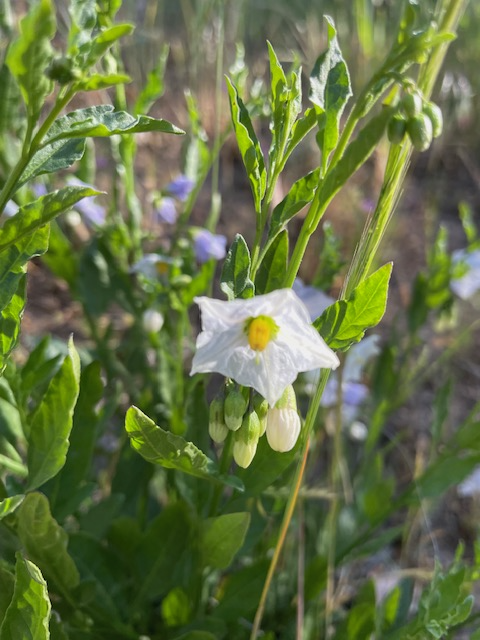
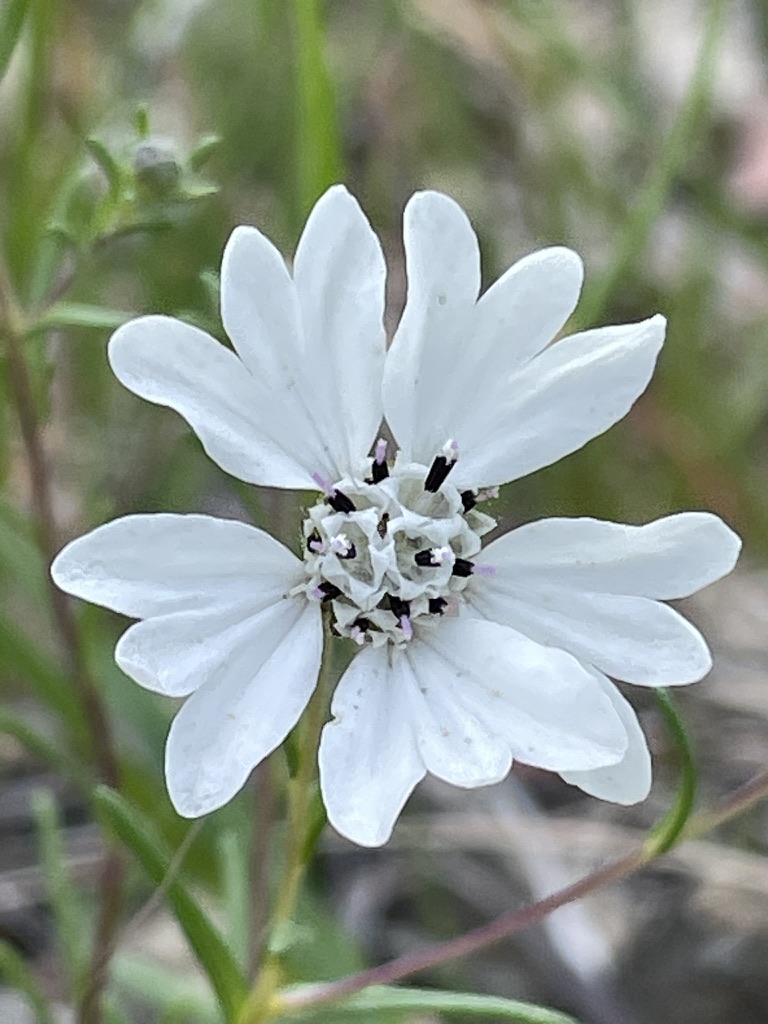
But the best thing? We got to get up and do it all over again the next day – for four straight days. Even when we stopped for breakfast on the way to the airport for my flight home, Diana brought her computer and we tried again to identify the small white flower with fused petals. A Solanum surely but gosh darn, which one?

Anybody know what this is? Surely one of you knows!

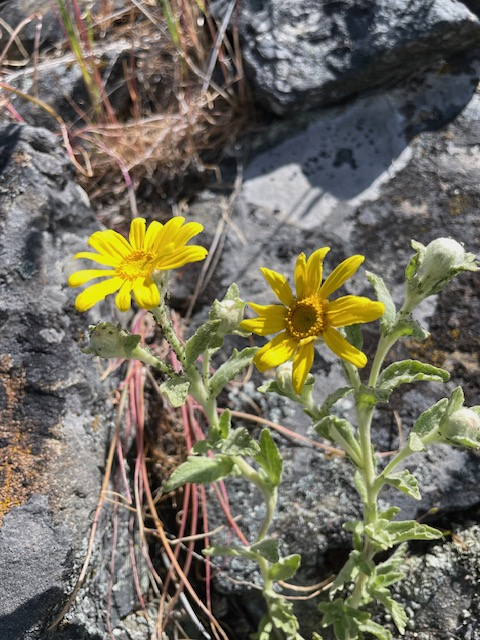
Though we got along splendidly, I have to admit to some arguing. It was all along the lines of…..”it had SIX stamen, not three, I’m sure!” or “I thought the leaves were lobed and you’re saying they were toothed.” One of our most heated discussion was about the ‘Hairy Oregon Sunshine,’ a plant the grew profusely along the Baldy Peak trail but nowhere else. Problem was that it wasn’t blooming so we couldn’t tell for sure what it was. But then? Voila! Two gorgeous, bright yellow flowers – which earned them their name of ‘Oregon sunshine.’

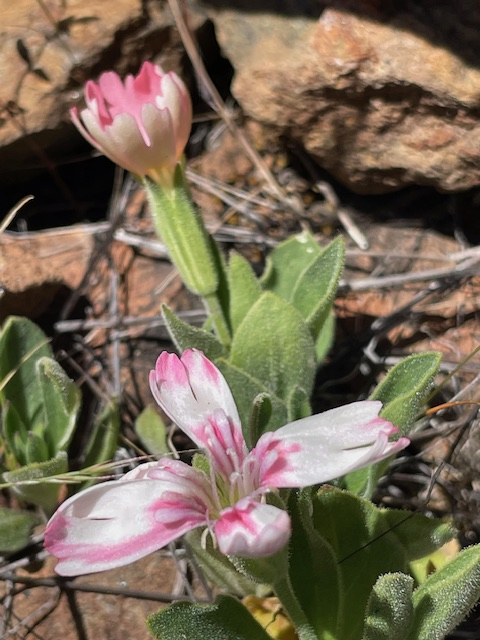
Photographs taken along the trail helped enormously, of course, though the phone plant I.D. apps proved to be all but useless. I learned a lesson after the first day about taking pictures. I had taken a photo of a gorgeous low growing white plant with four petals and pink stripes. I cannot tell you how many hours I spent trying to find the name. There just aren’t THAT many flowers with just four petals. Finally, we asked one of the women we had been hiking with if she would share her. photo and guess what? The plant has five petals. The flower I photographed had a petal hidden behind another. Identification came quickly after that.

Knowing that this has five petals greatly simplified identification.
It’s Silene hookerii (confirmed by a local expert.)
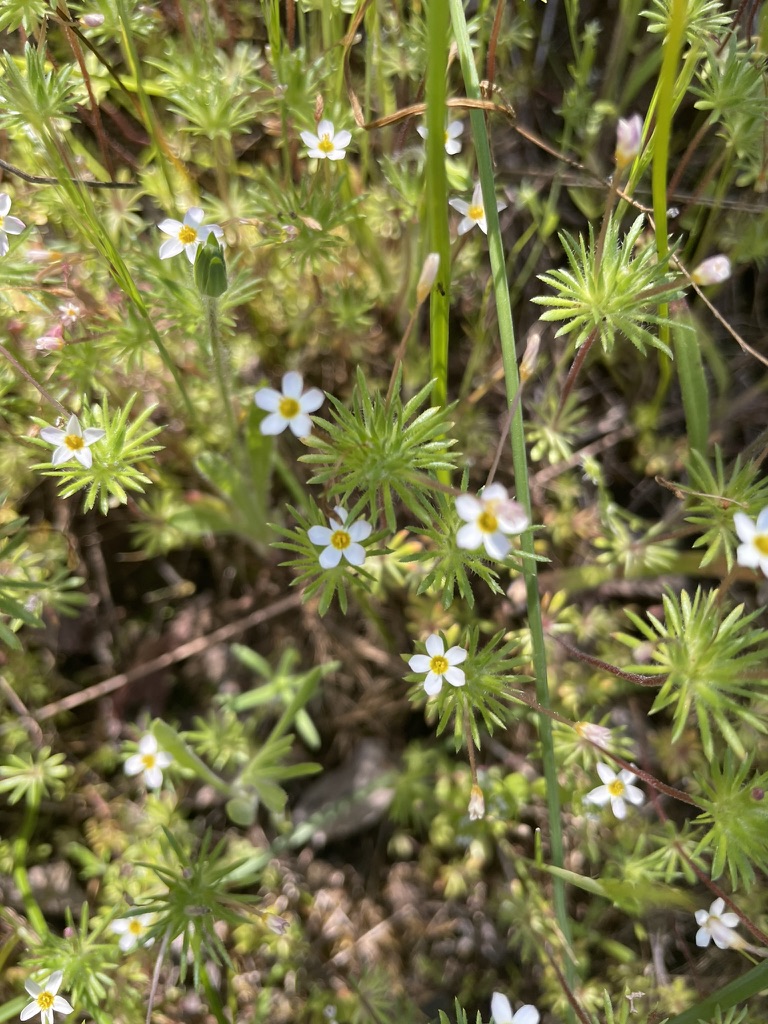
One of the more unusual plants we saw was this Summer Snow, Leptosiphon parviflorus ssp. banderii. Again, we had our guess confirmed by a local expert.

I could go on and on about the plants, the area, the good times I had with my sister but I think I’ll let the pictures tell the story. I am so grateful that there are wild places still left where beauty can be found around every curve of the trail. Let’s fight to keep these wild and scenic places. And, thank God for sisters!

Diana was dancing on the trail (literally) when she saw this beautiful Rough Eyelash
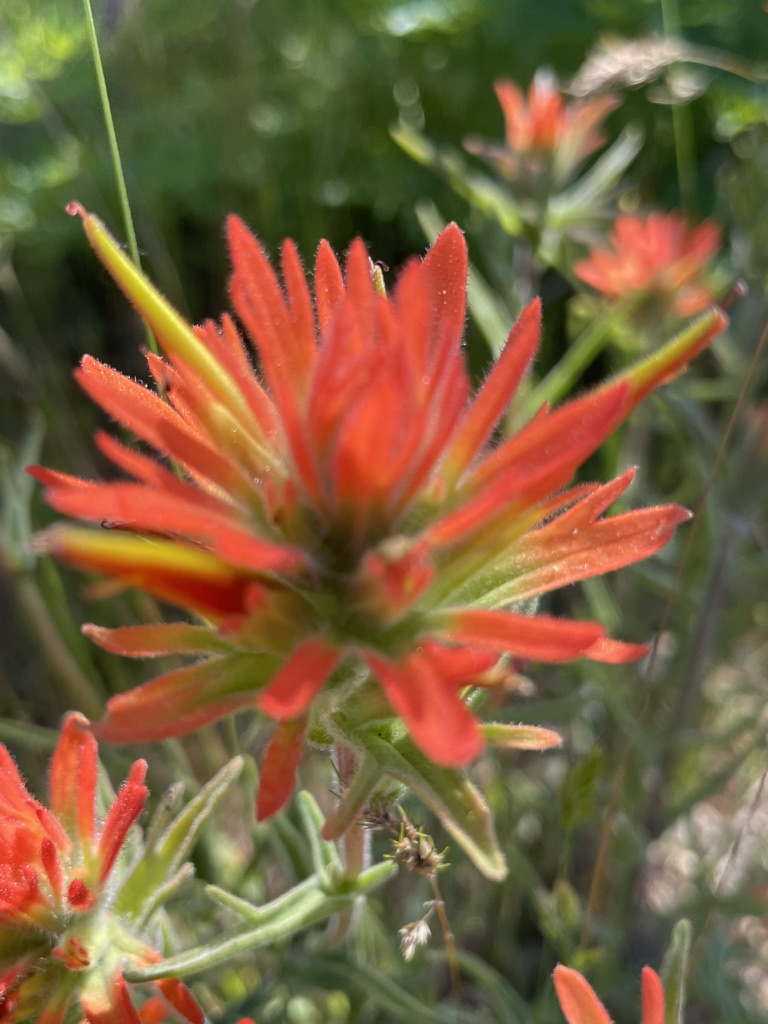
We really, really wanted this to be the Applegate paintbrush but alas, no wavy leaves. It turned out to be the well known common paintbrush, Castilleja miniata.

Hellebore ‘Black Death’

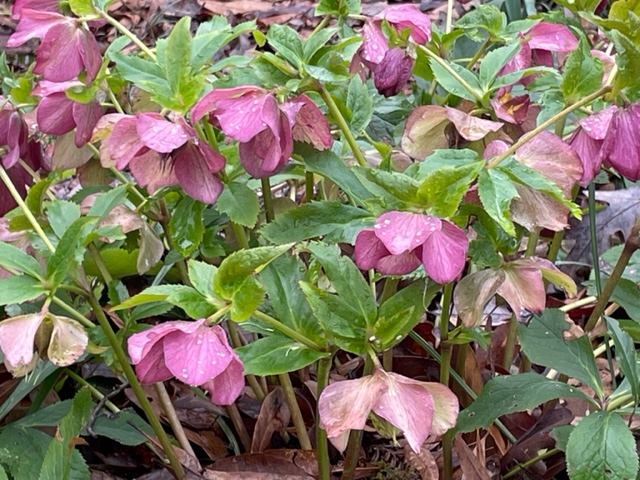
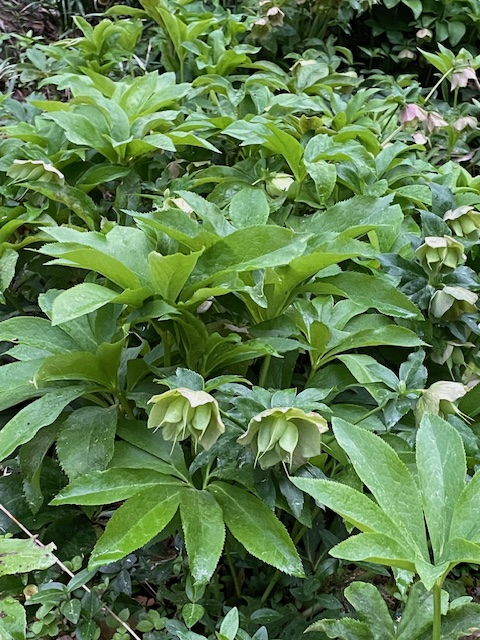
For years, I’ve complained that the lenten roses (Helleborus x hybridus) in my back garden are taking over. Even a few weeks ago, in this blog, I was wishing that I didn’t have quite so many hellebores since they were limiting the biodiversity in the garden. Be careful what you wish for.

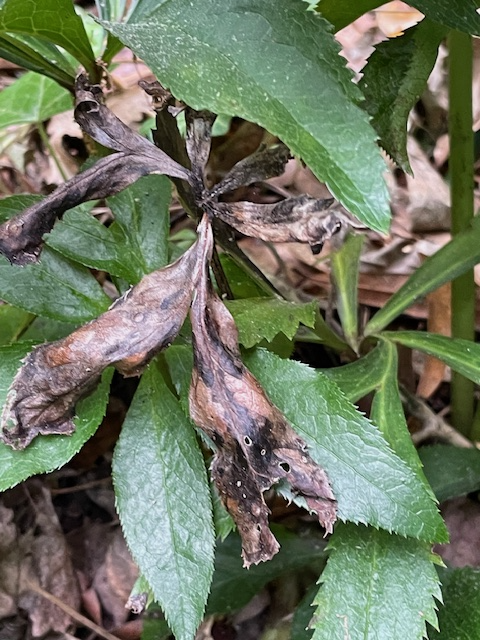
For decades my lenten rose has provided late winter beauty. It saddens me to lose this beautiful part of my shady garden.

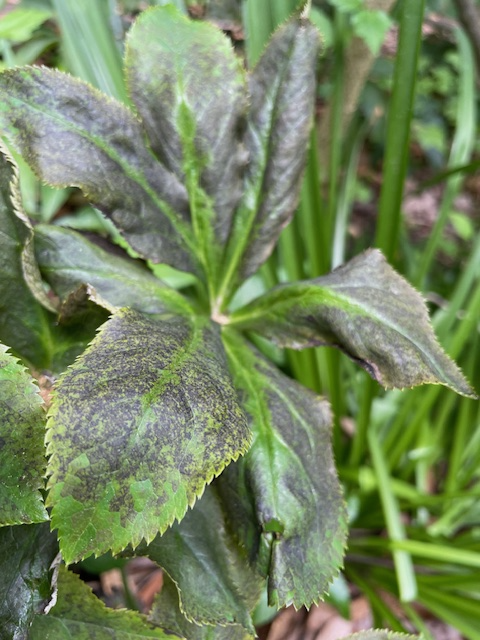
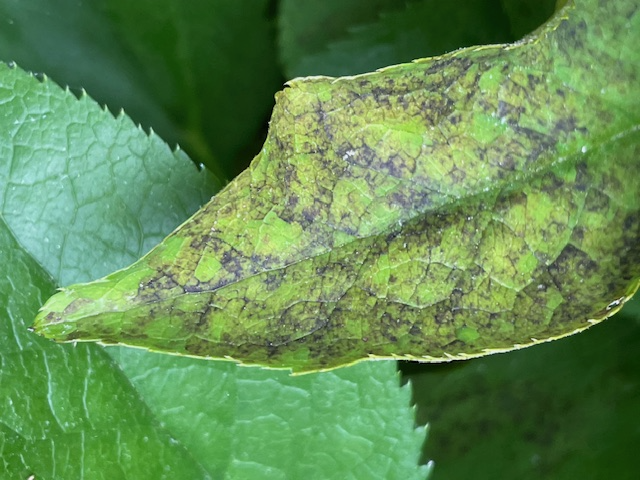
I have come to the devastating conclusion that the hellebores in my back, which number in the hundreds and form the foundation of my shady gardening beds, are suffering from a virus that is called Hellebore ‘Black Death,’ officially HeNNV. There is no cure. Infected plants will die in anywhere from a few weeks up to a year and a half.

The virus was first found in the early 1990’s in England and continental Europe. It does not seem to effect H. nigra or H. argutifolius as badly, but the common H. orientalis and hybridus are killed by the virus. As of last summer, it was still considered uncommon in the U.S. but infected plants can take up to 1 1/2 years to show symptoms.

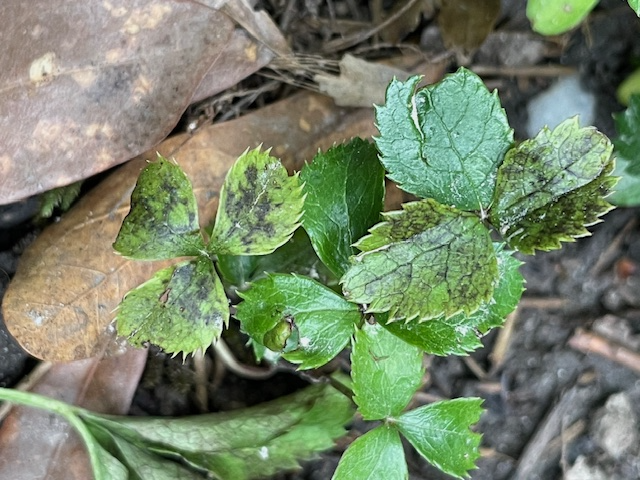
What does it look like? Black and nasty. The leaf veins turn a yellowish color that quickly turns black. New growth on older plants is stunted and dark and brittle. Though I’ve not read about this elsewhere, all the new seedlings in my yard are showing the black coloration as they emerge.

Just because I have this in my garden, doesn’t necessarily mean that you do too. There is natural die back every year, as older leaves die and new ones come in. But, if you grow hellebores, you might want to take a look. If there are big black splotches on the leaves and some of the new growth is dark and stunted, your plants might be infected.

Though the virus seems to be species specific and doesn’t spread to other kinds of plants, it is highly contagious among plantings of the same species. Scientists believe that the virus is spread by aphids or whiteflies, neither one of which has ever been much of a problem in my garden. The only thing to do is to cull the hellebores and put them into the trash, a daunting proposition in my situation.

My first inclination was to put a For Sale sign up in the front yard and move to a high rise apartment, letting someone else deal with it. But I love my garden and my home and my neighborhood and I don’t really want to move. So, I began digging.

This is my strategy: First, weed out all the seedings so they don’t have a chance to establish. Then, starting in the beds closest to the house, begin to, as one friend put it “wrastle” with the plants, digging up the dense, fibrous, interwoven root system. In their place, I’ll replace the soil and put in shade loving natives, such as Mayapple, blue phlox, bloodroot, blue eyed grass, columbine and wake robin trillium

I’m continuing to cut back infected foliage wherever I see it, just for aesthetic reasons but the virus is moving fast and it’s hard to keep up. I really hadn’t planned on spending so many gardening hours dealing with hellebores, but that’s the way it turned out.

Is it all bad? No, of course not. I’m glad it wasn’t a virus that killed more useful native plants such as my creeping blue phlox. That would be a tremendous loss! And, this does present an opportunity to replace the lenten rose with a greater variety of native pollinator plants.

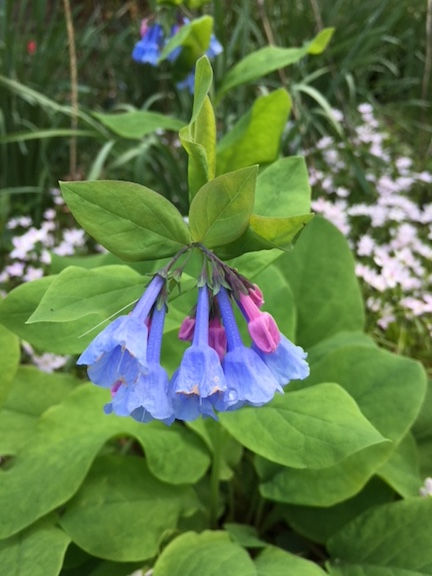
Taking out the lenten rose means more room for beauties such as this Virginia Bluebell.

There’s a lot I don’t know yet. I’m hoping as the plant dies that the roots will also die and decompose quickly. I’m praying that it truly will not spread to other species. I’m really hoping that my situation is unique and that the virus is not widespread. Time will tell.

Nature has a way of humbling even the most enthusiastic of gardeners. It’s another reminder that I’m only one small part of nature and that even though I like to think I have control over my garden, there are many things that are beyond my influence. I have faith, though, faith that my garden will recover, faith that nature heals, faith that I won’t really sell my house and move into a high-rise apartment!

Sunny days ahead?

After decades of gardening, I’m still surprised at the explosion of energy that sunshine causes. In spring, of course, when the skies turn from winter grey to brilliant sunny blue, plants seem to just jump out of the ground. (I’m also still amazed at how much plants want to grow!)

But putting a plant in the right environment is critical to its health and success. And, let’s define “success” here from the plant’s perspective and not the gardeners’. Success, for a plant, means being able to reproduce. Fortunately for the gardener, this can also be defined as success as bright, big blossoms almost always lead to an abundance of seeds. It can also be defined as pollinator success because sun loving flowers form the bulk of the favorite pollinator plants.

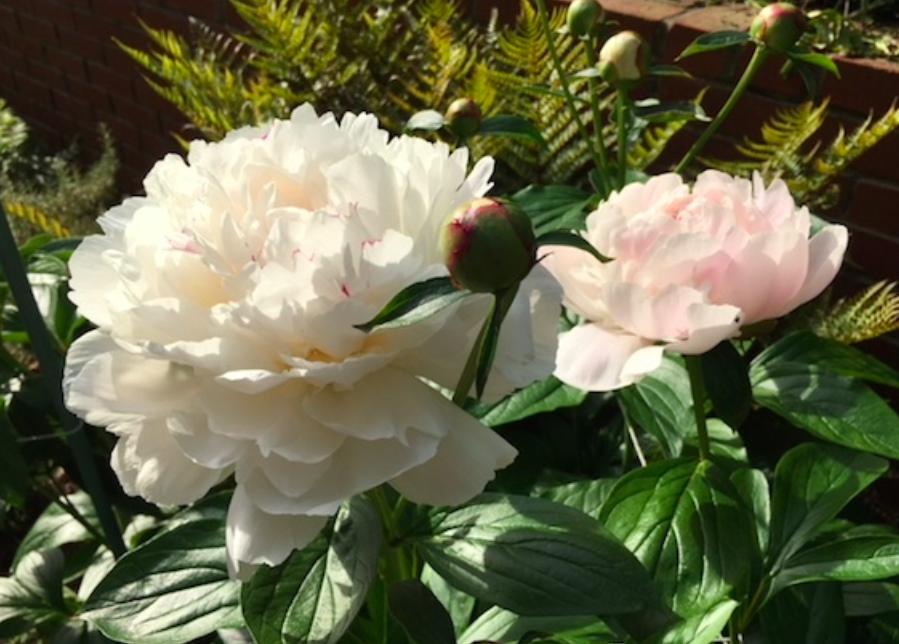
“Shade tolerant” does not necessarily mean that a particular plant will thrive and reproduce without sufficient full sun hours. The sun loving plants that I’ve put in my shady backyard, hoping that they will do well anyway, just don’t. My grandmother’s peonies languished and almost died out before I carved out a space for them in the front where sunshine renewed and reenergized them.

Unfortunately, this sun to shade ratio is having a tremendous and detrimental impact on many, many of our native plants. Many of the native ecosystems of the Southeast were sunny grassland areas kept open naturally by fires started by lightning or by herds of grazing animals. The ecosystems evolved based on these periodic disturbances and sun loving plants settled in and called it home.

But then people moved in, fragmented the open areas, stopped the natural fires and pushed the wild grazing animals into small pockets of land. Without these natural disturbances, woody shrubs and vines began to grow in the grassland areas, eventually shading out our sun loving plants. And, many of these shade producing plants, such as Chinese privet, nandina, and autumn olive are also some of the most invasive plants, meaning that they spread at alarmingly fast rates.

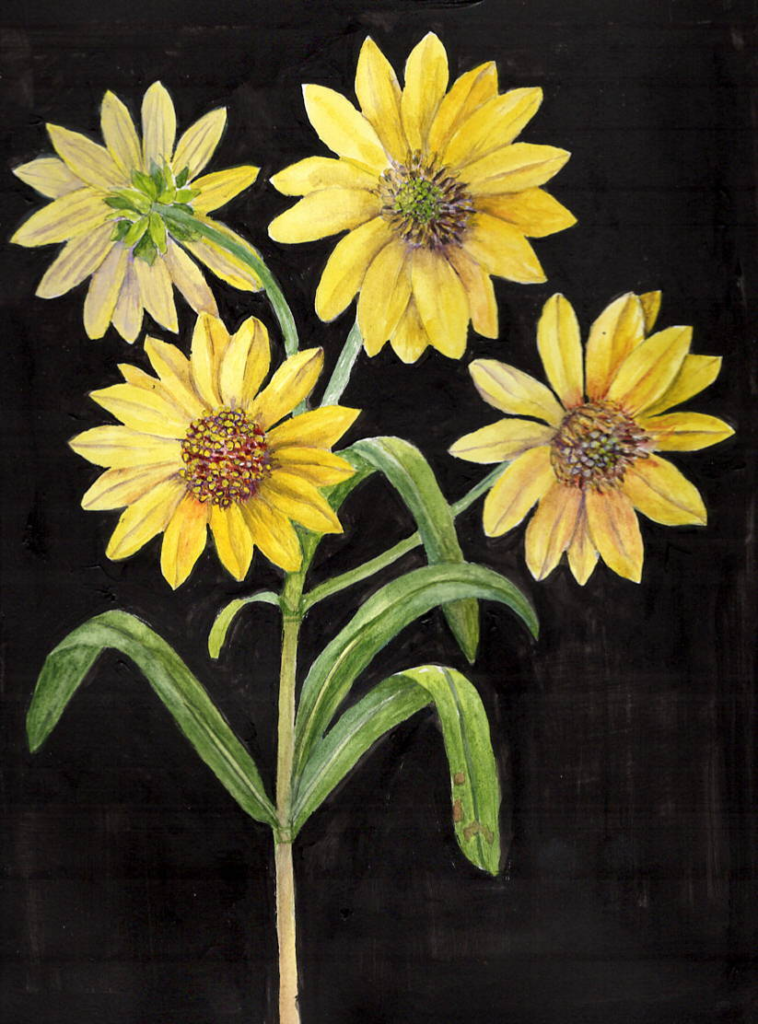
Whorled sunflower is one of Georgia’s endangered plants that needs sufficient sunlight to bloom and set seed.

So the result is the same as in my garden. Without sufficient full sun hours, these plants lose vitality, are unable to bloom and set seed and are in a state of demise. The best tool we have to keep these areas open is fire, set and controlled to keep the woody plants from moving in and creating shade.

There are other ways – mowing (at the right time), hand weeding and even occasionally selective spraying are all methods used to keep a wild grassland area open. In a small space, such as in my garden, hand weeding is by far the best method. But, as a gardener, it’s my responsibility to know what my plants need and to provide for them the best environment possible – and to be realistic about my expectations. If Grandma’s peonies need sunshine, I can’t expect them to succeed in the shade.

Through supporting organizations such as Forest Watch, The Nature Conservancy and the Southeastern Environmental Law Center, who work unceasingly to protect our native plants, we can help maintain environments that support our threatened and endangered species. I do see sunny days ahead.

And the trees were clapping

For Jack

I often begin my day by hand watering the garden. I’ve never had a sprinkler system. I know it would be less work but I sort of like staying in touch with my plants and giving extra water to those who need it most.

As I stood watering, Jack walks up with the ever faithful Sadie. “I bet the trees are clapping,” he said. “What a lovely thought,” I responded and then he said, “It’s from the Bible.”

I looked at him skeptically. but he looked so smug I decided he was probably right. And right he is. The passage is from Isiah 55 and reads:

You will go out in joy and be led forth in peace; the mountains and hills will burst into song before you, and all the trees of the field will clap their hands.

What an absolutely beautiful verse and one which describes exactly how I feel these days as I walk through my garden, or on a trail or a path or a park. I don’t know that we’ve ever had a more beautiful spring.

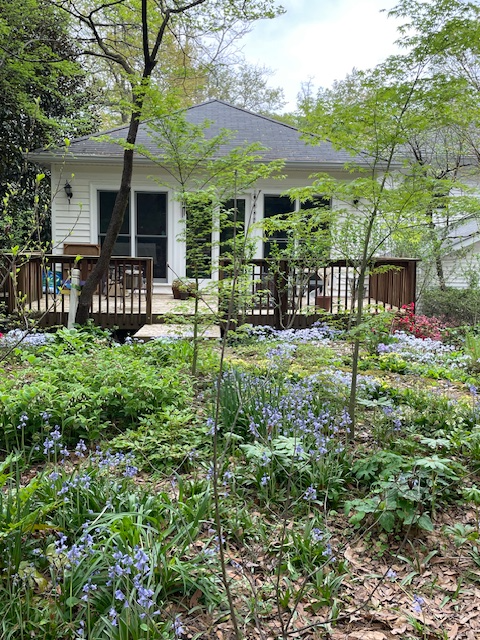
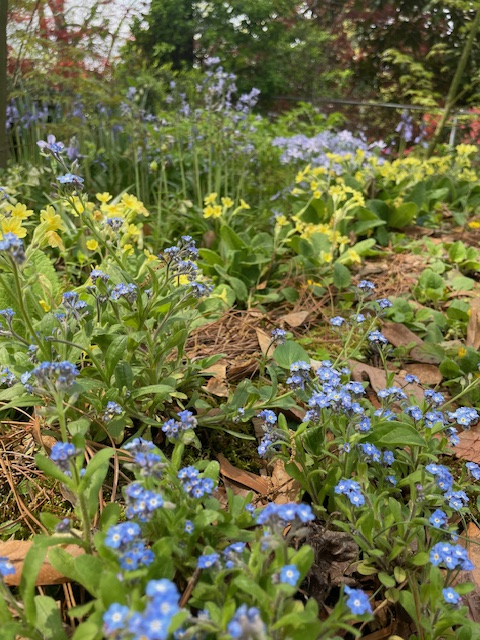
The weather has been warm enough to bring all our spring glories into bloom but cool enough to keep things from fizzling out too quickly. My back yard is a carpet of blues – violets, phlox, Scilla, grape hyacinth, Virginia bluebells, forget me nots, pansies and thrift. With yellow accents of English primrose and green and gold, it is a wonder to behold.

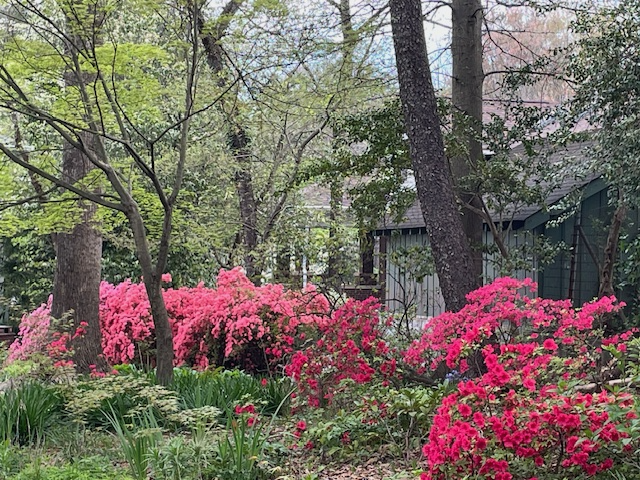
Behind all that, the azaleas are in full bloom in every imaginable shade of pink. It is as if my garden is truly bursting into song before me – and all the trees are clapping.

I spend a lot of my days working on conservation issues. It can be discouraging and depressing. So, it is a balm to go out in joy and to trust that I will be led forth in peace. It is a reminder that nature heals – itself and us. While I will continue to fight for both social and environmental justice, I am so grateful to Jack for reminding me to stop and listen for the all the trees of the field to clap their hands. If I don’t listen, I won’t hear them. It was a joyful morning.

Size Matters

Last week I took some time off from gardening to compare notes with one of my gardening friends. Though we both basically do the same thing (grow plants), our methods are drastically different. She has 18 acres of hills and forests and open spaces in a rural area – all fenced to protect it from the deer. What a treasure! In comparison, I have about 1/3 acre, within the Atlanta city limits.

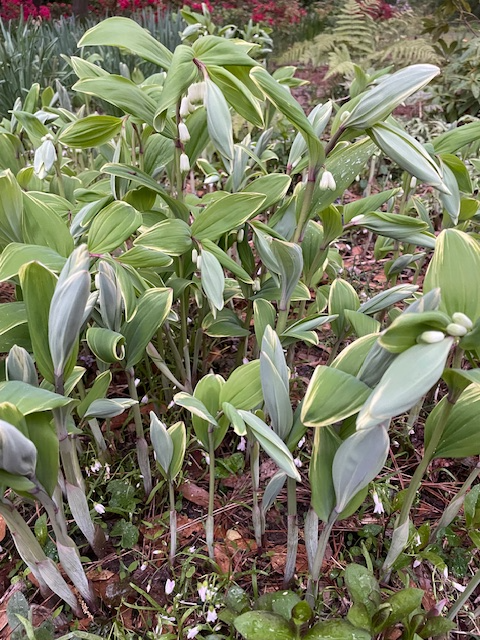
Variegated Solomon’s seal is much more aggressive than its native cousin.

She exclaimed over and over how happy she was that after years of gardening in this space, plants had naturalized and spread so she now has great swaths of color and beauty. I suddenly realized that what was a gardening accomplishment for her (on 18 acres) was a gardening headache for me (1/3 acre). Size matters.

Too much of a good thing? Absolutely! Lenten rose is crowding out everything else.

Plants, like people, like to live close to family. Whether plant populations increase by spreading from underground runners, such as the variegated Solomon’s seal or my beloved creeping blue phlox, or by setting and dropping seeds, such as the lenten rose, if given a good growing environment, they will spread. This means that in a small space, maintaining diversity is a constant battle. And diversity, as we all know, is critical to a healthy ecosystem.

If I didn’t keep a check on it, my entire backyard would be a mass of lenten rose fighting with snowdrops and Scilla. These are not technically invasive plants, but in a small space, they take up more than their share of room.

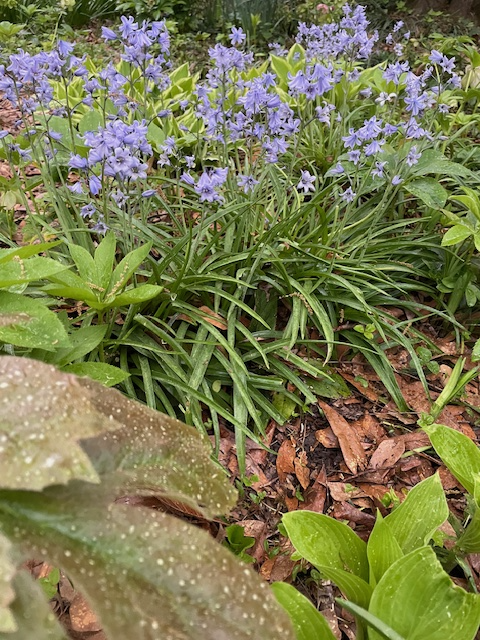
Blue Scilla amongst hosta and Mayapple leaves.

It’s not just the aesthetics of gardening that are at risk with overly aggressive plants, but the necessity of providing for wildlife and pollinators. My garden is an oasis for pollinators in the city. I know that many, many different kinds of pollinators visit throughout the year. Without the diversity to which they are accustomed, someone is going to go away hungry.
Of course the garden is just a small echo of what is happening throughout the wild and green spaces in our world. Size matters. We need big gardens and big parks and huge natural spaces so that our native plants can grow and spread as nature intended them to. We need corridors not just for our bears and wolves but for the native bees and insects. We need to protect every wild and wonderful place.

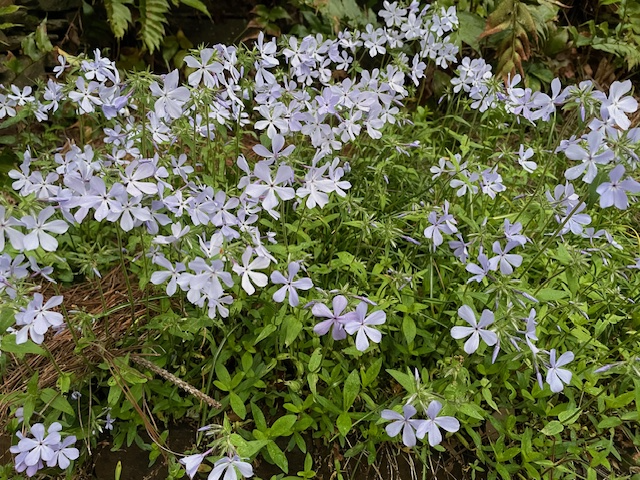
Creeping blue phlox – beautiful, native, delightful – but still reducing the diversity of my garden.

Even if you don’t have a BIG space, plant something! A plant in a pot is much better than no plant. And two plants in a pot are twice as good. As always, plant something useful to our native insects. If caterpillars eat the leaves of your parsley, say hallelujah! Gardening is no longer just for us. Gardening today is critical for helping to save the environment.

The Okefenokee Swamp

A call to Action

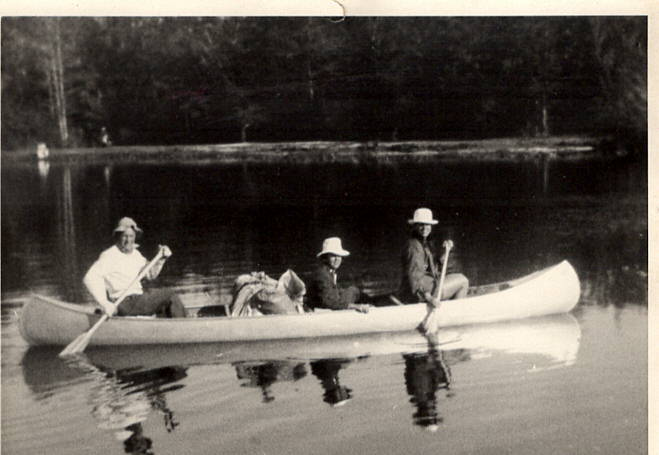
In 1973 my parents and I took a canoe / camping trip through the Okefenokee Swamp. It was a memorable trip, not the least of which was that I had my parents all to myself for two days! With four siblings, that rarely happened and I cherished this time with my energetic, smart and curious parents.

But of course it was the swamp itself that created the most long lasting memories. I can remember paddling for hours through the dark, still waters. The only sound was the calling of the birds and the soft plunk of the canoe paddles. My father and I fell into an easy rhythm, stroking the water together to propel us forward.

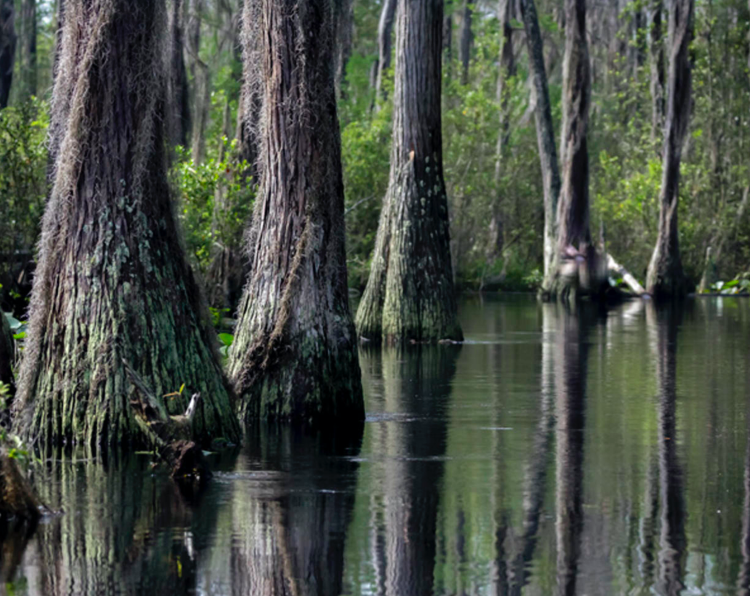
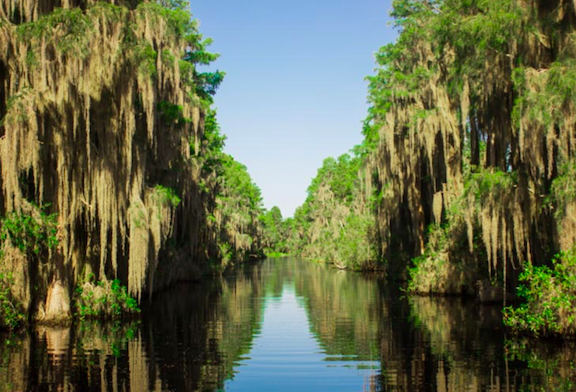
There were times that I was absolutely convinced that we were lost and would spend the rest of our lives gliding past cypress trees, dripping with Spanish moss, looking for water open enough to paddle through and out. We were never really lost but the swamp is such a mystical, magical place that everything feels different and nothing really looked familiar.

And, it’s big. Really, really big, covering over 700 square miles in the southeast corner of Georgia. It is the largest blackwater swamp in North America. And, it is teeming with life. There were alligators, of course, sunning themselves on muddy banks. And all kinds of birds, calling from the treetops, wading through the shallow waters.

What I didn’t realize then, was what a rich, unique and important ecosystem we were traveling through. There are over 200 kinds of birds that live in this swamp, 400 species of vertebrates, and 60 different kinds of reptiles, including the rare and endangered eastern indigo snake.

The Okefenokee Swamp is truly a treasure. What a travesty, then, that this part of our environmental heritage, is under attack for nothing more than money. A mining company from Alabama has requested – and permission is pending – for the right to create a mine within 3 miles of our swamp, a death warrant for this beautiful and vulnerable place.

Georgia Public Broadcasting reported this: Federal scientists have warned that mining near the Okefenokee’s bowl-like rim could damage the swamp’s ability to hold water. Interior Secretary Deb Haaland in 2022 declared the proposed mine poses an “unacceptable risk” to the fragile ecosystem at the Georgia-Florida line

The Environmental Protection Division states that once a wetland area is altered or destroyed it is impossible to restore.

We advocate for the swamp in the only way we know how – by writing letters to the state officials who have the power to save or destroy this incredible part of our state. Please join in the effort to save the Okefenokee Swamp. The quickest and easiest way is to go to the Okefenokee Protection Alliance website where they make it easy to make your voice heard. We have until April 9 to help save our Swamp. Let’s act today.

https://protectokefenokee.org

Winter whites

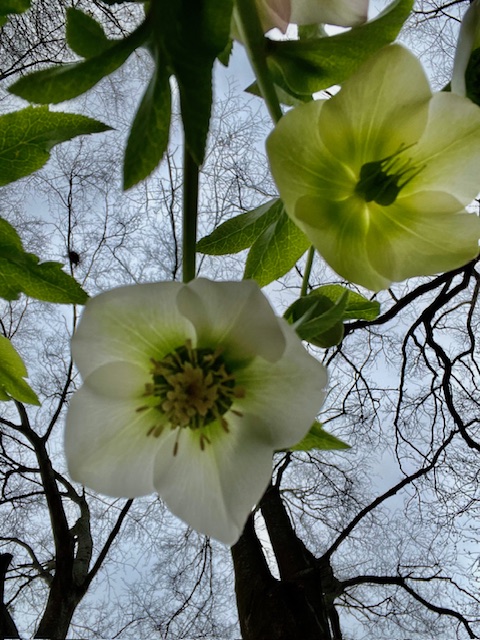
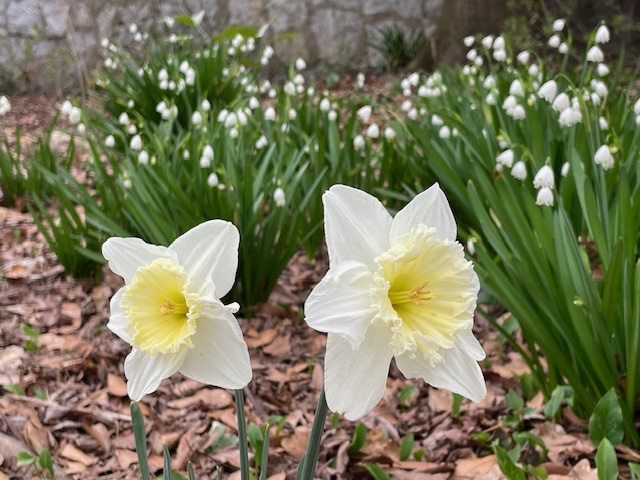
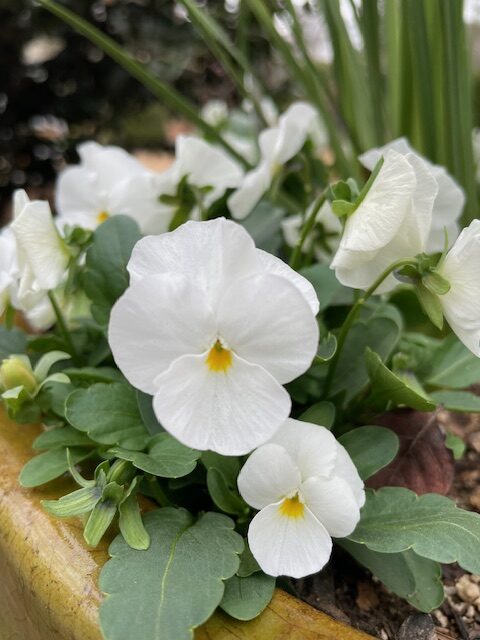
Looking out across the back yard, all I see is green and white. The early spring snowdrops are in their glory, blooming next to tall white narcissus. The white lenten rose, against a grey winter sky, has been blooming for several weeks.

It all made me wonder why so many of our winter and early spring flowers are white – and why there is a progression of color in nature from white in winter to pastels in spring, bright reds and yellows in summer and purples in fall. Is there a reason?

Of course and the reason for flowers, is (as always) the pollinators. Scientists say that some of the earliest pollinators are flies and that flies lack color vision. Instead, they are attracted to bright petals that are highly reflective and to flower forms that are easy to pollinate.

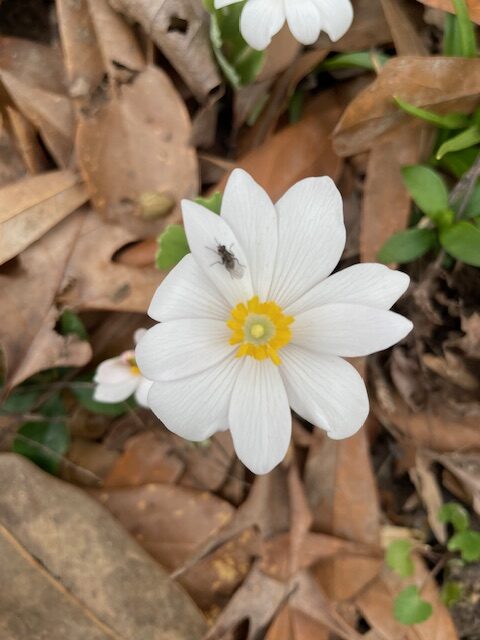
Early blooming bloodroot
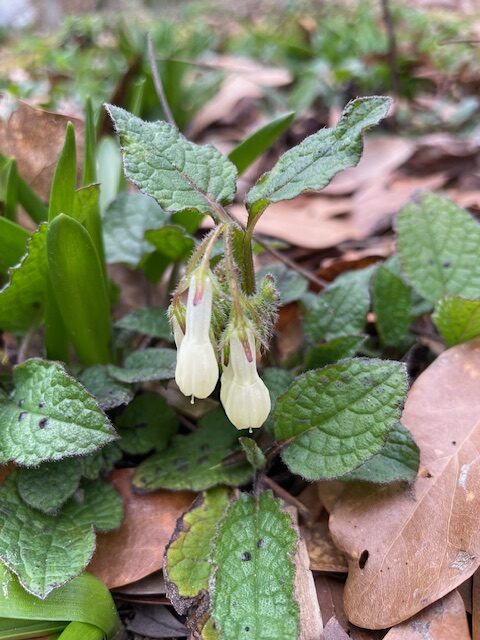
Pulmonaria ‘Sissinghurst white’

Blooming early in the season provides these flowers with some great benefits. First, there is little competition – the bulk of the natural world will wait for warmer weather to bloom. And secondly, these plants bloom under deciduous trees before the leaves come out, providing necessary light for their peak bloom time.

It’s interesting to think about the progression of color throughout the growing season for both our cultivated flowers and our natives. It won’t be long before pale pink appears in the natural palette with trilliums and lady’s slippers. These, too, are woodland plants taking advantage of available sunlight before the trees leaf out.

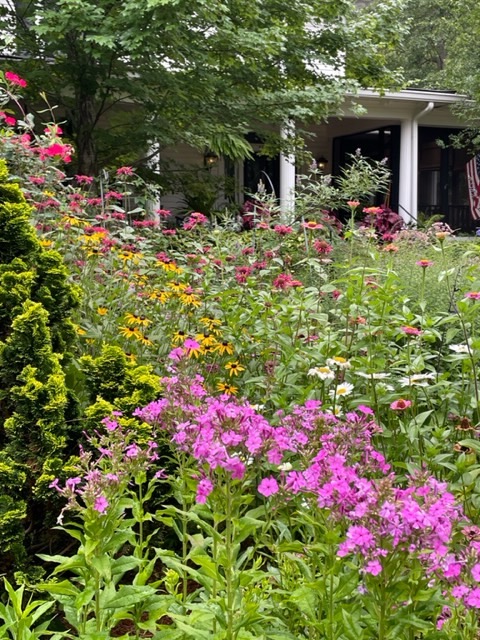
During summer, colors become more intense as temperatures rise and a whole new set of pollinators appear. Brilliant yellow, pinks, oranges, and reds dominate the landscape as sunflowers, Black-eyed Susans, butterfly weed, bee balm, summer phlox and Indian blanket grow tall and robust in the landscape.
Bright summer wildflowers

And of course, the giant roadside flowers of fall, such as asters, Joe-pye weed and ironweed show every shade of purple, beautifully complemented by the yellow goldenrod.

There are exceptions, of course, but it’s fun to look at this natural progression and appreciate the simple beauty of the winter whites while anticipating the riot of color to come.