Lessons of hope

A few weeks ago, I had the great privilege of presenting at the Chattahoochee Nature Center at a day long conference celebrating the joys and challenges of gardening both with and for nature.

I contributed as an artist / writer / storyteller to raise awareness of the most imperiled and threatened plants that grow in Georgia. There are nineteen Georgia native plants that are threatened with extinction and I cited the reasons why, offered some suggestions for what we can do to help and encouraged the audience to maintain hope for the future of conservation. We must keep hope! There is no alternative.
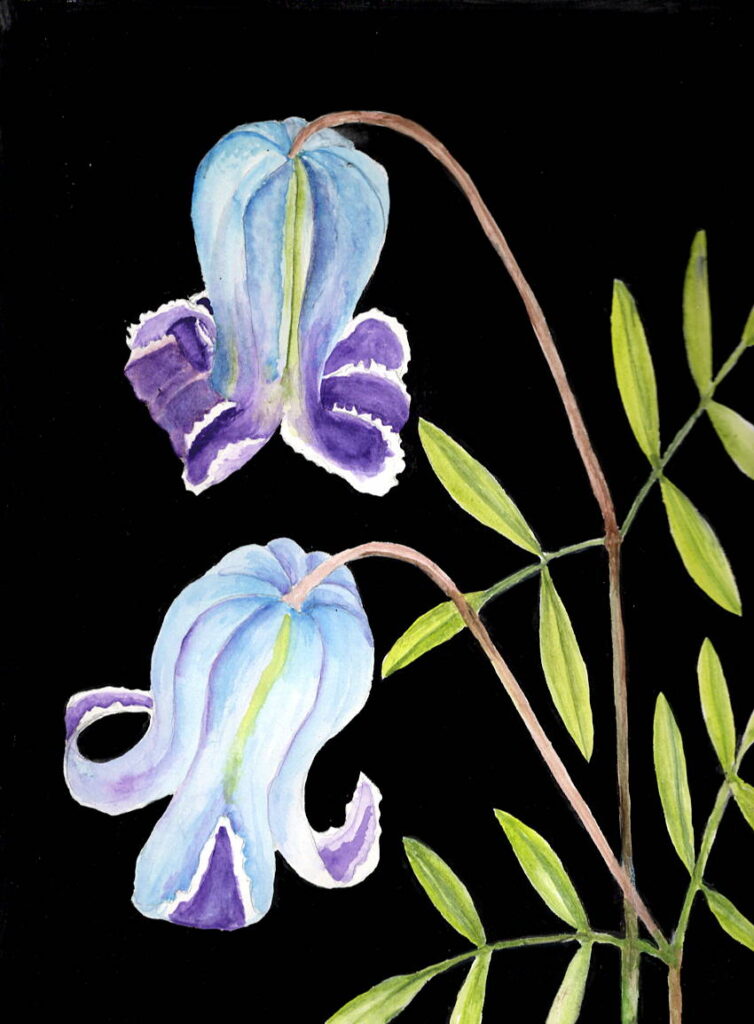
Morefied’s Clematis, one of Georgia’s federally endangered plants

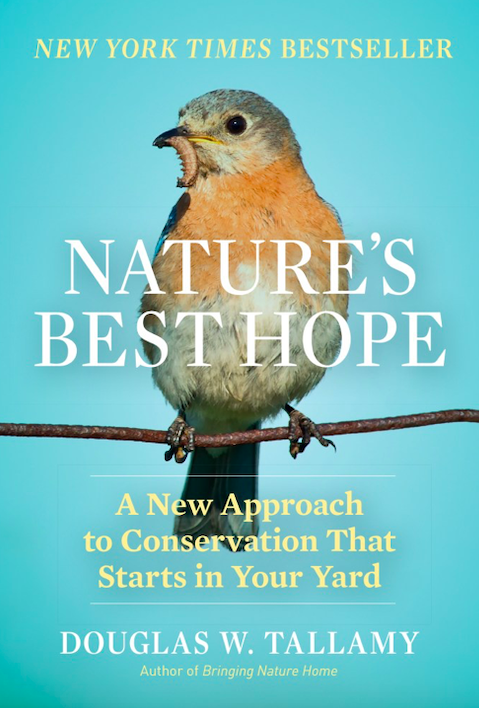
My talk was followed by that of Douglas Tallamy who said (not necessarily in reference to my plea of hope, I think, but in general) that hope is great and yes, essential, but it must be followed by action.

Douglas Tallamy has authored several books about taking action for the environment and his message is always the same. By changing the way we garden and planting native plants useful to the ecosystem, we can greatly alter the dire predictions for the loss of biodiversity in our future.

Though I’ve known his work and read his books, I was struck by the simplicity and power of his message about the absolute necessity of growing native plants, not just for pollinators but for the caterpillars which feed the birds and which can greatly increase biodiversity in even a small yard.

Dr. Tallamy stresses the fact that many of the caterpillar and insect species are host specific and that is why we need to grow such a diversity of native plants. A hillside of purple coneflower is native and great but how much better it is to have a hillside where a dozen different kinds of natives grow.
E.O. Wilson, the great writer and ecologist, says that “loss of biodiversity is a greater threat to conservation than climate change.” What is so important about diversity?

Think of it like going to Baskin Robbins. If, suddenly, there were only a half dozen ice cream flavors rather than 31, it doesn’t just mean that our choices would be limited, it means that some ice-cream specific people who survived by eating a single kind (say strawberry) would starve to death if strawberry ice cream was no longer available. Then we would lose not only strawberry ice cream but all the people who were completely dependent on it. For those people, a lack of diversity is not just disappointing, it’s life threatening. In nature, for a host specific insect to lose its host plant means certain death.

So how do we help? By making our yards or flower pots or window boxes a virtual Baskin Robbins of yummy plant materials for the birds, caterpillars, insects, pollinators. (It’s not necessary to know which plants serve what species, just plant a variety and they will come.) By planting oak trees and shrubs and flowering plants that are useful to the environment rather than the ones that just look pretty. By taking action. By maintaining hope. While we may feel limited in our ability to alter climate change, we can all do something to increase biological diversity. Pledge to plant a native this spring, even if it’s in a pot.

I will continue to plant my beloved zinnias and dahlias but I hope to stuff, in every available nook and cranny a whole ice cream store full of native plants and pray the the caterpillars come and eat every single leaf. And that the birds will come and eat the caterpillars and that my yard can serve to help increase diversity at a time when it is so desperately needed.
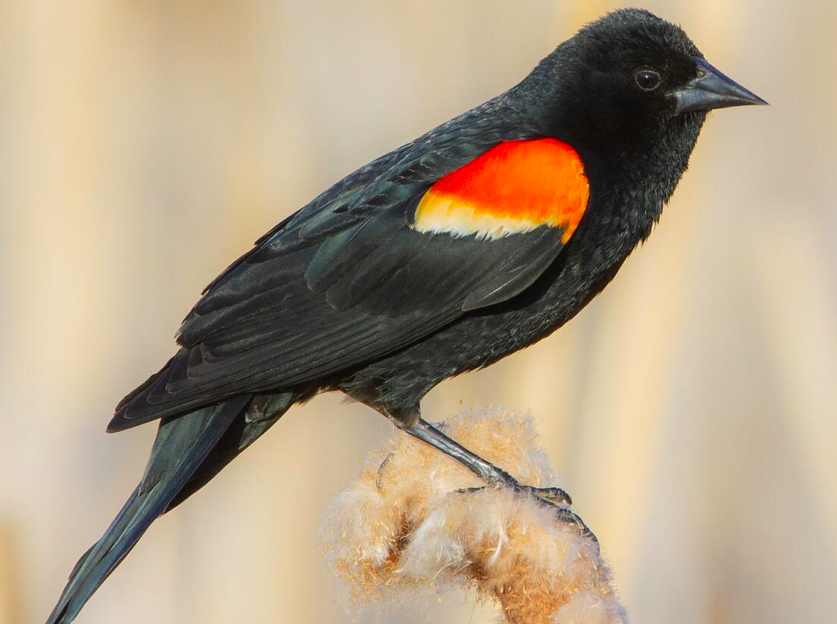
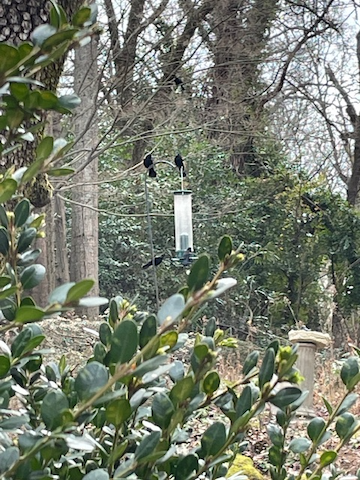
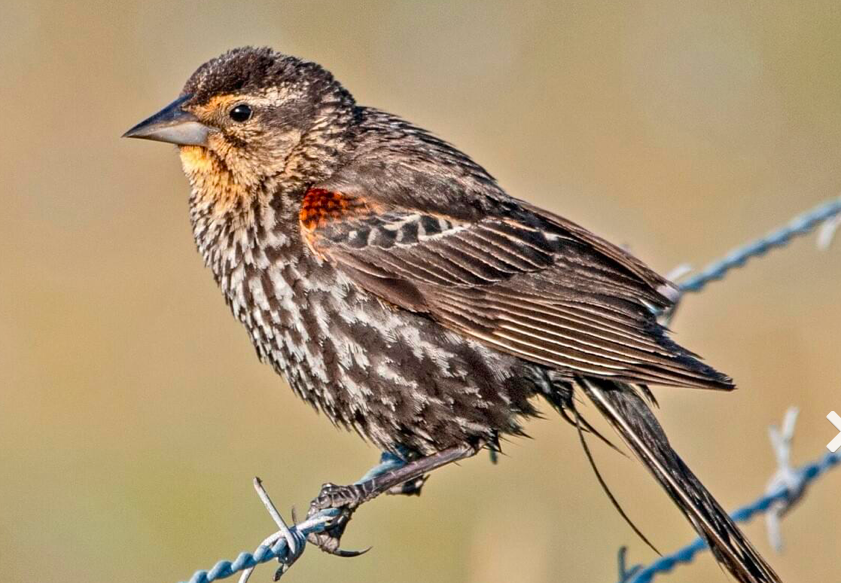
Red-winged blackbirds

The bird feeder in the backyard is just outside the window for easy viewing. I find it the best entertainment around, for the ready stream of winged creatures who come to visit and nibble is endlessly fascinating.

Photo from allaboutbirds.org

Last week, the feeder nearly toppled over when a flock of redwinged blackbirds descended. Starting in early December, these birds travel and go wherever they can to find food. In this case, my back yard.

It was pretty impressive. They emptied a large bird feeder in a single afternoon. For a short while, Jack and I kept track of an individual bird who somehow managed to fend off all the others. But then of course, he left too as more and more birds came to feed. All the other bird species just gave up and watched from nearby branches.

During winter, redwinged blackbirds fly in huge flock, often with other birds such as common blackbirds, grackles, and cowbirds. Numbering in the hundreds, these flocks fill the skies, turning and swooping together like a giant ballet. Apparently, there is no one individual bird that takes the lead, but any single bird from the flock can initiate a turn or dive, probably in response to either sighting food or a predator.

These large flocks are called murmurations. This term was originally used for the flocks of starlings in Europe which would make soft murmuring sounds as they flew. For OUR black birds, perhaps the flocks should be called “squawk” -ations because they are sooo loud.

The males are the only ones sporting the beautiful yellow and red patches on the shoulder. Females of the species are dark brown above, brown and buff striped below and not nearly as beautiful as the males. The males are polygynous and can have up to 15 female mates at one time.

Females look quite different – and not as colorful.

This abundant and common bird is found year in Georgia, though they usually spend the summers not in urban backyards but in swamps and marshes – yet another excellent reason to protect our wetlands!

I love watching the birds, especially in winter for it is a warm reminder of how alive and vibrant the earth is, even when it’s cold and grey.

Laura

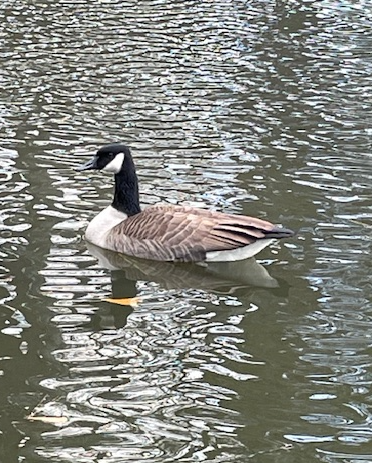
Canada goose

Believe it or not, the Canada goose almost became extinct in the early 20th century. There were so few mating pairs left that a concerted effort was launched to save this majestic bird. Needless to say, the efforts were hugely successful.

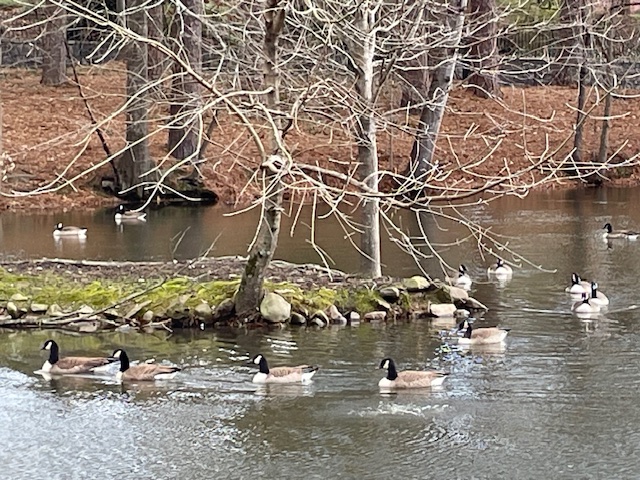
Today, Canada geese have proliferated to such an extent that they are considered pests in many areas – including my neighborhood. We are fortunate to live near a small pond and a series of parks – a neighborhood enticing to both people and the Canada goose.

There are several problems with the geese; they leave droppings everywhere and the droppings often contain harmful bacteria, they crowd out other more desirable water birds, and they can be very aggressive, especially during mating season. And there are just too many of them.

Too many geese for a small pond and tiny island!

Even so, the Canada goose, which is native to North America, is protected by our migratory bird act. Someone just forgot to tell the geese that they need to migrate. The Georgia Department of Natural Resources says that complaints about geese top the list of calls they receive. Even though you cannot harm, kill or move the geese, DNR encourages you to hassle and haze. But really, who wants to put up strips of shiny molar or balloons or barking dogs or sound making machines or shiny fences in an area that is supposed to be natural, serene and beautiful. It’s a quandary.

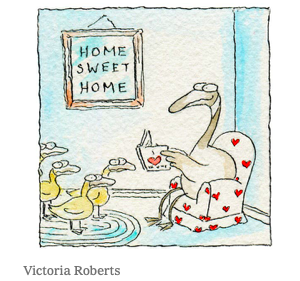
Credit The New York Times

It’s also a really good example of best intentions going haywire. With the increase of man-made ponds and lakes in urban areas, the highly adaptable Canada goose population has exploded and in many areas, is permanent. In our neighborhood, as in others, the problem is exacerbated by people who want to feed the geese, which not only encourages them to stay and makes them poop more, but geese that eat processed food such as bread, also contributes to potentially lethal water fowl diseases.

I am a true believer in the critical need for biodiversity and in protecting every native species. But our continued interference with nature has proven time and again to have unforeseen consequences. But, since both coyotes and geese have adapted so well to our urban neighborhood, I’m hoping that nature will take take care of the goose problem!

The Giving Tree

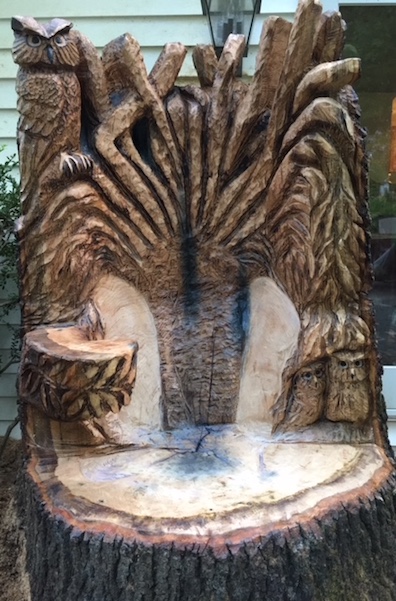
Several years ago, Jack and I had to have an old and diseased oak tree taken down. It was growing about a foot away from the back of the house and had it fallen in any direction it would have done serious damage to the house. Heartbroken at destroying this beautiful tree and depriving dozens of organisms their home, we opted to leave a 5 foot tall stump and have it carved into a chair.

The tree chair has been the source of a lot of joy and laughter and has provided a photo op for countless kids. But, like the tree in Shel Silverstein’s classic, The Giving Tree, this tree keeps on giving.

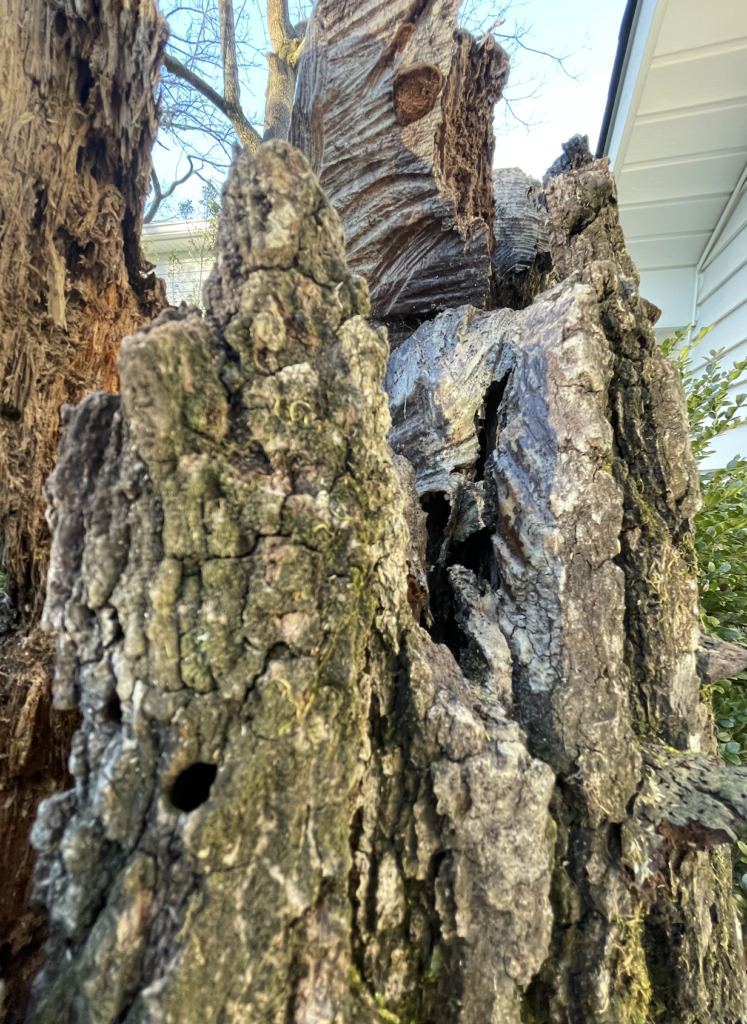
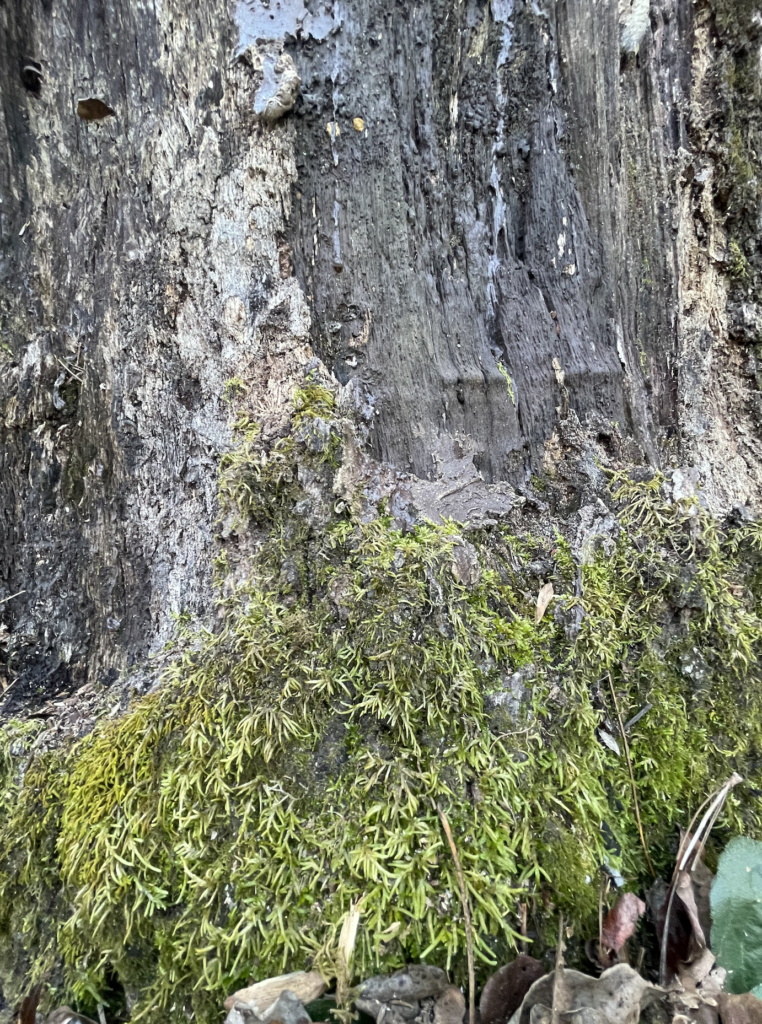
Some of the carvings are still intact but for the most part, the tree is in a state of fabulous, life giving decay. Covered with lichens and moss, there are wide cracks and soft holes in the back and sides. The base is definitely deteriorating and during the warmer months, I was delighted to see an endless stream of insects burrowing into the rich rotted wood. Small, perfectly round holes are proof that something – be it bird or insect – is making a home here.

I can only hope and assume that the tree is full of life, harboring hundreds of insects and microorganisms. The Xerces Society says that long horned beetles, jewel beetles and bark beetles all burrow into dead and decaying wood, creating spaces for cavity nesting insects such as mason bees and leaf cutter bees to lay their eggs. Spiders and other beetles are also attracted to the moisture of decaying wood.

Though our tree stump is both too close to the house and too short to be used by woodpeckers and owls, dead limbs of other trees, farther back into the yard must provide magnificent habitats as both the rat-a-tat-tat of the woodpeckers and the frequent hooting of the barred owl are part of the back yard music.

Two huge oak trees, probably close to 200 year old, are looking a little old and damaged but they are far from any structure and we’re just letting nature take her course. I’m sure, at some point, they will fall but will continue to serve their purpose in the ecosystem.

Nature, on her own, is not neat. Brush piles, dead flower stems, rotted tree stumps are not necessarily “beautiful” but they serve an essential role in the environment, providing food, shelter and nesting sites for countless organisms. Perhaps it’s time that we redefined “beauty” in the landscape.

I cherish the tree stump at my back door and am grateful to this tree for the many, many treasures it has offered during the years. It is truly the gift that keeps on giving.

For more information about creating and maintaining a pollinator friendly landscape, check out the Xerces Society for Invertebrate Conservation at

https://www.xerces.org

I hope that you and yours have a happy, happy holiday.

Laura

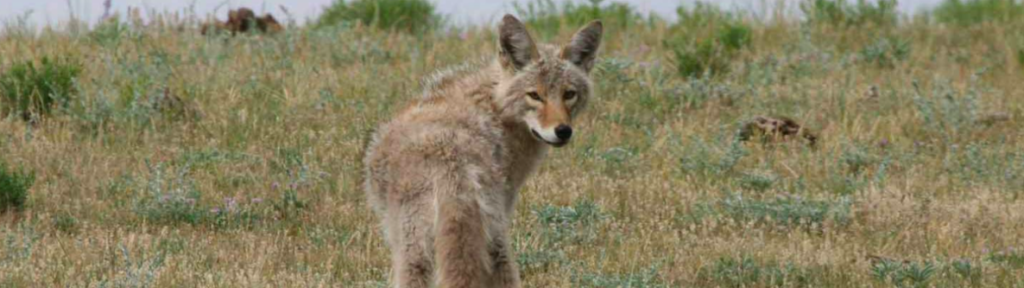
Wiley Coyote

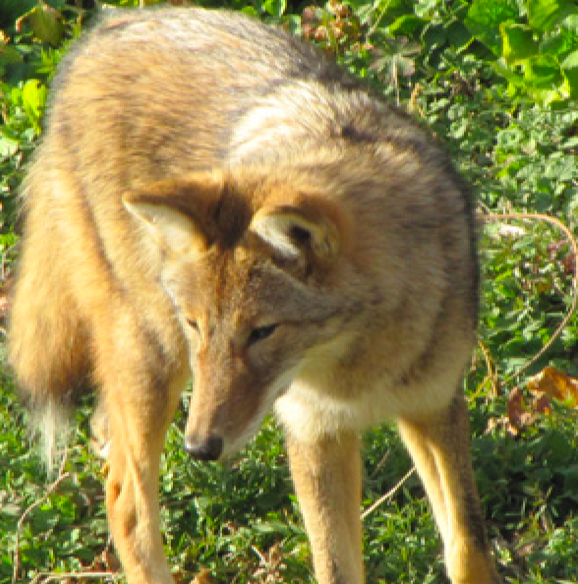
Sadie, my faithful sidekick, and I were walking from the house to my art studio one morning (a distance of about 120 steps). A sudden movement caught my eye and I looked up in time to stare straight into the eyes of a coyote. My backyard is fairly big (especially when I’m using a push mower to cut the “grass’) but our entire city lot is less than 1/3 acre so it’s not THAT big. Coming face to face with a coyote was startling, to say the least.

Photo courtesy of the Atlanta Coyote Project. Though I didn’t take the picture, the coyote in our yard looks VERY similar

I grabbed Sadie’s leash so she wouldn’t give chase but I needn’t have bothered, I don’t even think she noticed. For the next two weeks, we saw the coyote – and (presumably) his mate several times. They came as close as the steps to the patio a couple of times but ran off when we turned on the lights and made some noise – or when Sadie finally realized there were coyotes in her yard and barked.

Coyotes are not uncommon in urban areas and many cities report having hundreds of these wild canines living close by. Coyotes will get into garbage and any food left outside and will occasionally attack and kill small pets that are left outdoors, which is tragic. But coyotes rarely attack humans and pose no real threat.

Photo courtesy of the Atlanta Coyote Project

They are very clever and adaptable animals and have adjusted to city living with uncommon ease. They eat insects and fruit and rodents such as rats, mice and squirrels. Apparently they have a special love for wild persimmons and will eat the astringent fruit even before it fully ripens.

Two biologists from Georgia, Dr. Chris Mowry from Barry College and Dr. Larry Wilson from Emory University have formed the Atlanta Coyote Project with the goal of dispersing information and of keeping track of coyote sightings in our city. They have an excellent website which you should check out if you would like to know more about urban coyotes. https://www.atlantacoyoteproject.org If you live in the Atlanta area, you also might want to attend a talk to be given by Dr. Mowry, at Trees Atlanta on Jan 18th.

I suspect my coyotes are transient and will move on and I honestly don’t know if I’ll be sad or happy when they do. I’m just not sure how I feel about having coyotes so close by. They pose no real threat to me or to Sadie, who is a medium sized dog and able to take care of herself and I love the thought that they would keep the squirrel population in check, but it seems that the wild things should be found in the wild and not roaming city streets.

I didn’t invite them here and will have no part in trying to get them to leave. Their presence in my yard is a reminder that I am just a tiny part of nature and that once again, my role is to observe and do no harm.

Adaptable living

In the Conservation Greenhouse at the Atlanta Botanical Gardens, where I am lucky enough to volunteer every week, the conversation is almost always about plants. No surprise there! It is such a delight to be able to ask all my plant-nerdy questions and to listen to people who respond both enthusiastically and authoritatively.

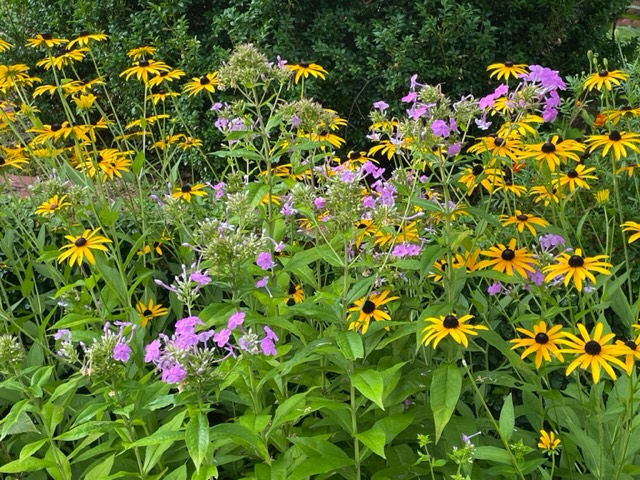
Wild phlox is one of the hardiest and adaptable of all southern native plants. In nature, colors vary from light pink to blue to deep purple.

The conversation this past week was all about the importance for plants to be able to adapt quickly and smoothly to harsh conditions caused by climate change. The consensus was that the best way for plants to adapt is to have a strong and diverse gene pool. Of course, this means trying to prevent or reduce inbreeding, a concept more easily understood with monkeys and lions (and kings and queens!) than with plants.

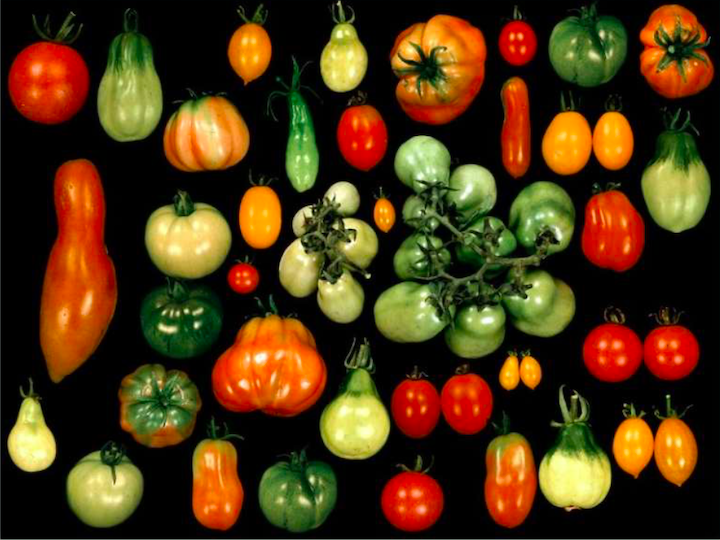
Wild tomatoes showed tremendous variety compared to today’s cultivars. This genetic diversity included characteristics allowing plants to withstand harsh environmental conditions and immunity to disease.

Everyone knows that if you’re breeding dogs or horses or cows that you don’t breed siblings. The farther from the family tree you can get, the better for creating a genetic mix that is strong and stable and produces individuals who don’t play banjoes (ha! a quick reference to the movie Deliverance.)

What’s a little more difficult to get your head around is that these same principles apply to plants as well. You can have a hundred endangered plants growing happily in a field but if they are all genetically identical, there will be no depth to the population, no hardy individuals who have just the right gene combination to withstand what may come.

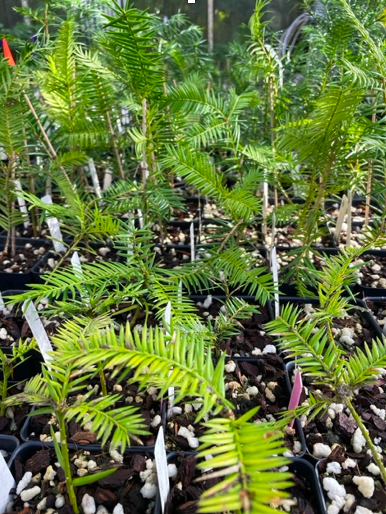
These Florida Torreya seedlings in the ABG greenhouse are all carefully labeled, tracking when the seeds were collected and where they came from. Record keeping is an essential part of the work.

And this is why scientists at the Atlanta Botanical Gardens and the State Botanical Gardens in Athens and a hundred other organizations are relentless in tracking the genetic flow of these endangered plants. When placed back into the wild, they need to be put into places where they will increase the genetic diversity to produce offspring that are hardy and adaptable.

In thinking about all this, it occurred to me that even though our own individual gene pool was set at conception, the idea of staying flexible and adapting to varying conditions is as important for us as it is for the plants. With a future that often looks bleak, I think that our best bet to stay off the endangered species list is to find the adaptability to keep our sense of humor and our optimism no matter what happens. These are skills and attributes that will allow us to thrive in a changing world.

Filling a niche

There’s an old gardening saying that states, “There’s a plant for every place and a place for every plant,” and for the most part, that’s true in nature too.

The southern United States boasts an incredible diversity of “places” that are perfect for a wide variety of plants. Over eons, our native plants have found just the right niches – places where all their environmental requirements are met and where competition is low enough to allow them to flourish.

The rock gnome lichen grows only on the steep cliffs of the Tugalo – Tallulah River basin. Photo credit, The New Georgia Encyclopedia.

Some of these plants are so adapted to a specific environment that any alteration to their habitat causes stress to the population. Think of it in houseplant terms. You are an avid grower of African violets. You’ve set up a place in your home that meets all their specifications. You provide the absolute perfect amount of light, you water from the bottom, feed them regularly, and keep them at an even temperature. You’re an amazing grower!

But what happens when a storm knocks out the electricity? Or you go visit your sister and forget to get a plant sitter? Your plants have become so accustomed to perfect conditions that any alteration – a change in light, moisture, or nutrients – is going to have an immediate and detrimental consequence.

Which is what’s happening to so many of our specialized and endangered native plants these days. Each habitat has developed in a unique way and the plants in it have evolved to thrive in those exact conditions.

A rockland hammock occurs at the tip of Florida is home to a staggering 150 different species, including the coin orchid below. Loss of this habitat would be devastating. Photo credit Florida Native Plant Society
Coin orchid is an epiphyte found on trees growing in Florida’s Rockland hammocks.

When those conditions change, the ability of these plants to thrive or even survive is compromised. What if your world is a tree in a Florida rockland hammock that is cut down to build a condo? What if your world is a puddle on a granite outcrop and someone throws an old tire into your puddle?

While it’s still true that there is a plant for every place, it’s no longer true that there is a place for every plant. Habitat degradation and habitat loss are two of the main threats to our vulnerable and endangered plants.

While we can’t provide for these wild plants as we would for African violets, we can work together to save their habitats and make sure that their place in the world is secure.

Fall leaves fall leaves fall

Last summer (when there were no leaves falling), in a fit of environmental enthusiasm, I fired the lawn service with their big, noisy gas guzzling leaf blowers and took over the job of caring for our yard myself. Jack, my ever supportive but sometimes skeptical husband, suggested that keeping leaves off the driveway and front yard may be a little challenging in the fall. He wondered (out loud) if I’d be able to do it.

The comment was slightly manipulative and completely effective. Since leaves began falling in earnest a few weeks ago, I have been slightly obsessed with keeping them off the driveway, just in case SOMEONE thought I couldn’t do it.

I have my trusty little battery operated leaf blower but even with this marvelous tool, I’m here to tell you that efficiently blowing leaves is harder than it looks. The first few times I think I managed to blow them from one side of the driveway to the other without ever really getting them into a pile.

But practice (lots of it) has improved my skills. My battery only lasts 20 – 30 minutes but this is generally enough time to blow off the driveway and make a dent in the moss “lawn” in the back.

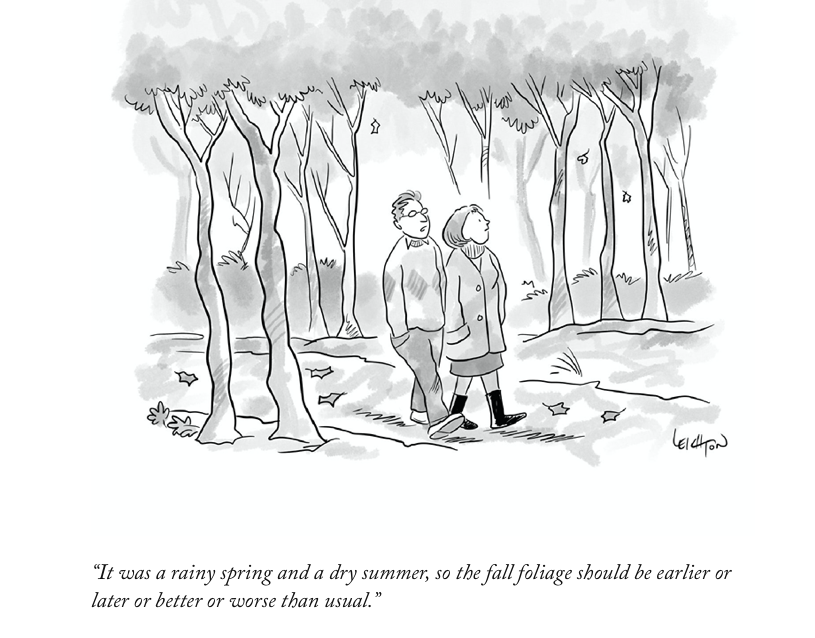
Credit The New Yorker Magazine

Once I have a nice pile gathered together, I get out my electric leaf mulcher. Since I only have a push mower, I have no other way to chop up the leaves to use as mulch and compost. But the mulcher is a great machine. It takes almost no time to pour a trash can of leaves through the mulcher to get a small basket full of cut leaves, particularly if there are no sticks amongst the leaves.

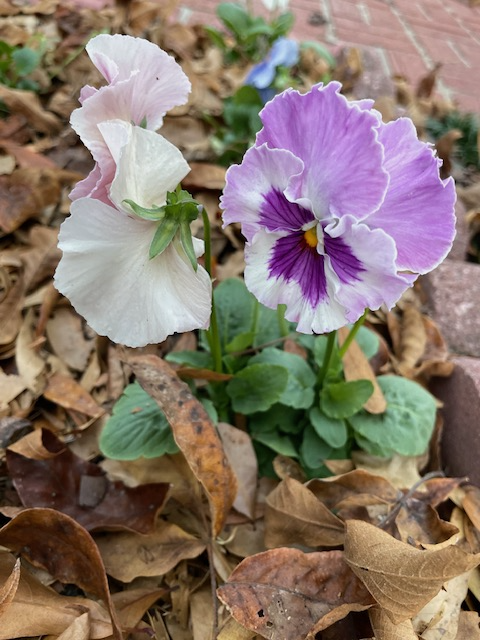
I used some of my newly mulched leaves to put around the pansies I just put out along the street front. Frankly, it’s hard to tell the difference between the oak leaves I just gathered up and the chopped up oak leaves that I just put back down in the same place. I have confidence, though, that the shredded leaves will decompose more quickly and serve to keep down the weeds and provide some protection from the cold, as any good mulch should do.

During my hours of blowing leaves, I have had ample opportunity to make some autumn observations. For example, the crepe myrtle trees were the first to lose their leaves, followed quickly by a large oak tree that has shown signs of stress in past years. The leaves on the water oaks in the back haven’t even begun to turn and fall, though the large sweet gum tree is almost bare limbed now.

There is a certain satisfaction in clearing a path clean enough to get cars in and out of the driveway and an even greater satisfaction in using every leaf that falls in our yard. They either go directly on the planting beds or are cut up for compost.

An unexpected benefit from all this is that I’ve made friends with the other lawn caretakers in the neighborhood. We compare notes and commiserate when leaves turn wet and are hard to get up. And, I have new found respect and appreciation for what they do and how hard they work though I really, really wish they would trade in their horrifically loud gas blowers for relatively quiet electric ones.

Fall is young yet and Jack may prove to be right but for now, I’m happy and energized caring for this piece of land I call home.

The Southern Live Oak

Last week our family was fortunate enough to spend three days on Georgia’s coastal island, Cumberland Island. Most of the island is designated as a National Seashore, meaning that it is a rare and beautiful coastal wilderness.

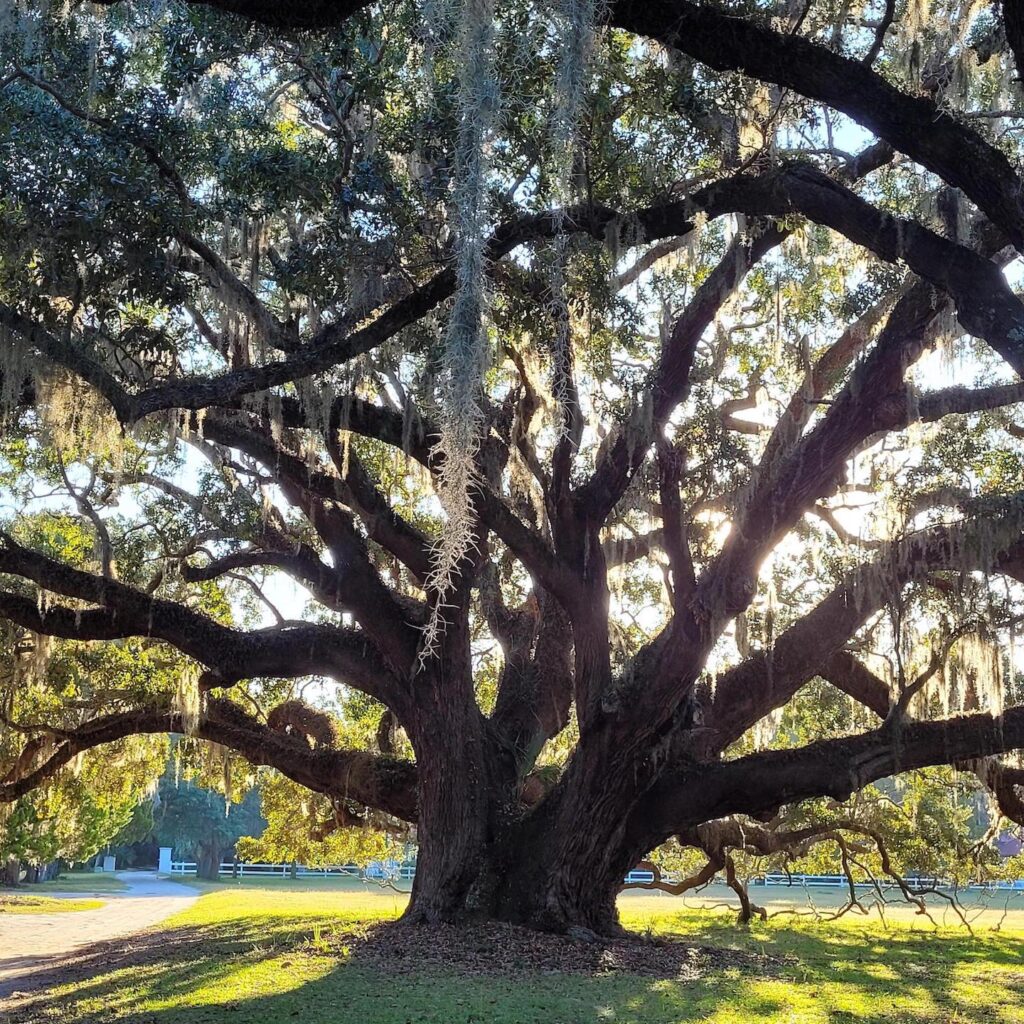
This wilderness area is dominated by one of the most beautiful and majestic of all trees, the Southern Live Oak, Quercus virginiana. With huge limbs dripping with Spanish moss, these trees are an iconic symbol of the South and is the state tree for Georgia.

Though it’s often described as evergreen, it is really. not. During a short span of a few weeks in spring, the live oak will lose leaves and almost immediately grow new ones. In autumn, it drops copious numbers of acorns with can germinate almost immediately.

The Southern Live Oak is a keystone species and is home, food or support for hundreds of mammal, bird, plant and insect species. Acorns feed northern bobwhites and Florida scrub jays, wild turkey, black bears, squirrels and deer. The leaves host any number of moth and butterfly species.

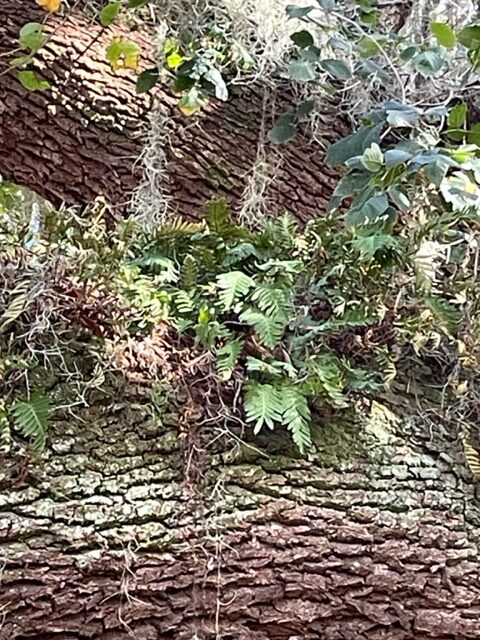
It seems that whole worlds grow on the limbs and in the treetop. In addition to the Spanish moss, resurrection fern, fig vine, lichen, epiphytes and dozens of other plants call the live oak “home.”

On the grounds of the inn where we stayed, one tree, in particular, captured our attention. With multiple trunks coming from a single root system, the tree was huge and was estimated to be over 350 years old. As impressive as it is, though, it cannot compare in size or age to other live oaks growing in the South.

This tree, on the grounds of the Greyfield Inn measures 12 feet in diameter. Limbs droop toward the ground and often root there.

The Seven Sisters Live Oak Tree in Mandeville, LA is estimated to be between 500 – 1000 years old. Measurements taken in 2016 found a circumference of 39.6 feet and a height of 57 feet.

The Southern Live Oak is a beautiful and awe inspiring example of the importance of a single species. To lose even a single live oak tree would impact hundreds of different organisms and would greatly diminish the beauty of our world.

Thrilling Trilliums

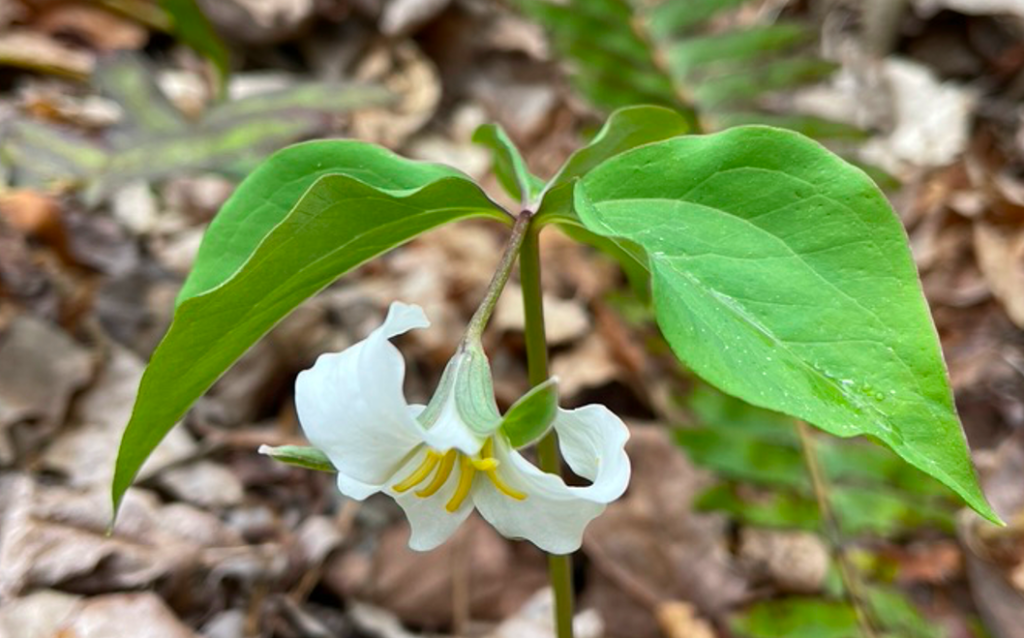
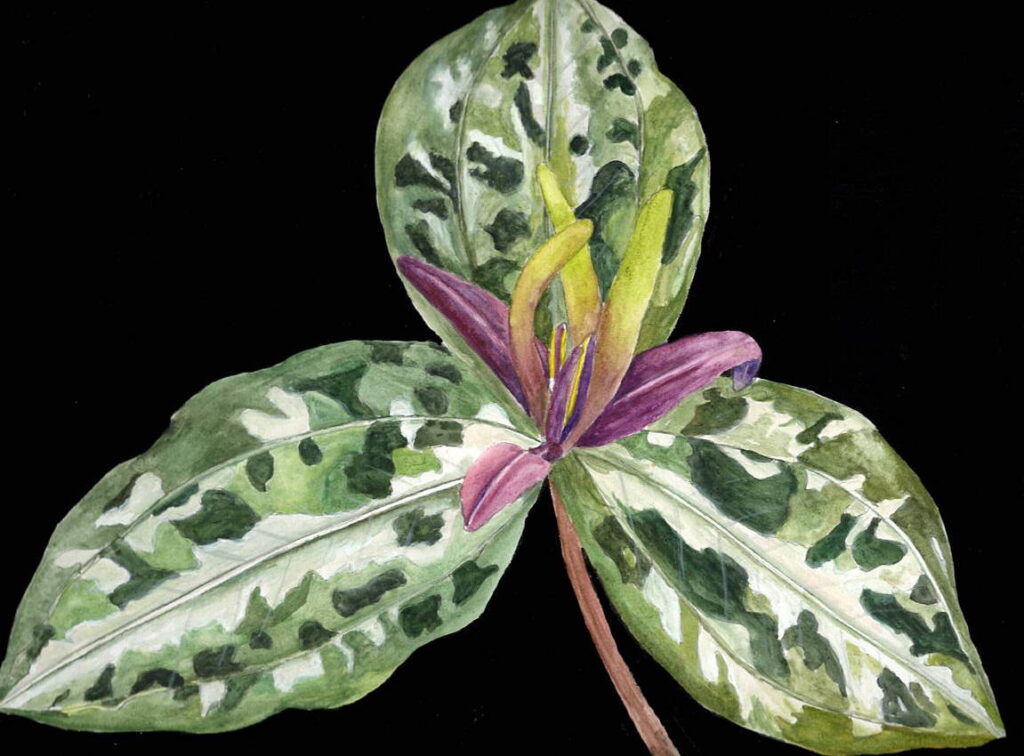
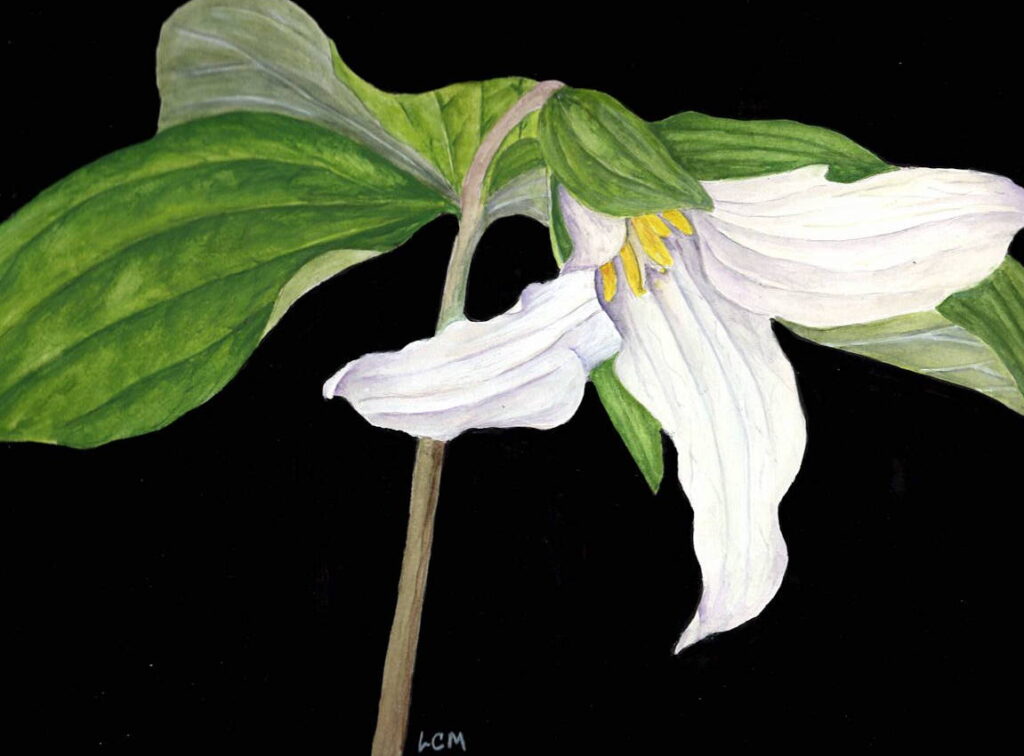
Trilliums, in all their three part harmonies, are some of our most beautiful wildflowers. Worldwide there are 43 different species, 38 of which are native to the United States, primarily in the Southeast. Georgia alone boasts 20 native trillium species, two of which are on the federal endangered species list.

Even though a “rose is a rose is a rose,” the same is not true of trilliums. Though they all have three petals, three sepals and three leaf-like bracts, there is a wealth of variation in color and flower form. They are broadly grouped into two different types: pedicidellate, meaning the flower is attached to a short stem called a pedicel (such as the nodding white trillium above) or sessile, meaning the flower seems to grow directly from the bracts (such as the relict trillium below).

Trillium reliquum, a federally endangered species, grows in only a few places in Georgia, South Carolina and Alabama. It is part of a mature hardwood forest ecosystem. Unfortunately, much of its native range has now been taken over by timber companies for growing pines for pulpwood.

Trillium persistens is a gorgeous white blooming plant native to a tiny slice of rugged land that spans the Georgia, South Carolina border in the Tallulah -Tugaloo River drainage. This species has probably never been abundant so losing even a small percentage of the population has devastating effects. The primary threat to the species is an altered habitat due to the continued demise of the hemlock ecosystem.

Our very common and charming little toad shade trillium, T. cuneatum, grows abundantly throughout the south and is a great trillium to include in a garden. It has a musky scent that attracts pollinators such as beetles. As charming as it is, the toad trillium wouldn’t win any beauty contests when lined up with such stunners as the snow or painted trilliums.

Seeing a wild hillside covered with trilliums in bloom is thrilling. It will stop you in your tracks and offer the gift of awe and wonder. We should be full of gratitude for such a gift of nature and should work unceasingly to protect the threatened and vulnerable of these species.

To learn more about Georgia’s endangered trilliums and other species, go to my exhibit, Imperiled Beauty at the gallery of the Atlanta Botanical Gardens. The exhibit will be up until December 3, 2023.