Down the primrose path

My mother had a casual but beautiful garden and one of her favorite plants was the little English cowslip, Primula veris. This is NOT to be confused with the candy-colored primroses that are ubiquitous in the garden stores these days. Sporting neon colors of pink, blue, red and who knows what else, these short lived bits of plugged in color would have looked ridiculous in my Mom’s naturalized, spring time garden.
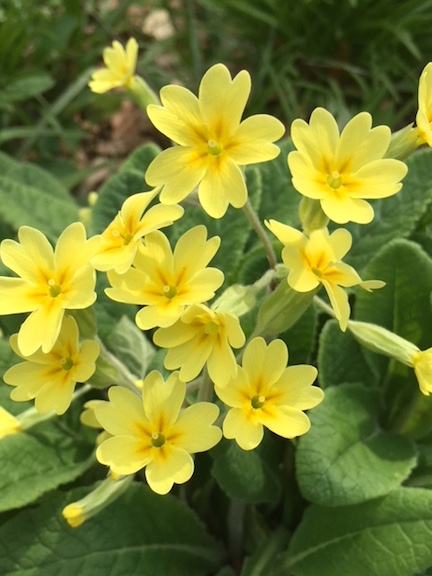
The lovely light lemon colored blossoms of cowslip are one of the first garden flowers to appear in spring. This plant is native to fields and meadows throughout Europe and Western Asia and is a common hedgerow plant in England. It has always been appreciated for its early bloom. Both the genus name, Primula (meaning “firstling of spring” and the species name, veris (meaning spring bloom) refer to this early appearance on the garden stage.
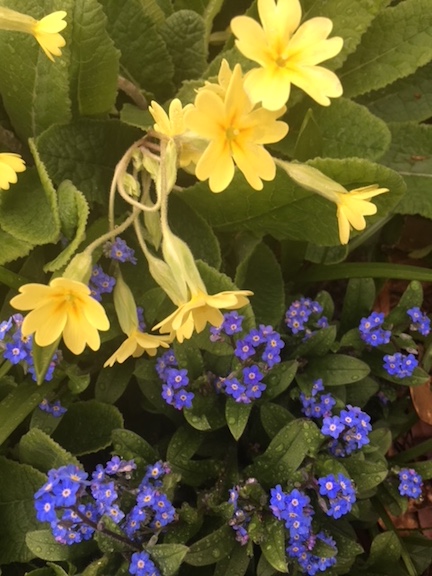
The Spanish used the raw leaves as salad greens. The English used the blossoms to flavor wine and vinegar. The Celtic Druids were said to have put the blossoms in potions to increase the effectiveness of other herbs.

The plant is not too commonly found in nurseries and garden centers here but if you do see it, you should snap it up. It is a thoroughly satisfactory plant. After it blooms, the leaves continue to grow for a few months then begin to fade away in the heat of summer. Seeds can be harvested and replanted in late summer. Perhaps a better way of propagating this is by dividing established plants.
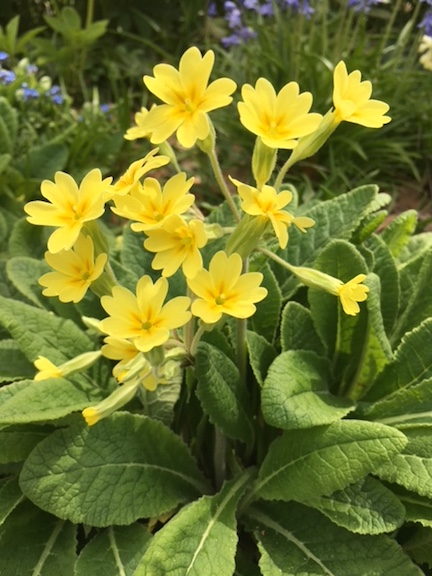
My mother used this low growing clump forming plant to line the pathway to her next door neighbor’s house. It was a perfect choice for this as the plant spreads slowly and retains it’s basic shape for years, but more than that, I just think that Mom wanted to walk down a primrose path.
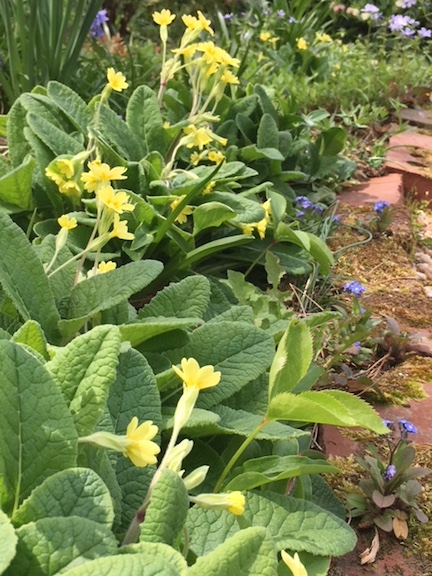
The cowslips in my garden are divisions from my mothers. Partly in tribute to her and partly because I like walking down a primrose path myself, I have lined the walkway to my art studio with this little plant – and think of Mom every time I see these harbingers of spring.
Lunch from the back yard

Well, “lunch” is quite an exaggeration. It was more like a morsel. A tiny morsel that my grandchildren, Rivers and Ellie and I shared. It wasn’t the nutritious value I was after but the experience.

When Rivers and Ellie and I had a discussion about how the American Indians used to eat off the land, gathering herbs and killing game, Rivers, with all the uninformed confidence of an 11 year old said, “I could do that. Easy.”

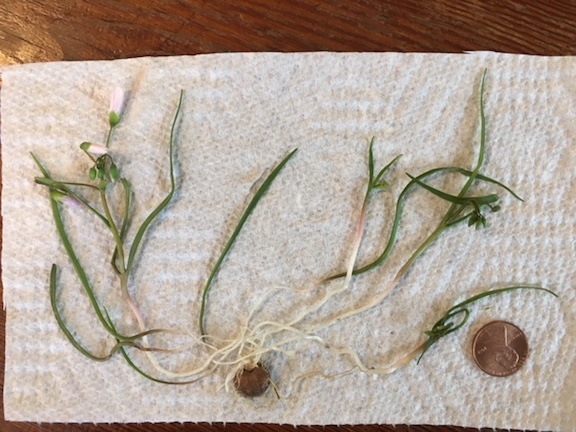
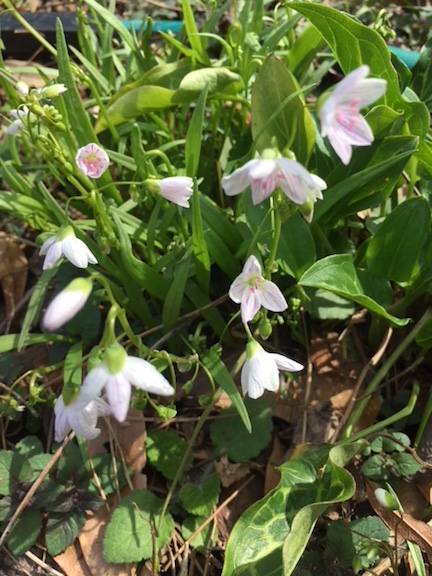
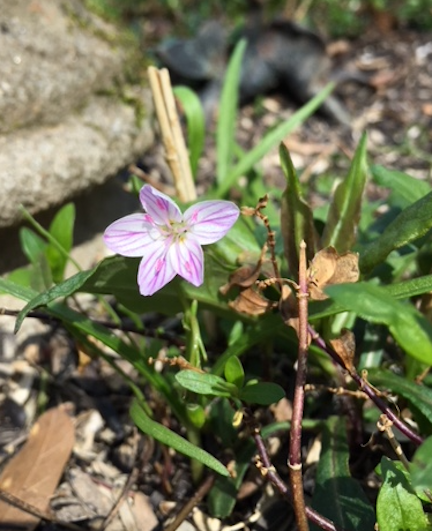
With raised eyebrows I suggested that we try it out, just for a snack and the three of us went into the backyard. I’m not into killing game of any kind but I AM into gathering plants. I don’t have any vegetables planted yet so we were in for a (relatively) authentic experience. What I do have is an impressive display of a tiny little plant called Spring Beauty. If you’ve ever gone to the Appalachian Mountains in early to mid-spring, you may have seen what looks like acres and acres of this plant. It is tiny, growing only 2 1/2 – 3 inches tall on slender grasslike stalks but what it lacks in size, it more that makes up for in quantity.

The blossom is white with intricately detailed dark pink veins or sometimes they are all pink. I have written about Spring Beauty (Claytonia virginica) on numerous occasions so I knew that they come from an edible tuber. What I did not know, because I have never actually dug one up before, is that these tubers are also very small, about the size of a chickpea. Also, what I did not know is that one tuber sends out numerous flower stems laterally. This means that the (tiny) tuber is not directly underneath the flowering stem but can be as much as 2 – 3 inches away, obviously underground.

It took us a little while to figure out how to find the tubers but when we had a few gathered we took them inside to wash them off and try them out. In my book, Wildflower Folklore, I wrote that the tubers, “raw, have the sharp taste of radishes and when baked, have the taste and texture of baked potatoes.” So we bit into our harvest and stared at each other. After swallowing Ellie said, “It doesn’t taste like anything!” and we agreed. Then we decided to bake them and, probably not very authentically, stuck the remainders in the microwave. We added a little butter and tried again. I can’t say that it tasted much like anything except butter, but at least it was softer.

At this point I’m waiting for Rivers to ‘fess up and tell me how incredibly difficult it would be to dig up enough Spring Beauty tubers for a meal but instead he’s eyeing the banana bread muffins on the counter and I could feel “lesson time” slipping away.

Will they remember the afternoon at my house when we dug up tubers, trying to feel what it would be like to live off the land? I hope so, but you never can tell. If you want to try it, come on over! And if Spring Beauty tubers aren’t to your liking, maybe there will be some banana bread muffins left on the counter.

Happy Spring!!!

Bloodroot is blooming!

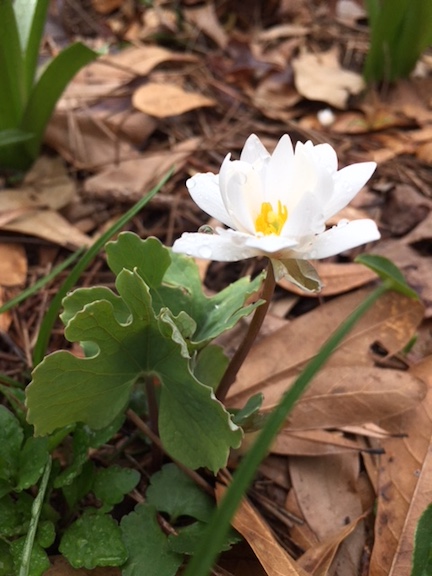
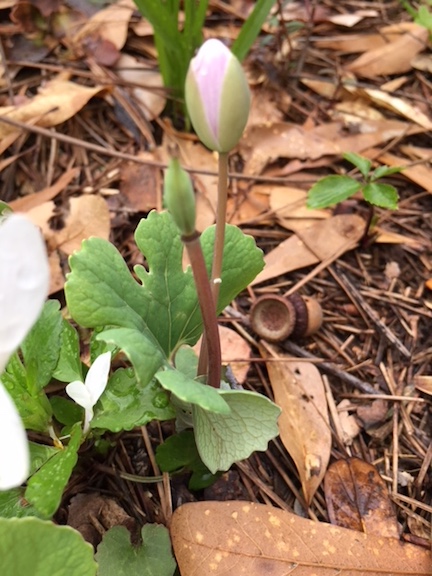
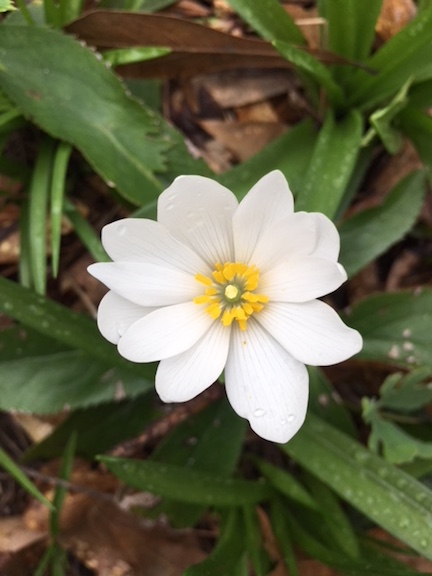
I was away last week, spending spring break with my children and their children and when I returned home, spring had broken out all over my garden. Although I am happy to see so many of my early spring favorites popping into bloom, it is the bloodroot with it’s stark white petals and golden centers that I find the most thrilling.
In a way, I feel like I’m cheating to enjoy seeing the bloodroot right outside the door. I should have had to hike up and down the mountainsides, crawling on my knees to see this, the first of the wild spring treasures to appear. Instead, I can easily see it from the comfort of my kitchen chair.

Undoubtedly, the American Indians who lived in our region appreciated bloodroot for its beauty, but it was also an important part of their medicine – and war! chests. Break open the root and stem of this wildflower and you’ll immediately see how it got its name as blood red sap begins to drip on your fingers. Cherokees and other tribes mixed this sap with either black walnut oil or bear grease and used it as war paint and to dye baskets and blankets.

Algonquin and Iroquois Indians made bloodroot into teas and tinctures to treat a variety of ailments, including colds and congestion, rheumatism and fevers. The potential of this folk medicine created interest in western medicine and the plant was tested and found to contain useful medicinal elements. Although extracts from bloodroot were at one time included in some toothpastes and mouthwashes, this practice was discontinued when dangerous side effects developed.

Like many medicines, bloodroot is potentially toxic and dangerous. So, how did the American Indians apparently use it safely? While western medicine focused on identifying individual bioactive compounds, traditional medicine included the entire plant, resulting in a mixture of chemicals that may be more effective and less harmful than isolated elements.

Much research is yet needed to determine the safety and effectiveness of the plant as medicine. In the meantime, just rejoice in its beauty and sing Hallelujah that spring is around the corner.

“Saucy” magnolias

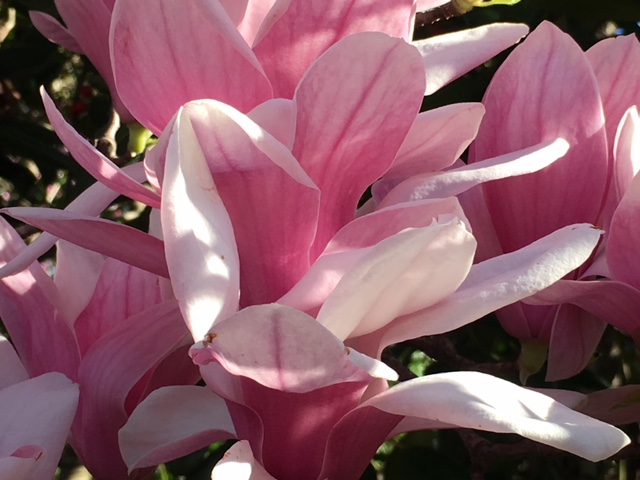
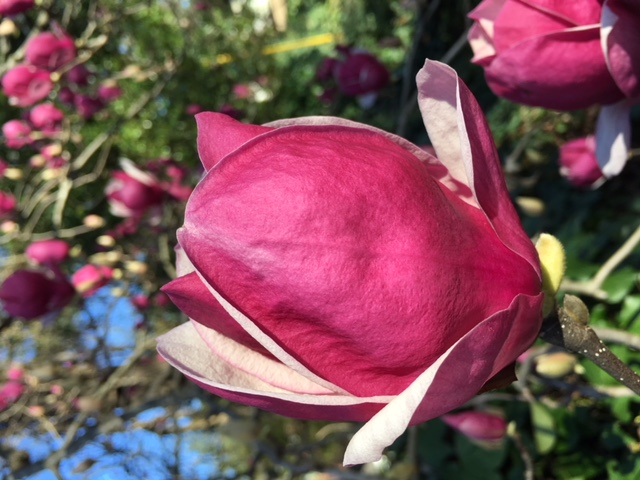
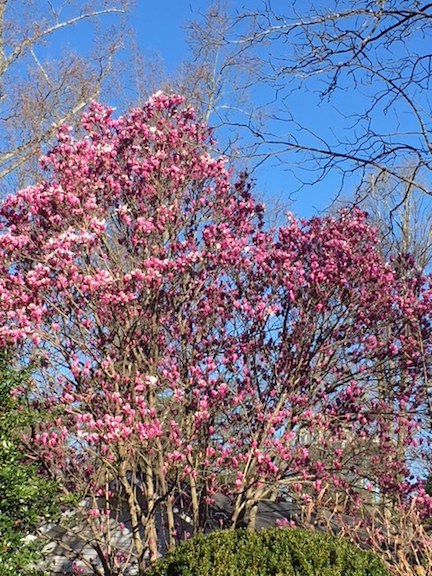
It is about this time of year that I begin to hope and pray that we don’t have another hard frost. With just a few warm, sunny days this week, my garden is popping out all over. Forget me nots, English primrose, violets, spring beauty are all putting forth a few brave blooms. But it is the saucy, bold and stunningly beautiful saucer magnolia that is in full and vibrant bloom right now – and the one that is most susceptible to losing all that beauty if we have a late frost.

Saucer magnolia is a hybrid between Japanese ( or Mulan) magnolia and a white flowering magnolia native to central and eastern China. This species was grown in Chinese Buddhist temples as long ago as 600 AD, not for its great beauty but for the buds which were used in medicine and as flavoring for rice. The flowers were appreciated as well and were considered a symbol of purity. Even today this tree is the floral symbol for Shanghai.

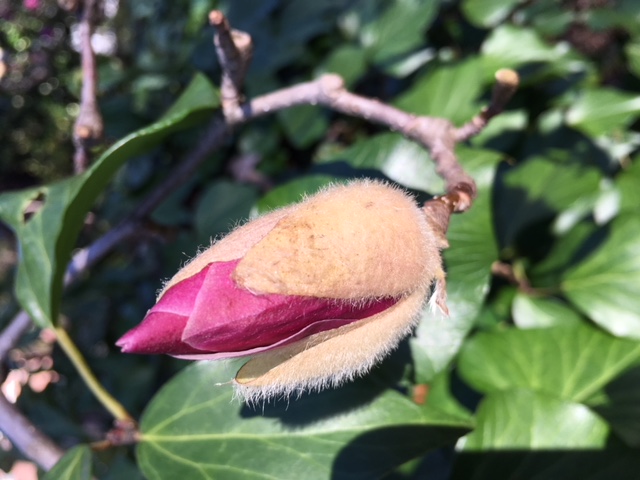
The blossoms of saucer magnolia are varying shades of white, light pink, magenta and purple-pink. Surrounded by thick, fuzzy sepals, the buds are protected from the cold – until they burst forth into bloom. The bark is a smooth gray and the leaves, which only appear after the tree has fully bloomed are leathery and bright green. Mature trees grow to be about 25 feet tall.

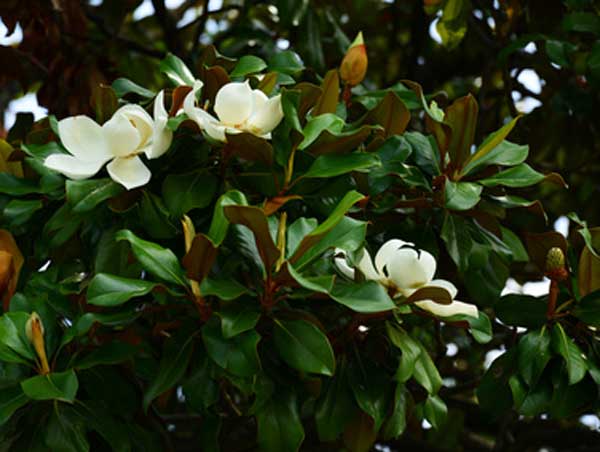
Our own great southern magnolia is huge in comparison, growing 80 feet tall with a spread of as much as 40 feet across. The creamy white blossoms usually have six petals and are highly fragrant. Another native, the cucumber magnolia, is found in eastern forests and was at one time substituted for quinine to treat malaria or typhoid.

Southern magnolia

I love all the magnolias but have a special fondness for the “saucy” saucer magnolia for braving the uncertain weather of early spring to bring us such a magnificent show.

Coffee –

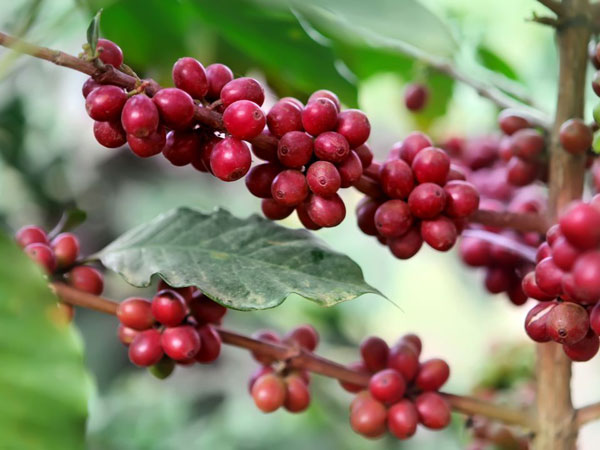
Isn’t is grand how many of the wonderful things in life come from plants? Tea, wine, beer, and of course, coffee! Coffee has been known and appreciated for many, many centuries. At first the rather bitter fruit was mixed with animal fat and eaten as the equivalent to today’s “energy bar.” It wasn’t until the 13th century that beans were extracted from the fruit and roasted to provide a beverage similar to what we enjoy today.

Coffee is such a part of our daily lives it’s difficult to imagine life without it. In the United States we consume a tremendous amount of coffee, but maybe not as much as the French writer, Voltaire, who was said to have drunk 40 – 50 cups a day! But Food and Wine magazine reports that the average American spends $1110.00 on coffee every year.

The money we plunk down for a cup of coffee is really the easy part. The more difficult part is in determining the cost to the environment.

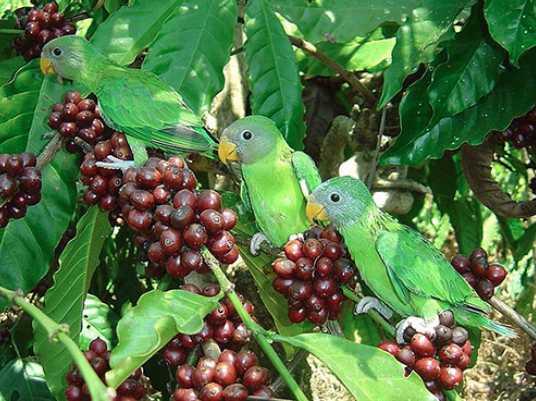
The impact that coffee producers have on the environment depends entirely on how it is grown. Coffee is traditionally a plant that grows under the canopy of other trees so if it is cultivated in the traditional way, coffee has relatively little impact on the environment. Trouble came in the 1970’s when sun tolerant coffee plants were introduced. Considerably more productive than shade grown plants, these were immediately welcomed by much of the coffee growing industry. And the problem? To grow these sun loving plants, the rain forest has to be cut. To date, it is estimated that in Central America alone, over 2 1/2 million acres have been cleared to plant sun loving coffee trees.

The really good news is that there are still producers who rely on environmentally friendly shade grown trees for their beans. Of course, you have to be careful when buying “shade grown” because the amount of shade can vary tremendously from 10% to 100% shade.

Fortunately, there are a couple of watchdog organizations who make it easy to know who really is producing coffee in a sustainable and environmentally friendly way. The first is The Rain Forest Alliance which says this of their farms:
On Rainforest Alliance Certified™ farms, coffee grows in harmony with nature: soils are healthy, waterways are protected, trash is reduced or recycled, wildlife thrives and migratory bird habitat flourishes.

The second certification comes from a Smithsonian initiative and is called “Bird Friendly”. They explain it this way: Bird Friendly coffee supports fair and stable prices for coffee producers, healthy environments for communities, greater biodiversity and protection for bird habitats, and equal access to markets for Bird Friendly coffee producers.

Of course certified shade grown coffee is more expensive than most others but there comes a time when we must realize that our earth and all her myriad living organisms are priceless. So, help invest in our future, next time order a cup of “shade grown” – and don’t forget your travel mug!!

A host of golden daffodils

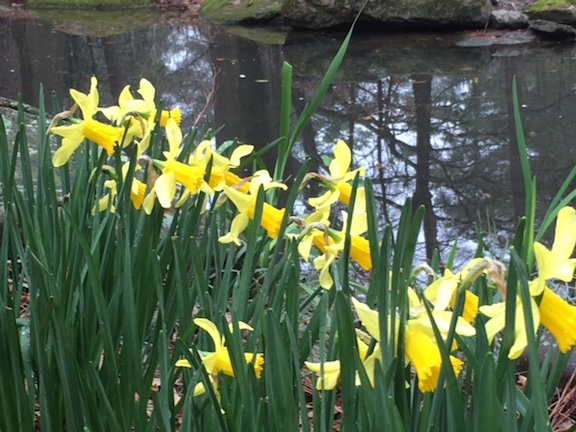
I was walking beside the lake close to our house yesterday when I came on a beautiful planting of yellow daffodils and – of course! William Wordsworth’s famous poem came to mind. when he all at once saw ….

“A host of golden daffodils, Beside the lake, beneath the trees, Fluttering and dancing in the breeze.”

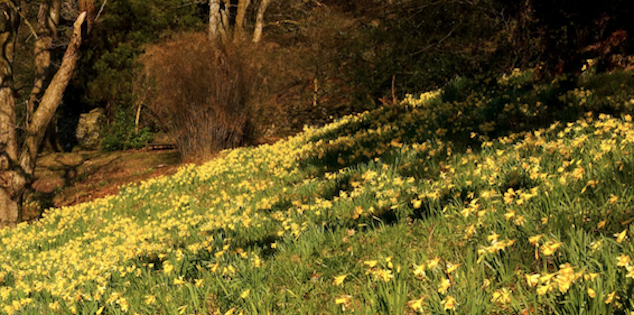
I was delighted, not only to find my own “hosts’ but to find the poem so aptly describing the scene in front of me. And then I read the next few lines……..”10,000 I saw at a glance, tossing their heads in sprightly dance.”

Ten thousand!!!! I couldn’t imagine wild daffodils stretching out before me as they must have in mid – nineteenth century Lakes District, England when Wordsworth wrote the poem. It must have been a magnificent sight.

I was curious if Wordsworth’s daffodils were still blooming in England and the answer is yes! and probably because of Wordsworth. His poem is so well known that daffodil gardens and parks are common in the District and tourists flock there between the end of February and the end of April, when daffodils blooms most profusely.

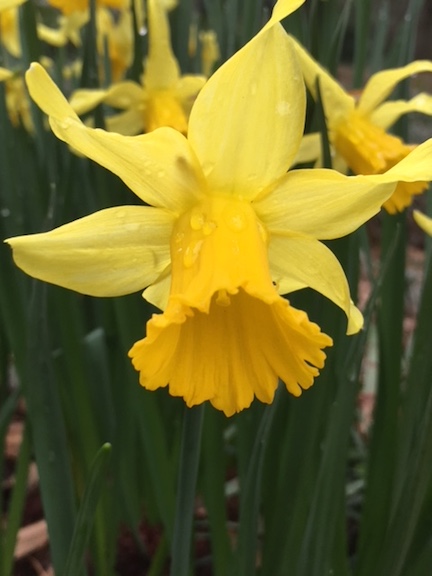
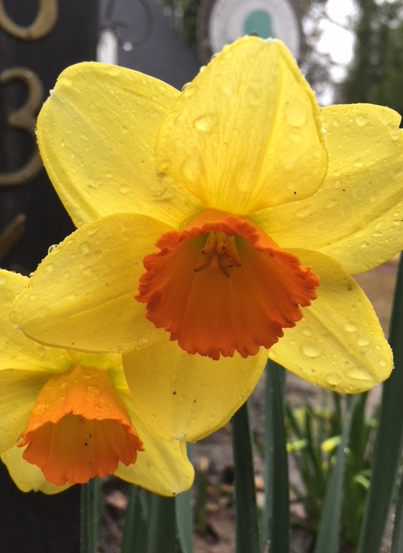
If you’re a little confused about the difference between daffodils, jonquils, you’re not alone. Technically, they are all in the “Narcissus” genus. Daffodil is a common name for everything in the genus and Jonquils only refer to Narcissus jonquilla – but the name is misused so often it’s become (almost) acceptable for all kinds of narcissus.

Greek mythology tells us how narcissus plants came to be: Echo was a mountain nymph who fell in love with a beautiful young man, Narcissus. He was a vain youth who cared for nothing except his own beauty and spent all his time looking at his reflection in a pool of water. He spurned Echo’s love until she finally faded away, leaving another but her voice. The gods, angry with Narcissus because of his vanity, changed him into a flower who was destined always to sit by a pool, nodding at his own reflection.

Although I love Wordsworth’s poem, it is not my favorite quote about Narcissus. That belongs to Mohammed, who is said to have written:

“Let him who hath two loaves sell one, and buy the flower of narcissus: for bread is but food for the body, whereas Narcissus is food for the soul.”

Sunshine! (or not)

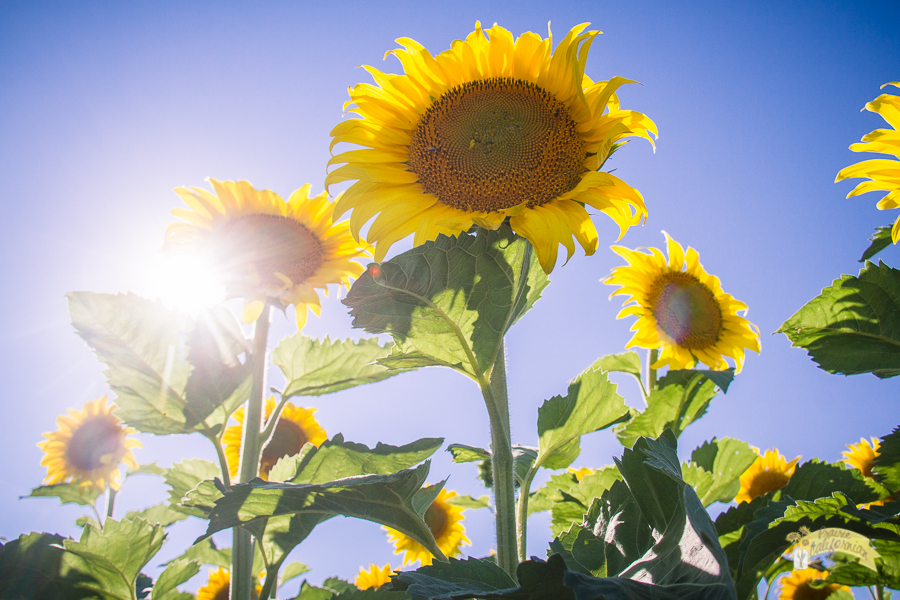
Sunflowers will track the sun throughout the day, turning to catch the brightest rays.

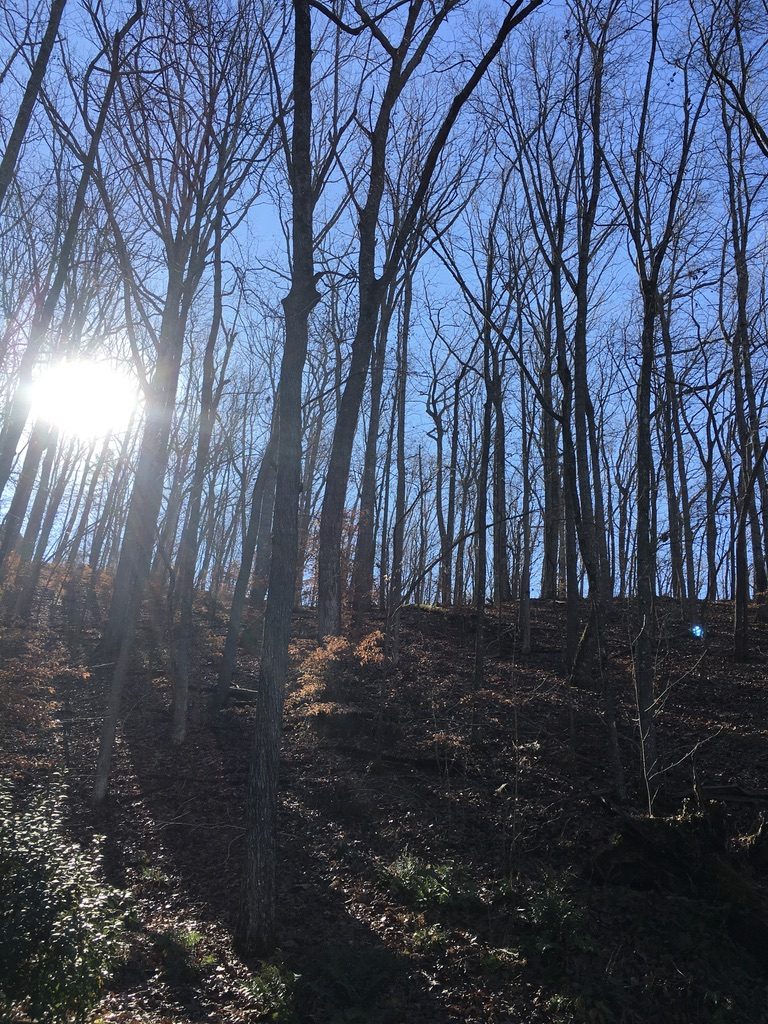
My raincoat is wearing out. I have blisters on my fingers from holding my umbrella. Even my elbows are getting moldy. It has rained. And rained. And rained. It’s easy to see why the ancient people worshipped the sun. On those few occasions during the last several months, when the skies above Atlanta have been blue and free of clouds I have been outside, face tilted toward the sun in worship.

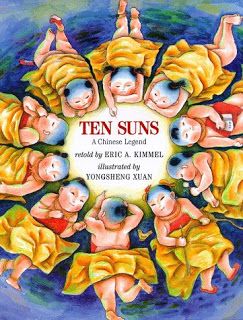
The Legend of the Ten Suns is a book about the favorite myth.

Let me hasten to add that I am not complaining. Really. I too well remember all those months of drought when I would have given anything for a good down pour. All I’m asking is for a little balance. Which is why the ancients had both sun gods and rain gods.

My favorite solar myth comes from China where, according to the story, there were originally 10 suns who would take turns coming out in the sky. But, these young boy suns loved to play with one another and one day they decided to all come out at once. Immediately things on earth began to burn up until the hero, Hou Yi shot down 9 of the suns with his bow and arrow, leaving only the one sun left. I sometimes wonder if this last sun might be so lonely he forgets to come out to play.

Plants (and people) need the sun. One of the first questions gardeners ask about putting in a new plant is, “how much sunlight does it need?” There are plants suited to every condition on earth and matching the right plant to the right spot is one of the golden rules of gardening. Generally plant labels provide information about the amount of sunlight needed: full sun (6 or more hours / day) part sun / shade (at least 3 – 6 hours of sunlight) or full shade (3 or fewer hours of sunlight ). Providing the right amount of sunlight is critical – too much sun and a plant may stress and burn, too little and the plant will become leggy and weak and refuse to bloom.

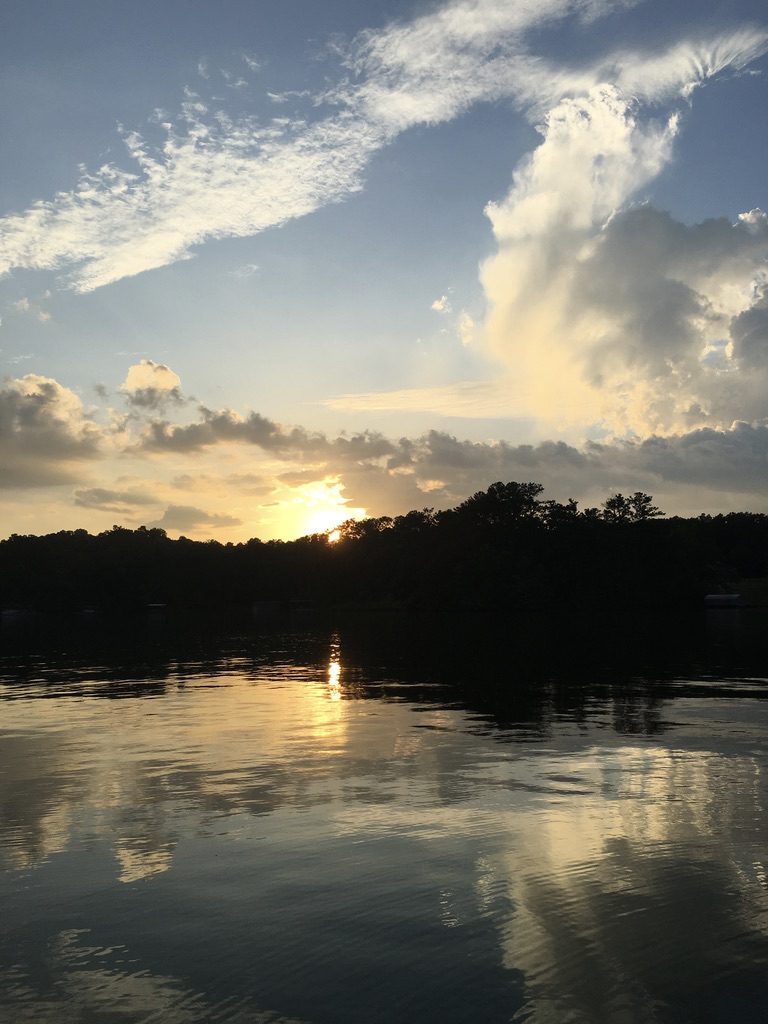
Autumn sunset on Lake Lanier

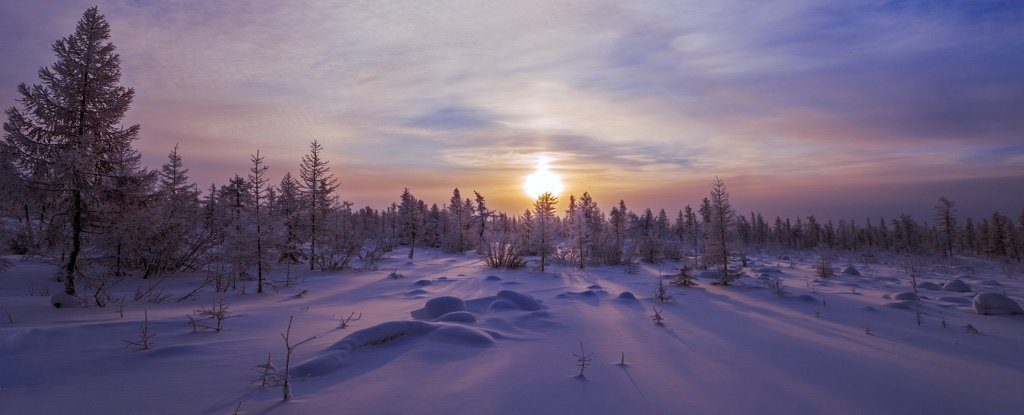
Though I may change my mind in the heat of mid-summer, right now I’d put myself in the “needs full sun” category. The last place on earth I would want to live is Utqiagvik, Alaska, the most northern town in the United States. Above the Arctic Circle, the sun sets on November 19th and remains below the horizon for 66 days. The average temperature in January is -14.2 degrees F. AND, it’s one of the cloudiest places on earth. Nope, even with the rain, give me Atlanta GA !

The last sunset before the sun disappears for over 2 months in Utqiagvik, Alaska.

Glorious wheat!

My eight year old granddaughter was full of excitement the other day because she had made bread (from scratch) at school that day. Yay and blessings for teachers who take time to do the important things in life, like teach children to make bread! I asked Ellie what kind of bread they had made and she said, “Wheat. But it was white.”

Wheat, that miracle plant that has changed the world, has been cultivated for thousands of years.

I understand her confusion. We so often use the word “wheat” when we mean whole wheat – or brown vs. white bread. But of course (almost) all bread is made from flour, which is made from wheat and how lucky we are that this miraculous plant is part of our world.

Wild wheat originated in the “Fertile Crescent” (the area of present day Syria and Turkey). It has been cultivated since Paleolithic times and has had a part of the history of mankind since its beginning. Today there are many different kinds of wheat, including winter, spring, red, hard, soft and white.

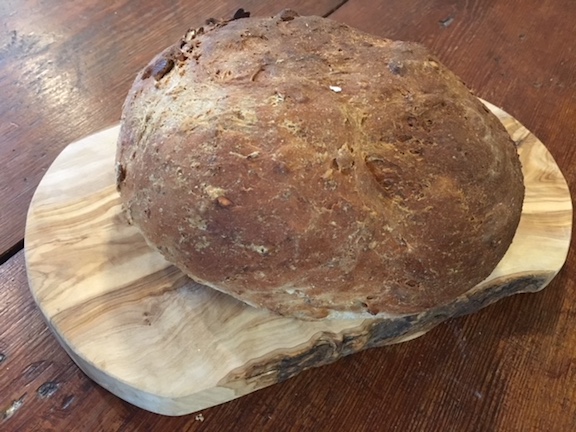
What could be better than homemade whole wheat bread?

The short solution to Ellie’s confusion is this: Whole wheat flour is a product that uses the entire seed of the wheat plant – the bran (outside covering), germ (the part that sprouts to make a new plant) and the endosperm (the largest part of the seed.) The result is flour that is brown and makes a denser bread, more nutritious bread.

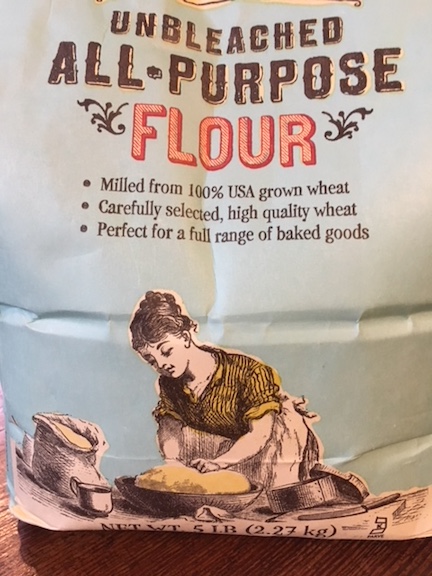
White flour is made from only the endosperm and has virtually no nutritive value. Many manufacturers use chemicals to bleach the flour so that it is uniformly white, making white flour even less nutritious. A slightly better alternative is unbleached white flour.

There are many, many other different kinds of flours, including durum which is a hard wheat high in protein and semolina, a kind of durum used in making pasta.

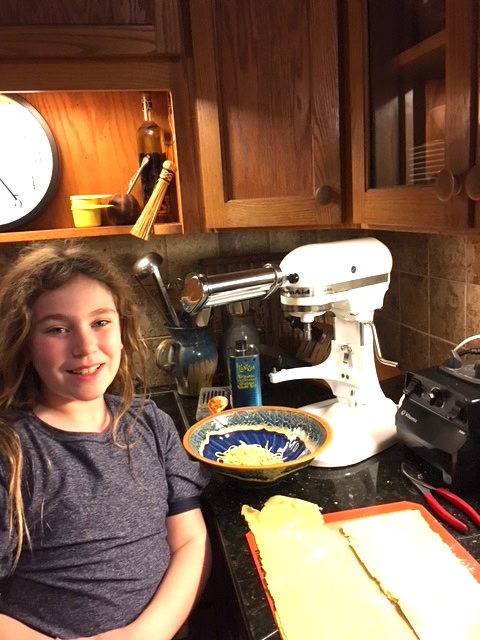
By now Ellie has completely lost interest in my explanations and is ready to do something. So we decided to use our (my) newfound knowledge of wheat and make some pasta!

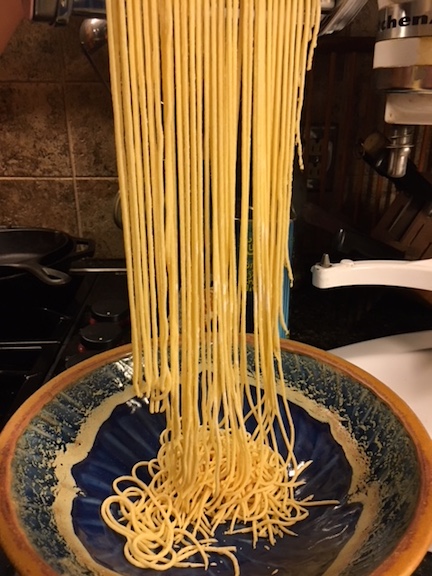
We combined semolina, eggs, water, baking powder and salt to make the dough and then the fun began! Making the world’s longest, most delicious spaghetti noodles. Making it was almost as fun as eating it.

Try it! It’s not only fun to make your own pasta, it’s also absolutely delicious. It helps to have a pasta maker on a stand mixer but you can roll and cut it without it. I’ve included the recipe below. Have fun!

Basic Egg Noodle Pasta

4 large eggs

2 1/2 cups semolina

1 cup unbleached all purpose flour

3 tablespoons water

1 teaspoon salt

Break eggs into a measuring cup. Place flour and salt into large bowl and gradually add eggs. Add water until the dough all sticks together, then knead for two minutes either by hand or in a mixer. Let the dough rest for 20 minutes then divide into four balls. Attach the pasta roller to the mixer and press through the widest setting (or roll out as flat as possible by hand). Send it through the roller several times, getting progressively thinner. Take off the roller and put the noodle cutter on the machine and feed the thin sheets through one at a time (or cut long, thing noodles by hand). Make them as long or short as possible but we found that the longer the noodle, the more fun it was. Just don’t try to slurp a 36 inch noodle, you’ll turn your cheeks inside out!

Desert Solitaire

“Wilderness. The word itself is music.” Edward Abbey

I have never spent much time in the desert. Having been born and raised in the South, my usual wilderness experience has been in the southern Appalachians where I walk on a thick, soft spongy carpet of thousand year old leaves and the trees above me offer both shade and moisture.

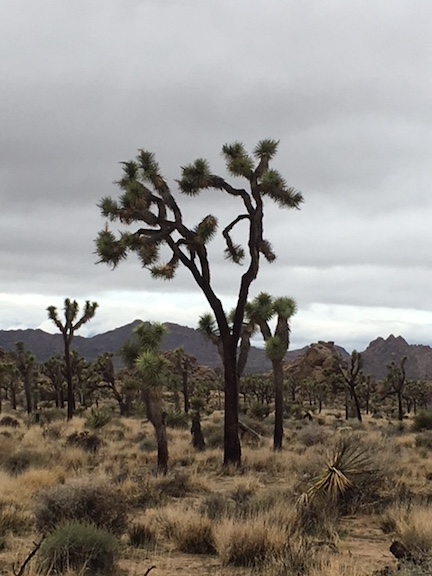
So, when Jack and I visited Joshua Tree National Park last week and spent some time in the desert, I was in awe of the sparse beauty that surrounded us. Certainly, the beauty of the desert has been written about extensively, most famously by Edward Abbey in his incomparable “Desert Solitaire“.

Following Mr. Abbey’s suggestion when he wrote, ” A man on foot, on horseback or on a bicycle will see more, feel more, enjoy more in one mile than the motorized tourists can in a hundred miles.”  Jack and I left our car in the parking lot and set off on foot to explore a bit of the desert.

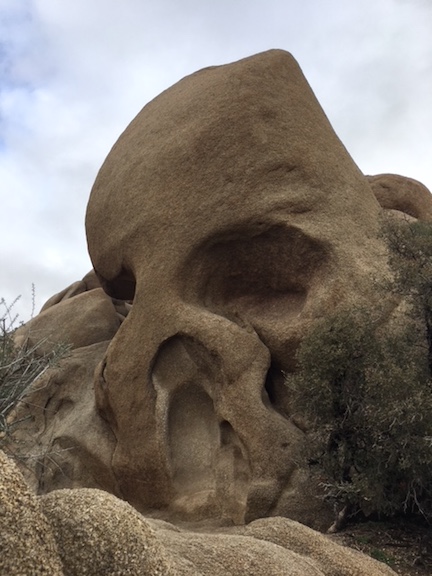
It was an unusual time to be there as it was raining. Unfortunately, we were too early in the season to see the wildflowers which are famous for exploding into bloom in the rain. What we did see were astonishingly beautiful and unusual rock formations,

Edward Abbey wrote of the rocks, “Men come and go, cities rise and fall, whole civilizations appear and disappear-the earth remains, slightly modified. The earth remains, and the heartbreaking beauty where there are no hearts to break….I sometimes choose to think, no doubt perversely, that man is a dream, thought an illusion, and only rock is real.” 

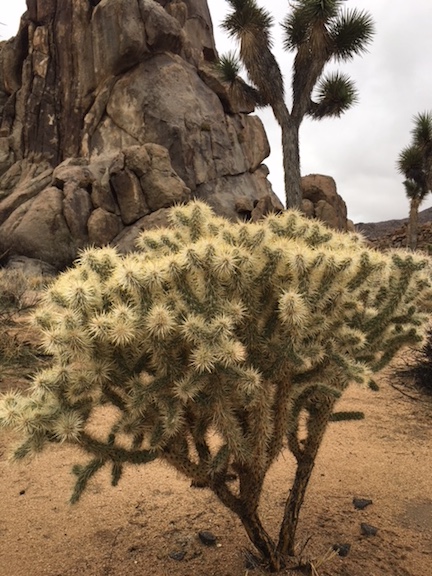
And, of course, we saw cactus, that amazing family of plants that can withstand some of the harshest conditions on earth with some of the most amazing survival techniques known in the natural world.

The Park’s namesake, the Joshua Tree, is not a cactus but a Yucca. Found almost exclusively in the Mojave Desert, the tree has roots that form a dense, shallow network that is impressively efficient in trapping any surface moisture. It is often called the “tree of life” since it is important for food and shelter for so many desert creatures.

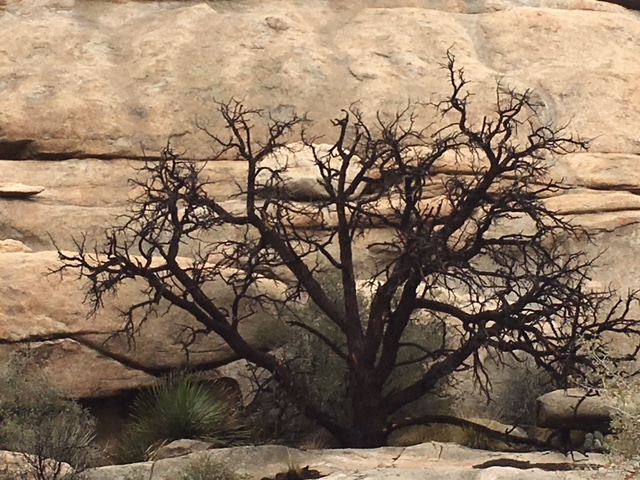
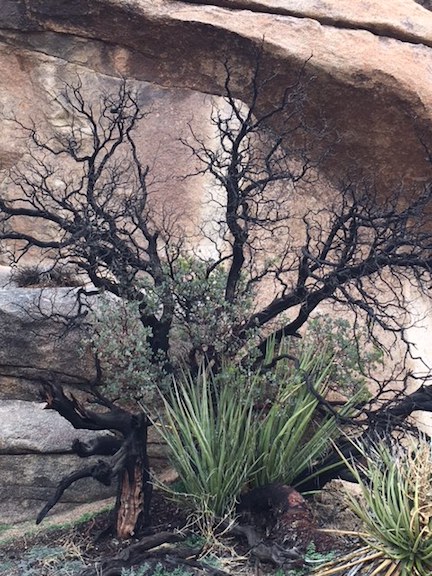
The leafless beauty of Mountain mahogany and scrub oak silhouettes provided some of the most dramatic specimens in the Park. The black, intricate branches against the pale red and tan rocks were absolutely stunning.

The desert is rarely thought of as a place of joy. Usually when I think of desert life, I think of species fighting for survival, of animals desperate for water, of plants thin and weak between showers. But, Abbey found great joy in the desert and this passage is one to remember for all kinds of situations:

Has joy any survival value in the operations of evolution? I suspect that it does; I suspect that the morose and fearful are doomed to quick extinction. Where there is no joy there can be no courage; and without courage all other virtues are useless.” 

As always, I have found lessons in the wild. In the desert I learned to find beauty in bare branches and spiney leaves and I was reminded of how essential wilderness is to our survival. Even if we can’t escape to the desert – or the mountains or the wetlands or any other remote place – these wilderness areas are critical to our well being. As Abbey says, “We need the possibility of escape as surely as we need hope.” 

The desert seems a funny place to find hope but there it is, in every sapling that begins so grow in a crack in the rock, in every cactus that survives extreme temperatures and little water, in every Joshua tree that escaped the perverse vandalism of thoughtless individuals. There it is in a desert that offers beauty, perseverance, and joy.


Oranges may become the new black

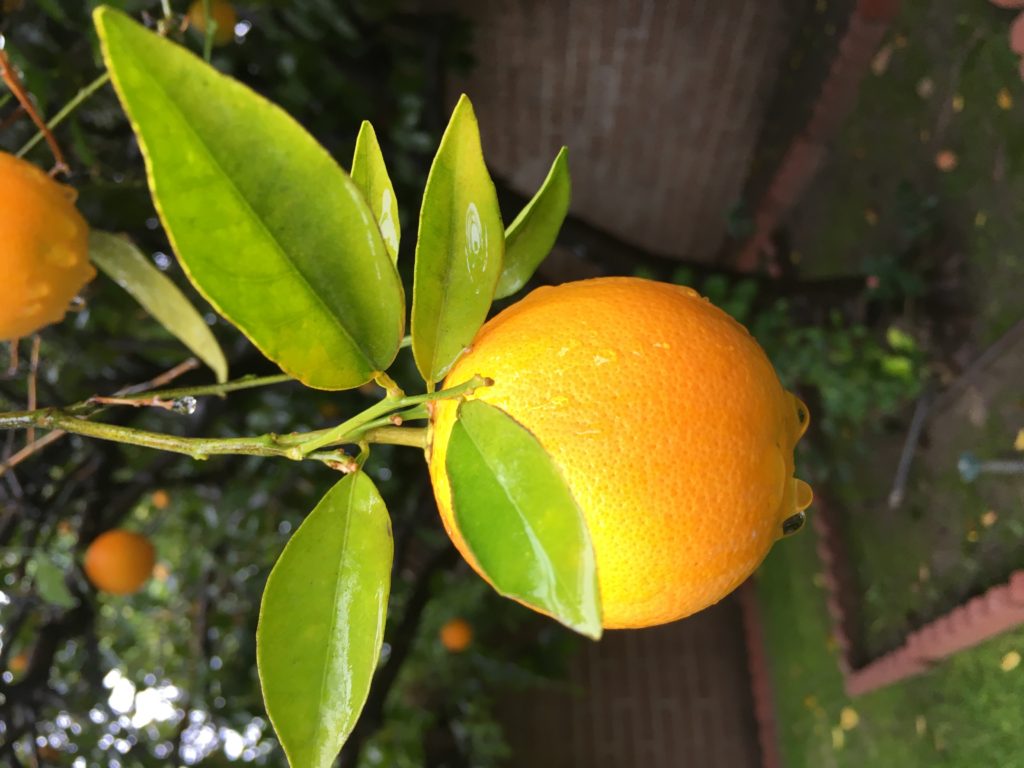
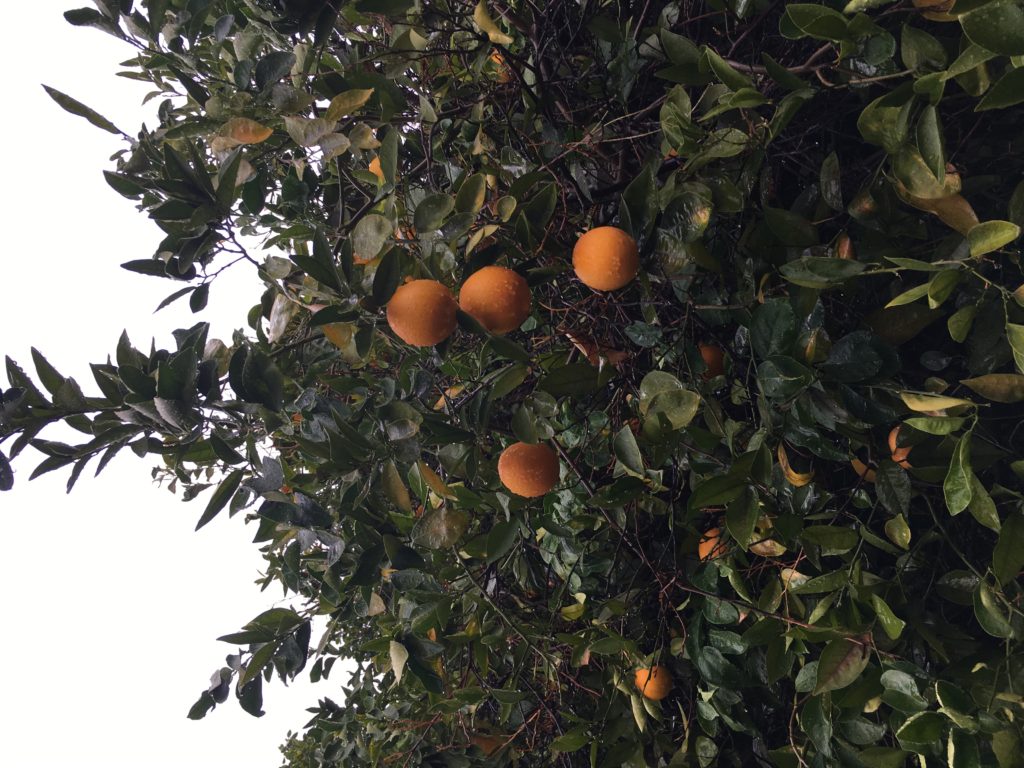
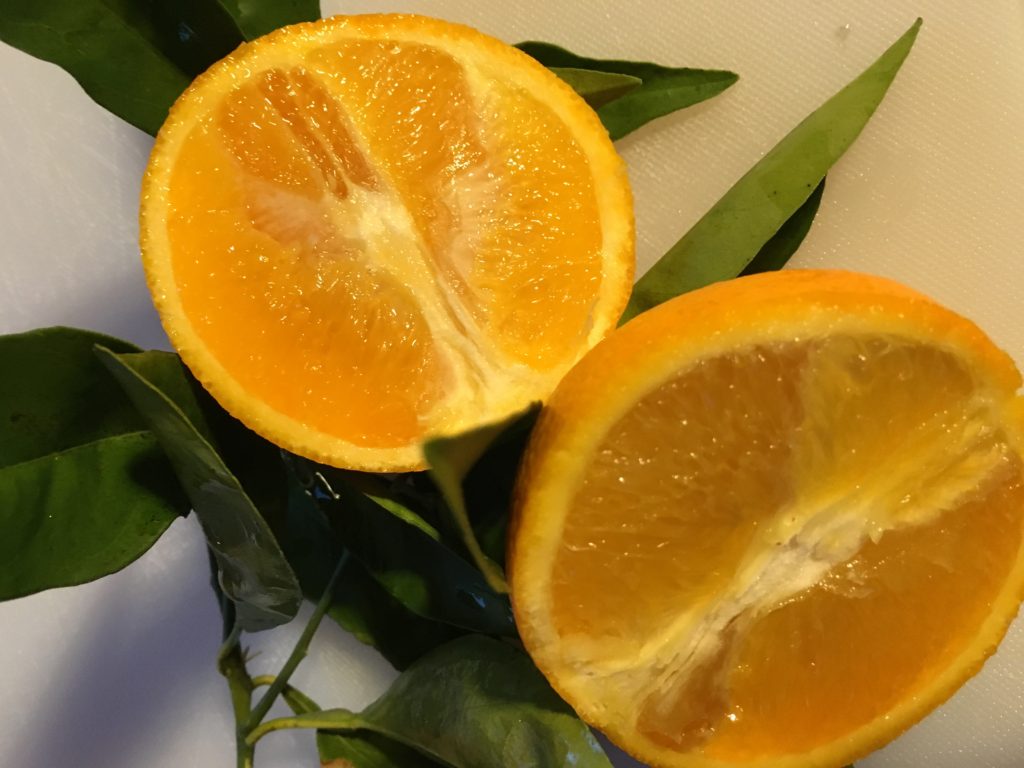
Jack and I are lucky enough to be visiting Southern California and the desert this week and even luckier to have an orange tree growing right outside our little inn room. Fortunately, the small kitchenette came equipped with both knife and hand juicer so the first morning I braved the pouring rain and plucked a few ripe oranges off the tree and we enjoyed the freshest juice we’ve ever had.

Oranges have been known and cultivated for centuries. Sweet oranges were mentioned in the literature in China dating back to 314 BC. Early explorers brought orange trees to Florida in 1565. Franicans brought them to sunny Southern California in 1769.

Orange juice has been a breakfast staple for so long that it’s hard to imagine life without it. But as the citrus industry continues to suffer, that is a possibility that we have to consider. We all have heard about the difficulties Florida citrus growers have experienced recently, from hard freezes to hurricane damage. What you may not be aware of is the little brown bug from China that causes citrus greening, a disease that is threatening to completely wipe out the industry. The future of oranges looks black indeed.

The devastation has been enormous and the situation is so dire that the Center for Genetic Resources Preservation has put orange tree cuttings in a vault in Colorado, protecting against the possibility of losing all orange trees.

Scientists are working furiously trying to find a cure but results have been disappointing. Interestingly, the solution may lie with organic gardening practices. Twenty-five year old trees that were never sprayed with pesticides have developed vibrant immune systems which are allowing them to resist the disease.

I applaud the scientists who are working so hard to solve this sticky problem and sympathize with the many farmers who are suffering losses in the citrus industry and pray that the future of oranges regains it’s sunny reputation. It makes me grateful for every sip of orange juice.