Tipsy from the garden

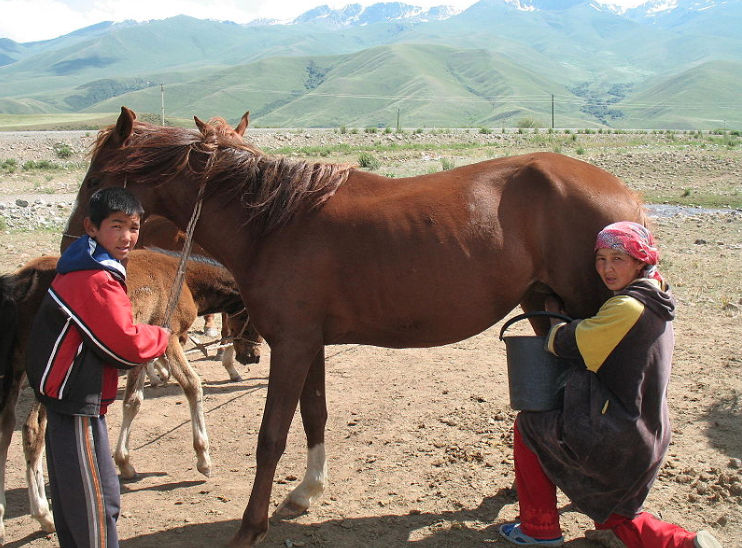
Everyone knows that wine comes from grapes and most people know that beer comes from malted grains, usually barley. But when you think about it, all alcoholic beverages come from some kind of plant. Well, that’s not entirely true, the poor nomads in Eastern Asia, lacking agriculture, fermented mare’s milk but it’s the exception rather than the rule. So, let’s raise a toast to the garden!! Without which our libations might be limited to fermented mare’s milk!
This image has an empty alt attribute; its file name is Screen-Shot-2019-06-04-at-9.32.34-AM.png
source: Wikipedia

Humans have been drinking alcoholic beverages since before we could write. Anthropologists believe that even before we were fully human, our ancestors were picking up and enjoying the buzz that came from fermented fruits. As we became better at manipulating the fermentation process, we became more and more enamored with the effects of drinking.

Remnants of wine made from rice, fruit and honey have been found in a jar in China dating back more than 9000 years. Chica, a South American drink made from wild potatoes and wine made from palm trees in Africa also indicate that humans’ love affair with alcohol is thousands of years old.

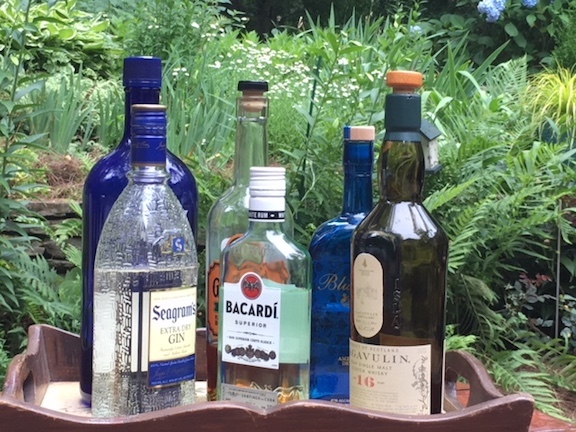
Almost all liquor is made from yeast, water, some kind of fermented grain and flavoring. Manipulating these ingredients to produce the finest beverages has been the goal of mankind for a long, long time. Different plant material produces different results. In general:

  • rice makes sake
  • barely makes scotch (and beer)
  • agave makes tequila
  • sugarcane makes rum
  • corn makes bourbon
  • grapes make wine

Vodka, on the other hand, can be made from any starch or sugar-rich plant including sorghum, corn, rye, wheat, potatoes, molasses, soybeans, grapes, rice and sugar beets.
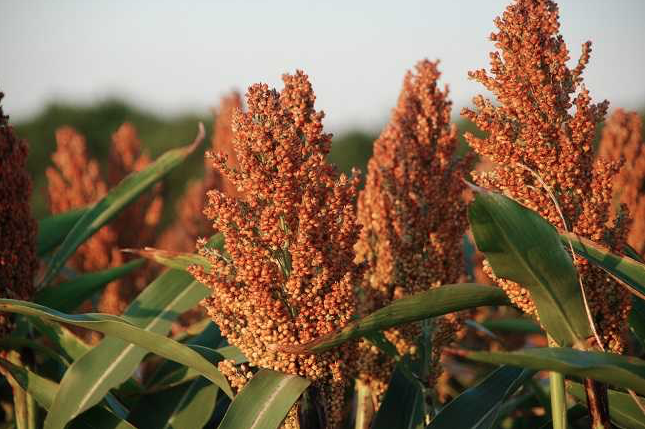
Sorghum is a pretty amazing plant, providing everything from animal fodder to vodka.

Amy Stewart, in her excellent book The Drunken Botanist says that “sorghum is probably the plant used to make alcohol more than any other.” Sorghum beverages range from homemade beer in Africa to a Chinese high-proof liquor.

The experts use all kinds of plants for flavoring – hops for beer, juniper for gin (it’s not legally gin unless it has juniper in it), smoky peat for scotch. But even if you’re not an expert, you can flavor your own liquors with many things right out of your own garden. If you want to infuse your own drinks, start with white spirits such as rum, vodka or gin and use what’s in season – berries, elderflowers, edible flowers or herbs.
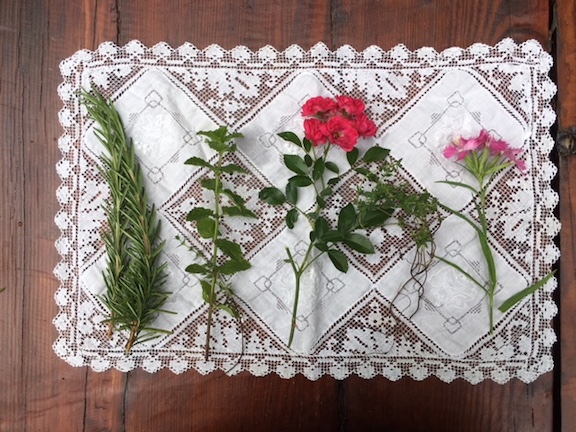
You can use all kinds of things from your own garden to flavor liqueurs. From left to right, rosemary, mint, rose, thyme and carnation.

You can add the plant material directly to the alcohol or you can make a simple syrup from flowers such as roses, violets, hibiscus, lavender or chamomile and add this to the liquor. Either way, it can be the garden in a shot glass.

So, if you didn’t think that you were a plant lover, think again. If you love your evening cocktail or a beer on a hot Saturday afternoon or a glass of wine with dinner, then you love plants! Unless, of course, you prefer fermented mare’s milk! Cheers!!!
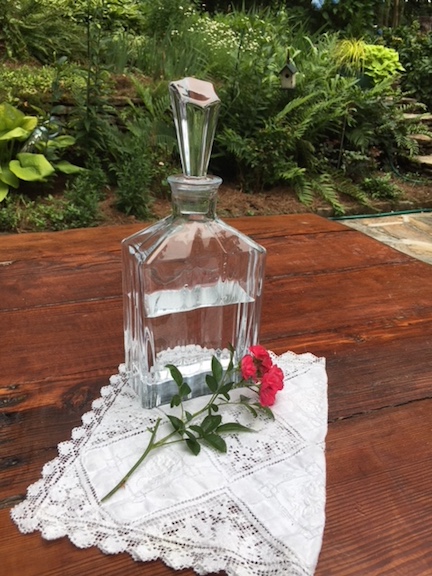
Rose petals, some spices, sugar and vodka go into the bottle and the transformation is delicious!

Here’s a recipe for Rose Liqueur. Enjoy!

  • 3 cups fresh rose petals (be sure they haven’t been sprayed!
  • 2 whole cloves
  • 1 cinnamon stick
  • 1 cup sugar
  • 4 cups vodka

Place rose petals and the vodka in a large jar with a tight-fitting lid. Steep for 2 days. Add sugar and spices. Steep for two more weeks, shaking vigorously a couple of times a day to dissolve the sugar. After 2 weeks, strain through a coffee filter, transfer to clean bottles and allow to sit 2 more weeks before using.

Don’t forget to check out the Nature Based Etsy store. You can get a bag to tote around all that liquor! http://www.naturebasedstore.etsy.com
Gardening: Science? or Magic?

There are hundreds of gardening books and thousands of gardening blogs. Information is abundant and accessible. But can you trust it all? Even this blog? In spite of my most sincere and energetic efforts, I’m sure that over 40 years of garden writing, I’ve made mistakes or stated unverified “facts.” It’s hard to know sometimes what is accurate or not and new information is always being uncovered. The truest and most reliable source is personal experience.

But when it comes to gardening, your “truest” experience and mine may be completely different because though gardening is a science, it is also an art and much depends on the “canvas” you are working with.

All of this came to mind when I was walking through my garden with a friend. When she saw an entire bed of elephant ears popping up, she stopped. “Did you just plant all those?” I grinned, “Nope, this is the fourth year they’ve come back.”

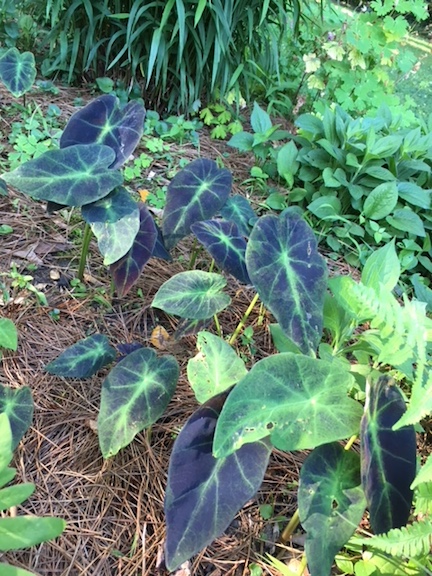
Every year I think I’ve lost my herd of elephant ears but in late May, one by one they begin to appear again.

Being a relatively new gardener, she’s still more into the science than the art and said “But, they said elephant ears are annuals.” And she’s right. In Atlanta, Georgia and more northern regions, when you buy these big bulbs that produce stunningly large, interestingly marked leaves, the tags say “annual.” But, technically they are not.

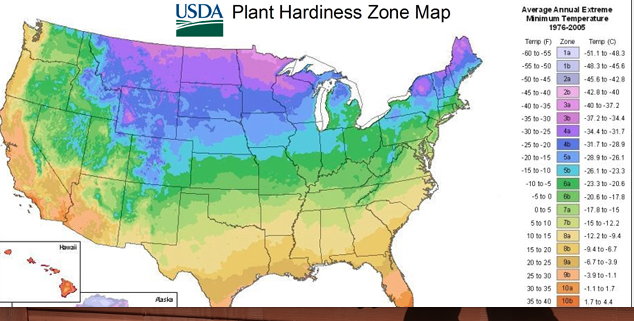
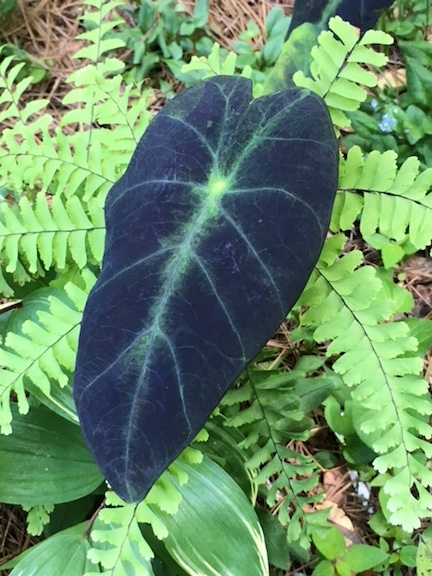
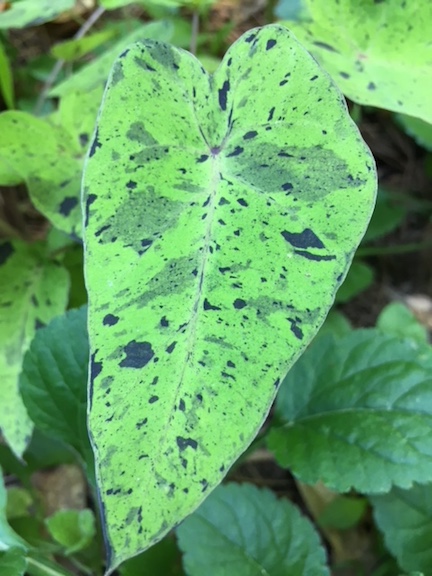
Elephant ears are from the family Alocasias which originated in tropical areas of Southeast Asia. I planted the species Cococasia Esculenta illustris and, if you read the literature about this, it says that they are reliably hardy in horticultural zones 8 – 12. Atlanta is in growing zone 7b which means that really my elephant ears should not be coming back year after year. But if I’d paid attention to what “they” said, I would have missed out on 4 years of splendidly beautiful, dark, dark arrow shaped leaves and lots of fun. (If you want to know what your exact growing zone is – by zip code – click on the following link https://planthardiness.ars.usda.gov/PHZMWeb/)

Like many of our summer bedding plants (such as vinca and marigolds?) elephant ears are really tender perennials rather than annuals. The definition of an annual is a plant that completes its life span within a single year. A tender perennial, on the other hand, is a plant that originates in a warm climate and can live for years but is sensitive to or killed by cold temperatures. To make things easier in colder regions, nurseries and garden stores simply call them annuals.

Elephant ears fall into this category, but in the little pocket of ground in which I planted three bulbs four years ago, they some how survive. It’s not particularly sheltered and we have certainly had very cold weather the past few years, it’s just……magic. It’s a case where the books say it won’t happen, and it did.

The broad, jungle look of the elephant ears looks splendid with the frilly maidenhair fern, hosts and false Solomon’s seal.

On the other hand, the books also say that Swiss chard will “withstand heat” and that you can grow it throughout the summer. Hmmm, tell that to my Swiss chard which is wilting and bolting in spite of being well watered. So, the science tells me it will work, but I guess there’s dark magic in the gardening world as well.

For the most part, I believe in planting what’s appropriate for my growing region. Just because I’ve had good luck with elephant ears, it doesn’t mean that I’m going to try to make my garden a tropical paradise with palm trees and bananas. Especially as our weather patterns become more and more erratic, it’s better to keep the backbone of my garden plants that are reliably hardy for where I live.

I’m grateful for the body of knowledge about gardening that precedes me and hope that I am accurate and correct with the information that I add to it. But don’t believe everything you read, not even here. Try it yourself. Armed with common sense and a large measure of magic, no telling what you’ll discover!

And for my part, I’ll continue to spend as much time as possible in the garden, trying, experimenting, failing and succeeding and reporting back to you as accurately as possible. But mostly, I’ll just enjoy the magic.

Laura

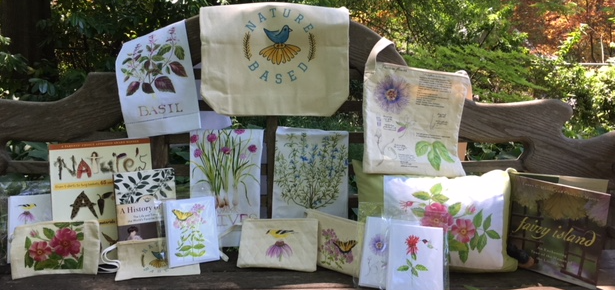
P.S. I’m thrilled to announce that Nature Based now has an Etsy store. I’ve put many of my botanical designs on gifts and products and would love for you to check them out. http://www.naturebasedstore.etsy.com
This is an overview of what you will find in the shop. Notecards, bags, linens, books, pillows…….all kinds of fun things!

Apples on Oaks? How galling

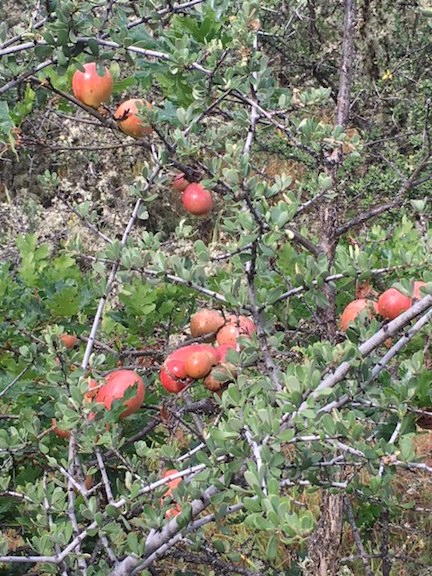
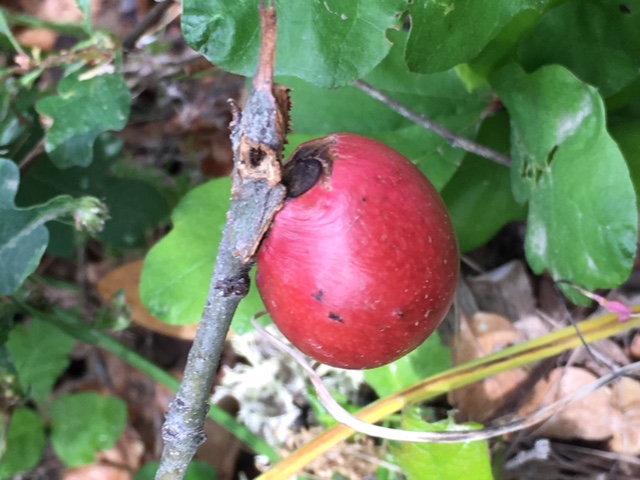
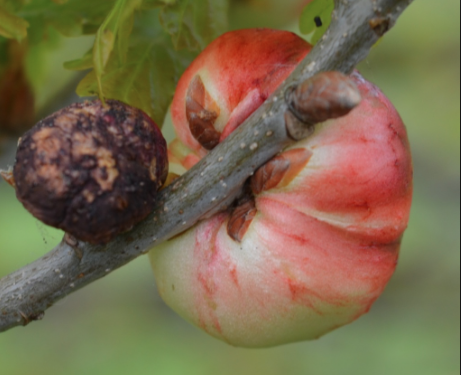
My husband Jack and I were hiking in southern Oregon last week when we saw the most interesting sight. It looked like bright orange / red fruit growing on oak trees. I thought they were probably oak galls but I’d never seen a gall so large or so bright. I texted a picture to my friend who confirmed that, yes, these were fresh galls.

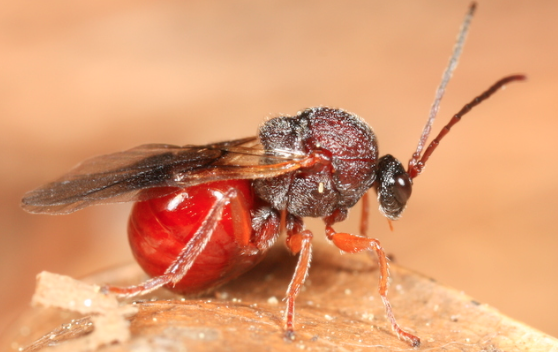
An oak gall is an interesting phenomenon. A female wasp from the Cynapid genus (that doesn’t sting!) lays her eggs in the twigs, branches or leaves of an oak tree. The tree tries to protect itself by growing tissue around the eggs and, in doing so, provides both cocoon and nutrition for the larvae that develop. The galls can house from one to several individuals. Different species of wasps use different species of oaks, resulting in a wide variety of galls. Some small ones look like bumps on leaves while the ones we were looking at were up to 4 or 5 inches across.
The larvae feed on the tissue surrounding them, pupate and eventually turn into an adult which drills a hole in the gall to escape. It takes about a year to make the journey from egg to adult. Once the wasp escapes, the galls dry, harden and turn brown.

But the usefulness of the galls has just begun when the wasp flies away. Galls are extremely high in tannic acids and have been mixed with iron sulfate to make an incredibly intense blue/black ink. This was the ink of choice from the 5th to the 19th century and many, many manuscripts from medieval times written with gall ink still exist today. This includes one of the oldest, most complete bibles.

You, too, can make your own gall ink. Take mature galls and crush them, soak that in water for 24 hours, then strain. Mix the resulting liquid with sulphate of iron (found at a gardening store) and a fixative of gum arabic (found at the grocery store) and you’ll have a beautiful ink that will last for centuries. Have fun!

Beautiful begonias

In their rush to find out what’s cooking in “LaLa’s Kitchen” my grandchildren rarely take time to notice flowers. So, when 9 year old Ellie commented on the tuberous begonia growing just outside the back door, I was pleased and excited and ran out to buy her her very own tuberous begonia.

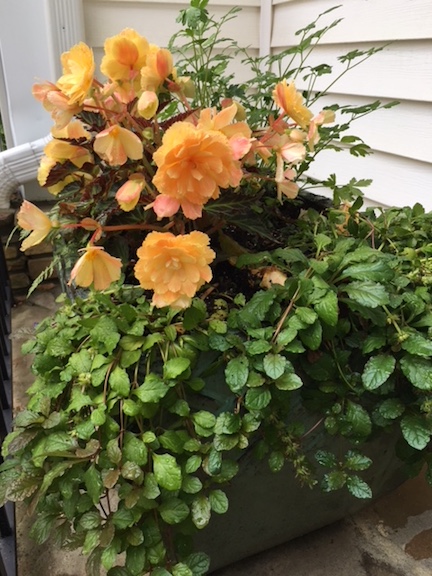
This tuberous begonia is in a pot with some trailing ajuga and a parsley plant. It’s at the back door so I keep a careful eye on it and enjoy it every time I go in and out.

I could have started her gardening career with a slightly easier plant. Tuberous begonias are “goldilocks” plants – needing everything just so; not too hot, not too cold, not too sunny, not too shady, not too wet, not too dry. I generally feel as if I don’t really grow these finicky plants as I do to put them in a container and hope that they live as long as possible. So far this year, though, I’ve had pretty good success.

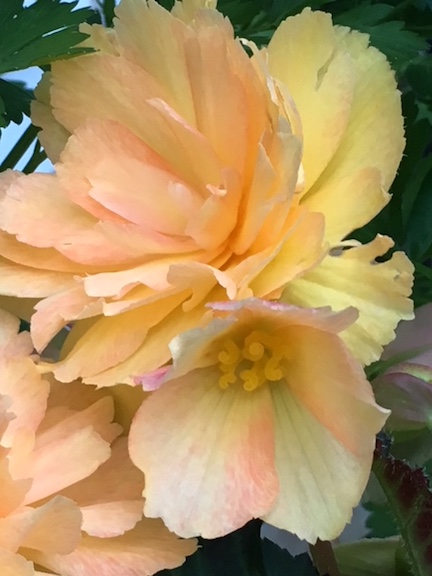
Male and female flowers are on the same plant. The female is the one in front. Tuberous begonias need a dormancy period and are not a suitable species for overwintering indoors. You can dig and save the tubers, though, and replant next spring.

At one point I thought I was losing it as an entire stem looked limp. I quickly watered again, compounding the error as the stem wasn’t dry but was actually rotting from excessive moisture. I brushed the soil away from the base of the main stem, making sure that no stems were resting on the damp dirt and (at least for the moment) problem solved! I amputated the rotting stem but managed to save the main plant.

Begonias make up a mega genus of over 1800 species, not counting the countless hybrids and varieties that have been developed. Most of the species are native to moist subtropical and tropical areas. If you want to grow begonias, mimic their natural habitat which is that of an understory plant. Most thrive in filtered sun, moist soils and warm temperatures. Almost all begonias are perennial but are treated as annuals as they will not tolerate cold or frost.

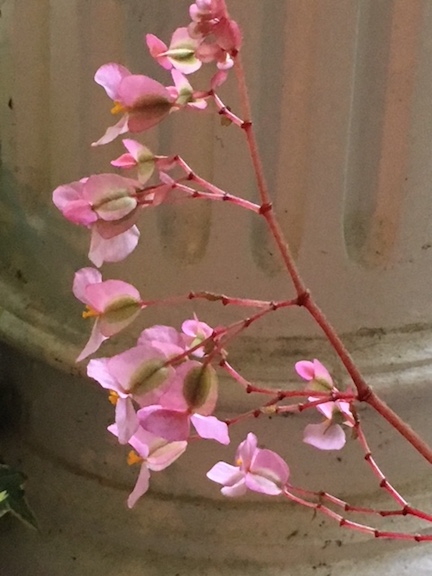
There is tremendous variation of flower form in the huge Begonia genus. All are beautiful, some are more subtle than others.

Begonias make superb bedding plants for shady areas and, if given an occasional shot of organic fertilizer, will bloom from frost to frost. Many of my begonias, such as a stunning “Plum Paisley” I treat as house plants, dragging them outside when the weather warms and back inside when the temperatures cool.

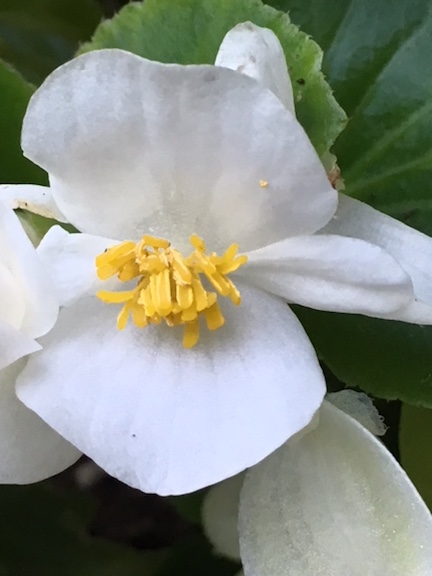
The bedding plant begonia has a lovely little flower, usually in red, pink or white.

Begonias are very easy to propagate, especially if you just divide them. It’s sort of like growing grass, though, if you fertilize and care for your potted begonias, they’re going to grow so fast you’ll have to divide them frequently, just like fertilizing grass means more mowing.

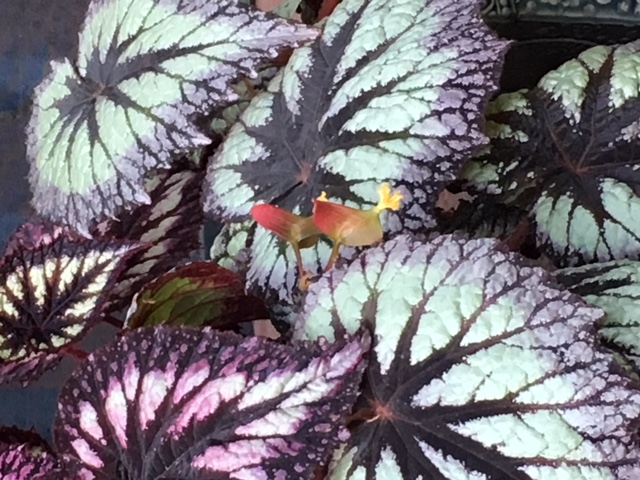
Who wouldn’t want to grow something called “Plum Paisley”?

Will Ellie’s tuberous begonia spiral her into her grandmother’s passion for gardening? I doubt it. But I can always hope.

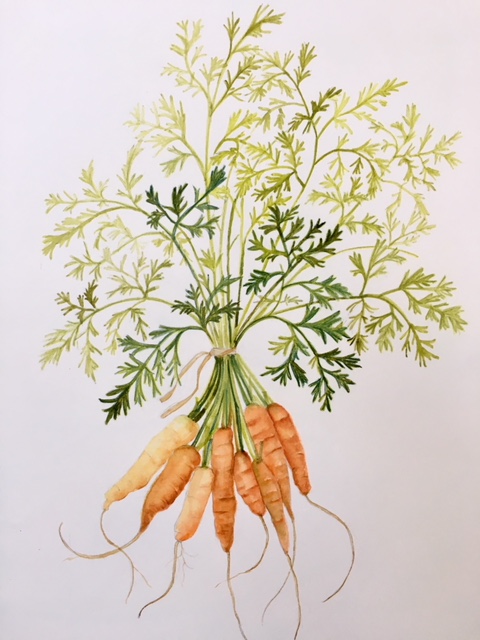
Carrots – Underground Wonders

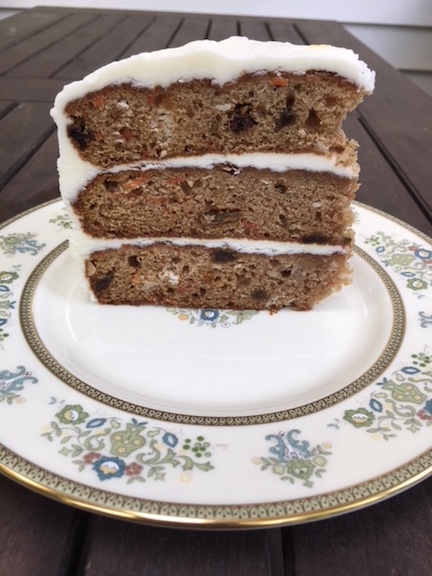
Let me say this first thing; my favorite way to eat carrots is in cake. I love them other ways too – fresh and raw, cooked with butter and parsley, chopped up in salads, juiced, purreed and souped – but the best is carrot cake. Dump shredded carrots in with maple syrup, eggs, flour etc. (more precise directions follow in the form of the world’s best carrot cake recipe) and you can end up with something to celebrate, or celebrate with.

Carrots are really, really old. Cultivated carrots were selectively bred from wild carrots, Daucus carota, which are native to Europe and Southwestern Asia. The first carrots were actually prized for their leaves and seeds, not for the root. Archeologists have found carrot seeds in Switzerland and Germany that date back to 2000 to 3000 BC.

The modern carrot, which was purple, originated in Afghanistan in about the 10th century. It was brought to Colonial America in the 17th century.

Called one of the “World’s Healthiest Foods” carrots top the charts in health benefits. My Dad always told me that I could see in the dark if I ate carrots, which was not exactly true, but did result in my eating an impressive number of carrot – who wouldn’t want to see in the dark? What is true is that carrots are chock full of vitamin A, which will help prevent vision loss.

Carrots are fun to grow with kids as they germinate relatively quickly. It takes a little longer (70 – 80 days for many varieties) to actually get a carrot. Carrots need deep, loose, well drained, sandy soils. If grown in rich, rocky soils you’ll end up with hairy, misshapen roots.

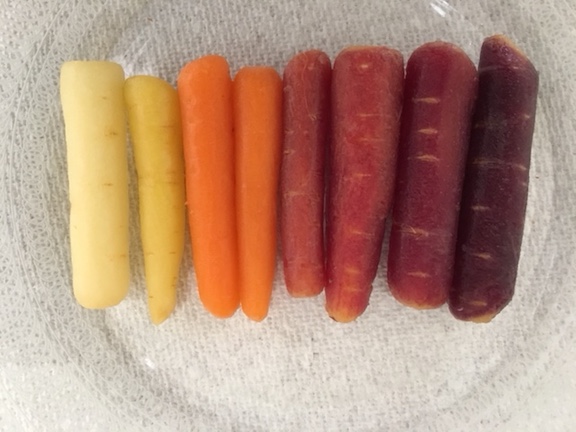
Carrots now come in an impressive array of colors, shapes and sizes. In addition to orange, you can now get carrots in purple, red, white, yellow and black. You can get tiny carrots, smaller than your little finger, or carrots that have been crinkle cut, shredded or matchsticked.

I love what Thich Nhat Hanh had to say: “If you truly get in touch with a piece of carrot, you get in touch with the soil, the rain, the sunshine.” I’m hoping that it is true with getting in touch with a piece of carrot cake as well.

Carrot Cake

(This is a variation of a “vegan carrot cake” recipe that my daughter gave me years ago. I usually use real eggs but if you eat “vegan” you can always use an egg substitute. I also love to sweeten it with maple syrup and honey but you can substitute the same amount of brown and white sugar and it works splendidly.)

2 teaspoons baking soda

2 1/4 cups all purpose flour

2 teaspoons cinnamon

1 teaspoon allspice

1 teaspoon baking powder

1 teaspoon salt

3/4 cup maple syrup (OR light brown sugar)

3/4 cup honey (OR white sugar)

3 eggs (OR egg substitute)

1 teaspoon vanilla

1 cup light tasting olive oil (or other vegetable oil)

2 cups finely grated carrots

1 can (14 oz.) crushed pineapple, drained

1 cup shredded coconut

1 cup nuts and / or raisins (optional)

  1. Preheat oven to 350 degrees.
  2. In a medium bowl, mix dry ingredients, except sugars
  3. In a mixing bowl, mix maple syrup and honey (or sugars) eggs, and oil.
  4. Add dry ingredients and blend well.
  5. Add carrots, coconut and nuts and raisins, if using
  6. Prepare three 8 inch round cake pans (or one 13″ x 9″ sheet pan). Pour batter into pans and bake 25 – 30 minutes for rounds, 40 minutes for sheet or until toothpick comes out clean. Allow the cake to cool before frosting.
  7. Frost with cream cheese icing (Mix together 8 ounces cream cheese, 1/2 stick butter, 4 cups XXX sugar, 1 teaspoon vanilla, 3 or more tablespoons milk.)

Grandma’s Peonies

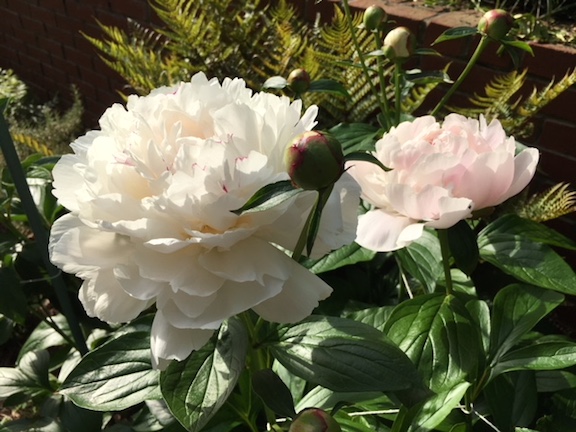
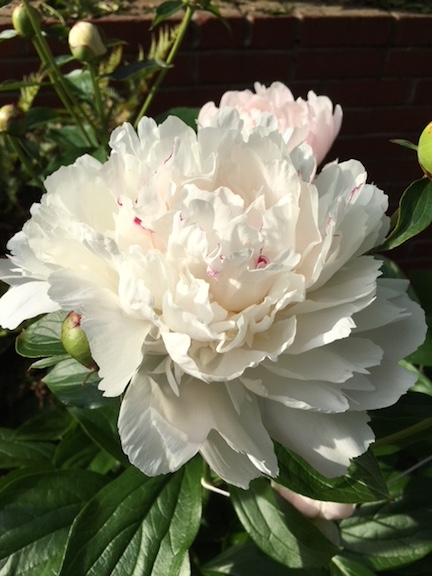
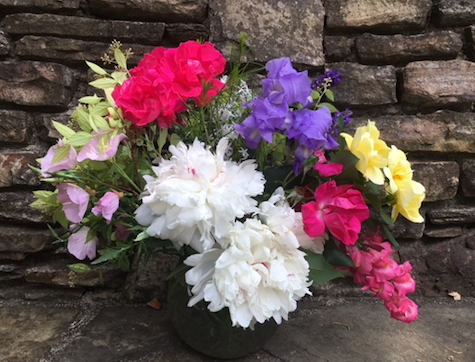
I’ve had divisions from my grandmother’s peony plants for 40 years. I’ve moved them from one home to another, planted them in various gardens and tried to grow them in countless different spots but it wasn’t until this year that they really bloomed. As if to make up for lost time (as in FORTY years) they put on a show stopping extravaganza. I watched last night as a woman, walking down the street stopped to look at my peonies, then leaned over to smell their delicate scent. It was as happy as if someone had told me how cute my grandkids are!

There are two reasons that Grandma’s peonies bloomed to well this year. The first is that, after years of talking and writing about the importance of a soil test, I actually did it and found out that my soil is achingly empty of potassium. I corrected this with a balanced organic fertilizer. The second, and far more important reason is that I finally put them where they receive enough sunlight. There is no getting around the need for sufficient light for stupendous blooms.

In addition, I made sure they had plenty of good air circulation and well drained soil. Peonies don’t like wet feet!

Although mine are the old fashioned full, white variety, there are numerous cultivars of peonies that come in white, pink, red, coral, maroon, striped and yellow. These generally grow to a height of about 3 feet. There is also a “Tree Peony” that grows 5 – 6 feet tall.

In the sunny South, peony blossoms only last a few days, making the season a very short one. Is it worth it? They are a lot of trouble as they need staking and support when they come into bloom. Ahhhh, but when they do bloom? Yes! It’s worth it!

In many ways, my grandmother was an unlikely candidate to be a peony lover. She was a stout, no nonsense kind of woman. She and my grandfather lived on a farm near Jeffersontown, Kentucky and her life was not easy. Looking back on it, her life was particularly challenging when my family (all 7 of us!) descended on her small house and organized life. It must have stretched her patience to have five small children running enthusiastically through her house and garden and an extra seven hungry folks to feed three times a day.

So, it made me wonder why my grandmother loved peonies so much. They are the “prima donnas” of the garden, needing care and attention and plenty of support as they come into bloom – sort of the opposite of my grandma who stoically did everything herself. It seemed that she would want to grow things that were more like herself – hardy and low maintenance. But then it occurred to me that the peonies might have represented something from another world for Grandma. That staking, fertilizing, watering and weeding these exquisitely beautiful flowers was her way of escaping the practical “low maintenance” part of life and expressing her love of pure beauty.

I wish I could ask her. I wish she could see that I finally succeeded in growing her peonies. I wish that we could stand together and celebrate pure beauty. I miss my grandma but I’m so happy that I have this living, beautiful reminder of her.

Happy spring.

Laura


Settling the score

I think gardening must be contagious. After laughing about her “black thumb” for years, my friend Ruthanna has suddenly decided she wants to be a gardener. Though a skilled pianist and incomparable music teacher, Ruthanna has never really learned to play in the dirt.

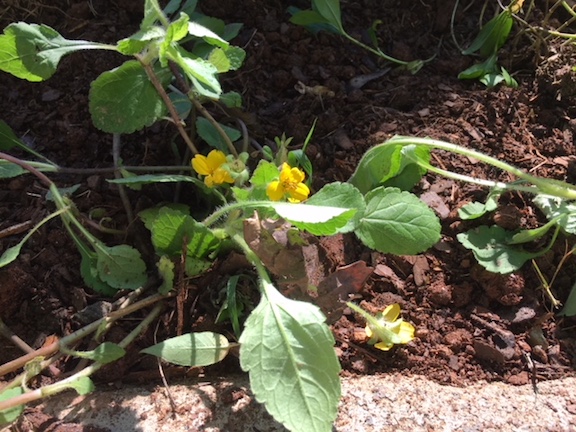
Green and gold

Ruthanna and I spend a lot of time together, usually with me hovering over the piano keys and her patiently correcting, gently nudging and even occasionally shouting out loud in praise (or horror or disbelief). So when we switched roles, I knew it was time to settle the score as I began teaching her all about the joys and challenges of gardening and she started looking at me with a slightly dazed look. It was a fun and funny experience for both of us.

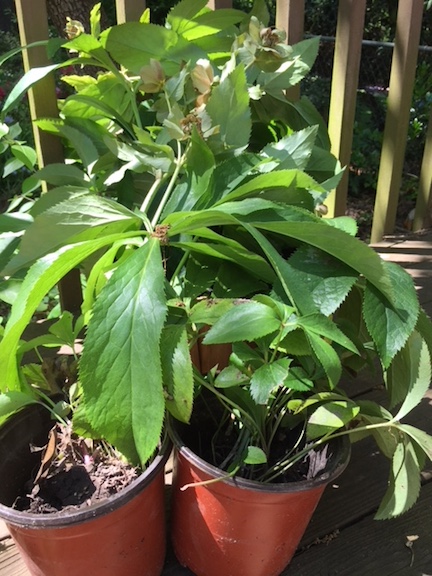
Lenten Rose

Ruthanna had a blank page, a yard with only grass and foundation shrubs so she was happy with anything I brought her. We talked about soil and sun and watering, the three major keys to gardening, and a few minor elements such as color, grouping and mulch.

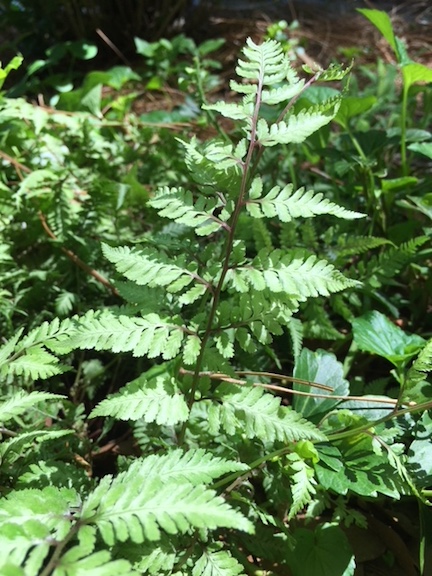
It only made sense to share with her things that do well in my own garden so I dug and potted and filled my car with lenten rose, Solomon’s seal, Japanese painted fern, green and gold, and blue phlox for the shady areas. Black eyed Susan, Japanese aster, bee balm and summer phlox are for the sunny spots.

Japanese painted fern

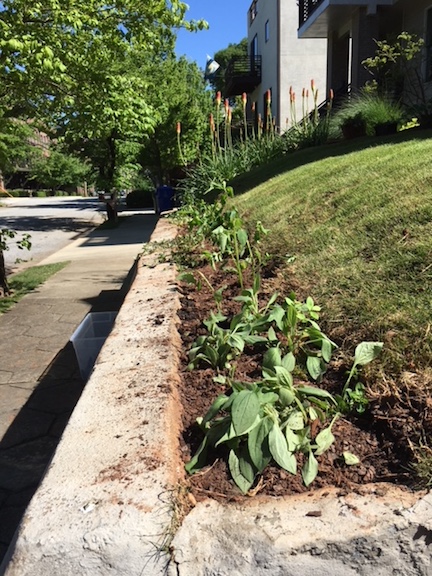
Together we incorporated a lot of soil conditioner into her red clay, then carefully transposed the plants from the car to the garden beds. Some things looked a little wilted and may not make the transition, others looked as if they had been there all their lives.

It’s such a thrill for me to share plants. Many of the plants I gave to Ruthanna came from my mother’s garden. I know that when I walk through Ruthanna’s yard and see these plants thriving and blooming, it will make me think of my Mom and how happy she would be to see what she started.

Ruthanna’s new “garden” in the Old Fourth Ward.

We ended on a high note . Even newly planted, the composition looked lovely. But I know that the success of Ruthanna’s garden will depend on her. The key to a well tuned garden is diligence and practice – and a good friend to share it with.

My “handkerchief” garden – from flax seed to linen cloth

So, I had this idea. I really want to create a piece of cloth from start to finish, from planting a seed to weaving the cloth. I already have the loom, so really all I need is a field of some kind of fiber, a spinning wheel and a few instructions of how to get from a seed to a handkerchief. Seems reasonable to me!

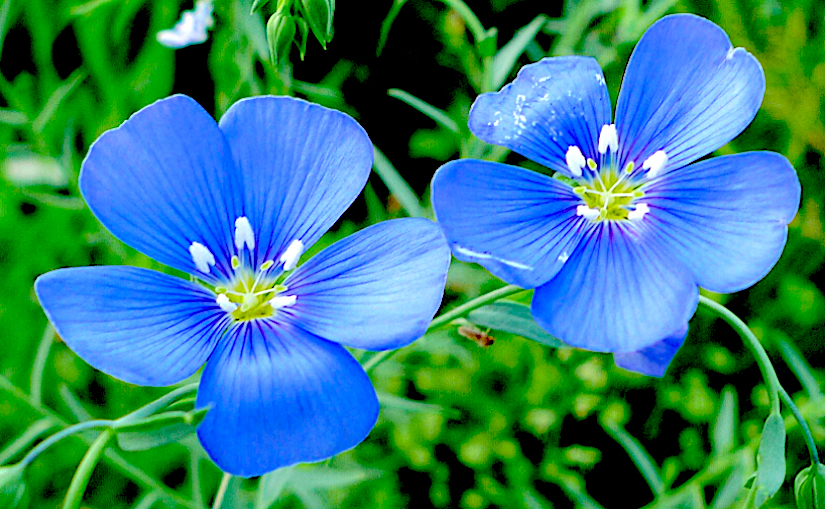
The first step was determining what kind of fiber to grow. I decided on flax, to make linen. A little research quickly confirmed that the Eurasian species, Linum usitatissimum was the correct choice. Wow, what a plant and well named because “usitatissimum” means “most useful” – and is fun to say! Not only is this plant very attractive with its blue flowers, but it has been used for both food and fiber for tens of thousands of years. Excavations from a cave in the Fertile Crescent showed flax fibers that had been spun, dyed and knotted, dating back 30,000 years.

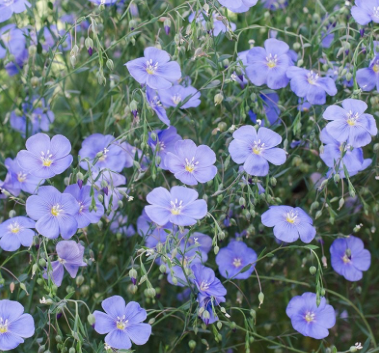
Wild blue flax, Linum perenne, is native to the western United States and blooms profusely from Alaska to Southern California and east to Kansas. Native Americans used it to make rope and cords, though were not thought to have used it in weaving.

Wild blue phlox

Common flax was extensively cultivated in ancient Egypt. Spun and woven into linen, it was used to make sails for ships and to wrap mummies for burial. Flax became an important crop in both Europe and China about 5,000 years ago. During the Middle Ages, the region of Flanders became the center of the linen industry in Europe. Flax was also brought to North America by the colonists, who developed a thriving linen industry which lasted until early in the 20th century when cotton cloth quickly replaced the more expensive linen.

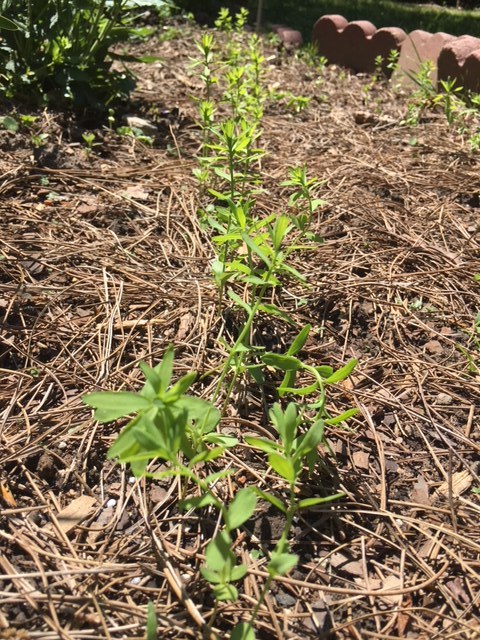
Flax is supposedly easy to grow from seed so I ordered 100 seeds (I’m not trying to start an industry I just want to “grow” a handkerchief) and planted them in a sunny spot. So far so good. They are up and growing. I’ve babied them, making sure they stay moist but abundant rainfall has helped too. I can’t wait! I go out first thing every morning to check on my little seedlings.

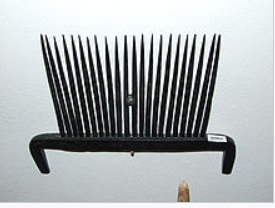
A hackle is used to comb the flax stalks, separating
the long, silky fibers from the stem.

In between watching my seedlings grow, though, I’ve done a little more research about how you actually make yarn or thread from flax stalks. It’s umm, humbling. and okay, a little intimidating. There are several steps including retting, breaking, scutching, hackling, spinning and weaving. And all that is possible only if the seeds grow, thrive, bloom and turn into nice, straight stalks. I have a long way to go.

Can’t you just SEE a handkerchief? Stay tuned.

Wish me luck. I’ll let you know how this project progresses, even if the grandkids stampede the seedlings in their Easter egg hunt enthusiasm. Really, it’s not the handkerchief I’m after. It’s the joy of looking at something such as a seed and envisioning all the things that it can become. I see a handkerchief. You probably see something different. I don’t think it really matters what you envision as long as you can see fun, promise or beauty in something as small as a seed.

A lovely purple haze

If purple is the color of royalty, I am living in a kingdom! My garden is wave after wave of shades of purple from 10 different kinds of spring blooming plants. Ranging from fuchsia to violet, from lavender to grape, my garden makes me think of the Jimi Hendrix song, “Purple haze was in my brain….”

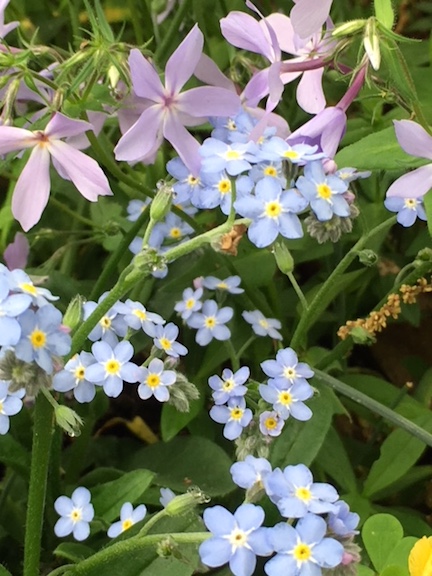
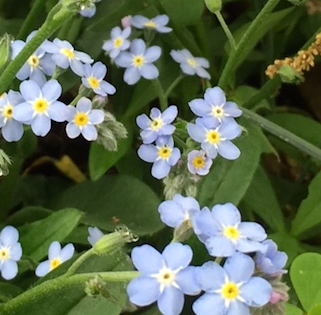
Foroget me nots and phlox

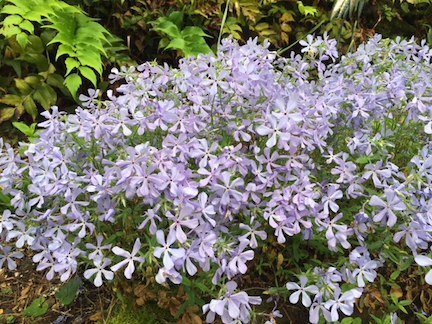
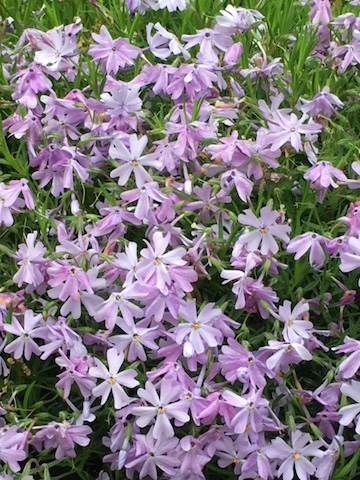
The backbone of my spring garden is, and always has been, the incomparably abundant and beautiful creeping blue phlox. I can’t understand why everyone does not plant this in mass profusion. It is everything you could want from a plant: perennial, semi-evergreen, abundant without being invasive, beautiful flowers that last 3 – 4 weeks, early blooming, easy to grow, maintenance free……shall I go on?

Blue phlox


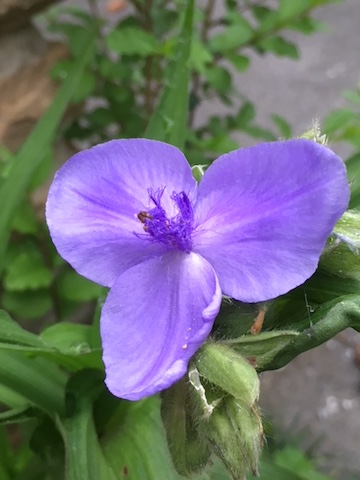
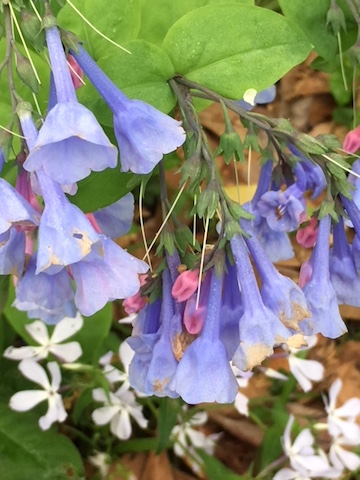
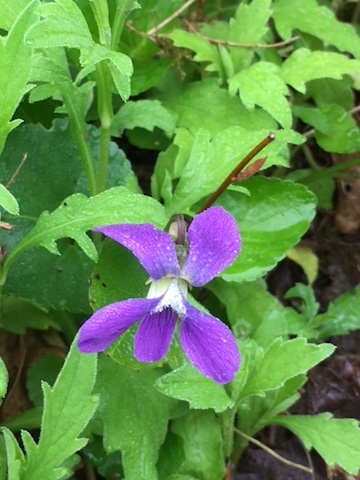
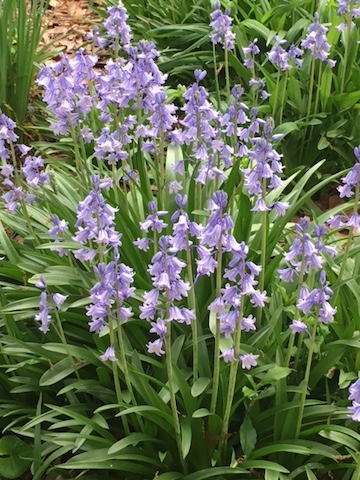
In and amongst the phlox are other native plants. Virginia bluebells are a bit past their prime by now but still offer gorgeous purplish blue bell shaped flowers accented with bright pink. Another “Virginian” is Tradescantia virginiana, spiderwort, which, though native, CAN become overly aggressive so I put the vast majority of these in the back where I have little else planted. Of course our small and slightly invasive purple violet is everywhere. I’m not sure whether my little forget-me-not is native or not. It looks very similar to the mountain forget-me-nots of the American West but I’m pretty sure my woodland plant hails from England. It is an annual but reseeds so freely that I always have a large number of them popping up in unexpected places throughout the garden.

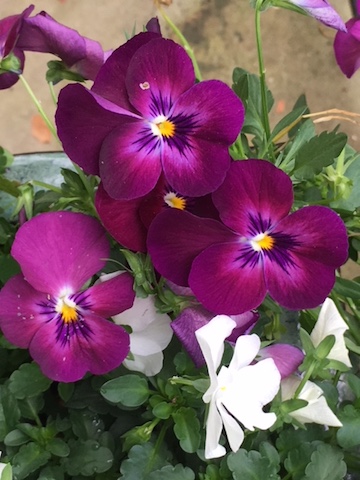
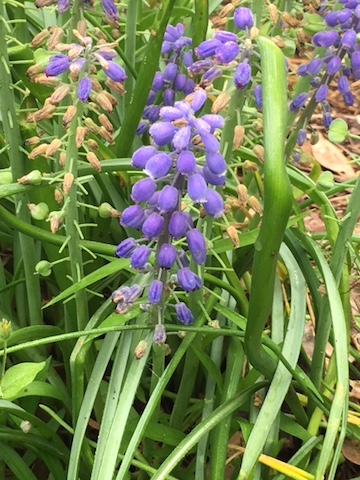
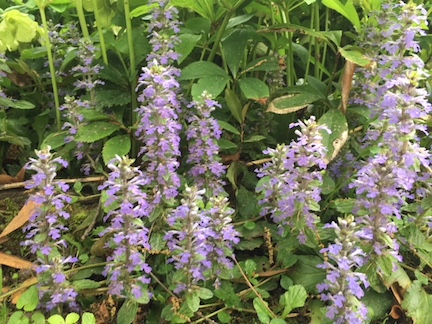
Other purples in my garden are definitely non-native but are welcomed never-the-less. Pansies are putting on a great show in the planter boxes, thrift is spilling over the rock wall while ajuga creeps down the hillside with brilliant spikes of purple flowers. Scilla and grape hyacinth both come from bulbs that have now spread remarkably well under the branches of deciduous trees.

I wish my 3 year old grandson, George, could see my garden because he has always, throughout his young life, loved purple. When I called Oregon to speak to him on the phone over the weekend , I told him about all the purple flowers in my garden and he said, “I don’t like purple anymore. I like pink!”

Ha. I’m not falling for that one! As soon as I plant a pink garden, he’ll like yellow. Nope, I’m sticking with purple. I love my kingdom.

Feeding lions – and other springtime superstitions

Somehow, hundreds of years ago, there arose a superstition that if you fed columbines to lions in the spring, they would receive extra strength and renewed vigor. I have to admit, I’ve never tried it myself but this, like many of the superstitions surrounding plants sounds absolutely fascinating.

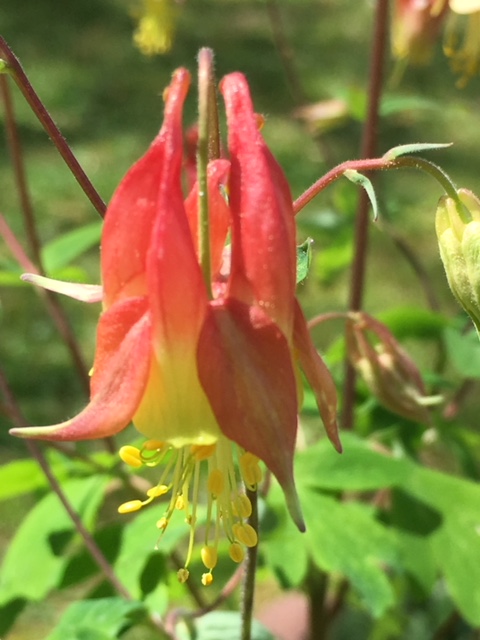
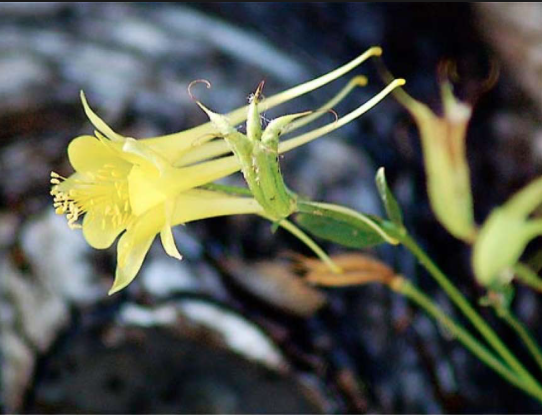
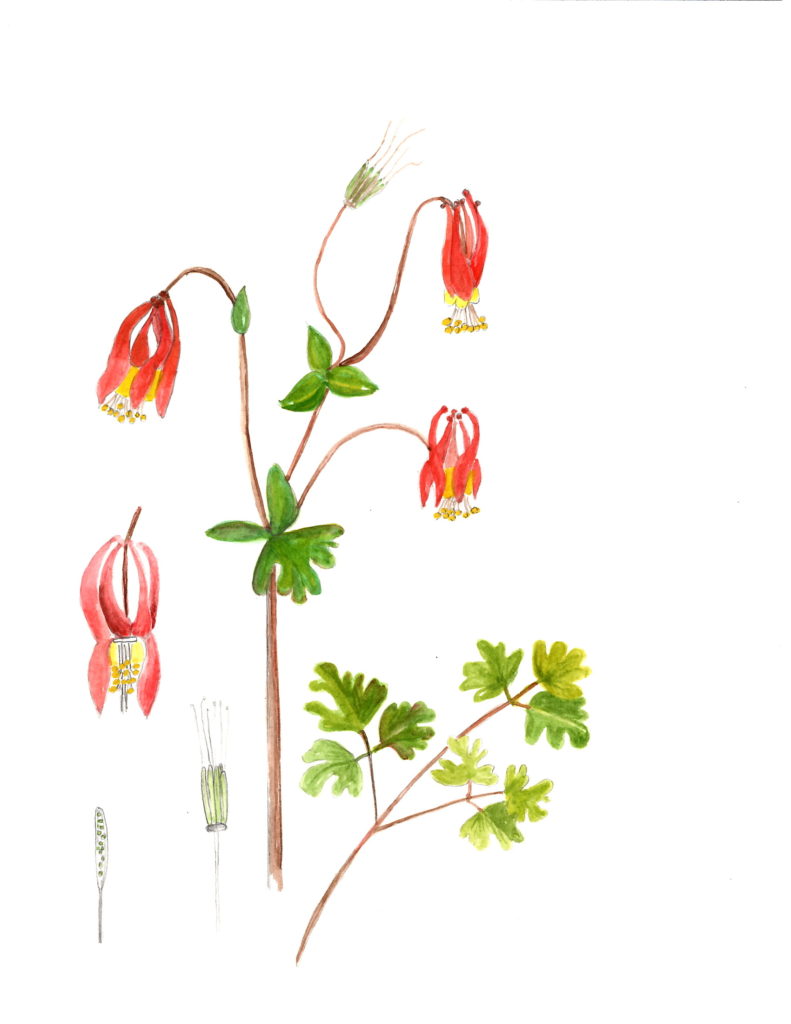
Our small red and yellow native Columbine looks a little different from the columbines native to Europe (where this superstition originated) but all columbines share remarkably similar genetic material. This manifests in many different ways; the result being different flower forms, shapes and sizes.

These variations have occurred, in part, to accommodate pollinators and the evolution of columbines can be easily traced based on where they grow and the most common pollinators in their particular region.


For example, the long spurred columbines, whose spurs can measure 10 inches or more! are almost exclusively pollinated by the hawk moth whose tongue measures an astonishing 9 – 11 inches long! Hawk moths are common in the southwestern parts of North America, where the long spurred Columbine is also common.

Our own red and yellow Columbine has more modest spurs, measuring only a few inches long which makes it perfectly suited for pollination by the ruby throated hummingbird, which is found exclusively in the eastern United States. Interestingly, the red and yellow Columbine also has a higher sugar content in the nectar, adding to its appeal to the hummingbird


Columbines with short spurs are pollinated by bumblebees. Both short spurred columbines, such as the lovely blue Colorado Columbine and bumblebees are prevalent in the same regions.

In addition to being an important pollinator plant, our native red and yellow Columbine and is a wonderful wildflower to grow in the garden. It needs well drained soils and partial shade but seems to be tolerant to a fairly wide range of growing conditions. These are prolific self seeders so once you get one plant established and happy, even though a single plant only lives 2 – 3 years, you should have columbines for years to come. Which may come in handy IF your lions seem sluggish in the spring time! Even without the lions, this is a super plant to include in your garden.