Sugar Snap Peas

I have an unwritten agreement with all my plants. As long as they earn their keep and either provide some sort of harvest or at least look good, I’ll let them stay. For the most part, this works well, with both parties seemingly happy.
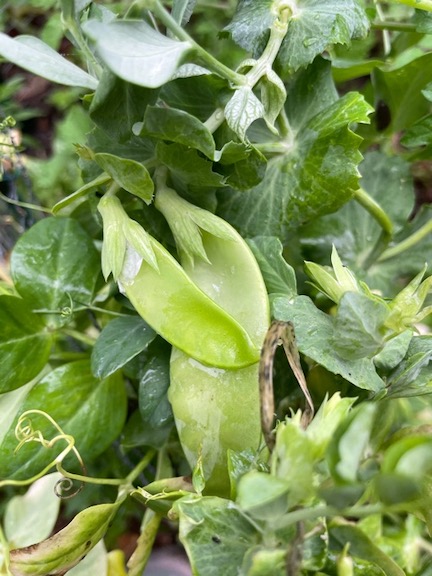
But at the moment, I’m reconsidering my end of the bargain. In March, I planted sugar snap pea seeds. They eventually sprouted and began to grow. I provided the support they needed and in mid – April I harvested my first little pods. They are delicious!
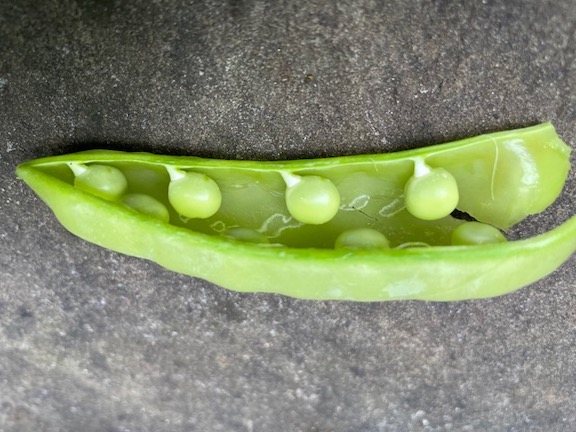
They all look alike, don’t they, almost like peas in a pod.

I’ve never grown sugar snap peas before so I was interested to find out that they are different from “snow peas.” Sugar snaps have rounded pods with thicker walls, snow peas have very thin pods. But both kinds can be eaten whole, either raw in salads or steamed or sautéed. I like the French name for them, mangetout, which means “eat all.”
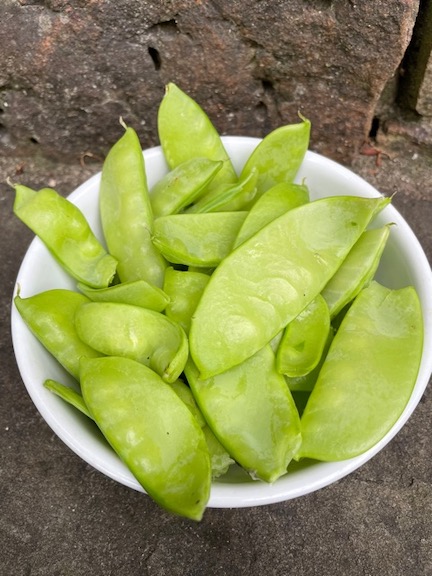
I have had a long and very productive season of sugar snap peas. Every few days I go out and stuff my pockets full of pods. We’ve eaten them in all kinds of ways and the freezer is full of them. All of which is great. What’s not so great is that this lingering harvest has messed up my brilliant garden design.

I know that peas are (supposed to be) cool weather crops, meaning when hot weather comes, they are supposed to be done so I can pull them up. Planning for this, I planted tomato and okra seedlings nearby so that when I pulled up the peas, they would have plenty of room to grow. Brilliant, right?
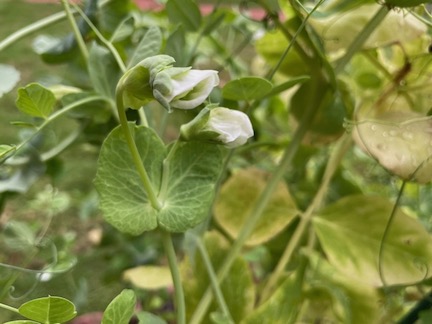
But this is my dilemma. They are still producing! And don’t even look terrible. They are full of buds and are technically holding up their end of the bargain. What to do, what to do!
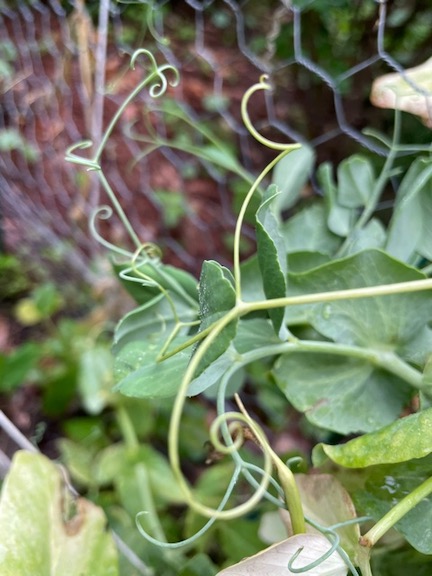
I finally decided this morning that the space was much more important for my summer vegetables and that I had to pull up the pea vines. And feeling only slightly guilty that I had breached our agreement (I mean, after all, they’re only peas) I picked the last pods and tossed the plants on the compost pile. Tomatoes and okra are happy that they have more room, Jack is happy that we won’t be having sugar snap peas at every meal. I’m happy because I’m always happy in the garden and because I know too much sugar is just not good for you!
Hubris in the garden

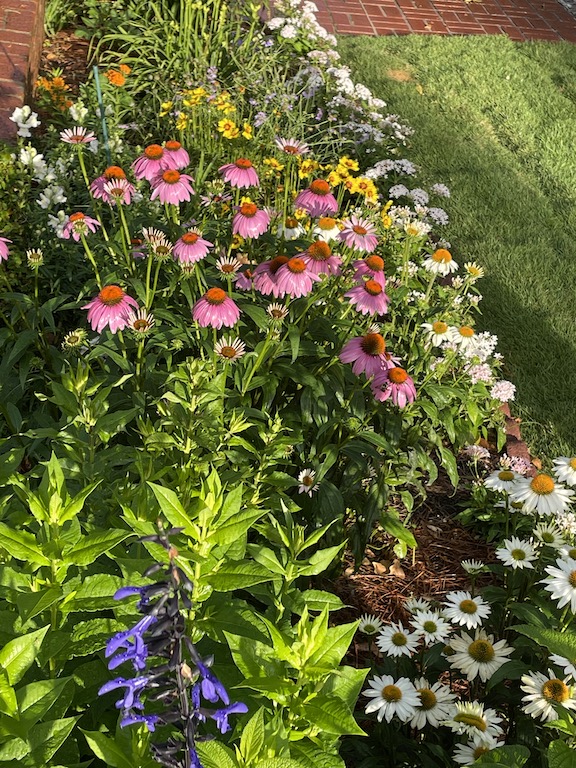
I’ll have to admit that every once in a while I am guilty of hubris when it comes to my garden, especially this time of year before bugs and heat and gardening fatigue have taken their toll. I look out at an expanse of bright blossoms and healthy foliage and swell with pride.

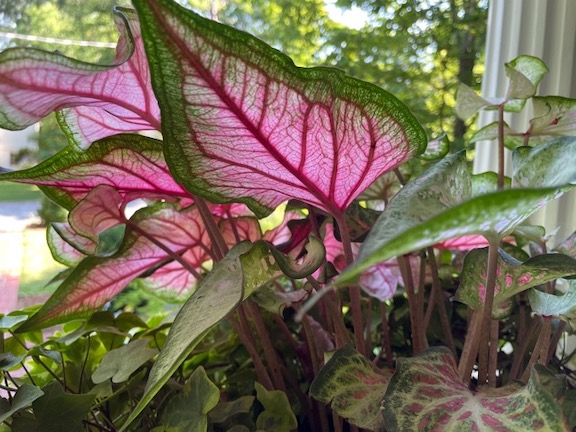
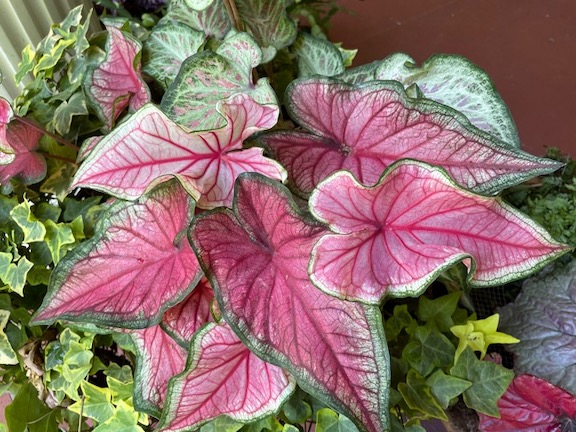
But inevitably, in the wings, my dear and revered Mother Nature is standing by to bring me back down to size. This year my comeuppance was particularly humbling. My caladiums last year were so beautifully satisfying that when cold weather threatened, I decided to save the bulbs to replant in the spring. (Caladiums won’t tolerate freezing temperatures so I couldn’t leave them in situ.)

I dug the fat bulbs and stored them in the garage over the winter and in early March, shook off the dirt, removed any lingering dried foliage and planted them in an array of pots. I put a few on a sunny windowsill and a few under a grow lamp, just to see which would emerge first and dreamed of a field of colorful caladiums in my back yard.

And then I waited. And waited. And waited. While my tomato and zinnia seedlings virtually jumped out of the potting soil and grew quickly and happily, my caladiums didn’t show a sign of life. Finally, after a couple of months, I couldn’t stand it any longer and dug up one of the potted bulbs to see if it was at least putting out roots. This is where Mother Nature began laughing as if she were watching a Laurel and Hardy skit.

Even after I fixed the problem, I can’t say my bulbs were very happy.

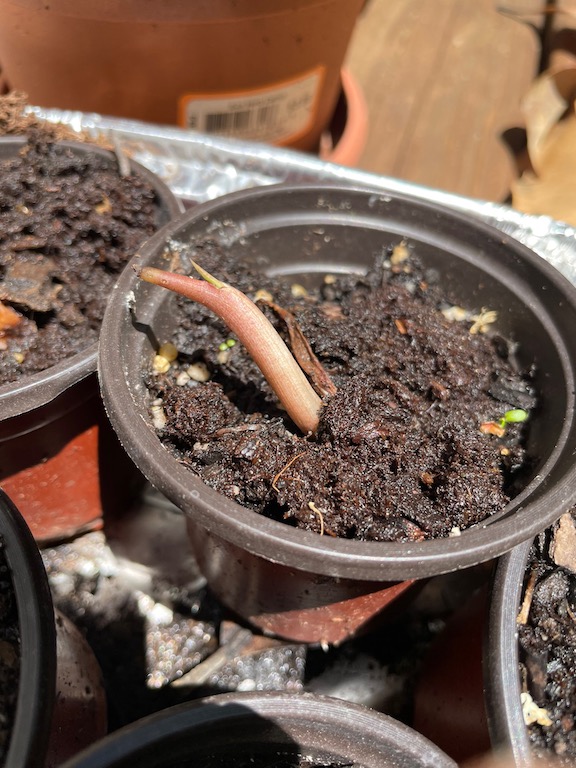
Because what I discovered was that I had planted all my carefully saved caladium bulbs upside down. And poor little pitiful leaves were trying desperately to blindly push their way through damp dirt to find sunshine. Oh good grief!
Humbled and slightly embarrassed, I dug up the remaining bulbs, turned them right side up and tried again. More than half the bulbs had rotted, being planted so improperly they just gave up, and the remainder weren’t in any great shape but a half dozen persevered and look pretty good, though still a little frail by now.

It was a great reminder that no matter how long you’ve gardened, how much you’ve read and studied and how hard you’ve worked at it, gardening is still a humbling – though ultimately extremely satisfying adventure.

The Cutting Garden

If there’s one thing that I enjoy more than looking at the flowers in my garden, it’s looking at a bouquet of flowers I’ve created from flowers cut from my garden. The bouquets vary from one season to the next, of course, and sometimes even one week to the next as the progression of blooms marches through the gardening season.

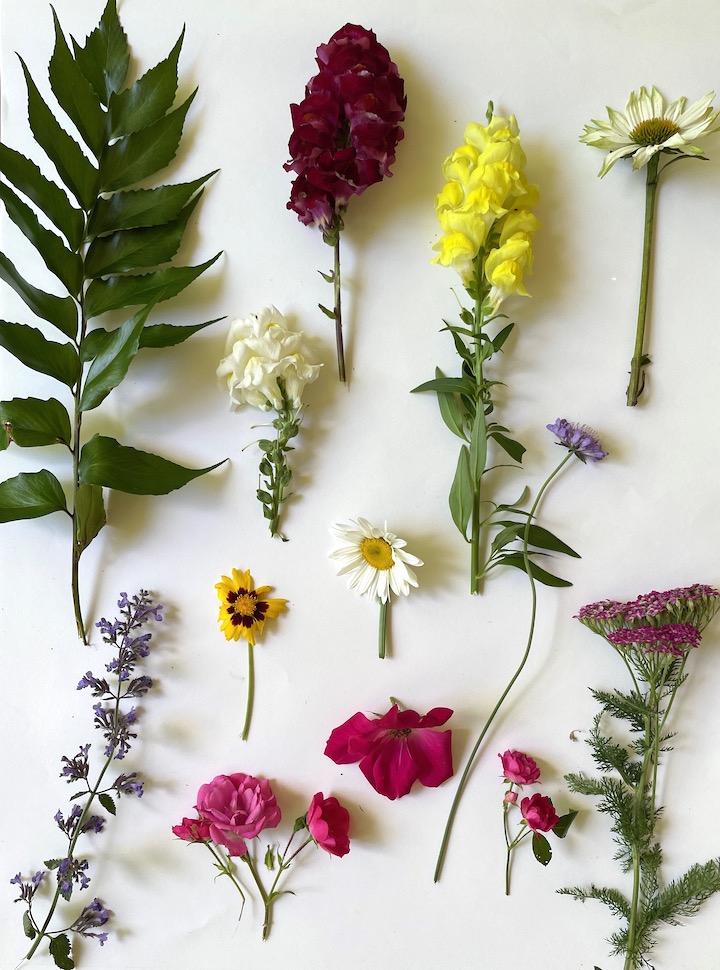
Holly fern, snap dragons, echinacea, catnip, coreopsis, Shasta daisy, pincushion flower, roses and pink yarrow.

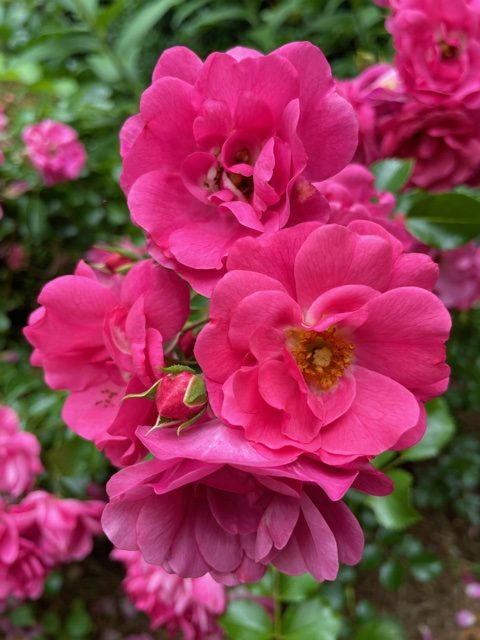
Right now, in mid-May, my garden is full of cuttable treasures. I have six different kinds of roses, mostly pink and mostly the “low maintenance” variety. Although I love the more traditional roses as much as anyone, I’m just not willing to give them the chemical support that they so often need. In my garden, they only get the bare necessities of sunshine and water.

Roses have hit their peak. Once the blooms fade, I’ll cut them back and get another round of blooms in a few weeks.

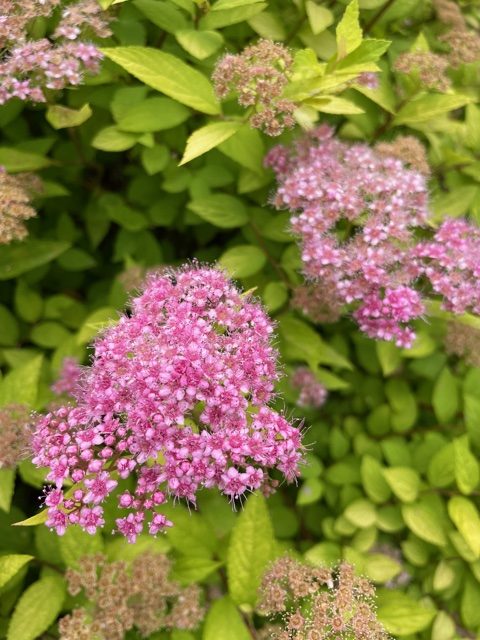
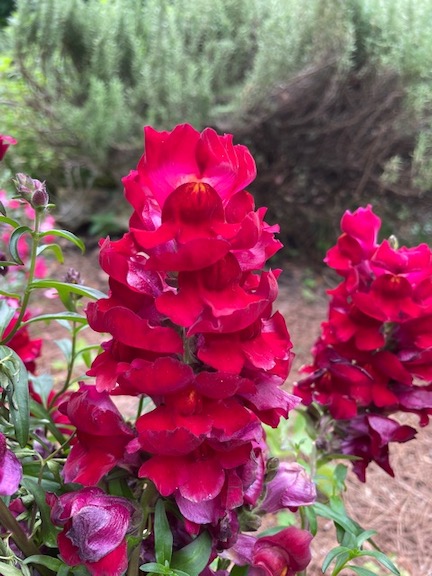
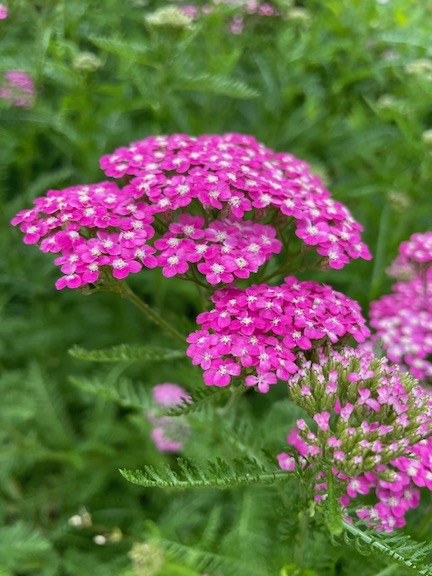
I have a lot of pink things in my garden right now. Pink yarrow, which began to bloom in earnest about a week ago, looks gorgeous alongside the roses and dark reddish-pink snapdragons. The pink blooms of spirea look especially pretty against their bright yellow / green leaves.

Golden leaf spirea is a shrub that puts out fuzzy pink blooms early in the summer. The cut branches look great in an arrangement.
I planted snapdragons last fall and patiently waited until they burst into glorious bloom in early April. I have white and yellow snapdragons as well as this red.
Pink yarrow gets floppy when it doesn’t receive enough sunlight but in full sun, it’s a splendid plant that will produce blooms for many weeks.

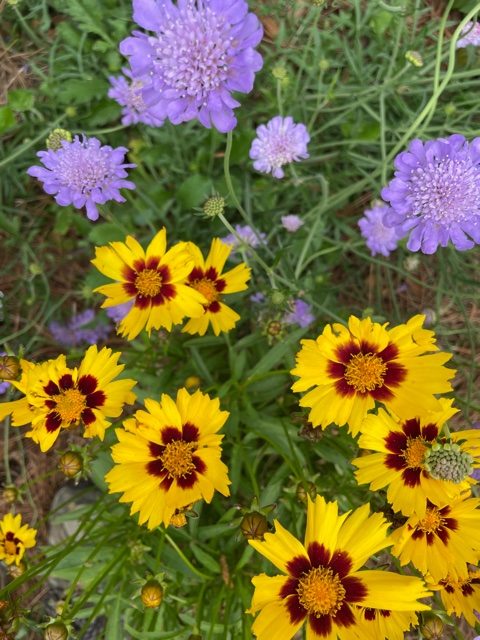
Both catnip and pincushion flower have both offered up boucoups of blossoms this spring and have stems long enough to make them a welcomed addition to a bouquet. The added advantage to cutting these blossoms is that if you cut enough, the plants will generally bloom again later in the season.

Pincushion (above) and coreopsis (below)

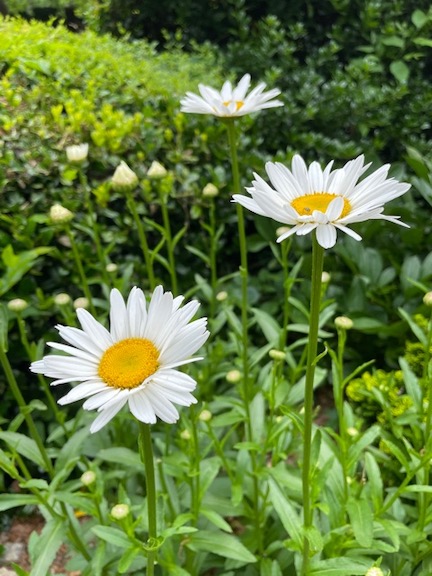
Daisy-like blooms come from Shasta daisy, yellow coreopsis and Echinacea, which I have both in white and a pale pink form.

White daisies last a long time as a cut flower and are easy to grow.

The best time to cut flowers is early in the morning when they are rested and full of moisture from the night. Once the sun comes up, they will begin to lose moisture. I try to put the cut stems into water as soon as possible.

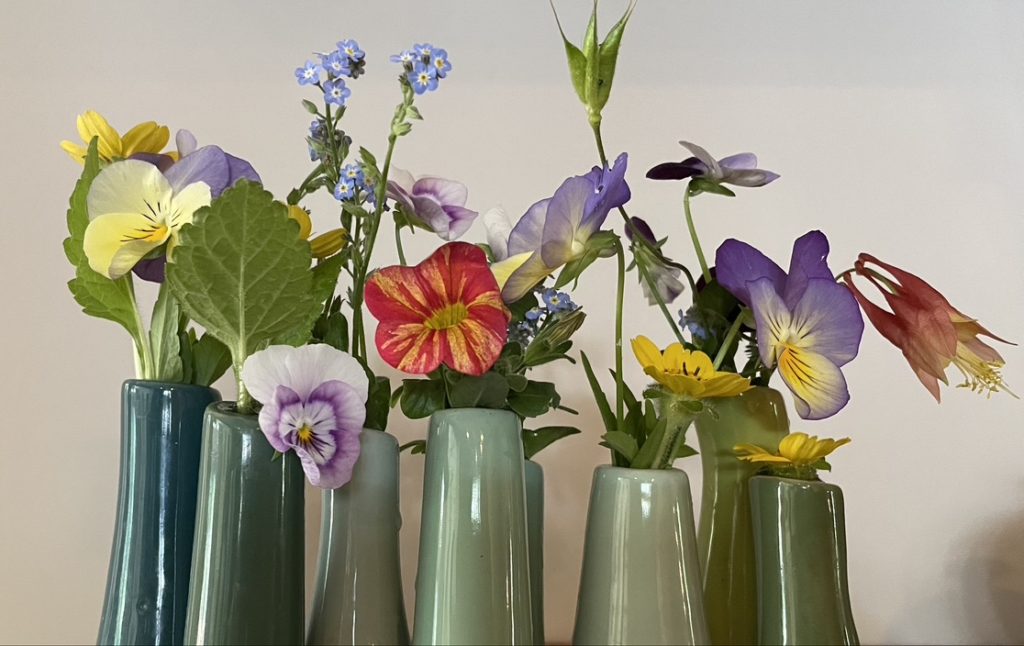
Earlier in the season I put small violas, million bells, forget me nots, cowslips and Columbine in small vases.

AS this cutting season fades, I look toward the next round of flowers, which includes favorite perennials such as summer phlox, bee balm, black-eyed Susans, hydrangeas and Japanese aster, as well as annuals such as apricot cosmos and lime green zinnias. Come on by – I’ll pick you a bouquet. Can’t wait!

Foxglove

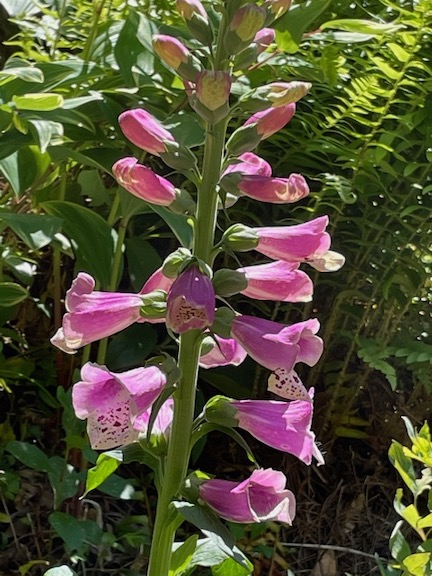
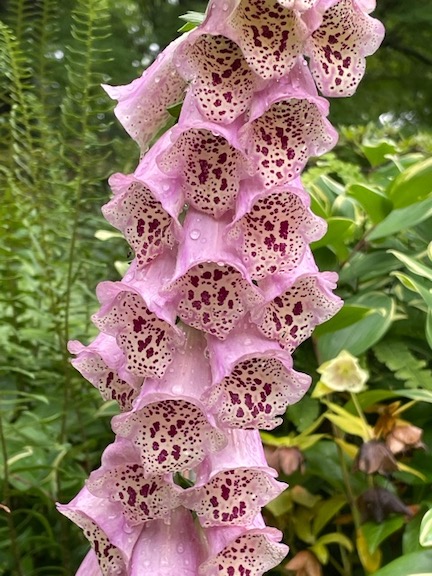
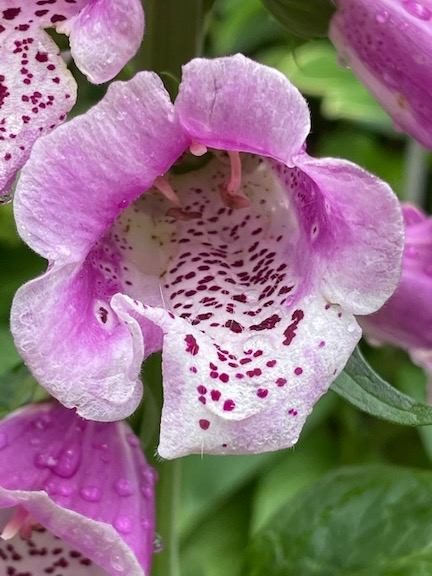
I’ve been trying to grow foxglove in my garden for years. The desire is, like many things in my garden, based partly on nostalgia because my mother used to grow beautiful foxgloves and partly due to the challenge of growing a new plant. But mostly it’s due to aesthetics because I find foxglove to be elegant and beautiful.

This year I had a bit of success as I found and purchased plants at a local nursery in early spring. I settled them into the space that I had planted foxglove seeds the fall before (with almost no success) and about two weeks ago they began to bloom.

Because they are so toxic, I put them in a place difficult for both dogs and children to reach. And they’ve done well. The spot is in semi-shade, has good, rich soil and good drainage. Everything I read about foxgloves indicates that they will “easily” reseed so I’ve provided bare ground underneath the fading blossoms and hope they do!

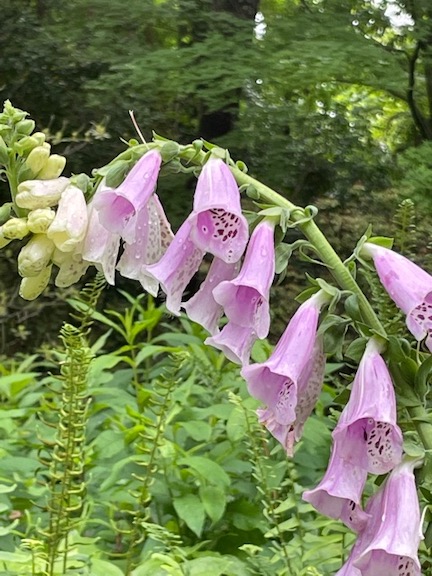
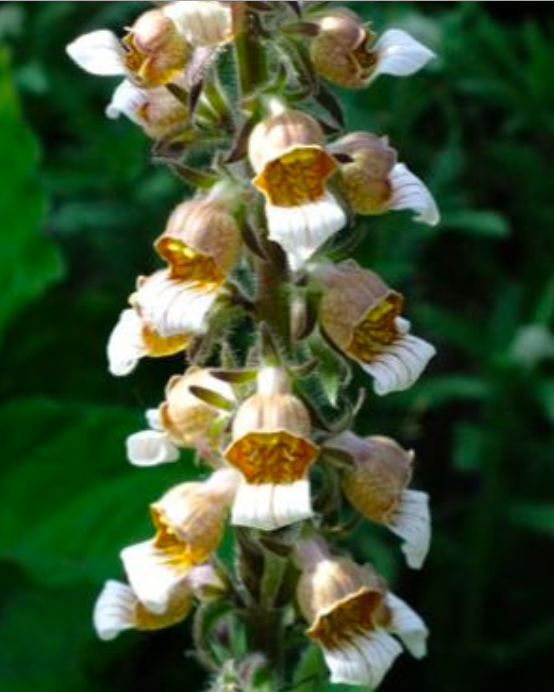
Digitalis purpurea is the species used most often in the garden and there are now seemingly endless numbers of varieties and cultivars that range from yellow and orange to white to the more traditional pink and purple. The bell shaped blossoms are arranged on a tall, graceful stalk. The shape of the flower has led to many common names (some say as many as 65 folk names). “Foxglove” has several possible origins, including a variation on the name “folk glove”, folk referring to the fairies and other little people. Another possible origin is that the name came from “fox’s glew,” a glew being an ancient bell shaped instrument.

It is Digitalis lanata that is the commercial source for the chemicals that are found in the drug digoxin that is used to treat heart disease. At present, the chemicals cannot be produced in a lab, meaning that we are still dependent on the plant itself for the components in the drug. Growing digitalis for commercial use is an intensive and time consuming project, since the plants have to be two years old before they are harvested and even then, the plant produces very small amounts of the glycosides. And, if you believe in superstition, the process is further complicated because folk healers believed that the plant only held medicinal powers if it was collected with the left hand!

The first documented use of foxglove as medicine is attributed to an English doctor, William Withering, who wrote of using the plant to treat a patient in the 1780s. The story is told that the patient regained her health – and that the good Dr. Withering eventually married her.

Although the plant has saved many lives, it’s good to remember that many species, including the garden variety, are poisonous and that they should be treated with care and admired at a distance.

Ferns: Shaggy, sensitive, maidens

I love ferns and have multiple kinds growing both indoors and out. I have to admit that they are a little tricky to identify but for the most part, I can come up with an ID that satisfies me.

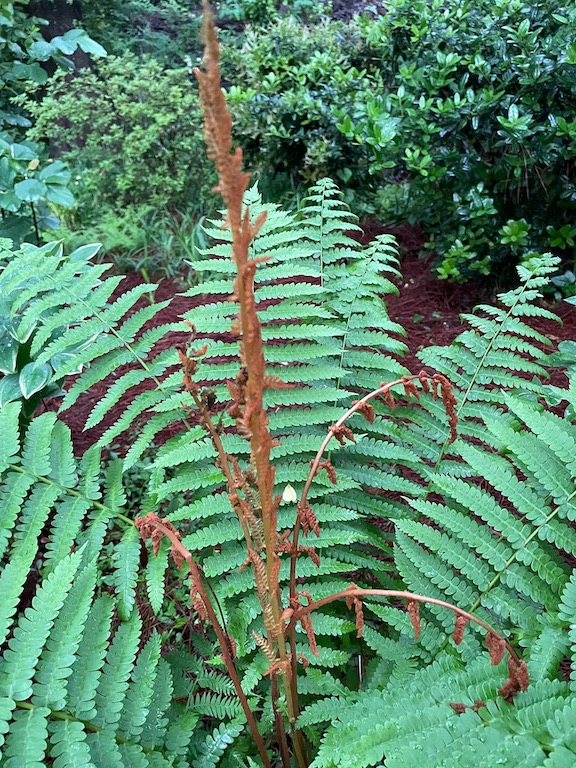
Cinnamon fern

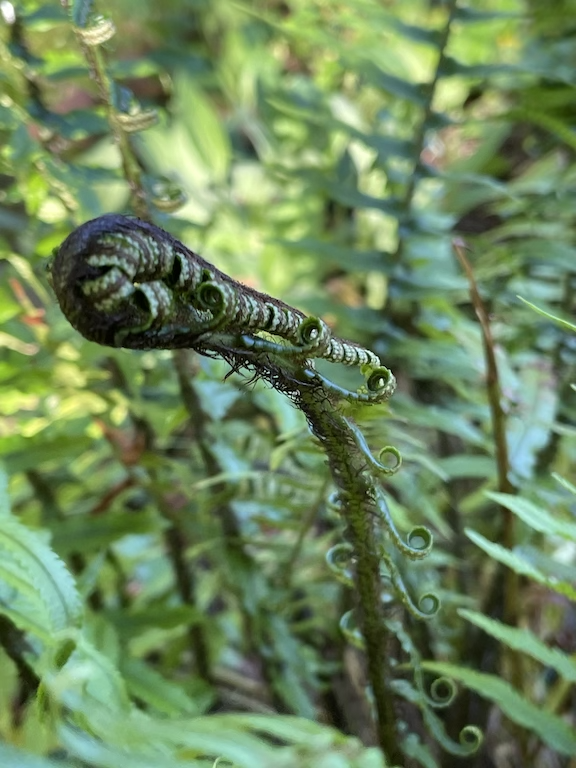
So, when I transplanted a beautiful fern from our land in north Georgia down to the garden in Atlanta, I thought it would just be a matter of looking it up to find a name. This is a very distinctive looking fern with unique characteristics. It is covered with black hairs and the fronds, instead of being in a circular coil like other ferns, are folded back onto themselves. So, I thought it would be no problem finding the name. I thought it was probably native since it was growing in the woods, but I wasn’t sure because it was not far from the house.

I went through all my books and even dragged out my mother’s copy of Getting To Know the Ferns that she used a half century ago. I Googled it, of course, and spent hours scrolling through fern images but nothing looked even close.

This is where I’m going to lose some of you. You either “get” the obsession of having to know the identity of a plant – or you don’t. Many of us have obsessions, mine just happens to be a relatively severe case of plant mania. I literally stayed awake at night trying to figure it out, images and possibilities flitting through my mind. But I still came up empty handed, or empty minded as the case may be.

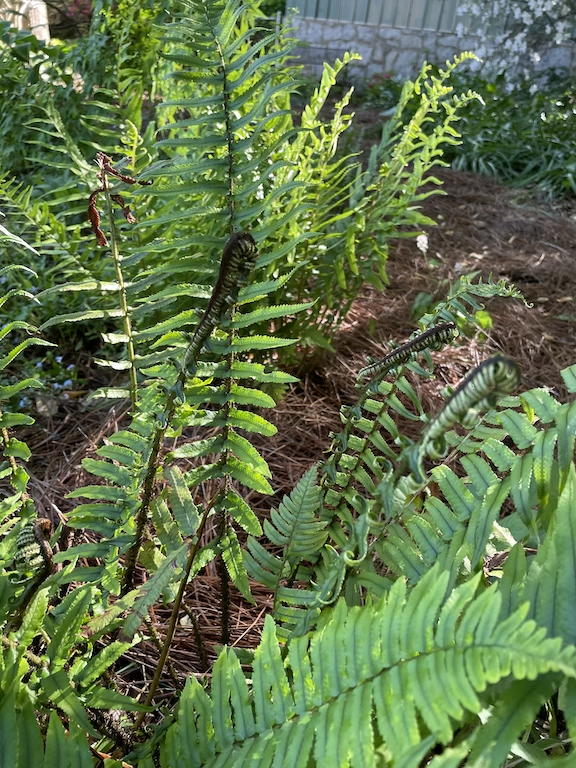
Shaggy wood fern

But I knew help was on the way. Forty master gardeners were coming to look at my garden, surely someone would know. But, no! We were all intrigued but no one could come up with a positive ID. Back to the drawing board, or actually the phone on my camera. I took lots of pictures. I contacted a fern nursery. No response. I called a local nursery. No answer. Finally, it occurred to me that there must be an American Fern Society. Which, of course, there is. And they have a Facebook page. I hurriedly joined their “group,” became their new best “friend” and posted my pictures. Within an hour, I had an answer. Dryopteris cycadina. Of course! Why didn’t I think of that? Just kidding. Commonly known as shaggy wood fern, it is NOT native to North America but instead is native to China and Malaysia and is obviously sold as a cultivated plant here. It is a handsome plant and one that I’m glad to have growing in my garden. But more than that, I’m just glad I know what the sucker is. Now maybe I can sleep at night

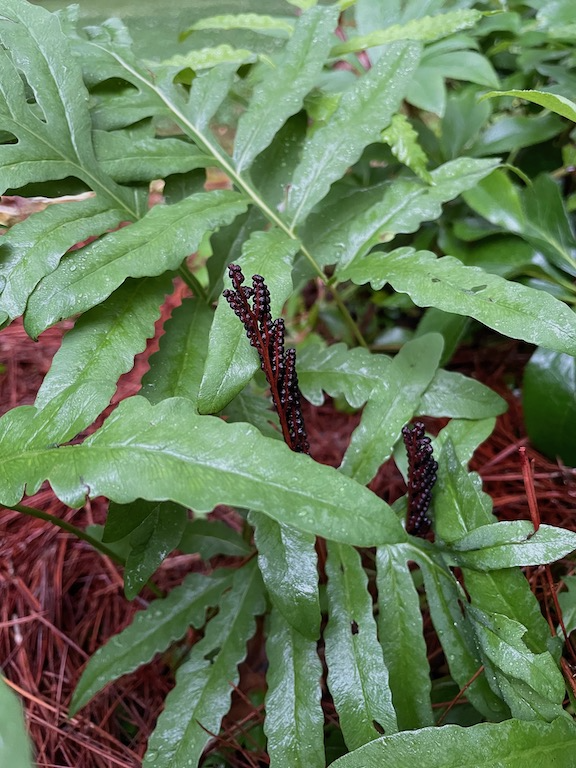
Sensitive fern

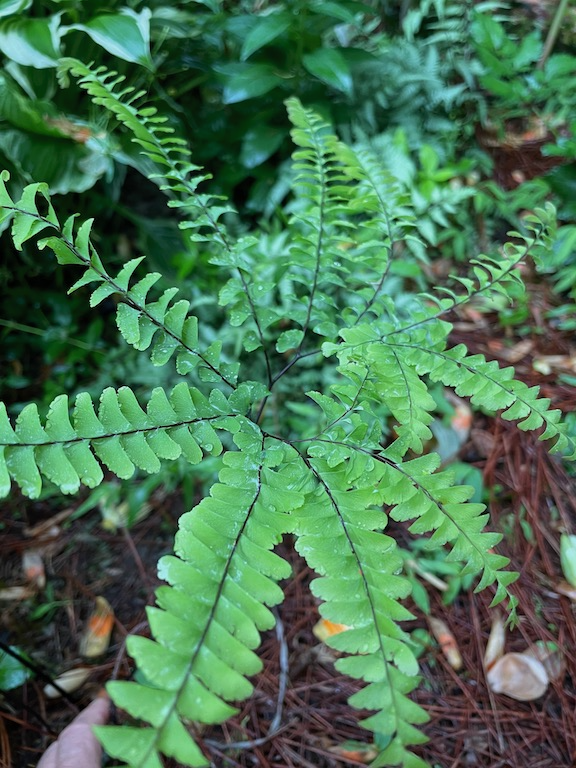
Oh, and for the sensitive maidens? Other ferns, of course. Both maidenhair and sensitive ferns have a strong presence in my garden and thankfully, I know their names.

Maidenhair fern

Posers in the Plant World

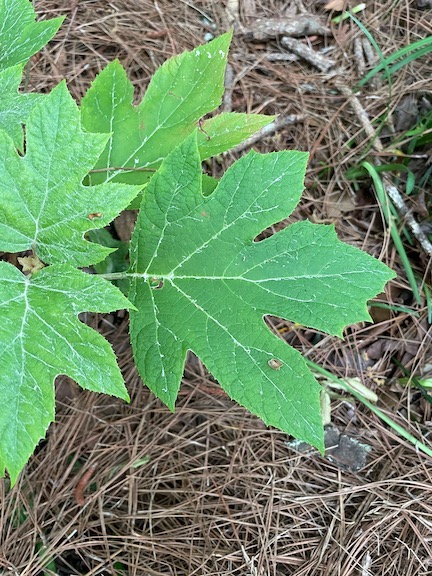
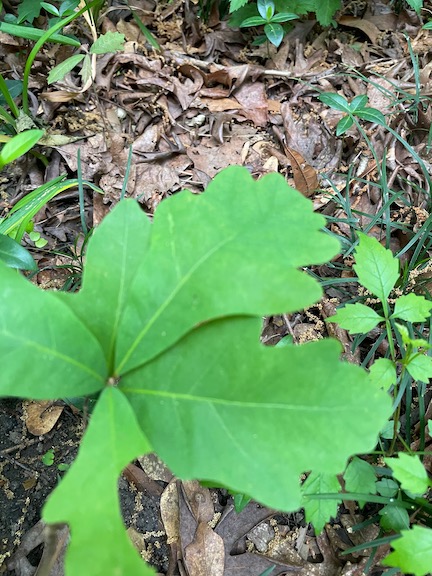
I stared at my Oak-leaf hydrangea, knowing something wasn’t quite right. Some of the leaves just looked a little off but I couldn’t quite figure out what was wrong. Finally it dawned on me that what I was looking at was a real oak leaf from a seedling growing right up through the hydrangea! Coincidence? I think it more likely that it was Mother Nature enjoying a good laugh at my expense. Again.

OAK LEAF HYDRANGEA
OAK LEAF

This happens over and over again (Mother Nature laughing) when I try to impose some sort of control over my happy, wayward garden. Like a 3rd grade prankster, Mother Nature continues to tease and baffle me, allowing weeds to flourish right next to a plant that it closely resembles.

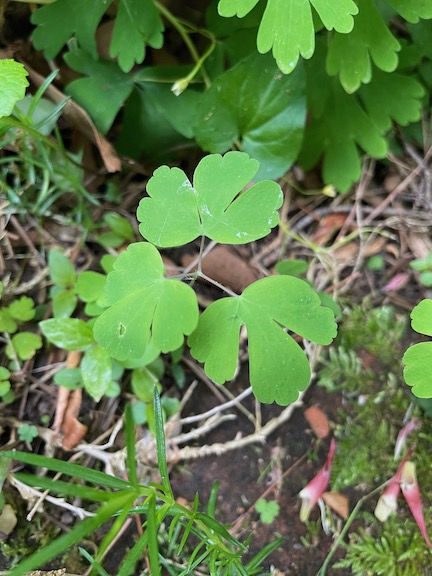
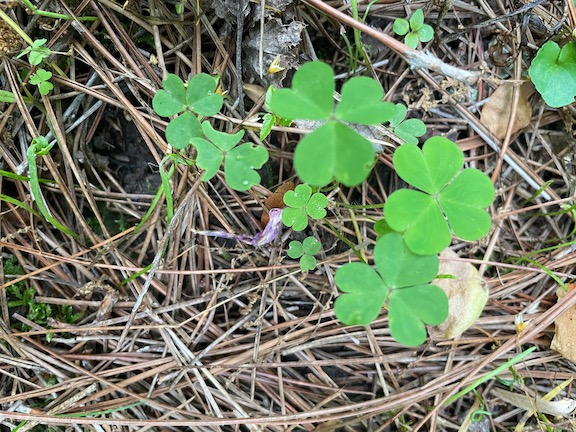
Take, for example, the bed where I’m working hard to establish Columbine seedlings. Sprinkled throughout the bed are the seedlings of common, weedy wood sorrel that look almost identical!

COLUMBINE
Wood sorrel

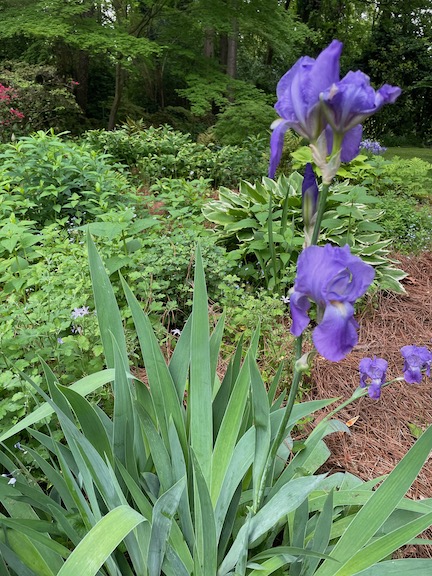
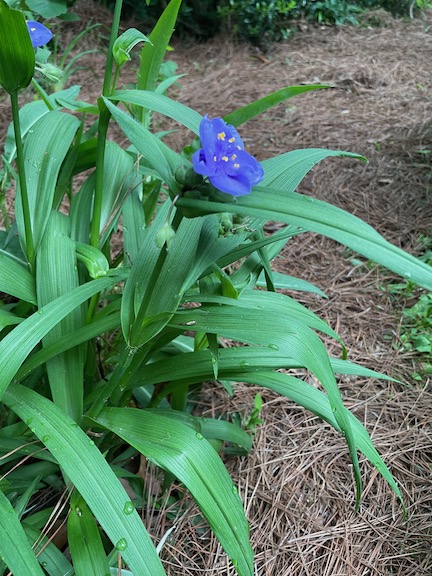
Or think about all the giggling going on when I was all puffed up and proud of the thick, luxuriant growth of iris only to realize that half of the leaves were from the aggressive and unwelcome spider wort! Ha, ha. yeah, yeah, yeah.

Bearded iris
Spiderwort

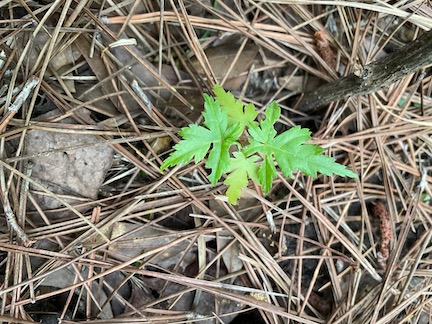
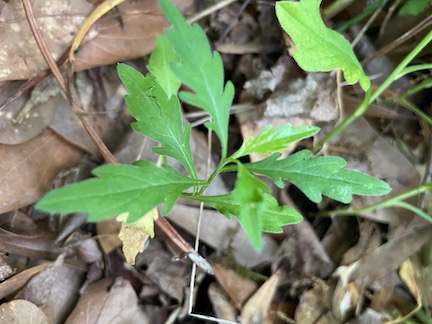
And then there are the tiny seedlings from my mother’s Japanese pale tree that I protected with great ferocity (staking, chicken wire, extra watering etc.) only to find out that they were actually new growth from the ubiquitous Japanese aster.

Japanese maple seedling
Japanese aster

Is all this a survival mechanism? Do weeds grow next to plants they resemble because they have a better chance of being missed by obsessive gardeners? The whole field of plant mimicry is fascinating and perhaps the most interesting example is the Boquila trifoliolata, a vine growing in Chile that is a master of disguise.

Boquila trifoliata – and a look alike tree

This sneaky plant can vary in size, shape, color, length of stalk and angle of growth to mimic the plant it is growing next to. And, no physical contact is necessary. If the vine is growing close to a plant with spiny-tipped leaves, Boquila, too will develop spiny tips. It must be the world’s greatest plant poser.

Boquila does not grow in my back yard, although I am quite sure that if it did, Mother Nature would be having another good laugh.

Appalachian Spring

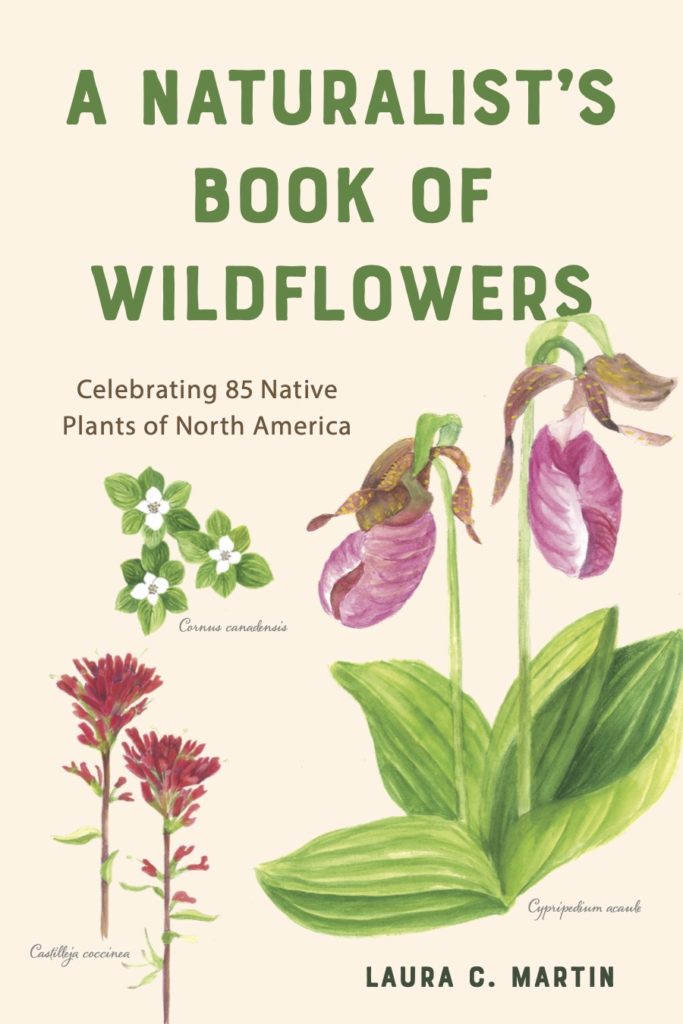
Jack and I spent this past weekend in the North Carolina Mountains up towards Joyce Kilmer Memorial Forest. It was Jack’s annual indulgence in allowing me to spend hours crawling around on my knees, magnifying glass in hand wallowing in wildflowers. It was glorious! The flowers, for the most part, can speak for themselves. If you’re interested in reading more about these (and other wildflowers), check out my latest book A Naturalist’s Book of Wildflowers, available at numerous online sources. For a link, click on “Books” from the menu at the left. Enjoy.

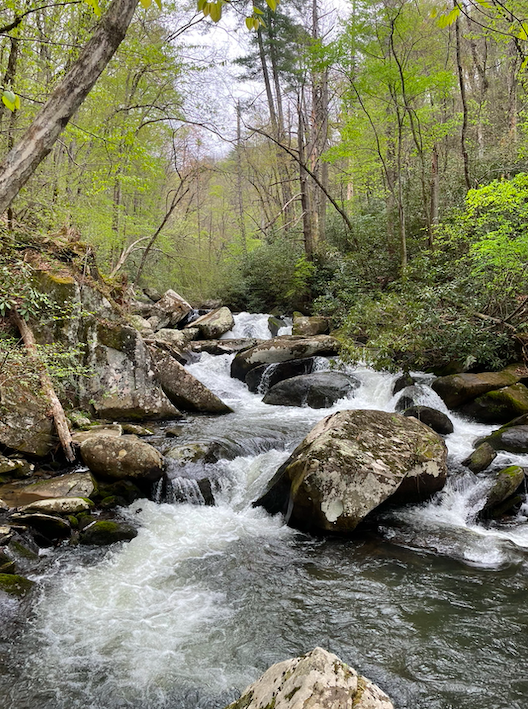
Being typical Appalachia, there were many beautiful streams, each with their own unique flora.
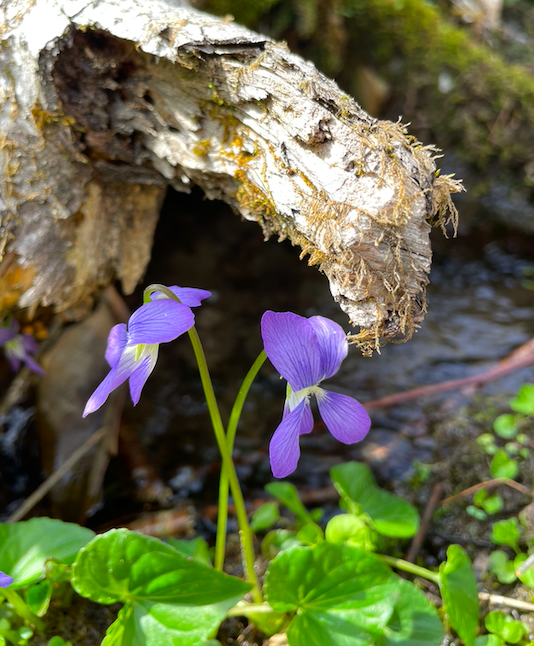
Stream violets, with stems 6 – 10 inches tall were beautiful.
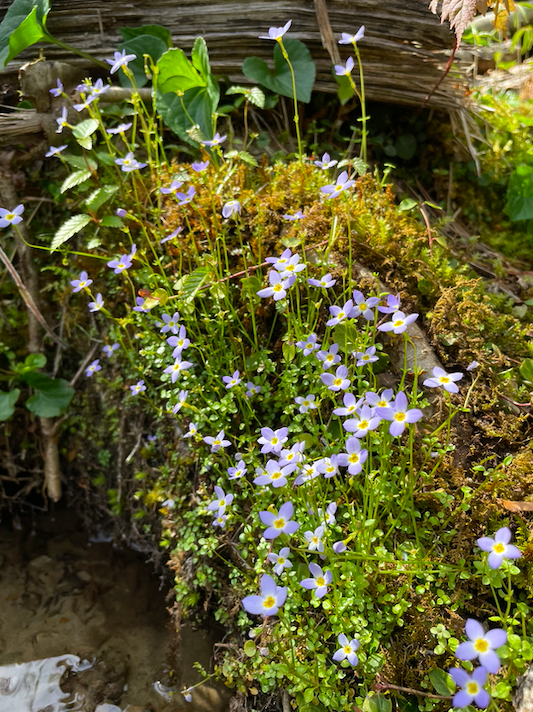
Bluets were growing on mossy rocks.
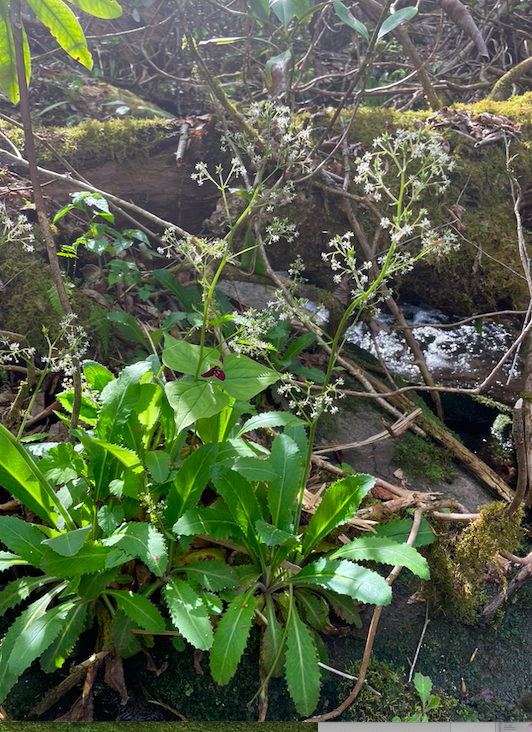
Brooks lettuce was growing right in the water. This is the only place I’ve seen it growing.

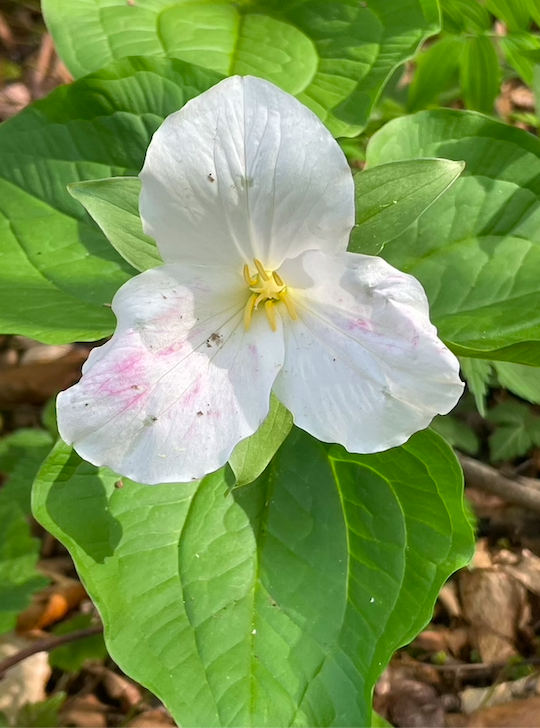
Trillium grandiflora covered acres of woodlands.
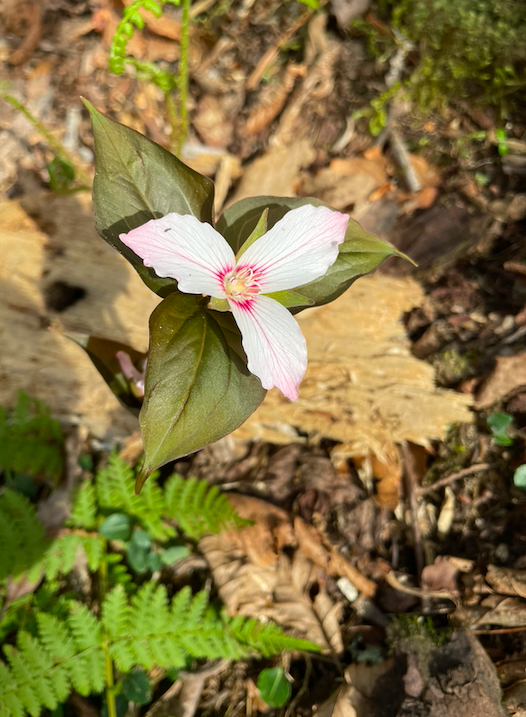
Painted trillium was not as abundant but individual flowers were stunning.
Toadshade has a peculiar odor, beloved by certain pollinators.
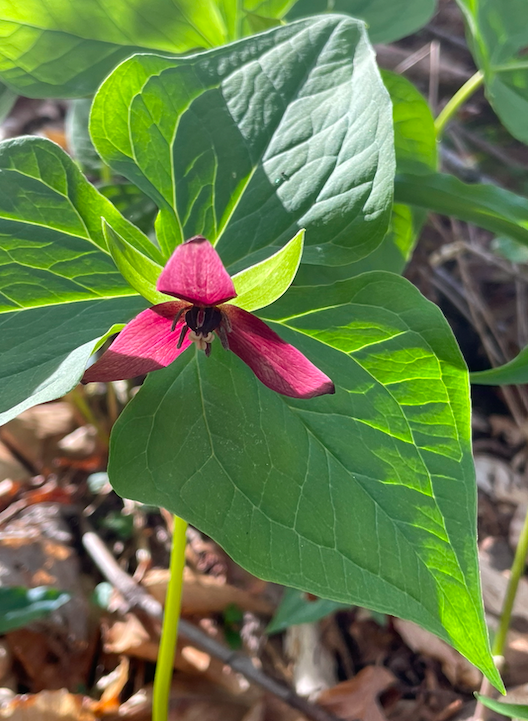
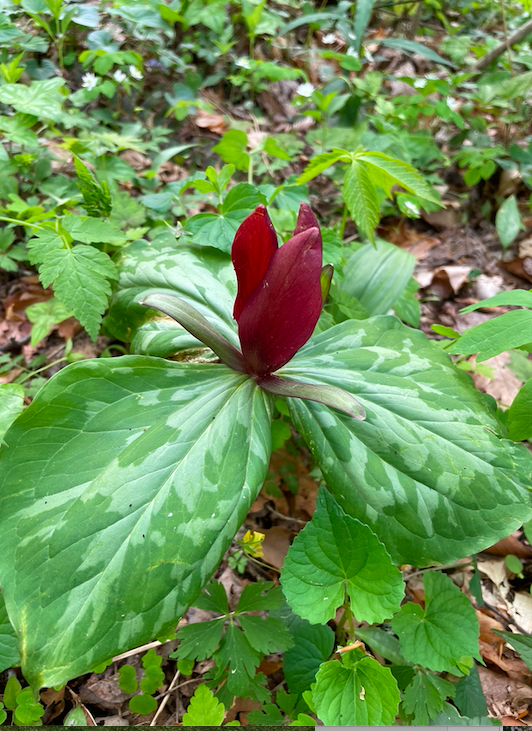
Purple trillium also has an unpleasant scent but a beautiful blossom!
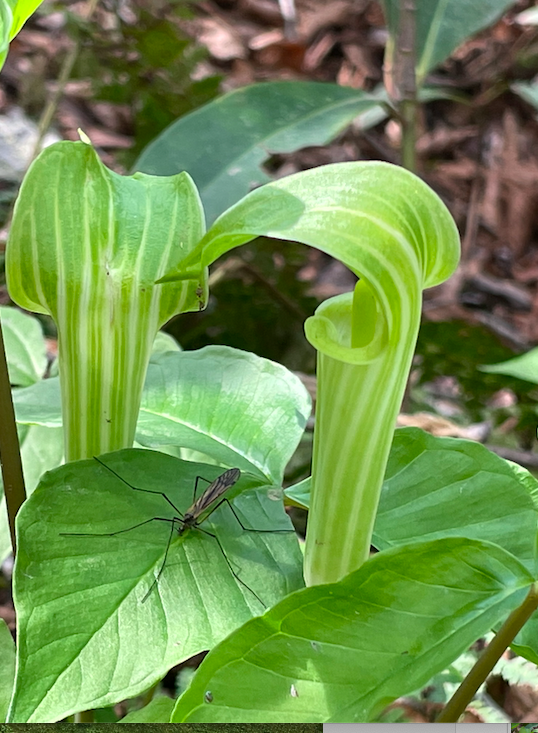
Though it has leaves similar to the trillium, Jack in the Pulpit is a distinctly different wildflower.
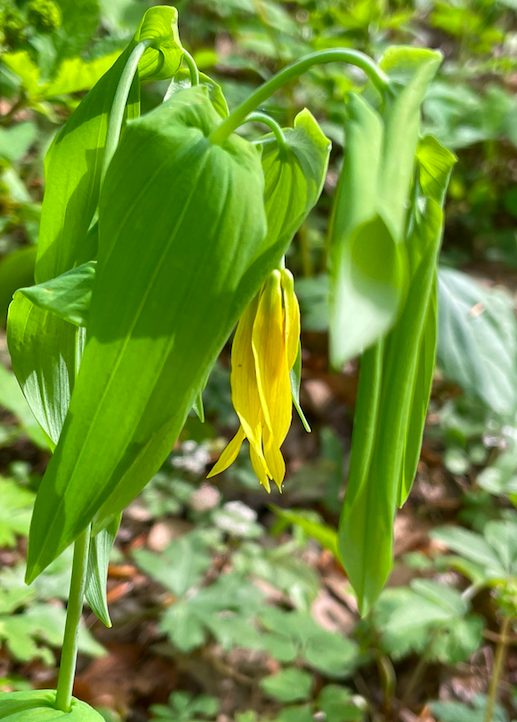
Large-flowered bellwort has gorgeous yellow flowers that never quite open
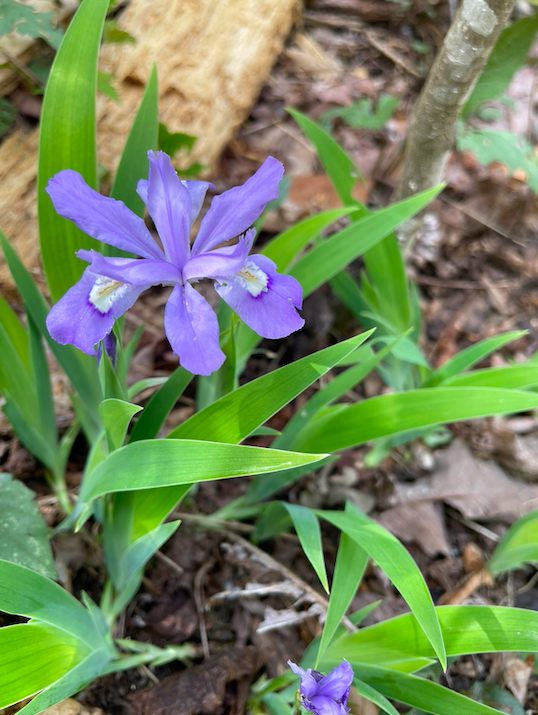
Dwarf crested iris is a miniature version of our cultivated bearded irises – and a treat to see in nature.
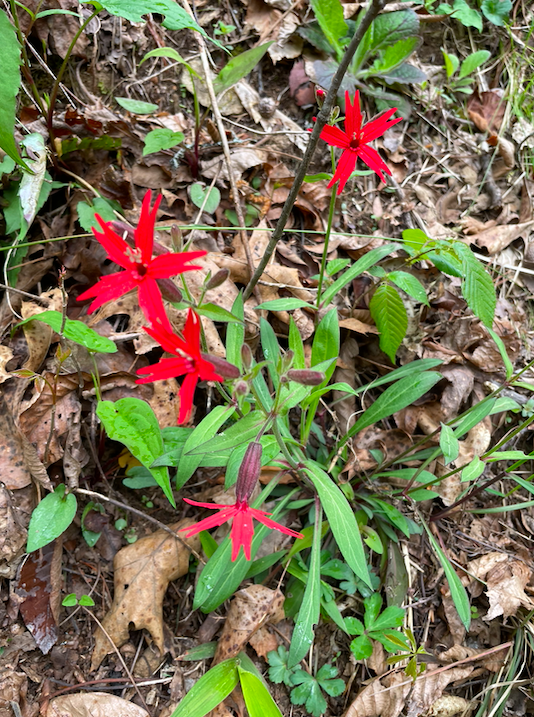
Indian pink is not named for the color (obviously) but because the petal edges are notched or “pinked” as with pinking shears.
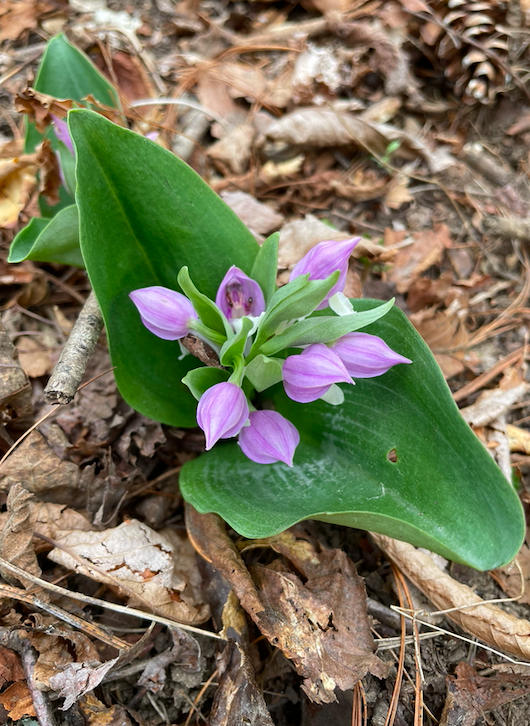
Though it was too early for Lady’s slippers, we did see this showy orchis, just beginning to open.

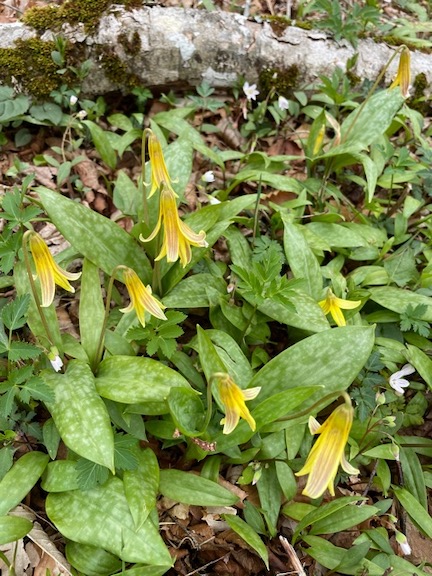
We only saw Trout Lily on one trail but it covered the hillsides.

Getting ready for the Masters

Last fall, when the local chapter of Master Gardeners asked if I would do a zoom presentation from my garden in April to celebrate the publication of my new book, I was happy to comply. It sounded like a great thing to do. Since I’d be the one behind the camera, I could point it to the most beautiful of the flowers, easily skipping over the weeds, the unkempt and the unwanted. But then the world began to open up again and they asked it they could come in person. In two weeks. YIKES!

It’s like getting ready for my sixth grade piano recital, practicing for the school play and inviting my favorite teacher over for lunch, all rolled into one. These people are MASTER gardeners, there’s no cutting corners or bluffing my way through this one.

And so, I’ve been in a joyful frenzy. The first thing I did was to order 40 bales of pine straw. It’s not exactly like sweeping things under the rug but I have found that pine straw can cover a multitude of small sins in the garden. It shows intent, it delineates beds and paths and – most importantly of all – covers up weeds.

In a perfect world where I would be a perfect gardener, I’d fully weed an area before putting pine straw down but I’m on a tight schedule here, so it’s not exactly perfect gardening.

My next step was to go to the local nursery. Again, this is not how I usually garden but I needed color in a few dark corners so I bought whatever they had that was in bloom that would look as if it would settle in in a couple of weeks, and would look as if it belonged there. After all, I don’t want my garden to look staged, like I only stuck things in at the last minute. (hmmmmm)

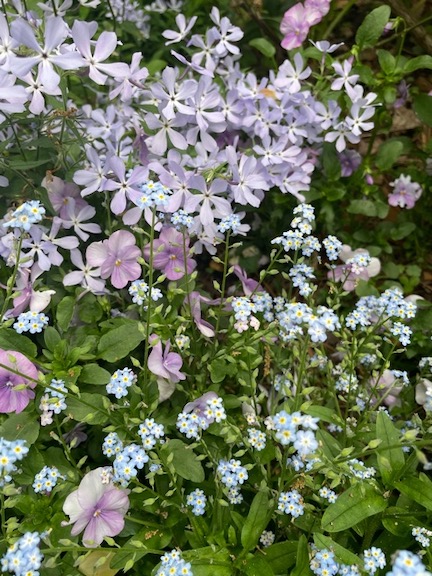
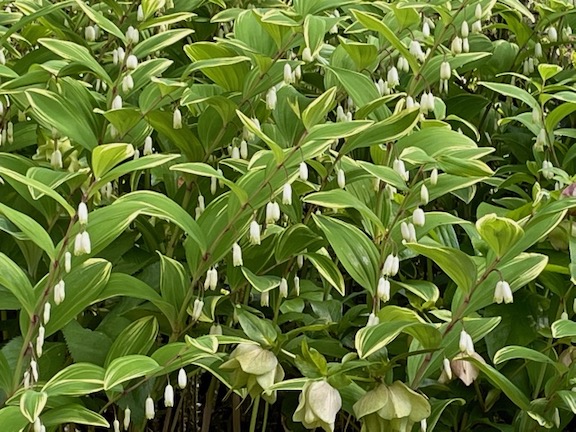
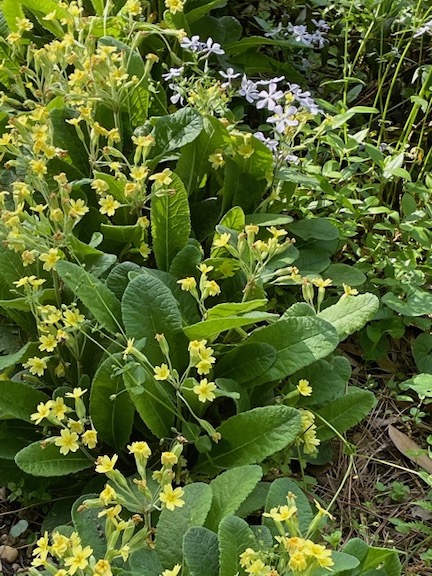
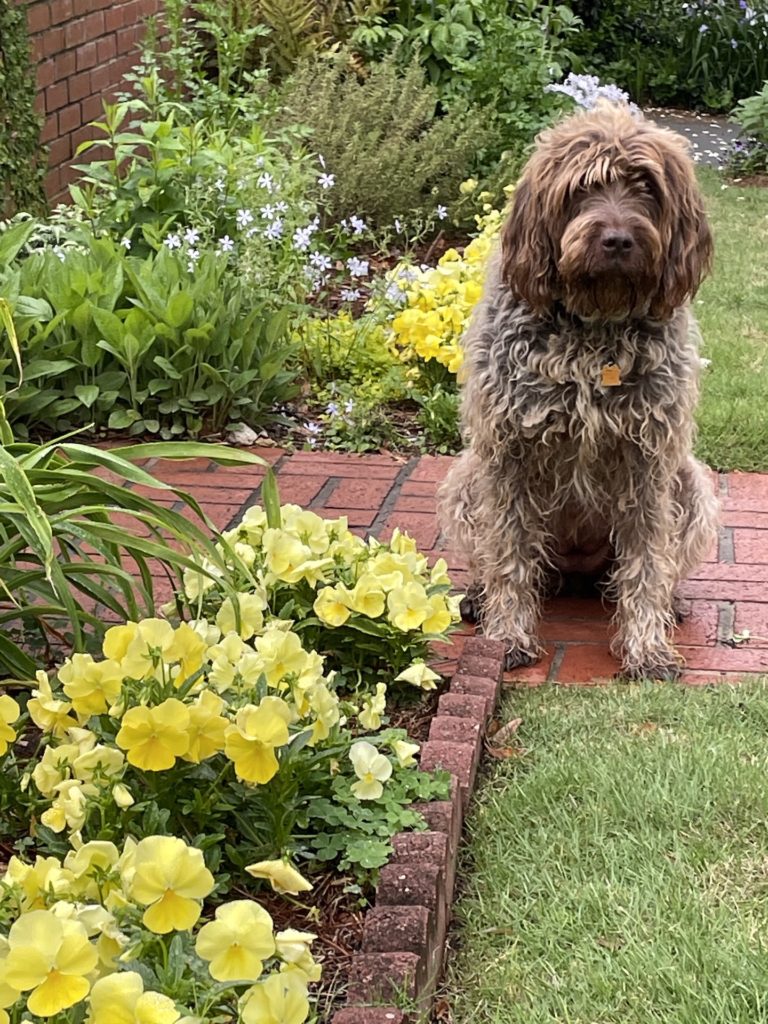
The truth of the matter is, I’m way overreacting. My garden is a wild and exuberant display of spring perennials right now. Azaleas are heavily laden with pink and white blooms. Blue phlox is at its peak and looks stunning with the forget me nots and the pink violas that I planted last fall. The path to my studio is lined with simple English yellow primrose, Solomon’s seal are in full bloom and stand arching gracefully over a profusion of green and gold. Will it all last another two weeks? I really don’t know. A lot depends on the weather but then again everything in the garden depends on the weather. That’s what makes it so exciting. A garden is never “perfect” never at rest and never finished. Certainly Master Gardeners know this and I’m sure, don’t expect perfection.

But I want them to love my garden. They won’t love it as much as they love their own (or as much as I love my own), but I am sure that they will recognize my passion for these plants and my enthusiasm for digging in the dirt. There will be, I am sure, a lively exchange of information and ideas and the satisfaction of spending time with people who share love and passion for something. Especially a garden.

And, what could be better than having a whole flock of Master Gardeners doing a house call? Just think how much I’ll learn!

All to say, I’m still spreading all that pine straw! My Mama used to say that the best way to get a clean house was to invite company. That goes double for when you invite the Masters. Sadie and I are excited.

My latest book, A Naturalist’s Book of Wildflowers is available here Amazon.       Bookshop.com.    Apple Books.   IndieBound   Barnes and Noble.  

Bare Branched Beauties

Loving the native azaleas

As we brace ourselves for the parade of jaw dropping spring beauty that has just begun in the South, it’s sometimes easy to experience sensory overdrive. Dogwoods, redbuds, and flowering cherry provide a lucious canopy for the shrubs below – mostly evergreen azaleas – whose branches are so packed with blossoms that they look like balls of brightly colored candy. The whole experience can be overwhelming for those of us passionate about and slightly obsessed with flowers. (Who me?)

I have nothing against the evergreen azaleas, I have a lot and keep adding to my collection. What could be better, really, than a shrub that provides evergreen leaves throughout the year, then graces us with startlingly beautiful blossoms for many weeks?

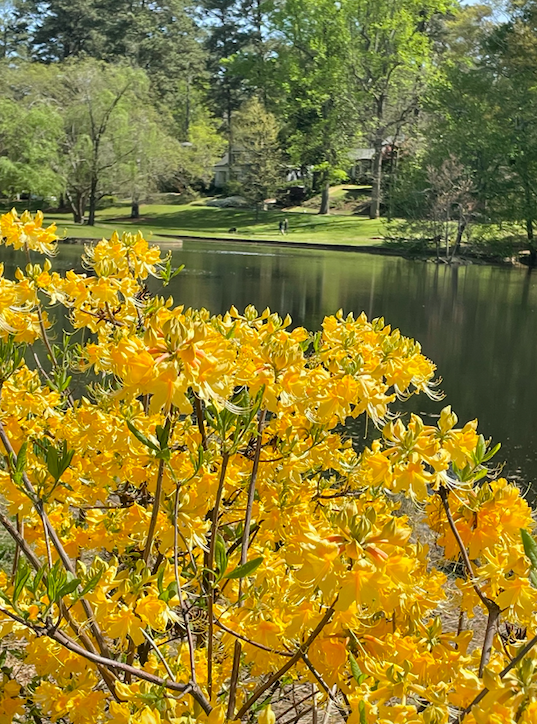
Flame azalea at an Atlanta neighborhood park.

Well…..for my own tastes, what could be better are the native azaleas which produce soft, gorgeous blossoms before the leaves come out allowing us to appreciate both the blossom, the new leaves and the lovely bare branches. Looking at this, you can breathe deeply and appreciate each perfectly formed flower.

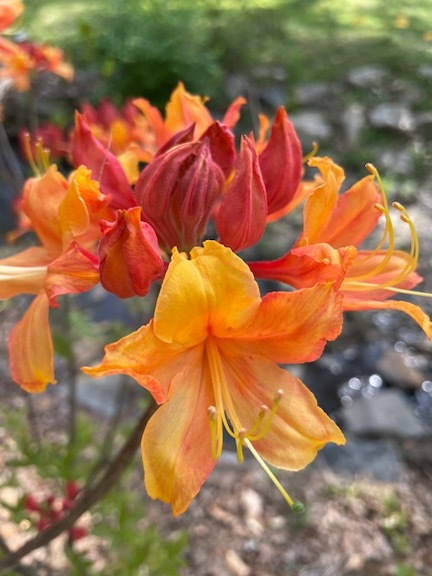
A cultivar of Flame azalea

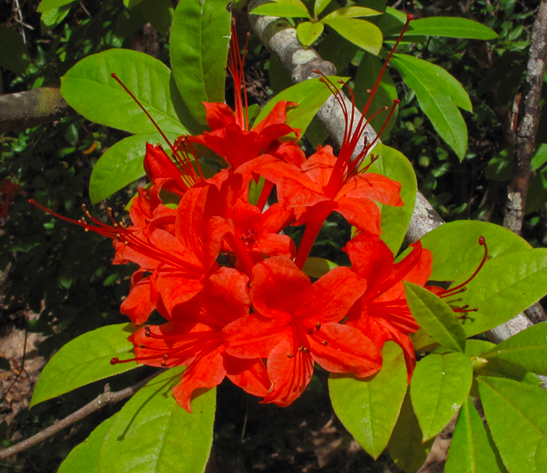
There are several natives that bloom this time of year, each with its own beauty and charm. The orange and sometimes red flame azalea, Rhododendron calendulaceum, is often found in our southern woods.

There are many natural varieties of flame azaleas, including “Hooper’s Bald” which grows profusely and happily on one of the open balds near Robbinsville, North Carolina.

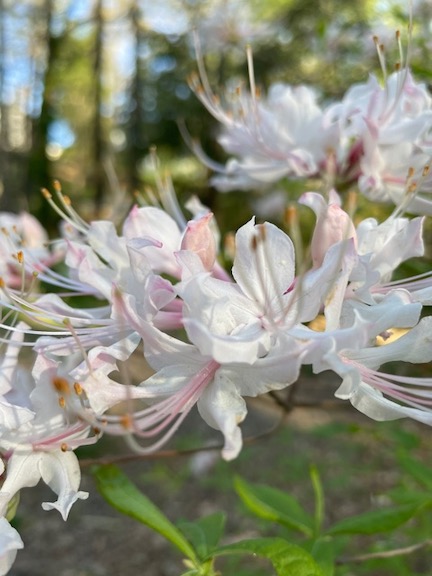
Piedmont azalea, Rhododendron canescens has either pink or white flowers and is the most common of the seventeen different azalea species native to the Southeast.

The Piedmont azalea (above) differs from the similar Sweet azalea in that the tubes are pink but the stamen are mostly white.

Choosing the right site is imperative for successful growth and bloom. Native azaleas need about half sun / half shade to bloom well. They prefer acidic, well drained soils. After they have been planted, they need regular watering until they have become established, usually about two years.

Native azaleas (as a group) are considered Georgia’s state wildflower (the state bird is the brown thrasher and the state animal is the white tailed deer) and what a beautiful choice! With their delicate blossoms, and bright green new leaves, they usher in spring with a restrained but lovely grace and joy.

Celandine Poppy

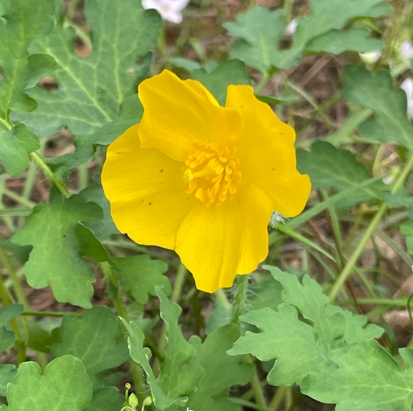
This spring my garden has been enhanced with the bright yellow blooms of the Celandine poppy. This is one of only two members of the Poppy family native to eastern North America (Bloodroot being the other). Celandine (Stylophorum diphyllum), sometimes called wood poppy, is a beautiful, showy wildflower that grows well in the semi-shady conditions of my back yard.

It is uncommon to find this in the wild and in Ontario it is considered an endangered species. But fortunately, it is easily cultivated and so far, it is a very satisfactory addition to the garden. I started it from bare roots (purchased at Gardens of the Blueridge Nursery last fall) and was delighted to see the bright green, attractive leaves unfurl early this spring. It only blooms for 2 – 3 weeks but it self sows and I’m hopeful that it will create gentle swaths of color without becoming aggressive.

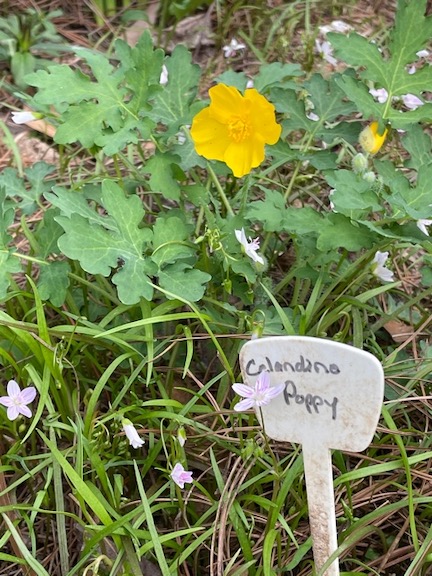
Celandine poppy looks great with the profusion of small spring beauty flowers that bloom at the same time.

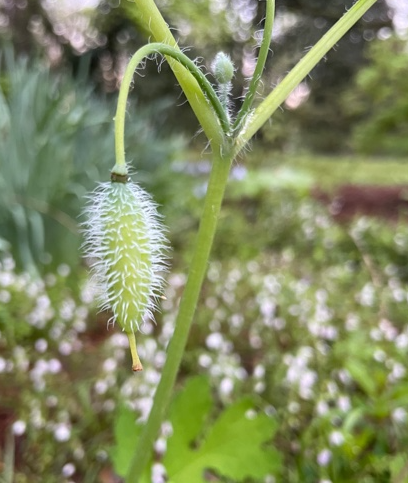
The seed pods are as interesting, though not as showy, as the blossom. They are fuzzy and hang from the petiole like a pendant. The sap is bright yellow orange and was used by Native American tribes as a dye. Take care, the sap will stain and possibly irritate your hands.

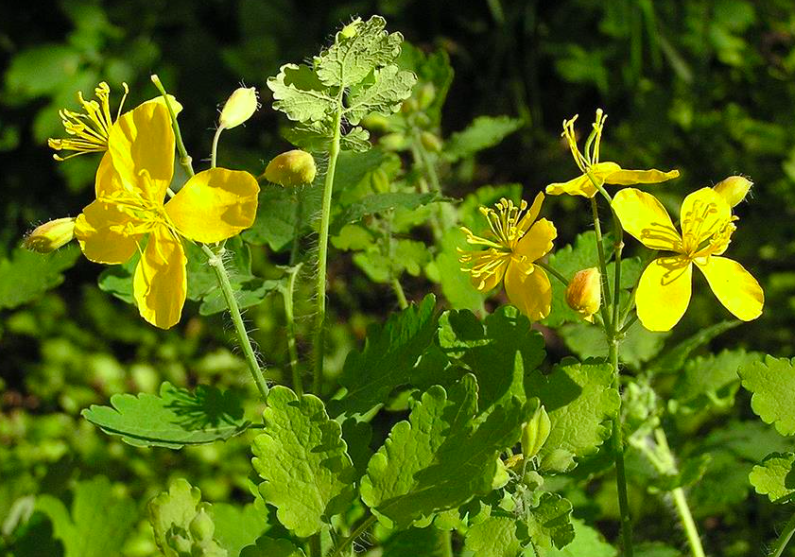
The common name, Celandine, comes from the plant’s similarity to the European plant Greater Celandine, Chelidonium majus. The two plants look very similar but the Greater Celandine is an aggressive grower and though not actually invasive, it should be maintained so that it does not push out other, more desirable natives.

Greater Celandine was used in medicinally for treating jaundice. This was based on the doctrine of signatures (or the Signature of All Things according to Elizabeth Gilbert) which was a European 17th century theory suggesting that whatever a plant physically resembled, it could be used to cure. For example the bright yellow sap of Greater Celandine was used to treat the yellow skin of jaundice.

Greater Celandine has smaller blossoms and a shiny, smooth seedpod. It is non-native and tends to be an aggressive grower.

Greater Celandine has a long history of use in folk medicine, with some pretty fantastic claims. For example, Albertus Magnus wrote in the thirteenth century, “if before named herb (Celandine) be put upon the head of a sick man, if he shall die, he shall sing anon with a loud voice, if not, he shall weep.”

Perhaps more useful for the lawyers in the family is the old superstition that says if you carry Celandine along with the heart of a mole, you will “vanquish your enemies and win your lawsuits!”