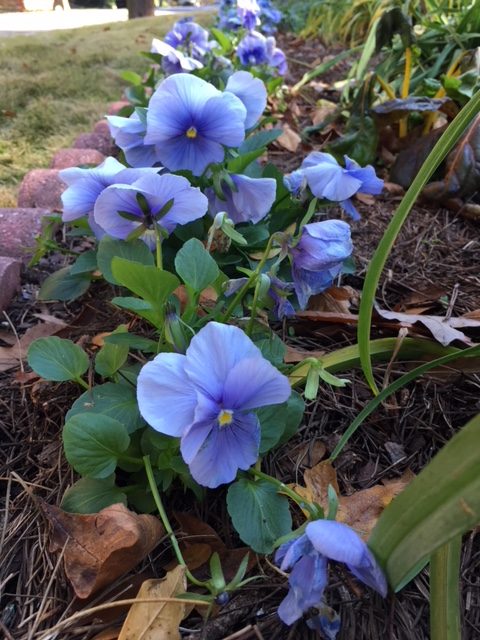
A Perfectly Pretty Pansy

Winter showed up in my garden last week. Jack Frost put to sleep any lingering thoughts of summer and my tender plants turned dark and limp over night. The difference between 32 degrees – and not – is the difference between life and death for many plants.
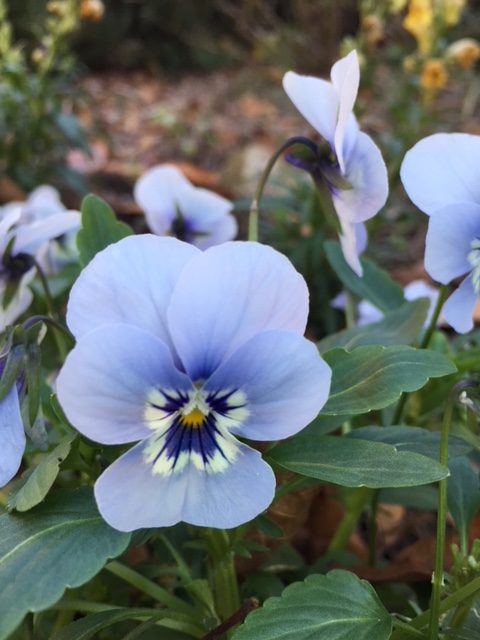
Fortunately, there are hardy annuals that don’t seem to mind the cold. Chief among these are the pansies. What great little plants! I can put them into the garden in October and, unless we have a sustained Arctic blast during the next few months, they’ll persist through winter and get a running start to perform beautifully in spring. I’ll finally dig them up to put in summer annuals in May.
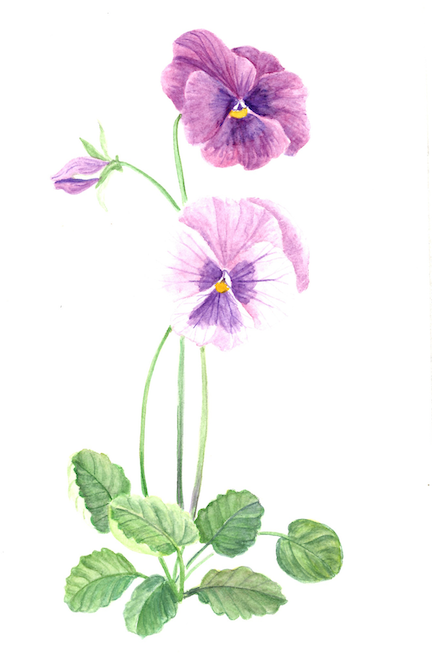
Some of my friends and family think that I’m a bit over-the-top obsessed with flowers and plants. Ha! Compared to William Thompson, gardener to Lord Gambier, a British naval commander, I am quite sane and reasonable. This man spent thirty years working to hybridize the small viola native to England to create the modern pansy. He was a legend in his own time (and obviously ours!) and by 1833, there were over 400 different named pansy cultivars. Today, there are countless varieties of both the large petaled pansies and the smaller violas.

The original little wildflower had many common names including Johnny-jump-up, hearts’ ease and tickle-my-fancy. Violas, then pansies, have always been associated with thoughts of love. The heart-shaped leaves were eaten to cure a broken heart.
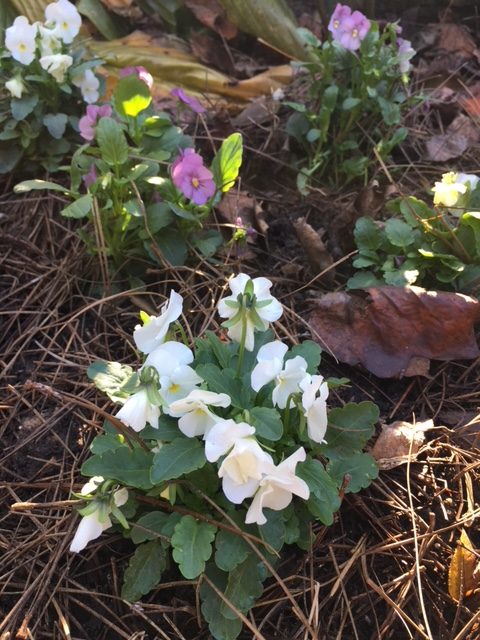
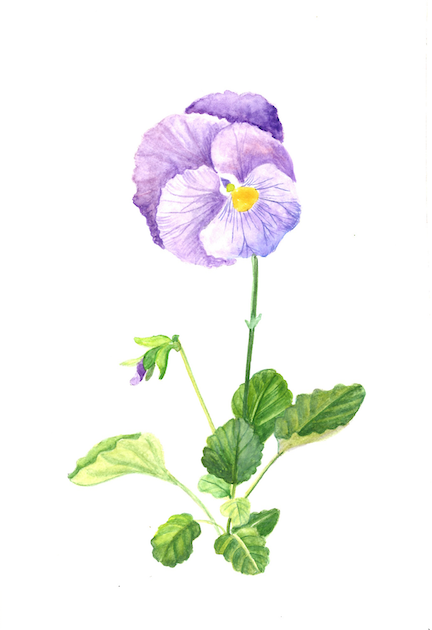
The name “pansy” is from the French word penser, meaning “to think,” because the French believed that the gift of pansies would make your lover think of you. According to the Victorian language of flowers, pansy means “to think of love.”

In addition to all this, both the leaves and flowers of pansies and violas are edible. The small viola blossoms make an excellent garnish for a salad or a beautiful decoration on an iced cake.
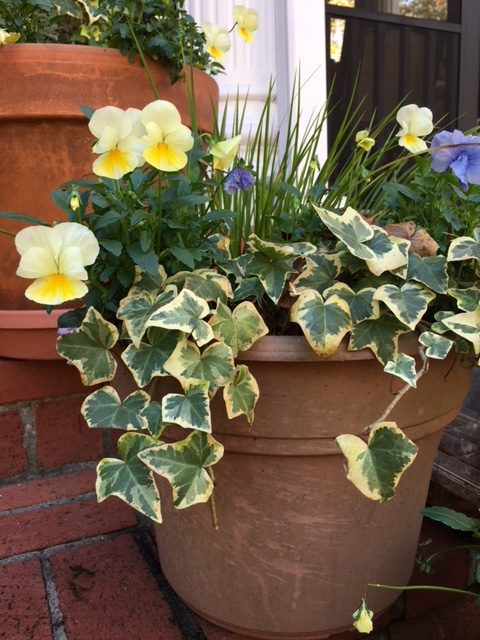
A Georgia garden would just not be the same without pansies. They are the colorful backbone of my winter garden. Okay, I may have gone a little overboard this fall, putting pansies in every nook and cranny, but who can resist? Not that I’m over-the-top enthusiastic about flowers or anything…..
Gardening with Sadie

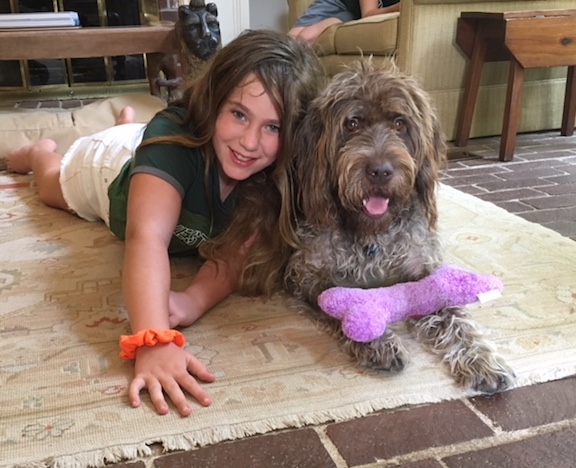
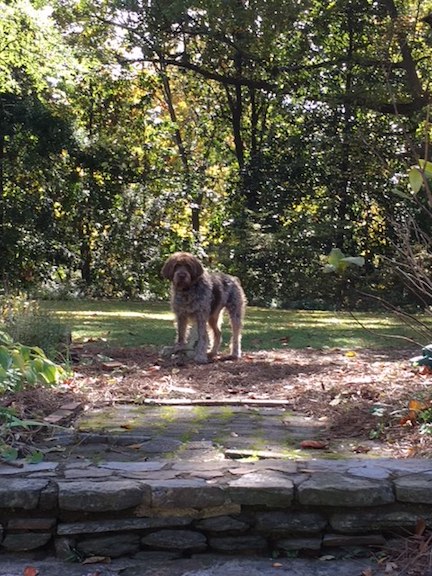
It’s inevitable. If you’re a writer and a dog lover, at some point, you’re going to write about your dog. I could probably resist if I had any dog but I have Sadie! World’s best dog. Ha (ask any dog owner and they’ll tell you their pet is the best.)
Sadie’s domain.

Gardening is a pretty solitary activity so I’m always grateful to have Sadie’s companionship as I spend endless hours in the garden. She never argues, doesn’t whine, is unfailing enthusiastic about – everything! and is just fun to have around.

Sadie and I have an unwritten agreement about her place in the garden. Her part is to not dig big holes, to try to step lightly on the plants, to not eat them and to chase squirrels and chipmunks. My part is to give her food, water, take her for daily walks and provide as much love, time and attention as I possibly can.

In addition to her gardening chores, Sadie is expected to play with the grandchildren as well. She and Ellie take a break from a game of chase.

For the most part, Sadie keeps her part of the bargain. She’s a Wire Haired Pointing Griffon, a WHPG. She was bred for hunting so chasing anything that moves in the garden is part of her nature. I can’t say that she’s ever caught anything. Ever. But it doesn’t keep her from trying, which is all fine with me. She also has a light step and a gentle mouth, which is great both for the plants and for any visiting grandchildren.

The only time Sadie and I have words about her being in the garden is when she has friends over to play, like her “cousin” Friday. In a frenzy of joy and chasing madness Sadie forgets all about our unwritten agreement and just goes nuts. So, play dates are held at the nearest dog park. It works.

Sadie loves it when Friday visits (okay, she may be the second cutest dog in the world) BUT they love each other so much, they go crazy.

SPCA suggests that you don’t include plants that are harmful to dogs in your garden. In theory this is an excellent idea. In actuality, I’d have to dig up my whole garden to comply. Azaleas, aloes, arum, black walnut, boxwood….and on and on and on. And those are only the “A’s and B’s.”

By naptime (several times a day!) Sadie’s ready for her bed.

In all of her nine years, Sadie has never eaten anything in the garden that made her sick. Other dogs might. In general, whether or not you can successfully garden with a dog depends on the dog – and the gardener. Paths and fences help, raised beds or containers for delicate plants help as well. But, basically, it just depends on the dog. If she’s a digger, a fence jumper, a strange-thing-eater, you’ll probably not co-exist in the garden very well. Fortunately for me, Sadie seemed to be bred not only for hunting but for gardening as well. Lucky for both of us. Best dog in the world.

The Butterfly Effect

I couldn’t begin to write the mathematical formula nor fully explain the scientific theory commonly called the “butterfly effect” which indicates that (as one scientist put it) that the flap of a butterfly’s wings in South America can cause a tornado in Texas. Or, as he hastens to add, the butterfly NOT flapping its wings may cause a tornado. The basic idea, though, is that minute events or occurrences (or their lack) may have consequences that are magnified and felt in an entirely different part of the world.

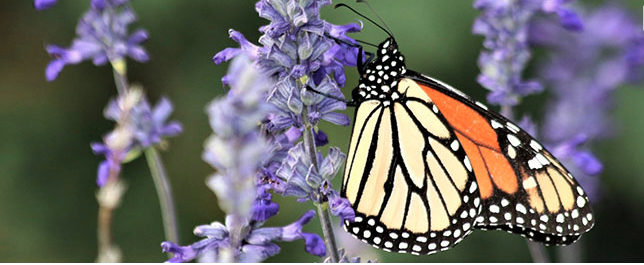
I thought about this as I was clipping the last blooms from my summer garden for a bouquet. Since there were still a few butterflies milling about, seeking the last bit of summer from a few remaining salvia blooms, I began thinking, literally, of the butterfly effect in my garden. How do my actions as a gardener impact the pollinators that come here? As I cut and tidied the garden, it occurred to me that maybe I shouldn’t. Maybe I need to leave every last bloom for the last lingering butterfly.

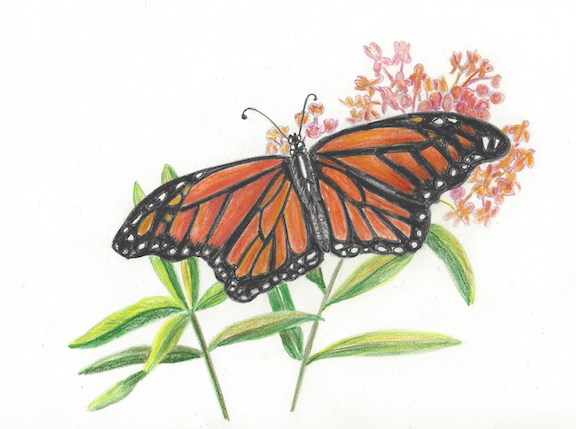
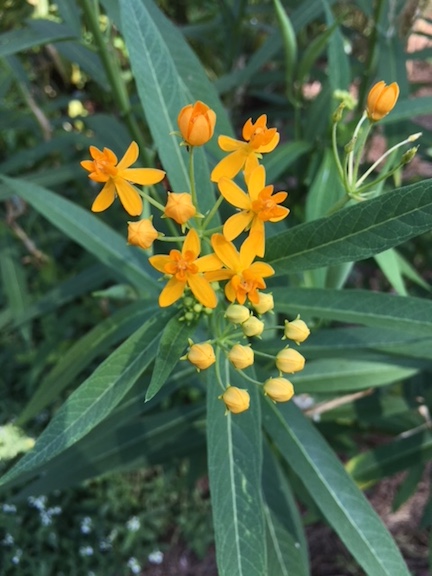
But then again, maybe I should clean up the remnants of the season. I don’t want to trick the pollinators into thinking that this is endless summer. With climate changes and prolonged seasons, pollinators are confused enough. So, what consequence does it have for monarchs who generally head for Mexico at this time of year, if I leave lots of yummy looking milkweed leaves for them? Do they settle in and get comfortable, only to perish in the first killing frost?

But then again, what if the monarchs have had a rough summer (heat, drought, extreme humidity) and my milkweed, still in bloom, provides enough nectar for them to make the trip south? Or what if my scraggly looking phlox provides protection and cover for the larvae of the painted lady butterfly?

And, of course, the same theory can be applied to all kinds of decisions in the garden. What if I choose to plant all double flowered impatiens next year? They provide neither nectar nor pollen nor protection for birds and butterflies. Will all my pollinators get fed up and leave my garden for more productive spots? Can they find such spots close by? Or, what if I left my garden looking completely wild and natural and the neighborhood association takes offense and makes me cut it all down, depriving both me and my pollinators?

I don’t know. All any of us can do is to find balance and stay in tune with the natural rhythm of the earth. I’ll leave a lot of seed heads and garden debris for the songbirds, but not enough to irritate the neighborhood association! I’ll cut back the butterfly weed for it’s really at the end of its natural season anyway. I’ll cut a few last roses and lantana blooms for the house and leave the rest.

All we can do is to make the best choices we can. All we can do is to be conscientious stewards of any kind of land that we call home. All we can do, really, is just love the earth with all our heart.

Halloween cake and candy eyeballs!

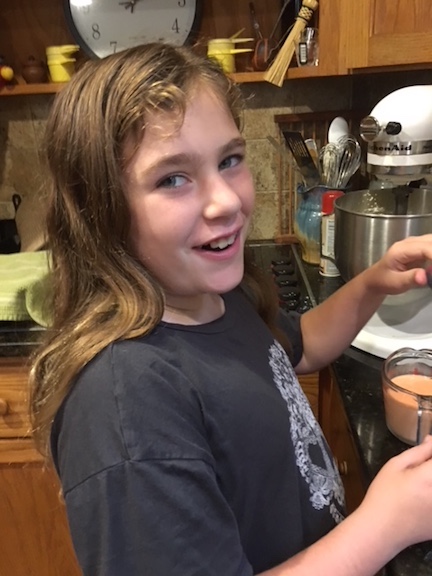
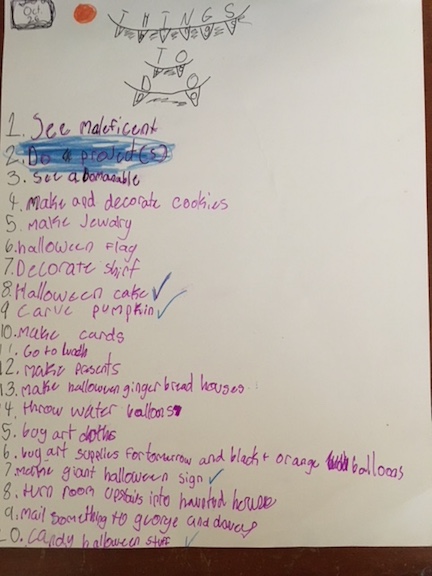
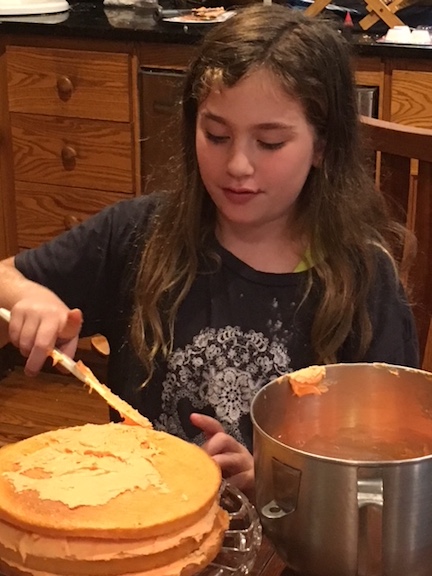
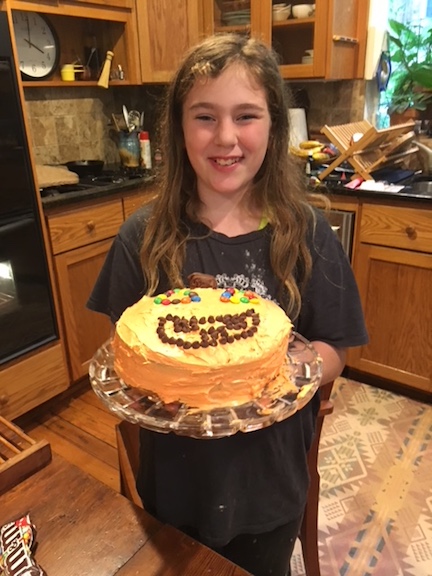
Nine year old Ellie came to spend Saturday afternoon with me, much to my unending joy! When I asked her what she wanted to do she said, “make a list!” So, together, we listed 20 things that we would like to do in the next 4 hours. Needless to say, we didn’t get through the entire list.

Her top two choices were to make and decorate a Halloween Cake and to make candy eyeballs. Everything had to be made from scratch, of course, so we took stock, made a quick trip to the store and turned the kitchen into Halloween Central.

The most fun, for her, was mixing red and yellow food coloring to turn both the batter and the icing a nice pumpkin orange. While the cake was baking, she started in on the eyeballs. Let me add a note here: My goals as a grandmother are totally different than they were as a mother. I know that cake and candy eyeballs are not exactly health foods but I also know that the real goal of the afternoon was the experience and not the product, so I relaxed and just let her make what she wanted. I also have learned, as a grandma, to back off and just let her do projects her way. I would have done things differently, would have used different decorating materials, put them on a different way but – this was Ellie’s project, not mine. It’s a continual challenge to teach her how to do things well but at the same time, allowing her the freedom to do it her way.

So, back to the eyeballs. Before you read the ingredients list, remember, it’s all about the experience. Okay, you mix 1/2 cup peanut butter, 3 tablespoons butter and 1 cup powdered sugar. Make eyeball sized balls, put in the freezer for 30 minutes, then roll in icing. The “pupil” is an M &M and the bloodshot look came from red writing icing.

Not all of the eyeballs were exactly alike. While we were at the store, we happened to see a package of ping pong balls and we looked at each other and started laughing. So, while dipping the candy balls in icing, we also decorated a couple of ping pong balls. It was spectacular!! They looked just like the candy and when her cousin tried to eat one, the whole project was deemed a huge success!!

The kitchen was a disaster. We were both exhausted. But, what fun! What joy! What an experience! What a memory we made. Eyeballs anyone!

Happy Halloween to you all.

Union Square Market

I spent a fabulous weekend exploring New York City with my daughter. I love New York. I love the art, the buildings, the bustle, the vibes, the sheer electric energy of the place. But, no surprise, my favorite place was the Union Square Market. You know what they say, “you can take the girl out of the country, but you can’t take the country out of the girl.” I know that technically, Atlanta isn’t really “country,” and okay, technically, I’m not really a “girl” but fortunately, this isn’t a technical blog.

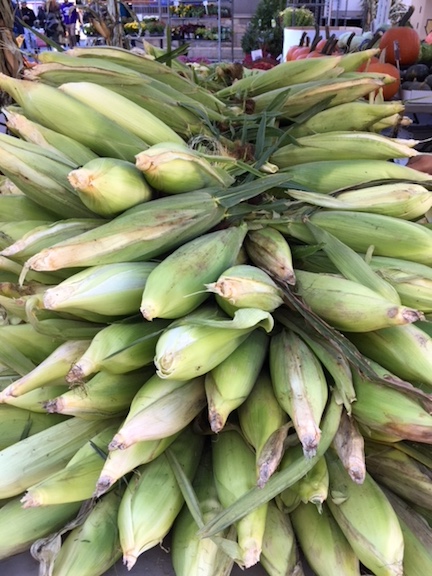
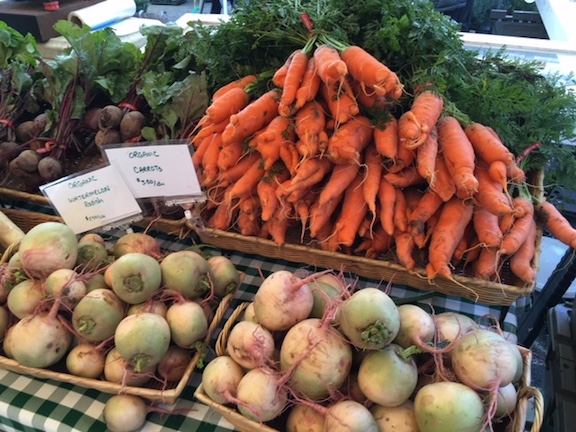
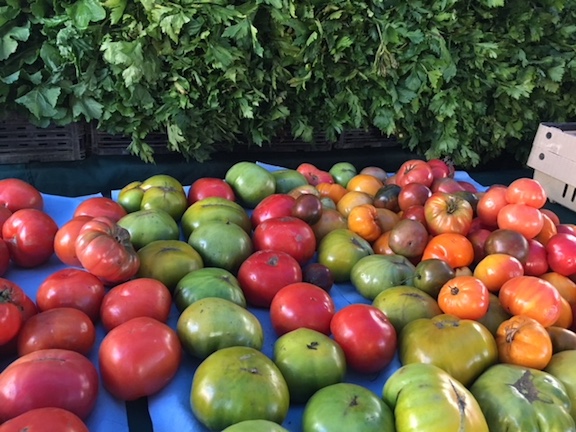
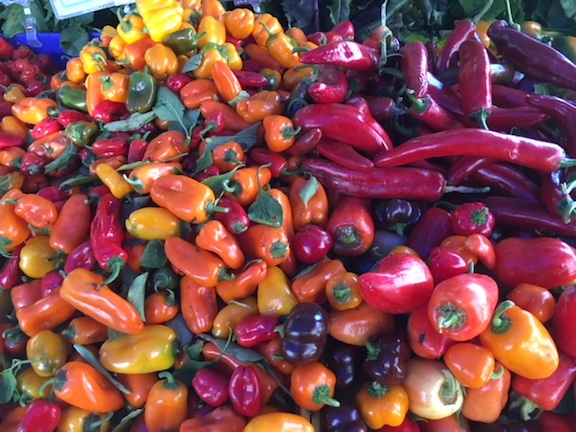
Who can resist mountains of fresh corn, arranged as carefully as a lego building? or bins of fresh, crisp apples? or racks of peppers sporting every color of the rainbow? We were only there for the weekend and staying in a hotel so the lure of the fruits and vegetables was not to actually buy anything, but just to celebrate the abundant bounty of the local farms.

We are not alone in our love of a Farmer’s Market. The number of markets in the United States has grown astronomically since the 1970s when they began to become popular. Interestingly, in California up until 1977, state law forbid the sale of produce outside of a commercial market. But in that year there was such a bumper crop of peaches that farmers couldn’t sell them all. Frustrated with the law, they dumped their excess peaches on the lawn of the state capital, forcing the then governor, Jerry Brown, to change the law and the first farmer’s markets in California were established.

The Georgia Department of Agriculture established the State Farmer’s Market in downtown Atlanta in 1936. They moved it to their 150 acre site in Forest Park (close to the Atlanta airport) in 1958, where it is still thriving.

There are so many reasons to shop at a local market and now, almost all communities have some kind of market. It’s great to meet the farmer who grows your food, it helps support local farmers, the food is fresh and, more often than not, organic and buying locally greatly reduces your carbon footprint, something that we all need to be more conscious of in our eating choices.

The Union Square Market is now open 4 days a week, year round and, in addition to mounds of fruits and vegetables, sells locally produced meats, flowers, artisan cheeses, maple syrup and other products of the region. In typical New York style, it attracts hordes of people, over 60,000 a day. It was established in 1976 and is proud to be the oldest farmer’s market in New York. Though, they should not feel too proud, Borough Market in London has been attracting shoppers for 1,000 years!

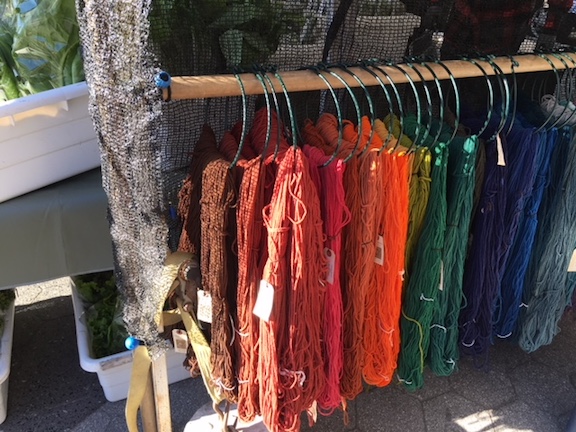
This stall sold not only lamb chops, but beautiful, hand dyed lamb’s wool yarn as well.

So, you can have the Empire State Building, the Statue of Liberty, Rockefeller Center AND the Metropolitan Museum of Art. I’ll take The Union Square Market with it’s treasures from the earth.

Appalachian Fall

Jack and I decided, on the spur of the moment, to go camping in the mountains this past weekend. “Spur of the moment” involved dusting off all the camping gear, making sure we had fuel for the stove, food for us, food for the dog, figuring out where to go and hoping that when we got there, we could find a camp site. But we did! AND it turned out that the camp site was only a half hour walk away from the Appalachian Trail.

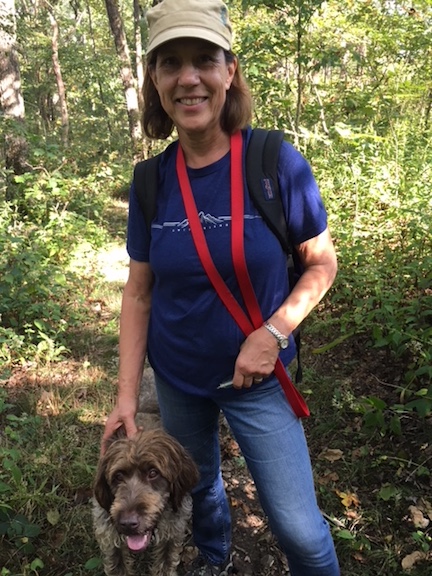
Sadie and I. She’s the best trail dog ever!

It’s always a treat to hike on the AT. Not only is it stunningly beautiful but you also meet some pretty interesting hikers. Jack, being the friendliest man I know, loved chatting with people on the trail, which gave me time to snoop amongst the wildflowers. Peak bloom, even for the fall flowers was long gone, which meant I had to look beyond the bloom to find berries, bark and beautiful leaves. And what treasures I found!

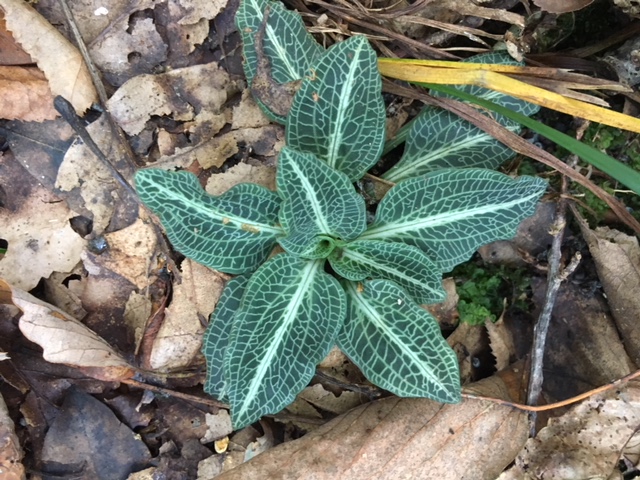
Rattlesnake plantain, a beautiful, evergreen native orchid.

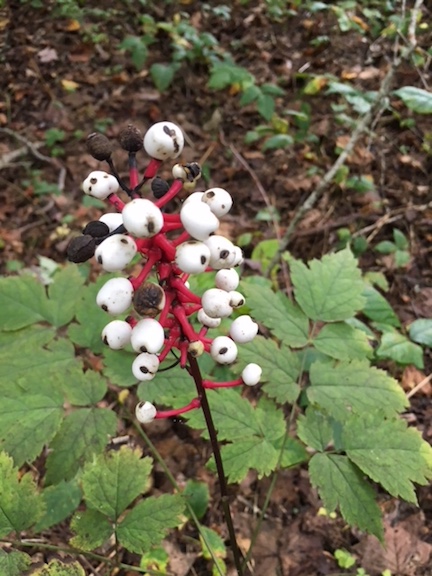
The most interesting was, perhaps, berries from a plant, appropriately enough, called “Dolls Eyes.” The berries look like eyes in an old fashioned China doll. Though interesting and beautiful, I wasn’t tempted to get too close for it is a highly toxic plant. Native Americans used it very sparingly as a pain killer during childbirth, but it’s a plant best left alone. It’s so toxic that ingesting it can cause heart attacks, not something I’d want growing around my grandchildren. Or dog.

Doll’s Eyes, Actea pachypoda. HIGHLY TOXIC

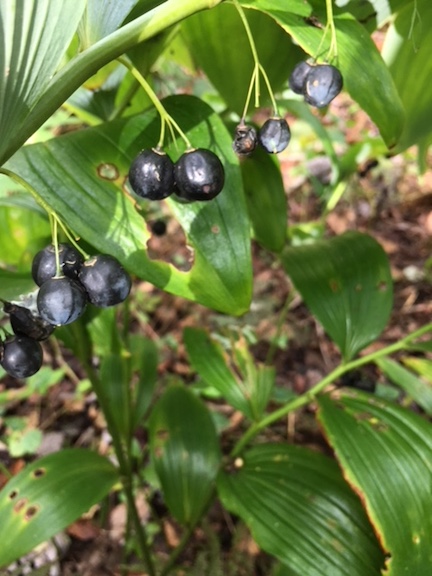
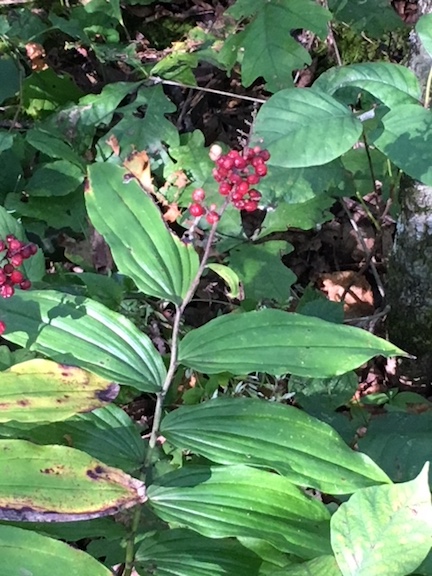
Much more benign were the blue-black berries of Solomon’s seal. Though the spring flowers are small and difficult to see hanging underneath the leaves, the berries are much more conspicuous. If I had dug it up (which I resisted doing, even though I would love to have this growing in my garden) I would have found rhizomes with distinctive leaf scars which some say look like the seal of King Solomon. Native Americans ate the rhizome (which I also resisted doing) and considered it quite tasty. Nearby, I found False Solomon’s seal, whose flowers and bright red berries are found at the end of the stem.

True Solomon’s Seal, Polygonatum biflorum
False Solomon’s Seal, Smilacina racemosa

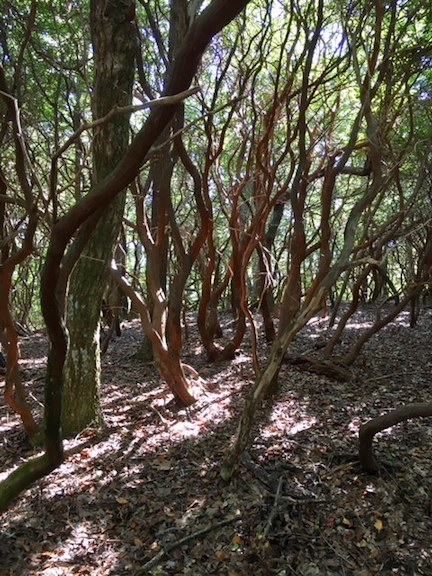
Though Mountain Laurel plants can sometimes grow so close together that it’s impossible to walk through, these were widely spaced with enough room for light to shine through, making it look like a magical forest. The leaves are evergreen but it’s the cinnamon colored, gnarled trunks and branches that lend real beauty to this shrub during fall and winter. If we come back in spring, I suspect that it will be covered with white and pink flowers.

And, I hope we will go back in spring, for every season offers treasures and though I love branches and berries, I look forward to seeing flowers too!

Mum’s the word

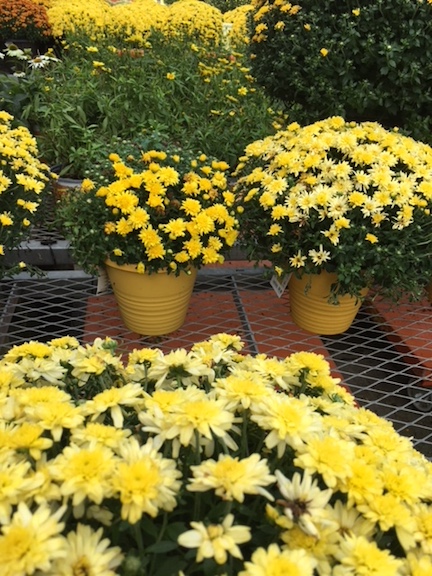
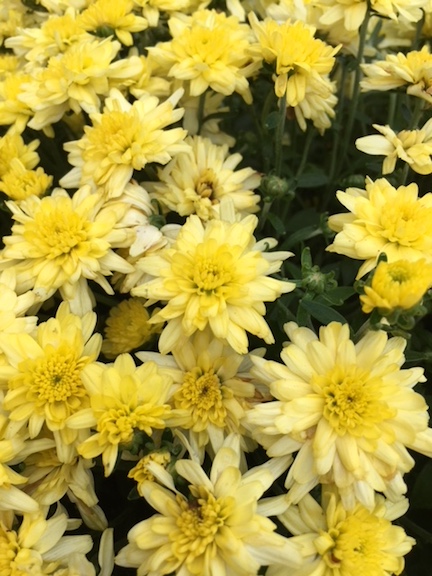
Wherever you go these days, from the garden stores to the grocery stores, you’ll see great big balls of flowering plants. These symbols of fall are chysanthemums which are found mostly in yellow and maroon, sometimes in white and occasionally in pink. For a plant that can display astonishing variety of form and color, it’s a little surprising that the tight, mounded variety is so ubiquitous.

Depending on your age, you might best remember chrysanthemums as corsages, so common that they were named “football mums” or “homecoming mums.” I thought these were a part of ancient history but a quick web search indicated that in Texas, Football Mums are a still a very big deal. Not content with just wearing a huge flower, Texans now add long ribbons, cow bells, teddy bears and on and on. It’s a bit of a phenomenon.

Today the flower seems to be only the backdrop for some pretty elaborate corsages in Texas, some of which can weigh as much as 10 pounds!!!

If you prefer your chrysanthemums without teddy bears, there are a lot of different ones to choose from. There are 40 species, native to Asia and Northern Europe and countless cultivars developed from these. Chrysanthemums are very ancient plants, as indicated by the fact that Confucius wrote of them in 500 BC. In AD 910, Japan held its first Imperial Chrysanthemum Show and declared it the national flower. There were records of 500 different cultivars by 1630.

Though they get a little leggy, even in full sun, I love my perennial mums that have come back faithfully for many years.

Based on the Victorian language of flowers, chrysanthemums symbolized cheerfulness and optimism (especially with a teddy bear attached?). The Chinese consider it a sign of rest and ease and the Japanese take it as a sign of long life and happiness.

Chrysanthemum petals are edible and some say even tasty. Only flowers that have not been sprayed with chemicals should be used for eating. Blanch petals for several seconds before adding to cream soups or salads.

In spite of the onslaught of chrysanthemums right now, a better time to plant them is in spring. But, ironically enough, it’s difficult to find them in the spring in your local garden store! Though they are true perennials, fall planted mums don’t always survive winters. They have been bred and pushed for a glorious one – time display. When they are planted in spring, though, they have a chance to develop a good root system and become established.

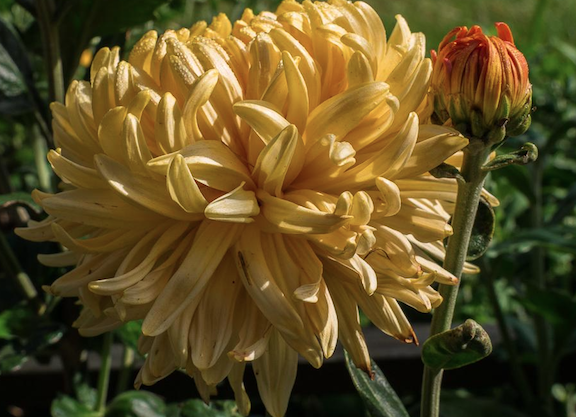
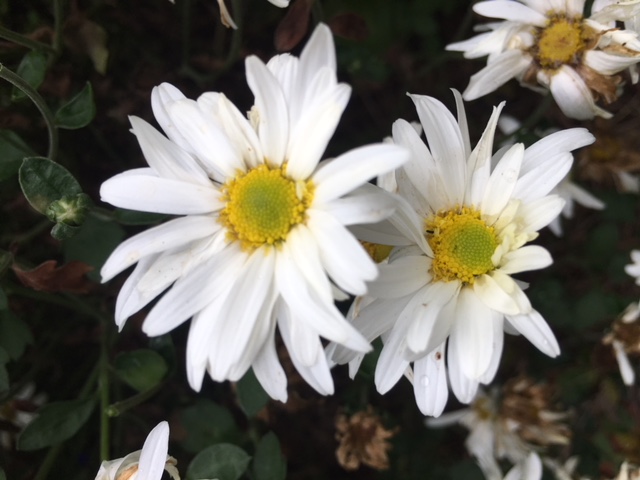
The name, Chrysanthemum, comes from two Latin words, meaning “yellow” and “flower.” A pretty good name! though the flowers also come in white, red, pink, cream.

Whether you plant them in spring or fall, use them in hanging baskets or as bedding plants, eat them or cuddle with them at night, Chrysanthemums are sure to bring beauty and joy.

It’s pumpkin time!

When I asked my 12 year old grandson what his favorite holiday was he said, amazingly enough, Halloween! Better than Christmas? I asked and he nodded enthusiastically.

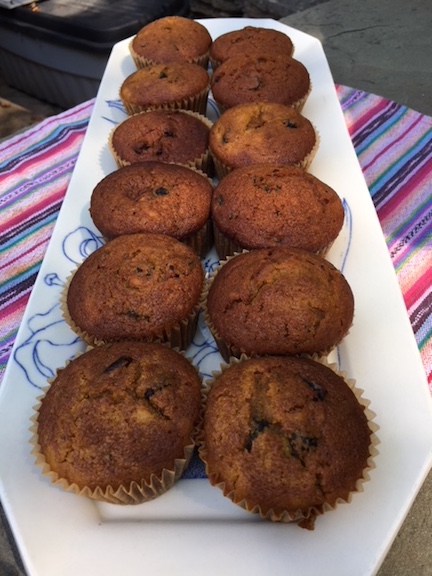
What!? What can be better than Christmas? Well, apparently Halloween is. I’m not much for Halloween food – except for the pumpkins! And I do love all kinds of pumpkiny things, especially muffins. I’ve included my favorite naturally sweetened pumpkin muffin recipe at the end of this blog.

Pumpkins are pretty fascinating. They are native to northern Mexico and the southern United States. They were first found growing 7500 years ago. The pumpkin is technically a winter squash with sweet meat and tasty nutritious seeds. The world’s love affair with pumpkins continues. The U.S. pumpkin production in 2017 was 1.5 billion pounds.

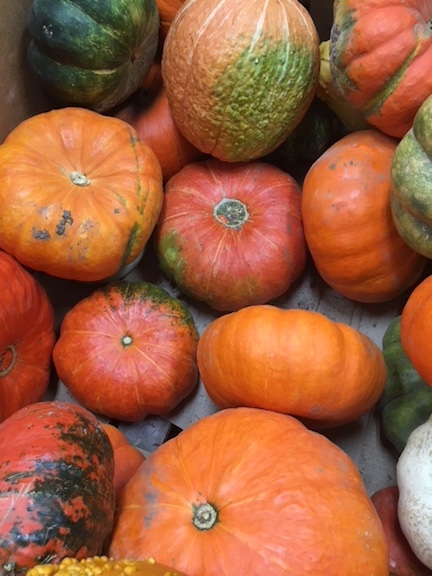
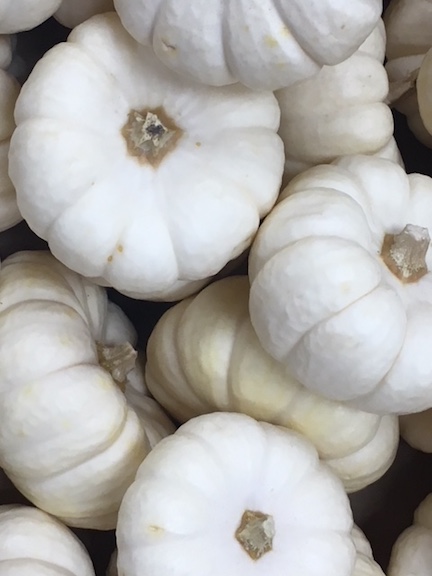
Though pumpkins are traditionally orange, you can now get them in all sizes and in colors that range from white through yellow and gold to orange and red.

Though most pumpkins weigh in at an average of 8 – 12 pounds, there are some real monsters out there. At a giant pumpkin contest in Europe in 2016, a Belgian pumpkin won – at a whopping 2,624 pounds!!!

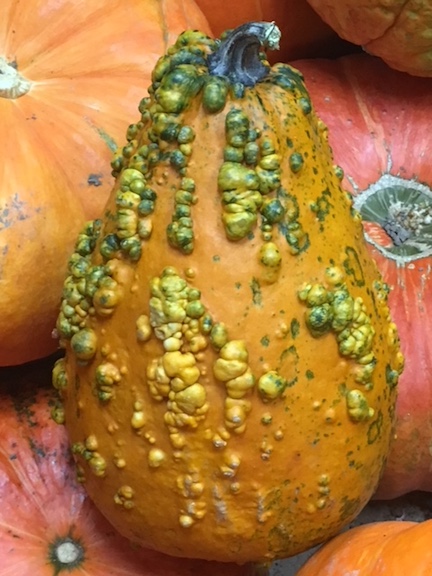
We love our pumpkins, warts and all!

The best pumpkins for baking are marked as “pie” or “sugar’ pumpkins. They are usually much smaller than those grows for jack-o-lanterns and their meat is much more tender and tasty. The meat can be baked and pureed to use in pies, muffins and cakes. But really? Canned pumpkin saves hours of work and is almost as good for baking.

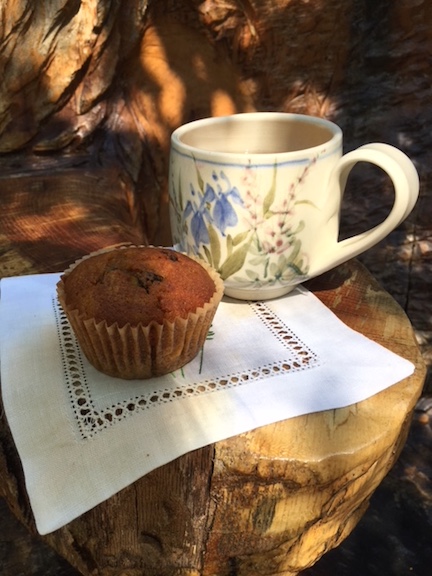
A cup of tea and a pumpkin muffin, sitting in my chair carved out of a tree. What could be better? Well, maybe Christmas.

Here’s the recipe for Pumpkin Muffins – it uses the entire can of pumpkin and makes 20 – 24 muffins. They freeze beautifully! Enjoy

1 1/2 cups raisins and hot water to cover

1 3/4 cup honey OR maple syrup (OR 1 3/4 cups granulated sugar)

one 15 ounce can of pureed pumpkin (1 1/2 cups if you’re making your own)

1 1/2 teaspoons vanilla extract

1 cup light flavored olive oil

2 1/2 cups All Purpose flour

2 1/4 teaspoons cinnamon

2 1/4 teaspoons ground cloves

2 1/4 teaspoons baking powder

2 1/4 teaspoons baking soda

1 teaspoon salt

  1. Preheat the oven to 350. Prepare muffin pans.
  2. Pour hot water over raisins to cover. Beat the eggs in a mixing bowl. Add the sweeteners and stir until the mixture thickens slightly. Blend in the pumpkin and vanilla extract.
  3. Pour in the oil and continue to mix until thoroughly blended. Drain the water off the raisins and add the raisins to the batter.
  4. In a separate bowl, mix flours spices, baking powder, baking soda and salt. Add the dry ingredients to the pumpkin mixture and stir until just blended.
  5. Fill the muffin cups to almost full. Bake 20 minutes or until done.
  6. Enjoy

Gardening in an age of climate change

It’s difficult to tell, these days, what is turning brown and dying back for the season and what is turning brown and dying for all time. My garden looks pretty dismal. Weeks with no rain and temperatures continuing to hover around 90 degrees have taken their toll. I don’t mind the annuals dying off, they’ve had their say, done their good deed, lived their lives…..it’s the shrubs and particularly the trees that I’m worried about.

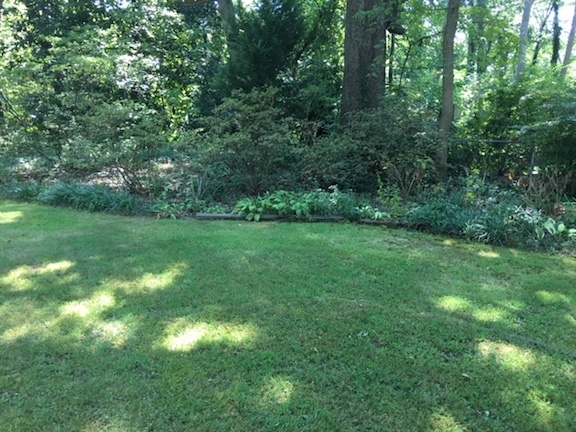
My “lawn”of weeds and moss was a good choice. I keep it cut and it has stayed green with no supplemental watering.

If I could depend on it being hot and dry, I could plant for that but along with increasing temperatures comes erratic and extreme weather patterns and they are more difficult to plan for. So, I’m looking for plants that (usually) like hot weather but will withstand occasional extremely low temperatures. And, plants that (usually) like dry conditions but will withstand periods of heavy rain and flooding,

Ummm, the list is getting smaller. All I have to do, though, is to look at my back yard to see what is still thriving and what looks like it’s on its last leg. (Since I can’t irrigate everything, I have chosen to keep the front watered – it’s a smaller area, easier to water and it pleases me to show off my best garden to the neighborhood.)

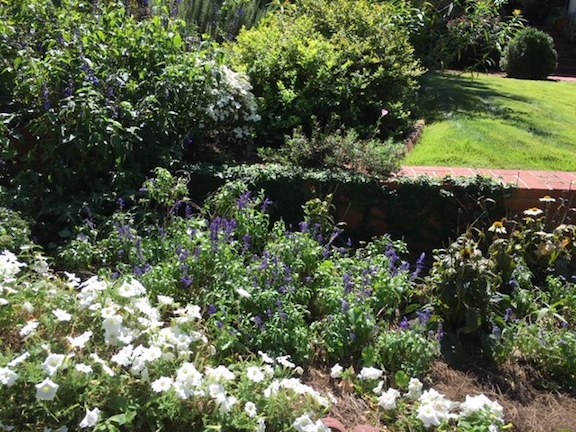
Even in the front I’ve chosen drought tolerant plants such as petunias, as well as natives such as salvia, white echinacea and pink evening primrose.

My back yard pretty much has to exist on its own. And what still looks good are most of the native plants, a few weeds and some hardy, beloved ornamentals. Bee balm, phlox, green and gold and black eyed Susans, asters and the native ferns and grasses seem unfazed by the heat and drought. Lenten rose looks pretty perky, as does the slightly weedy ageratum. Good old – fashioned green hostas continue to look fine but the more delicate, unusual hostas all have some leaves that are turning brown and crinkly. My hydrangeas, marginal even in the best of times, have lost most of their leaves. Can I revive them? Probably. Should I? Probably not. They are not the best choice for the times. My Japanese maples all have some leaves that are turning brown and dropping – I pray that it’s a survival technique and that they’ll all come back next spring.

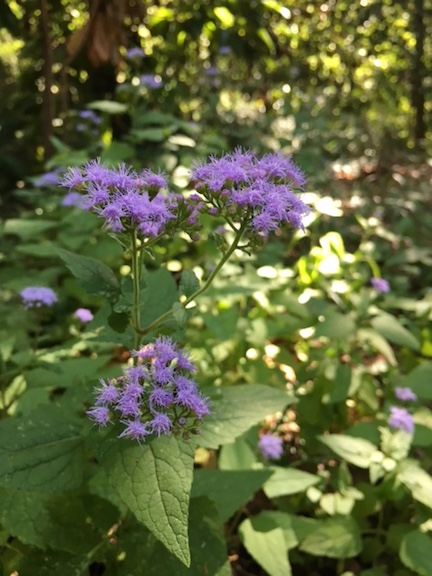
Ageratum is just now beginning to bloom.

So, the question is, where do I go from here? How do I best garden in these times of erratic and extreme weather patterns? I think it’s a question of both what to grow and how to grow it. The following might offer some ideas:

  1. Shade is your friend. Things will last longer and need less water in the shade. You may not get as many blooms on things but they will survive better.
  2. Choose carefully how you want to “spend” your water resources. Water trees and shrubs first – they are the backbone of the garden. Annuals and perennials can be more easily replaced.
  3. Practice good gardening principles. Keep weeds pulled up – you don’t want to waste water on them! And be diligent in keeping a thick layer of mulch around your plants – it will retain moisture AND keep weeds down.
  4. Choose plants that are hardy and adaptable. Many, many of our native plants fall into this category.
  5. Be wise in when you put in new plantings – wait until the weather cools and (hopefully) the rains begin again.
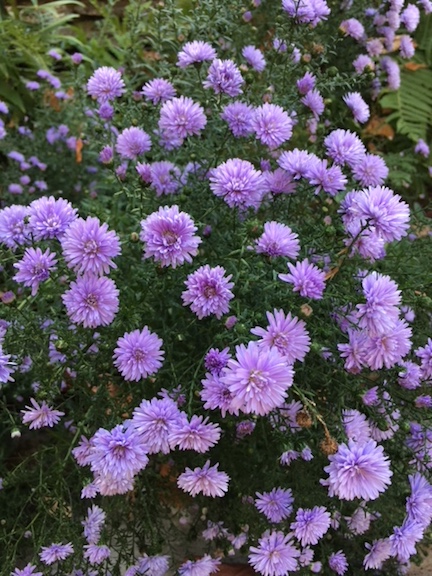
Asters are a bright spot in my fall garden, seemingly unaware that temperatures are more like summer than fall.

But most of all, I think we all need to realize that times, they are a-changing and that gardeners need to be a-changing too. Using water is not so much an economic choice as it is a choice of consciousness. Just because you can water doesn’t mean you should. As one NASA scientist said, ‘We need to get our heads together on how we manage groundwater…because we’re running out of it.”

In Robert Heinlein’s book, Stranger in a Strange Land, the main character is from Mars, where everyone considers water sacred. When he comes to earth, he is shocked at our wanton use of this precious substance. Perhaps it’s time that we all thought of water as sacred. Even here on earth.

Flowers from the Swiss Alps

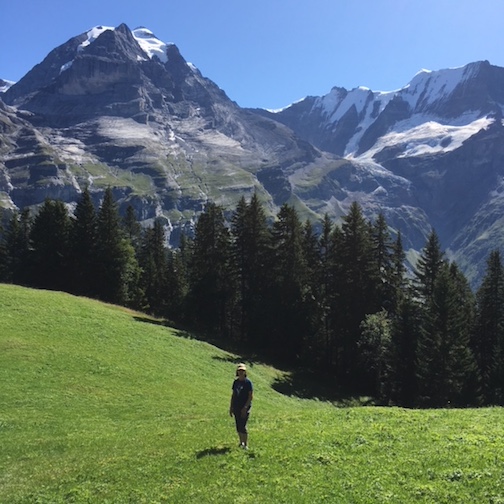
Jack and I just got back from traveling in Switzerland for two weeks. It was absolutely stunning with green valleys and snow capped mountains. Traveling in September meant fewer crowds, which was nice, but also fewer wildflowers which was really okay too. Because I wasn’t overwhelmed with fields and fields of flowers, I was able to see and appreciate individual blooms. I would love to go back when the hills are alive with color but, I was thrilled to be there in any season.

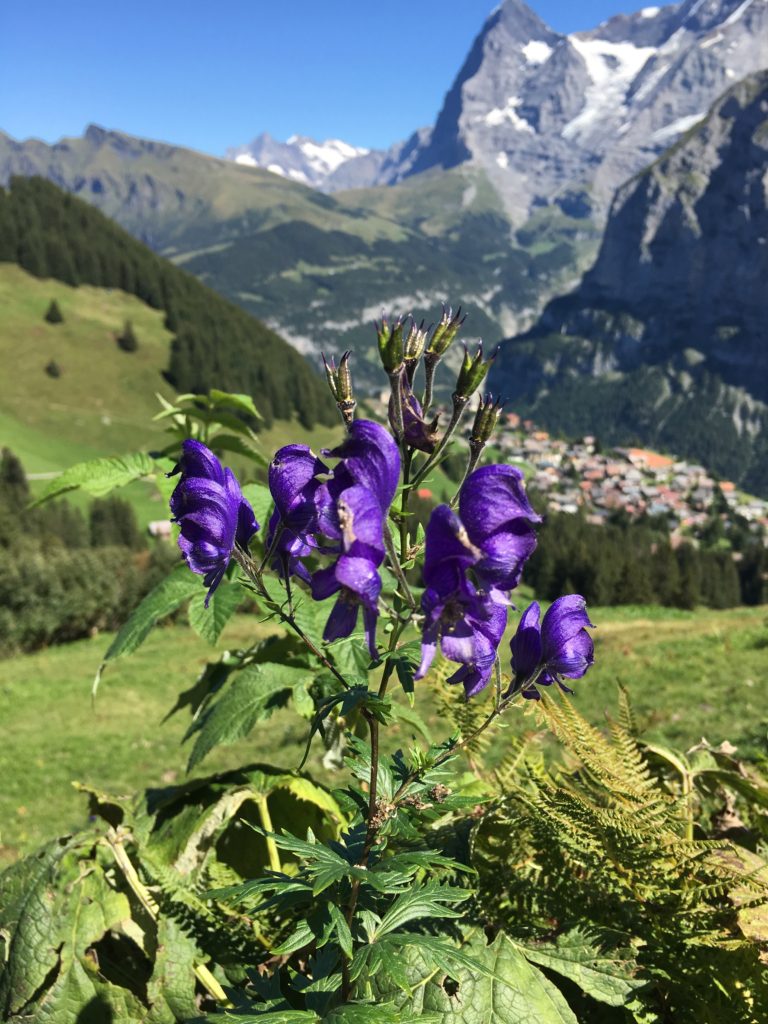
A monkshood native to Switzerland, overlooking the Lauterbrunnen Valley and the village of Murren.

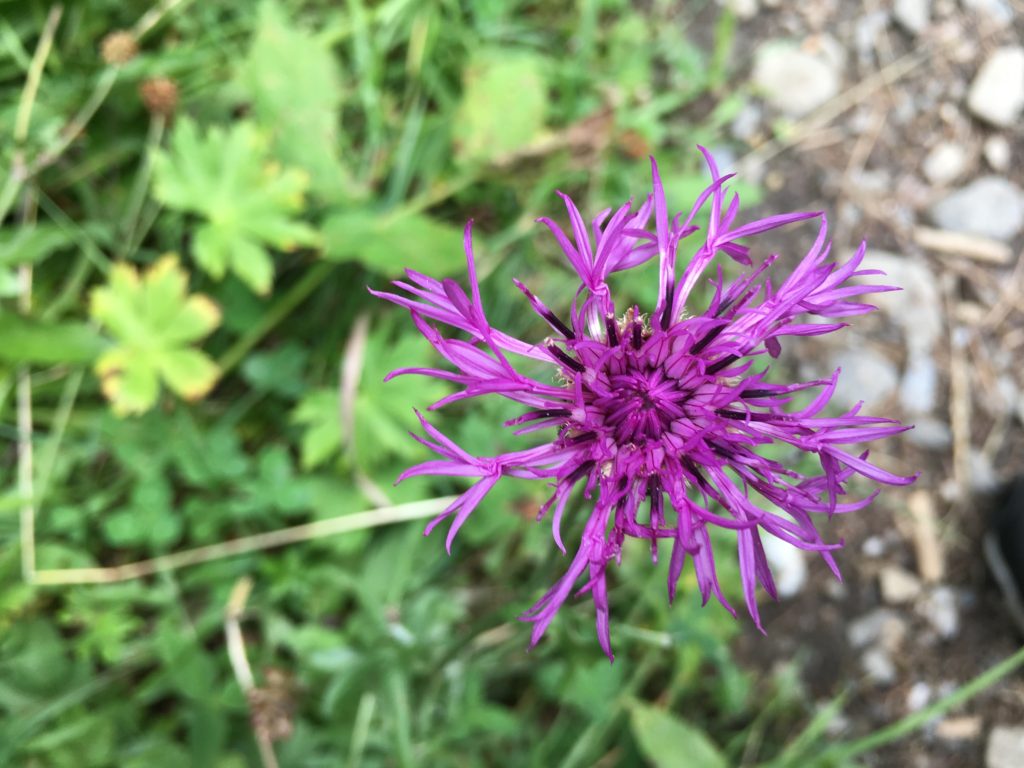
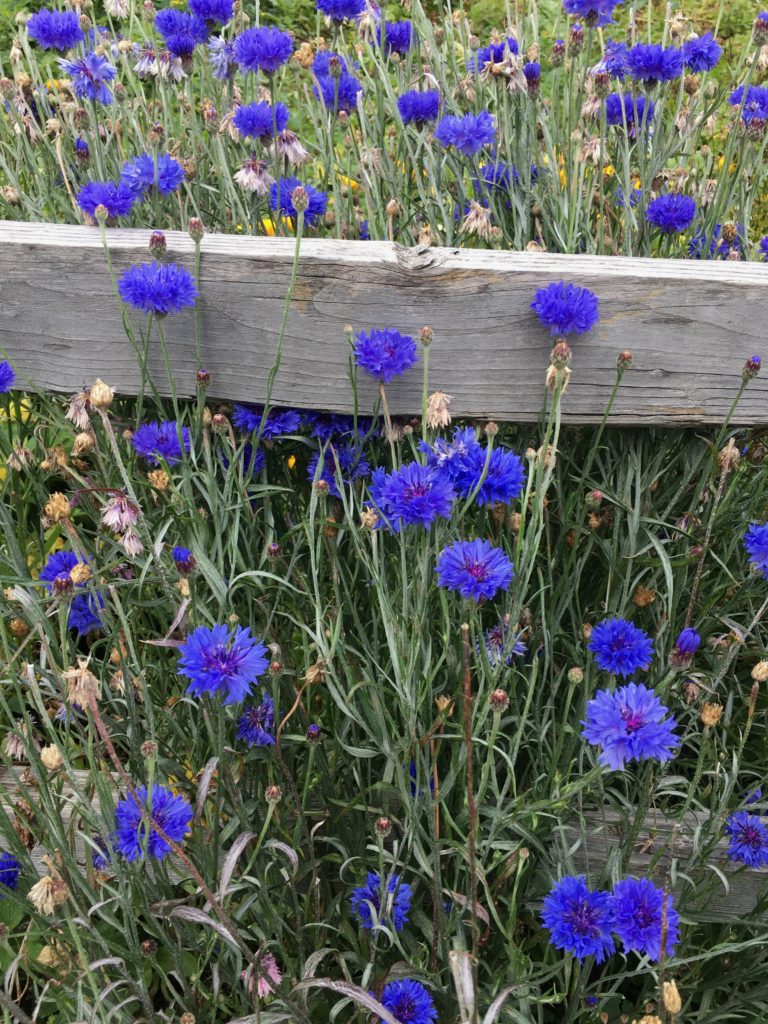
I loved seeing plants that we consider Eurasian weeds happy and well adjusted in their native habitats. Plants such as dandelions and buttercups, which we consider invasive pests, seemed to be much better behaved “at home.” Perhaps the most impressive example of this was the bachelor buttons (cornflowers) and knapweeds, both members of the Centaurea genus native to Europe. There, at home, they are just a lovely part of the ecosystem. Here in North America, they are in a foreign land and have become so aggressive that they outcompete the natives for space and resources and endanger the health of the natural environment.

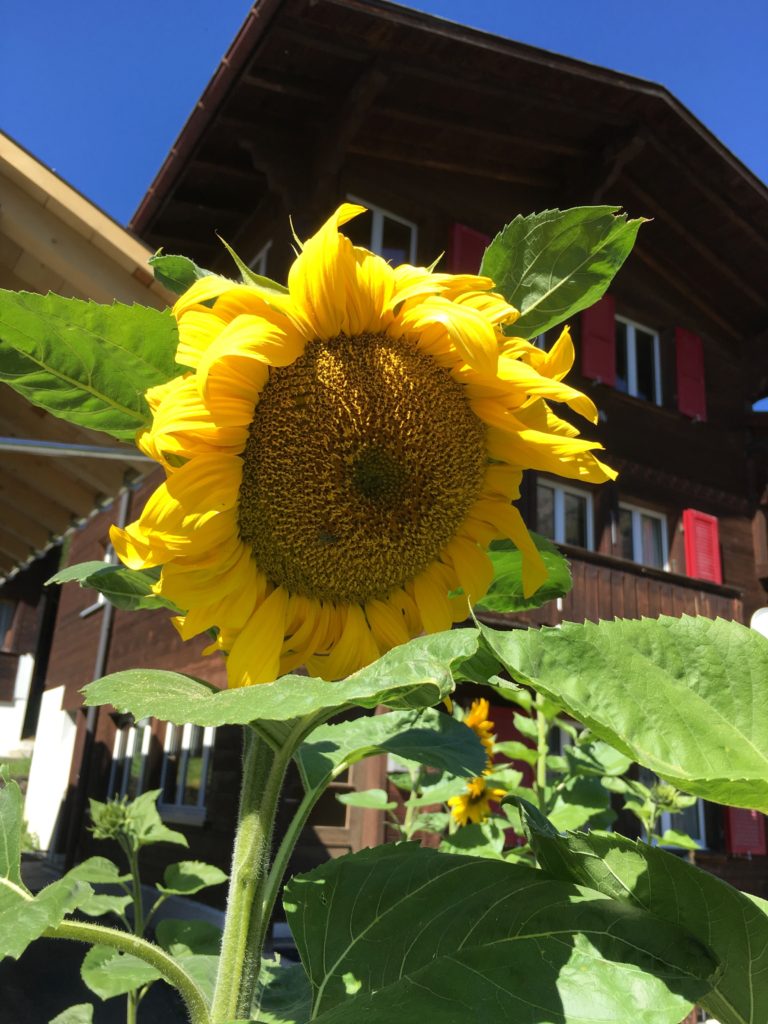
I also loved seeing how many American natives were being used as cultivated plants in the gardens that were so prevalent from small cottages to grand parks. Purple coneflowers, black eyed Susans, sunflowers, phlox were pampered and coddled in these Swiss gardens.

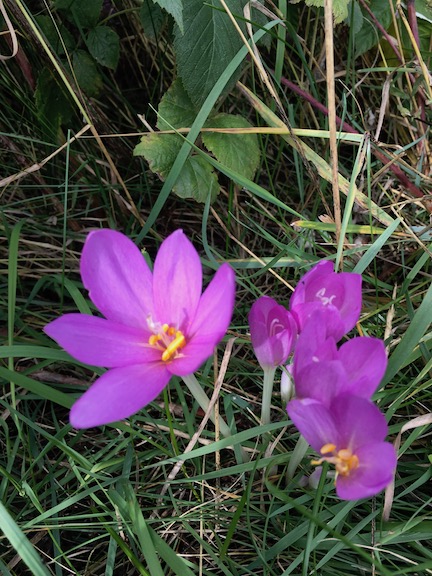
Perhaps the most thrilling sight was the fields of Autumn crocus that were in bloom. This is actually not a true crocus (and NOT the source of saffron) but a mildly toxic relative in the Colchicum genus. Toxic or not, it was thrilling to see hillsides come into bloom with this small pink flower.

Autumn crocus

Switzerland is reputed as being one of the most beautiful countries in the world and I would have to agree! I can’t wait to go back and roll in fields of flowers. And maybe even get to see the shy and ephemeral eidleweiss.