Got milk (weed)?

Though I love (almost) all my plants, it’s hard not to choose favorites. And, while I have some perennial favorites, it seems that each year, something tends to stand out and capture my heart. This year it was a stunningly beautiful, abundantly blooming milkweed plant.
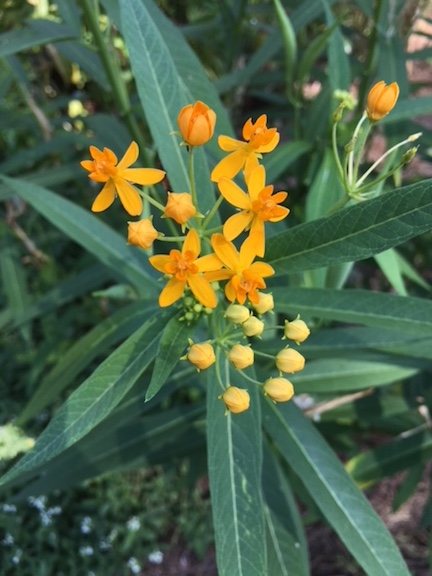
I planted it in mid spring, primarily to contribute to the milkweed population that is so important for the monarch butterflies. Although monarchs will sip nectar from a great number of plants, they will only lay their eggs on milkweeds. Milkweed used to be…well, a weed and could be found in abundance in sunny fields and prairies in a wide range across the country. But with fewer and fewer empty spaces available for “just weeds” to grow, milkweeds have disappeared at an alarming rate – and the monarchs right along beside them.
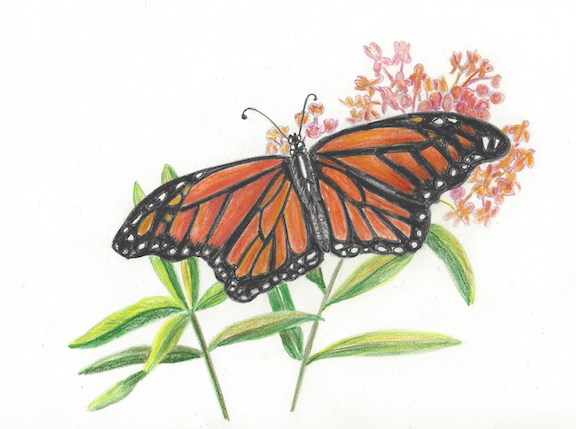
I knew better than to plant the beautiful – but somewhat harmful for the monarch – tropical butterfly weed that is readily available in plant stores and catalogs. The problem with this particular species is that it will overwinter in warm regions (including our own) and the monarchs are tricked into thinking that it’s a good idea to lay their eggs here instead of making that LONG trek back to Mexico. The results are not good. Not only does the tropical milkweed host a parasite detrimental to the monarch, but the adults who hatch from the eggs laid on these plants are diminished in size and display a shorter life span.

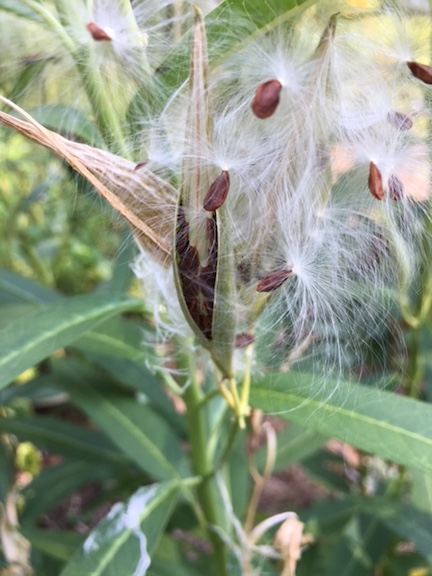
Instead, I planted a cultivar of a native and oh my! not only did I make the monarchs happy, it made me very happy as well. It has bloomed profusely for months, putting forth yellow – orange flowers over and over and over again. When it began to go to seed, the air was filled with silken parachutes. We’ll see if they land on fertile ground and germinate next year.
I was startled, one morning, to go out and find my plants covered with orange and black bugs. A little research informed me that these “milkweed bugs” (appropriately named) would not really harm the plant and to just let them be.
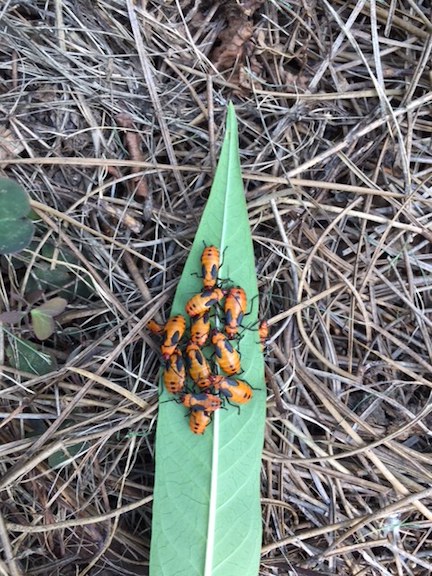
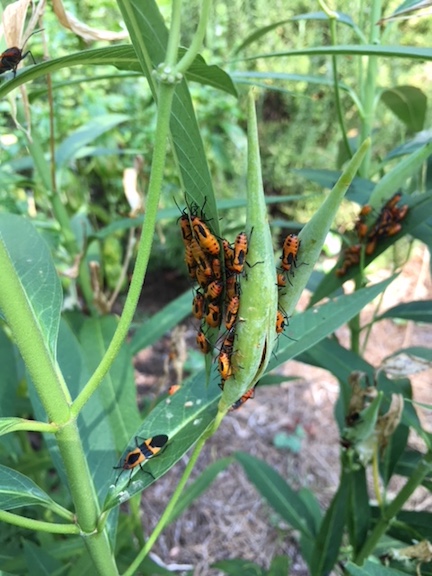
As thoughts of fall begin to occur to my garden, the milkweed has slowed down production. Flowers are few and far between, milkweed bugs have left for greener pastures and the monarchs, hopefully, are preparing to make their trek back to Mexico. May they journey safely and come back next year!
Oh what a tangled web we weave

Not many people can say that and mean it literally but I can, although I haven’t actually gotten to the weaving part yet. But the tangles! Oh yes. I know tangles.
It all started when my sister brought me skeins of white silk from Laos last year. The women in the village had done it all – raised the silk worms, then extracted the silk from the cocoons and spun it into thin – very thin – thread. Think dental floss on a diet.

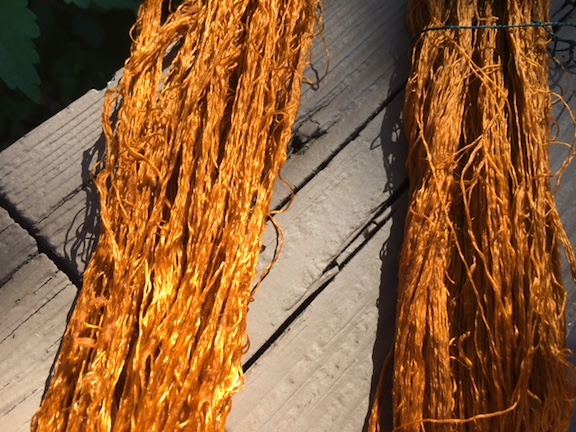
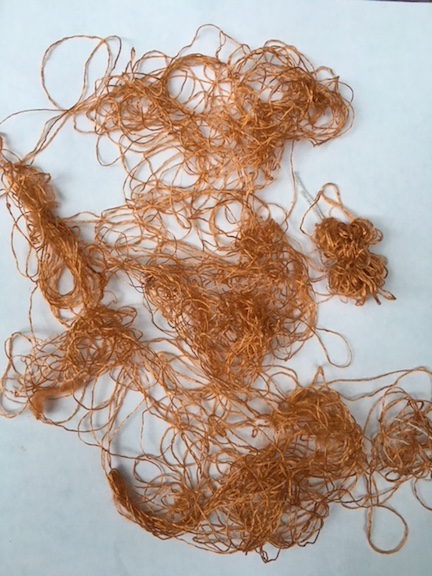
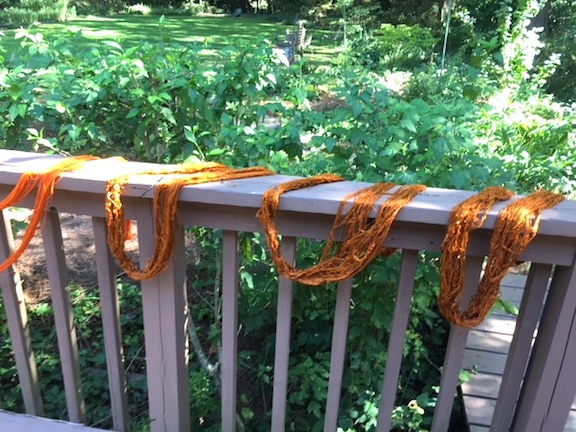
The first step was to dye it. I used a cold water dye that I got at the art store – rusty orange – and threw in just a little bit of midnight blue, just because I can’t help messing with colors. It turned out beautifully – a rich, golden orange color. But when I pulled it out of the dye bath, oh my! the tangles, the matted threads, the gnarls and swirls, the kinks! I looked at it and had two thoughts: (1) the trash can (2) three weeks of untangling the thread. I couldn’t bear to throw it away so I set it out to dry and hoped that it wouldn’t be as bad as it looked.

Well, it wasn’t. Quite. I yanked on it (hard) to get some of the kinks out (praying that it wouldn’t break the threads) and then began winding the tangled skeins onto cones and miracle of miracles! it only took three days instead of three weeks. There were only a few times I rethought the trashcan option. Once was when I had long threads carefully separated, strung out on the floor of my studio and my dog, Sadie, heard a squirrel in the back yard and in a spasm of joy, tore out the door, right through my thread. That part did go in the trash.

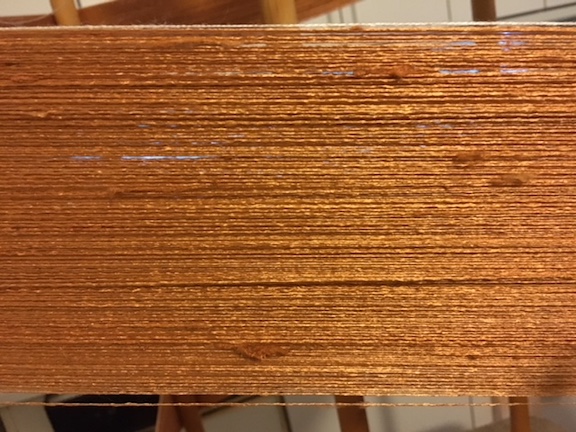
The question is, why would I do this? Why does any crafts person spend such an enormous amount of time making a product that you can get on Amazon for a few dollars? Obviously it’s the process. I don’t know when I’ve experienced such satisfaction as when I finally got all those threads lined up neatly and smoothly, ready to put on the loom. I don’t have control over much in my life but I can control these threads. Or at least most of them.

Alexander Langlands, in his very excellent book Craeft, addressed this question of “why” when he says that craft is “a hand-eye-head-heart-body co-ordination that furnishes us with a meaningful understanding of the materiality of our world.”

Is untangling thread really “craft?” Well, it was an absolutely essential part of the process and, as I said, it’s all about the process. Can I really make a narrow, thin scarf (about the best I can hope for) out of these threads? Maybe, maybe not. But if I do, I’ll know that it was “loved” into being.

Our forests need our voices. Today!

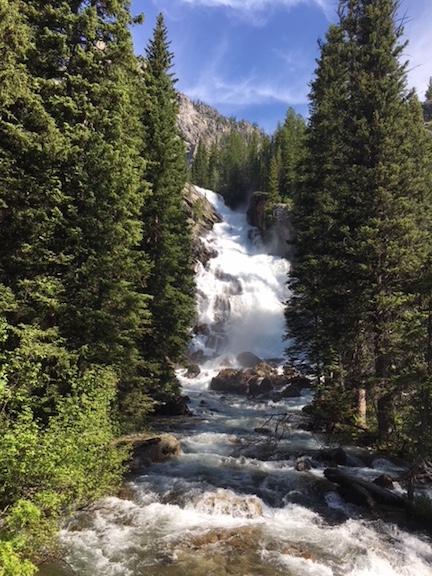
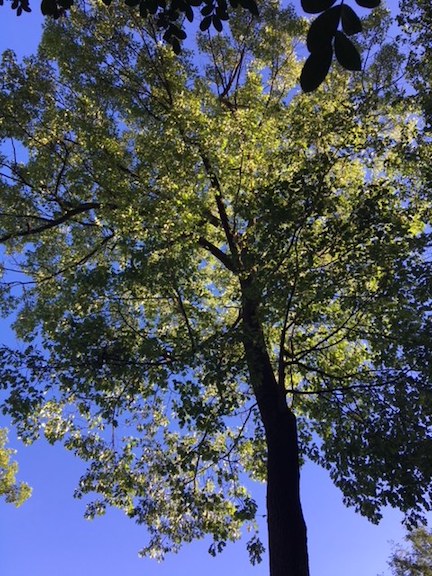
I don’t know anyone who doesn’t love trees. What’s not to love? They are beautiful, provide shade, food, wildlife habitat, shelter and help fight climate change by absorbing carbon dioxide and releasing pure oxygen into the atmosphere.

But a new Forest Service proposal may make it super easy for loggers to come in and cut down the trees in our beloved National Forest Lands, without any of us having a say about it.

The Administration is proposing a rule change which would “eliminate opportunities for citizen involvement and environmental review on more than 90 percent of all Forest Service projects” says Jim Furnish, the former Deputy Chief of the U.S. Forest Service.

He goes on to say, in this article from the Washington Post, “Buried deep within 16 pages of legalese are some nasty surprises: a nearly unlimited license to commercially log nearly seven square miles — about 3,000 football fields — or build five miles of logging roads at a time without involving the public or disclosing environmental consequences.”

This proposal would not only potentially eliminate our trees, destroy wildlife habitats and damage fresh water streams and rivers, but prevent us from being able to influence that things that go on in our National Forests.

But we have not been silenced yet. We have until August 26 to weigh in with the U.S Forest Service about this proposed rule change. Please, please, voice your opinion while you still can. Do it today. Do it now. Comments can be posted here: http://regulations.gov/docket?D=FS-2019-0010. Just click on “Comment now.”

Thank you.

Below is my own comment.

I vehemently oppose the new rule change for the Forest Service that would allow more logging and road building in our National Forests without public input or without disclosing the environmental consequences. The new rule changes could have catastrophic consequences for fresh water, wildlife habitat and forest ecology. At a time when we desperately need trees to help fight the effects of climate change, we should ALL be dedicated to saving every tree possible.

A rare white deer

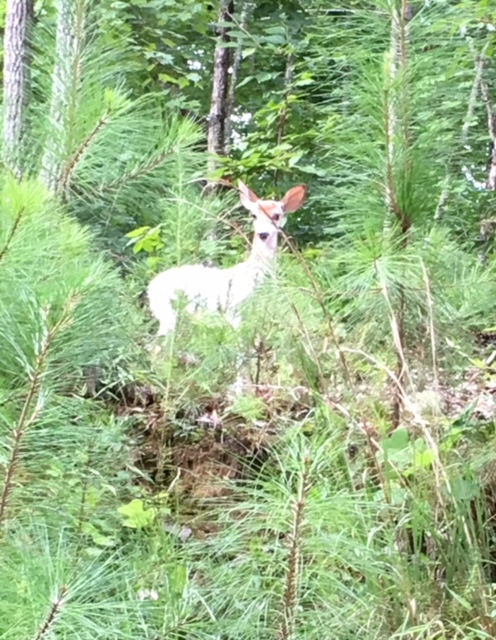
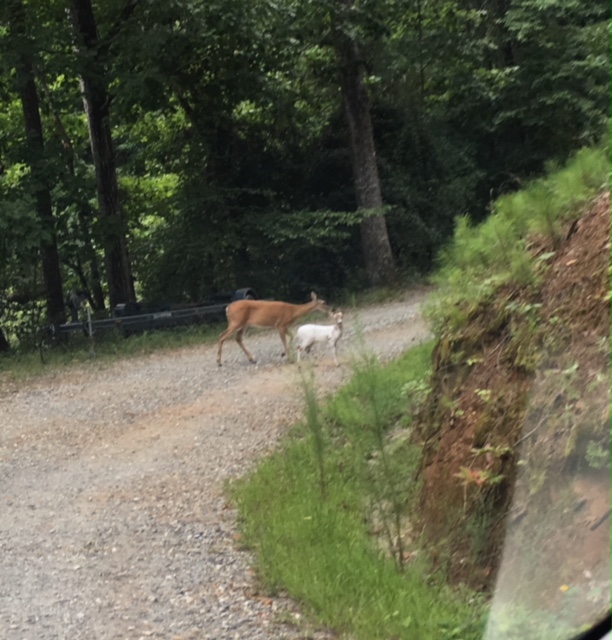
Sometimes you’re just at the right place at the right time. Driving down a back road at Lake Lanier last week, I rounded the curve and there, standing in the middle of the road, was a white tailed deer and her fawn. Really no big deal EXCEPT that the fawn was white. I mean almost totally white with a few brown spots and one brown ear.

I stopped the car and reached for my phone, which took a few precious seconds of groping before I could find it, then clicked on the “camera” only I kept hitting other stuff, wasting still more time until finally, just as they begin to leave, I got a picture. Then one more and then they bounded into the woods.

I just sat still for a moment, goosebumps dancing down my arm. I had never seen anything like it, not even heard of a white deer except in legend. I was pretty sure it was not an albino, as it had a black nose and one brown ear. But there was no question that it was white (thank goodness I got a picture, otherwise you’d never believe me!)

Armed with my precious photos, I began researching as soon as I could. White deer ARE rare, though certainly not unheard of. The white color is a recessive genetic trait called leucism, which occurs in 1% of all the white tailed deer population. Leucistic deer display some combination of white and brown markings and are often called piebald. Other animals show this characteristic as well, including birds and squirrels.

There is a fairly large population of leucistic deer in the enclosed 10,000 acre Seneca Army Depot where they have been protected since 1951. There, where they are in an enclosed space and interbreeding is common, 1/4 to 1/3 of the 800 deer are piebald.

Like any rare animal, white deer are protected both by law and by legend. Killing a white animal has always been taboo in cultures all over the world. Legend tells us that a hunter who kills a white deer will suffer a long streak of very bad luck. White deer are particularly important in American Indian culture where superstitions and legends abound. If you want to read the Chickasaw Indian legend called the Ghost of the White Deer (and learn a lot more about white deer), go to http://www.protectthewhitedeer.com

Seeing this white fawn was such a gift. I feel reverence and awe for this tiny, rare white fawn and will pray for her safety as I celebrate her life.

Some Sage Advice

I love my garden sages. And, when I stopped to count, I was surprised at how many different species grow in my sunny garden beds. Salvias (or sages) have a lot going for them – they are beautiful, easy to care for, deer resistant, drought tolerant AND are magnets for pollinators, including bees, hummers and butterflies. Another BIG plus for me is that many of my Salvia plants bloom in shades of blue that are absolutely stunning.

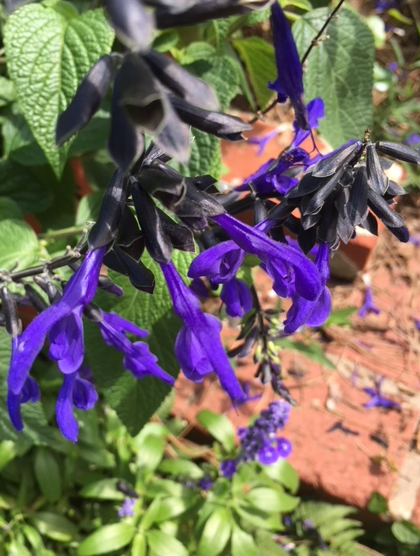
Probably my favorite (at least for this year!) is the “Black and Blue” Salvia guaranitica. It grows tall (up to about 40 inches) and has long tall spikes of black calyx (which surround and protect the buds) that open into rich purplish blue flowers.

Salvia guaranitica, Black and Blue

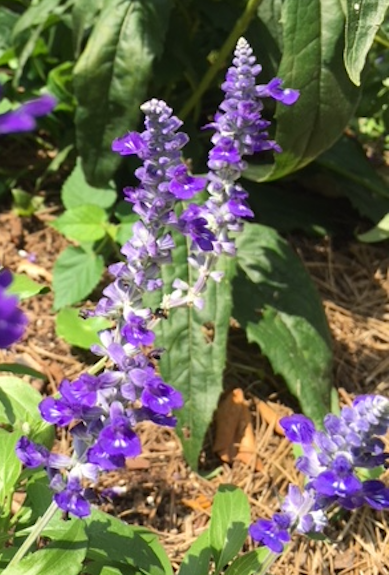
Growing nearby is the smaller blue sage called Mealycup, which I always thought was a bit of an unfortunate name until I read that both the common name and the species name (farinacea) come from the Latin word “farina” which means flour or meal and is so named because of the whitish powder on the upper stem and flower buds. This species is native to Texas and Mexico and grows about 12 – 24 inches tall.

Salvia farinacea, Mealcup Sage

Both the Blue and Black and the Mealycup are considered tender perennials. They are hardy to horticultural zone 8 so Atlanta is right on the cusp. Mine did not survive the winter last year but this year I’m going to treat them to an extra layer of mulch and see what happens.

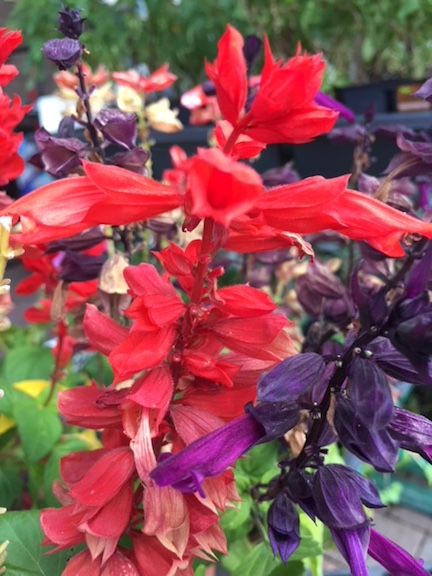
Perhaps the most used Salvia is S. splendens, or the bedding salvia which comes in that brilliant scarlet red color. Though red is the most common, it can also come in purple, lavender, yellow or white. All the bedding salvias have heart shaped leaves.

The word “Salvia” comes from the Latin “salvere” which means “to heal” and was given to this genus because of its medicinal value. There are over 900 species in the genus and the variety is impressive. The common cooking herb, sage, is also closely related. Salvia was dedicated to the Greed god, Zeus, and the Roman god, Jupiter. The ancient Greeks believed Salivas were good for enhancing memory.

Photo credit: Plants For All Seasons.

Some species are used as flavoring some as medicines, some as dyes, and some, when ingested, are dangerous hallucinogens. But all are lovely plants to include in the garden – and your visitors, winged and otherwise, will thank you.

Bamboo-zled

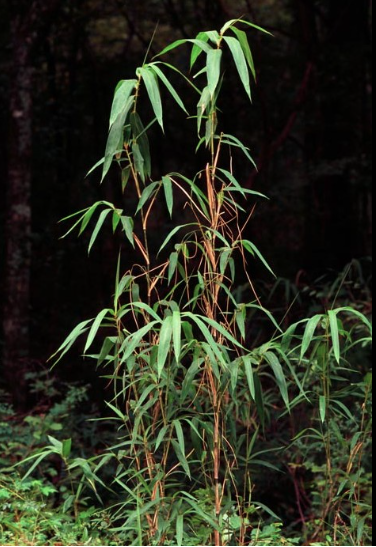
I love bamboo and am forever fascinated by it, both from a botanical viewpoint and an artistic one. Bamboo has been revered for it’s resilience and usefulness for thousands of years. Records dating back 7000 years indicate that bamboo was being used for arrows, building material, paper and books.

In the intervening years, bamboo has been used for food, clothing, housing, furniture building, transportation, musical instruments, fencing, weapons and garden ornaments, just to name a few. Today, bamboo is lauded as a renewable resource and is used for making a wide variety of products. And, of course, it’s the staple diet of one of the world’s most beloved animals, the Giant Panda.

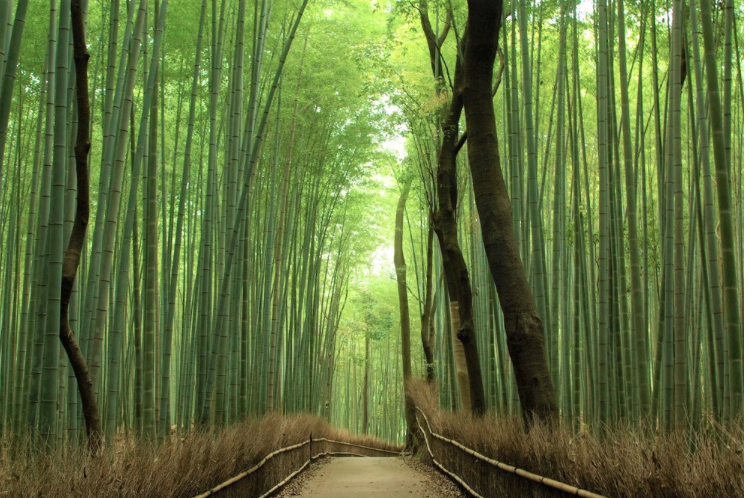
The famous Kyoto Arashiyama Bamboo Forest

Bamboo is technically a grass and has a hollow stem. There is tremendous variation within the bamboo family, which has been divided into 115 genera and 1200 species. Almost all species are native to warm, tropical and temperate climates throughout the world. In the Western Hemisphere, bamboo grows in South, Central and North America. There is even a species of bamboo native to the southeastern United States. called “river cane,” it grows in moist areas, such as along river banks.

If you choose to plant our native river cane, Arundinaria gigantea, be SURE that you have the right species. There are some incredibly invasive plants that look similar.

One of the more fascinating botanical facts about bamboo is that it exhibits what is called “mass flowering.” Any plant taken from the original grove, and replanted anywhere in the world, will all bloom at the same time in spite of differences in geography, climate, temperatures, rainfall or anything else. Bamboo are notoriously sporadic bloomers and flowering is unpredictable. The plants often go from 65 – 120 years without flowering. Perhaps the reason is that when they do bloom, the trees mostly decline and often die. But, the flowers set seed which fall and germinate to maintain the species.

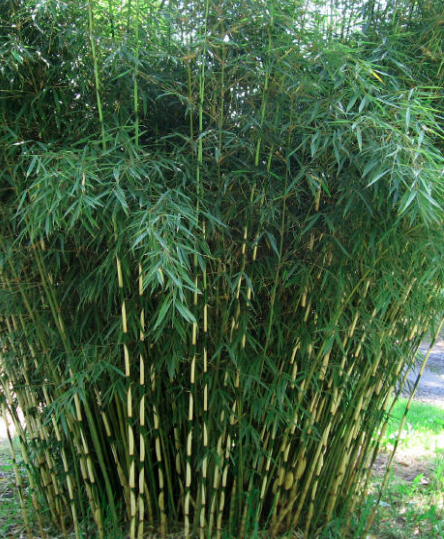
There are basically two types of bamboo – running and clumping. As a gardener, it’s imperative that you know the difference. Running bamboo (notice it’s not called walking bamboo) can be quite aggressive and fast growing. One species of bamboo can grow an astonishing 36 inches in 24 hours, a rate of about 1.6 inches an HOUR and some species of bamboo grow to be almost 100 feet tall.

Fargesia robusta ‘Campbell’, a cold hardy, clumping bamboo, offered by the nursery, Bamboo Garden.

There are many, many types of clumping bamboos suitable and appropriate for our gardens. The best way to determine what you might want to grow is to go and look at different kinds. We’re lucky in the South to have two wonderful botanical gardens with display forests. The first is the Bamboo Farm and Coastal Garden near Savannah (http://www.coastalgeorgiabg.org) where they grow over 60 different bamboo species. The other is in Gainesville, Florida and is the Kanapaha Gardens (http://www.kanapaha.org). Kanapaha also offers a yearly bamboo sale, mostly online from January – mid February. Go to their website in January to see what they are offering.

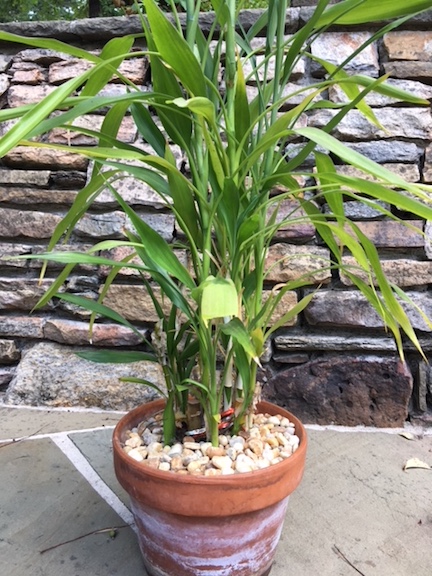
Lucky Bamboo is actually not a bamboo but a very hardy member of the lily family.

Oh, and about that “lucky bamboo” that are so popular as gifts? They’re not. Well, they’re not bamboo, but they may be lucky! I’ll let you be the judge of that.

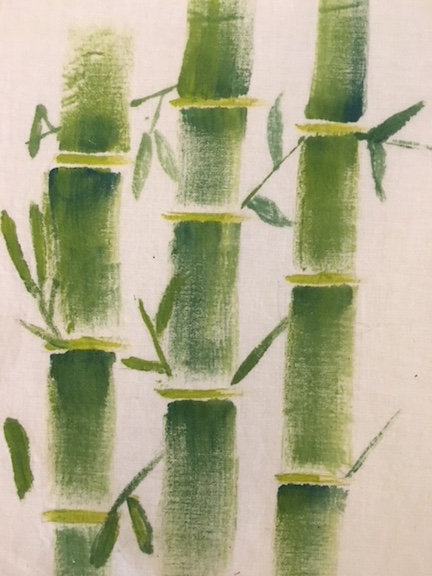
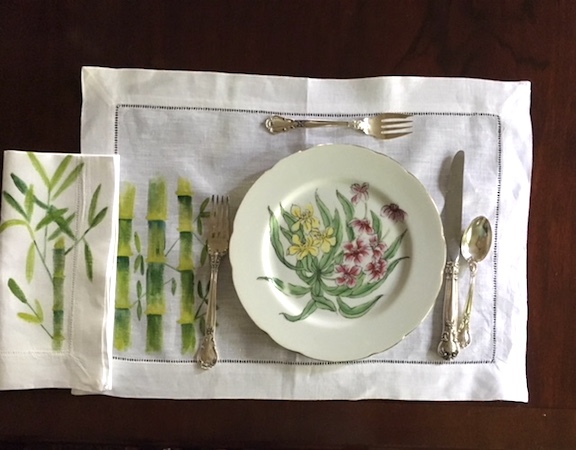
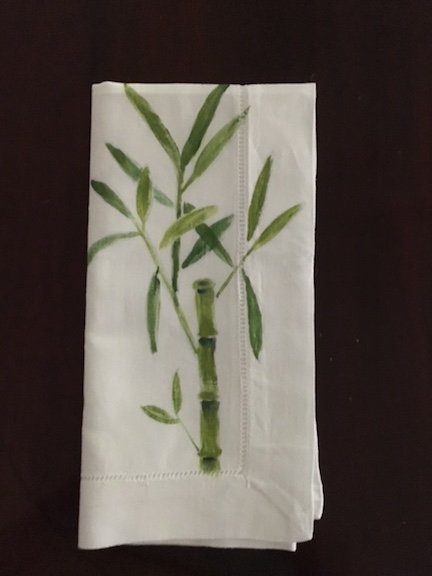
I think that bamboo is not only an amazing botanical specimen and one of the most useful plants on earth, I also think it is so beautiful that I just had to paint it. I’ve created a set of bamboo placemats and napkins that are in my Etsy shop (http://www.naturebasedstore.etsy.com). Check it out!

Bamboo on white linen.

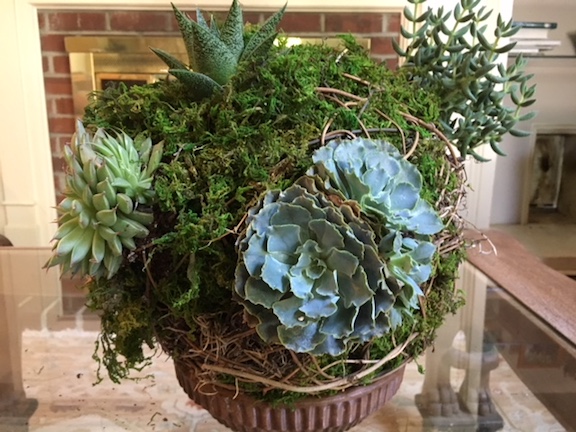
A garden ball

No, not a dance party in the garden, an actual round ball with a “garden” in it. Well, “garden” may be a bit of an exaggeration but it IS planted. This idea began last Christmas when I saw a cone of chicken wire planted with various succulents. It was in a store window so I didn’t take it apart to see how they had made it but I assumed that it was stuffed with sphagnum moss.

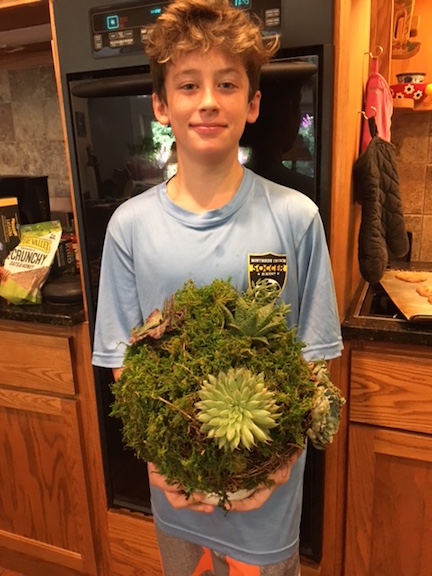
I’ve been wanting to try it ever since so when Rivers (my 11 year old grandson) and I were looking for a project, this seemed to be the perfect solution. And it worked great!! though it was one of those rare projects that took less time (though more money) than I’d anticipated.

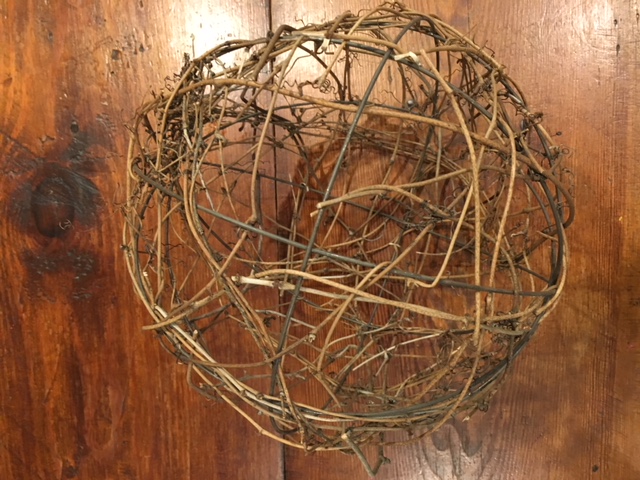
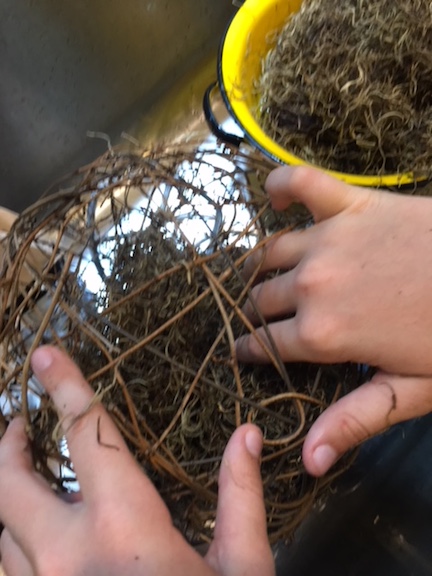
To begin with, I didn’t really want to make my own chicken wire cone and I couldn’t find one at the store but what I did find was a beautiful wood vine ball that I thought would work well.

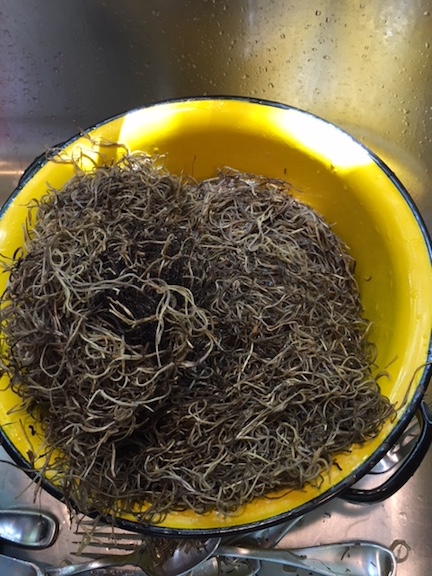
We bought two bags of sphagnum moss (and should have bought three) and a bag of green moss and 6 small succulents (and should have bought more!). We then soaked the moss in water, trying our best to get it saturated.

Then Rivers used his (slightly smaller) hands to carefully stuff the ball with the moss. Once filled, he put the green moss on the outside, then we worked together to create cavities for planting the succulents.

You could use any plants you like, though I tend to like the ones that are almost flat rather than the ones that are taller. They seem to keep the shape of the ball better. We got ours at Home Depot ( on sale!) but these small succulents are readily available many places. They take very little water and will thrive with low to medium light.

I have to say that the results exceeded my expectations! I placed it in a clay saucer and it has provided a beautiful centerpiece for the coffee table. But, of course the best thing was that Rivers left the soccer field long enough to do a project with me! I’m a lucky lady.

Celebrate! Red, White and Blue

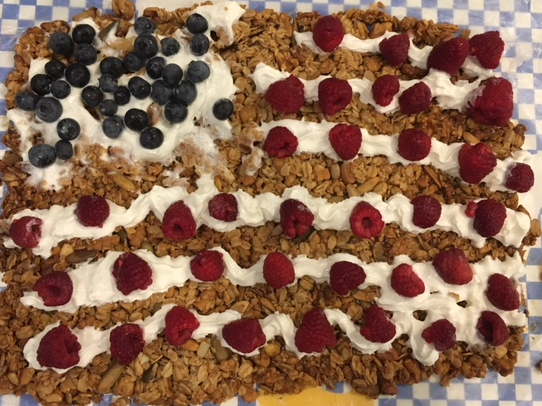
Being an independent minded sort of person, I’m aways thrilled to celebrate Independence Day!! Yay for Freedom!! When the family came for brunch over the weekend, I wanted to fix something that was in keeping with the season so the kids and I made a “breakfast tart” in the shape of a flag.

The granola base was easy to do, using store bought granola. You could make your own from scratch, of course, but there are some really good brands of organic granola available now. Mix 1 1/2 cups granola with a stick of melted butter and 3 tablespoons brown sugar or honey and press into a rectangular pan. You could also roll out a tart or pie shell and cut it into a rectangle and use this instead.

The blue and red parts were easy; blueberries, of course, and raspberries. It was the white that was the stumbling block. I thought I was going to use vanilla yogurt over the granola and put the stars and stripes on top of this, somewhat like a yogurt parfait. But all that yogurt that I thought was in the ‘fridge wasn’t. I didn’t want to go to the grocery so I kept rooting around until I found a can of spray whipping cream. The kids were thrilled and it was fun for them to squirt out the stripes. The whole thing was fun and easy delicious. Even though it was a bit crumbly, we ate the whole thing!

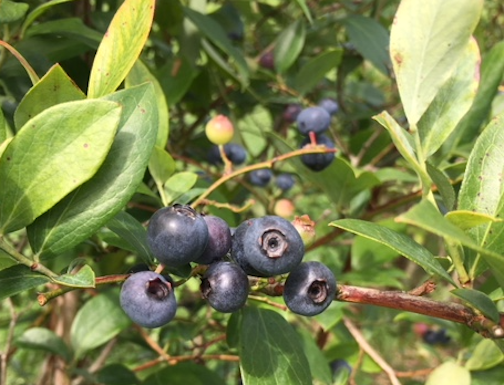
Aside from the obvious holiday connection, this is the perfect time of year to use a lot of blueberries. They are in full production in Georgia and the berries are big and sweet. Last week, I spent a morning at Cool Springs Blueberry Farm in Gainesville and picked almost 2 1/2 gallons of berries.

There are two types of blueberries – rabbit eye, which is native to Georgia, and high bush, which grows from Georgia all the way into New England. Rabbiteye is a great species to use in a home garden, though be sure to plant more than one variety for better cross pollination and increased production.

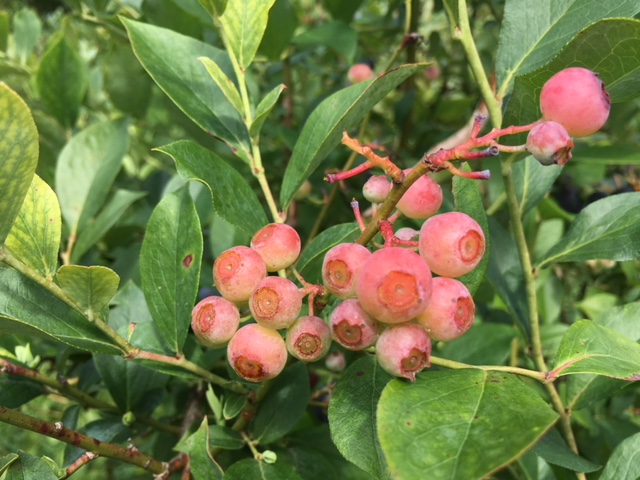
Not-yet-ripe berries on the Highbush are a lovely salmon color. But wait until they are fully ripe for the most delicious berries.

Compared to picking wild huckleberries, which are about the size of a pin head (well, almost) picking these lucious big berries was quick and easy. No thorns, no chiggers – and no grizzly bears! What a way to celebrate the Fourth of July. Happy Independence Day to all.

Check it out at http://coolspringsblueberryfarm.com

Flame azaleas on Hooper’s Bald

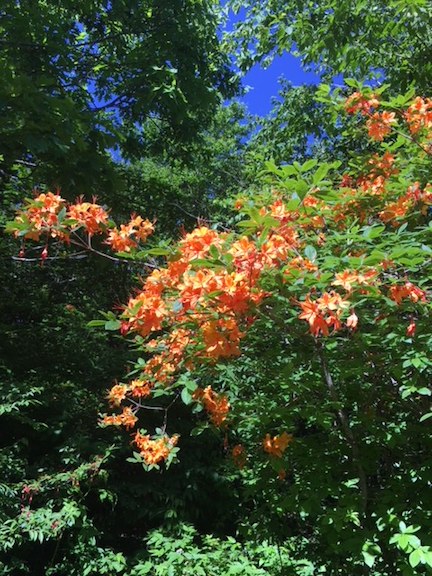
My husband, Jack, and I were lucky enough to go hiking in the southern Appalachians this past weekend and were even luckier to see the flame azaleas in full – glory – bloom.

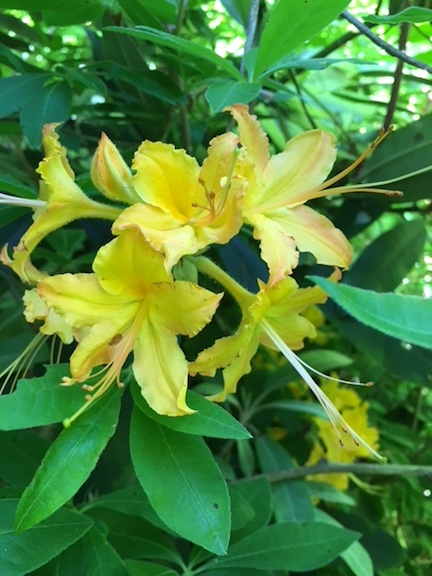
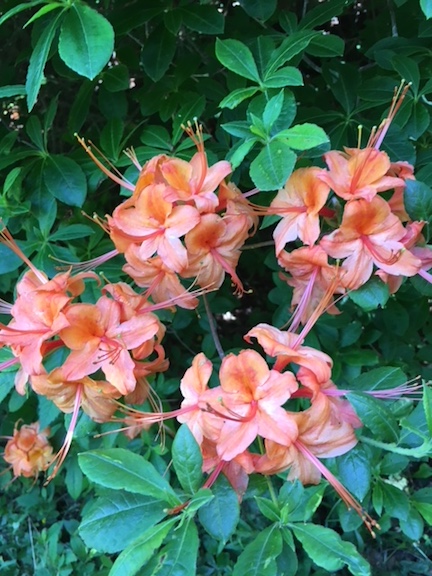
Rhododendron calendulacum is not all that rare and you’ll see lots of them if you drive the Charohala Skyway near the Joyce Kilmer National Forest in North Carolina. But, there is huge variation within the species that offers different colors of bloom in the wild and these variations are becoming increasingly threatened by loss of habitat and the invasion of non-native species

Thanks to the efforts of several volunteer organizations, including Partners of Joyce Kilmer-Slickrock Wilderness and the Mid Atlantic Chapter of the American Rhododendron Society, a grand diversity of the flame azalea is being kept alive and well, particularly on Hooper’s Bald where they are abundant.

On this grassy bald, volunteers have kept invasive plants at bay and have worked for years to hand pollinate select forms and replant seedlings back into the wild to help maintain a great diversity. Their efforts are apparent in huge 10 foot specimens that sport 3 1/2 inch flowers in colors ranging from bright red to yellow to orange and salmon.

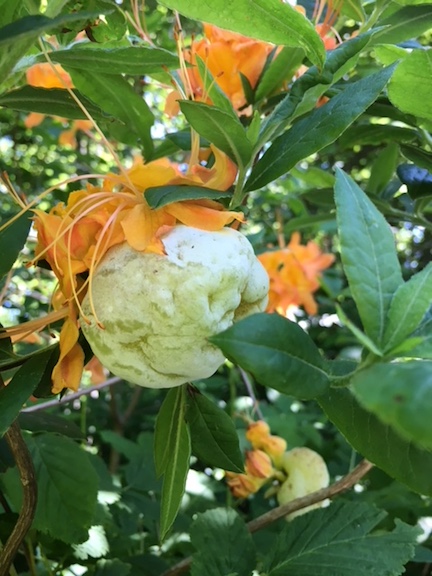
I was really interested in seeing that the azalea, like the oak trees in Oregon, held “galls,” growths on the tree that look like misshapen fruit. Unlike the oak gall (see my blog about this from May 20, 2019) azalea galls are not caused by a wasp but by a fungus. When ripe, they are full of water and some people consider them edible, though there is some controversy about this. Though the gall may or may not be toxic, azaleas and rhododendrons are poisonous and should never be consumed.

Often called “Azalea apples” these galls are caused by a fungus. They start off green, turn white and eventually brown and are usually more abundant during a wet spring.

A “bald” is a phenomenon unique to the southern Appalachian mountains and scientists still can’t quite figure them out. It’s basically just an open place at the crest or side of a mountain. There are two kinds of balds, grassy and heath, and both are devoid of trees.

In more northern regions you would call it an alpine zone but in the south, it’s much too warm for this designation. The forest service has called it an “ecological enigma and a conservation dilemma.” Theories about the origin of the balds includes grazing by prehistoric mastodons and wooly mammoths but no one knows for sure. They do know that European settlers who used the balds for grazing cattle helped maintain them.

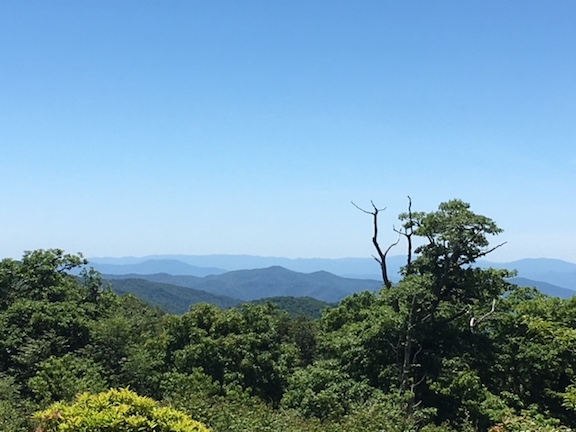
The view from Bob Stratton Bald. Well worth the hike up!

But now, many of the balds are found within the Great Smoky National Park and in National Forest land where, of course, there is no grazing and many of them are succumbing to the national progression of succession. We saw evidence of this when we hiked up “Bob’s Bald” and found not only the flame azalea but also acres of Canadian blackberry bushes overtaking the native plants.

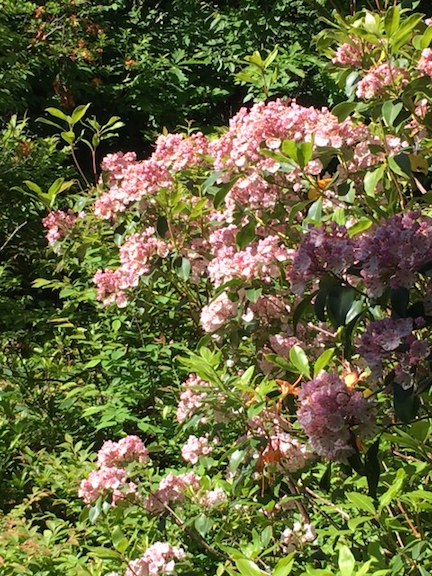
Mountain laurel is also in full bloom in June and can be found on Hooper’s Bald. The abundant sunshine causes abundant blooms.

The Forest Service, working with volunteer organizations, is trying to maintain these beautiful ecosystems by cutting back invasive shrubs and trees seedlings (which is where the conservation dilemma comes in) but the task is daunting. Most balds are at elevations of above 4,000 feet (Hooper Bald is 5,429) and are accessible only by steep trails.

But hooray and thanks! to all the people who work tirelessly to help the environment in so many different ways. Thanks to them, I’ll be able to show my grandchildren the glory of the flame azalea on Hooper’s Bald.

Hummingbirds

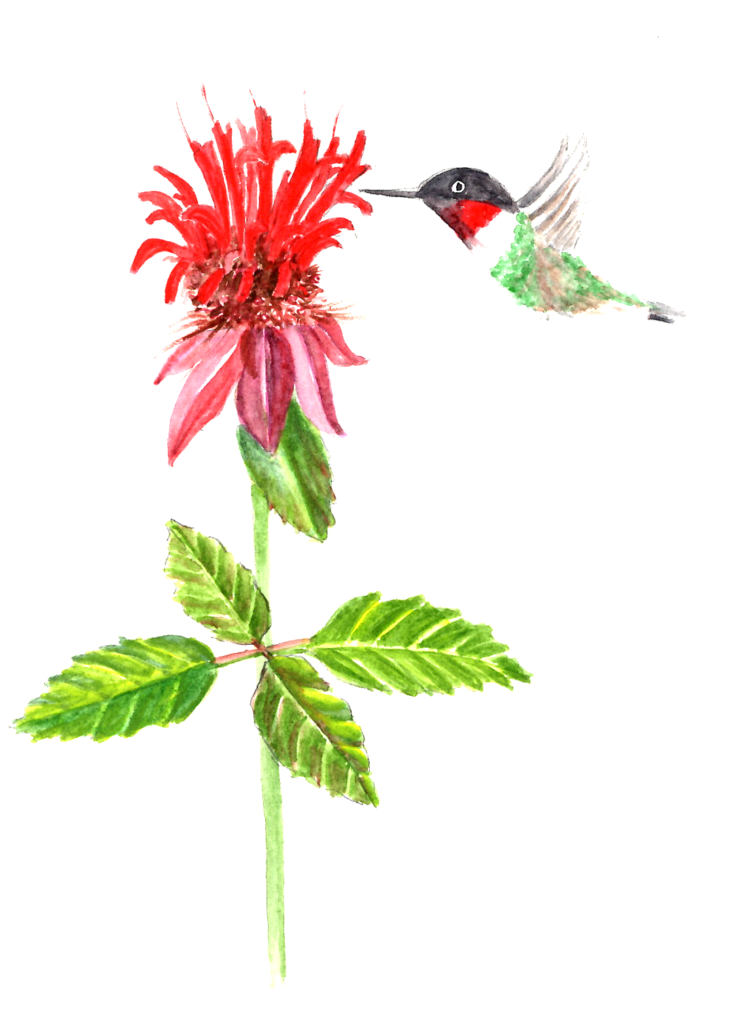
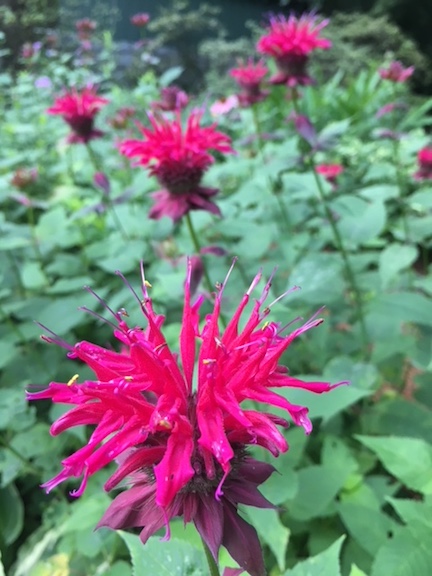
The beebalm in my garden began blooming this week and with it came the first hummingbirds of the season.  No matter how many times I have sat and watched these little bundles of joy and energy, I am still in awe of what they can do. 

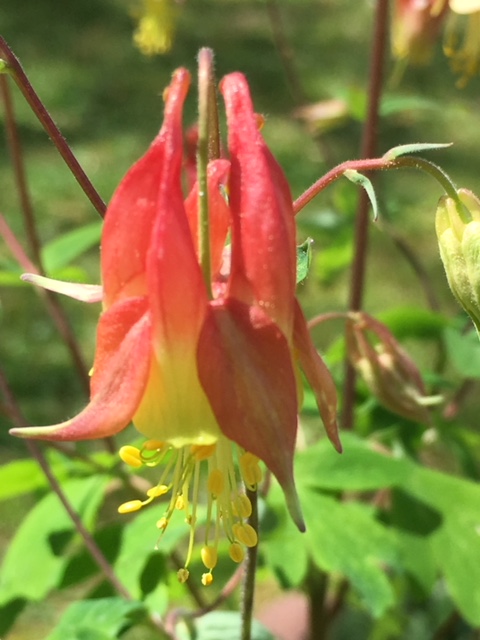
In addition to bee balm, hummingbirds love Columbine


Of course the hummingbirds on my flowers are ruby throated.  The brilliant colors on the throat are not from pigments but are caused by refracted light.  The angle and the amount of light directly influences how dull or sparkling these birds appear.

I say “of course,” because the ruby throated is the only hummingbird to occur in the eastern part of North America.  There are 24 species of hummingbirds that have been known to at least visit the United Sates, if not breed here.  Only 8 species do that.  The other 317 species of hummers in the world live in Central and South America and the Caribbean.

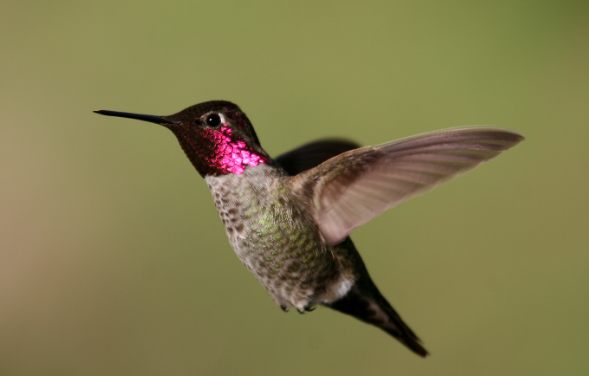
Anna’s hummingbird lives on the west coast of North America

Hummingbirds are truly amazing, especially for their size.  Each day that have to eat half their weight in sugar.  Granted, that’s not much as a ruby throated weighs only 3 grams (to give you some perspective, a nickel weighs 4.5 grams). They can fly backwards and when going forwards can fly at a horizontal speed of 30 mph.  In a vertical dive, they can reach 60 mph.

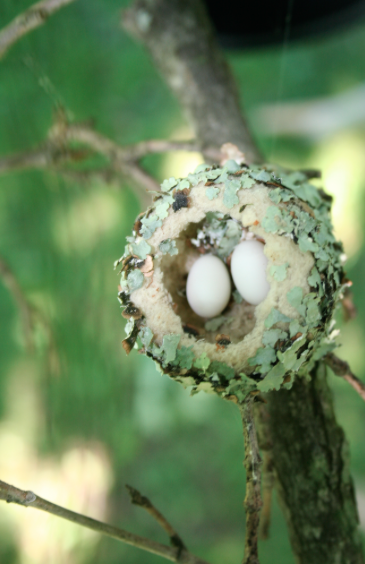
The smallest hummingbird, the bee hummer, lives in Cuba and is only 2 1/4 inches long.  Not surprisingly, hummingbirds lay the smallest eggs of any bird.  The ruby throated egg is about the same size as a jelly bean.

Image from Ohio DNR

Hummingbirds perform heroic feats of migration. The gold medal winner is the rufous which travels 3000 miles from Alaska to Mexico every year. The ruby throated crosses the Gulf of Mexico, clocking in an impressive 500 miles a year.

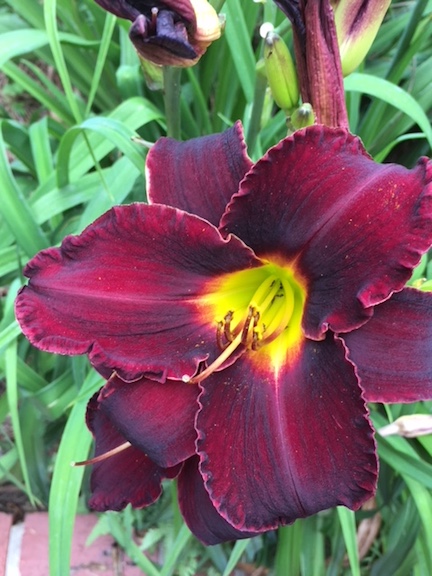
It’s relatively easy to attract hummingbirds to your garden. They love brightly colored (more than just red!) tubular flowers such as trumpet fine, foxgloves, impatiens, petunias, cardinal flower, salvia and day lilies.