Foraging Flowers in January

My friend, Jessica, loves to arrange flowers and always has a small bouquet somewhere in her beautiful urban condo. Jessica is also the one who alerted me to the environmental impact of buying cut flowers from a florist or market.

Like other goods that are imported from countries thousands of miles away, flowers have a serious environmental impact. Most of the flowers in the US come from Colombia and are flown here in temperature controlled planes. The “shelf life” for most cut flowers is 3 – 5 days so speed is incredibly important. Not only the transportation but the cultivation for flowers also has an impact as these flowers take a tremendous amount of water and are generally grown with chemicals.

So, to do our part and make our own contribution to fighting climate change, Jessica and I pledged to forage for flowers and to try to buy only locally sourced stems instead of purchasing them at the market or grocery store.

This not only influences the way I decorate the house but also how I garden. Knowing that my biggest source of flowers will be my own garden greatly inspires me to plant flowers that I can cut and bring indoors. With a continued promise to grow as many native plants as possible, this definitely narrows the field, so to speak.
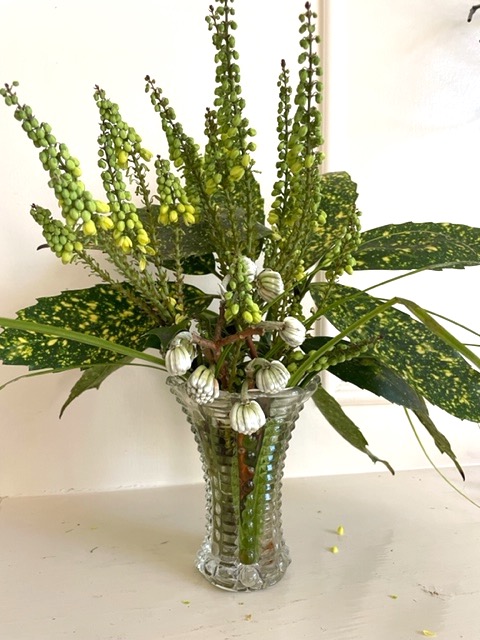
As I foraged this week in my garden, I knew I could pick some dried flower heads and grasses but I really wanted something colorful and living. After the cold spell of the century followed by torrential rains, the pickings were pretty slim. But, every bit of green and living caught my eye. All of a sudden moss, lichen and evergreen branches looked beautiful!
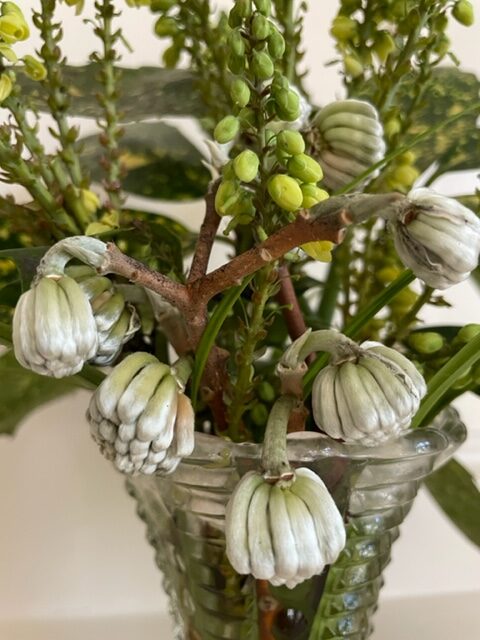
I decided on a few buds from my paper bush and the short elongated blossoms from mahonia. I found a small grove of mahonia – one of the worst invasive plants in Georgia – at the side of the house. I hadn’t even realized it was there. I need to cut all the blossoms back so it won’t continue to spread. I used yellow speckled acuba as a filler and put it all in a small crystal vase.

I can’t say that it’s a stunningly beautiful arrangement but it is colorful and it brings a small spot of nature into my living room. And, there was zero negative environmental impact. Actually, since it served to help control an invasive plant, I’ll put it in the positive column. What more could you ask for in January!!
Leave them with hope

A friend recently came back from touring in Europe, where she met an English professor who focused on climate change. When she asked him the one best thing we could do for our children, his answer was a surprise. Rather than list a list of “do this” or “don’t do that” the professor said, “Leave them with hope.”

When she relayed this story to me, I was first surprised and then delighted, for hope is something I can do – it’s my forte and within my skill set. I may not be able to transform my garden into an environment that absorbs huge amounts of carbon, but I sure can leave my children and grandchildren with a sense of hope. And with good reason!

There are positive signs that the world is finally getting serious about climate change. The U.S. legislation passed earlier this year is a clear indication that Americans are moving forward in mitigating the effects of climate change at a national level, though admittedly, we have a long way to go.

But mainly I’m optimistic because I believe that the smartest minds in the world are working on this issue and I believe in the creative genius of our species. I think that we can come up with solutions and put these ideas to work before it’s too late.

I’m also optimistic because I believe in the goodness of people and in human nature. Viktor Frankl, who spent years in four different concentration camps during World War II was well aware of the power of hope. His book, “Man’s Search for Meaning” grapples with the question of why some people survived and others did not. His answers had everything to do with our attitude and our sense of hope.

He wrote “Our greatest freedom is the freedom to choose our attitude.” This is as true today, when we sometimes feel dark and hopeless about our environment, as it was during the dark days of World War II.

But hope isn’t passive. Hope involves action. Frankl said “Our answer must consist, not in talk and meditation, but in right action and in right conduct.”

Hope is a choice. We can continue to wallow in the dire predictions of the day or we can choose to be hopeful – and to marry that attitude with right action and right conduct.

During this week of thanks, I’m grateful for all those who are working tirelessly to help solve our environmental problems. But even more, I’m grateful for all of you who choose hope.

Lasagna in the garden – building soil

Update on the leaf blower- Last week I posted about getting an electric leaf blower. I ended up buying a Ryobi 40 Volt. The best thing about it, other than it has zero emissions, is that it is sooooo quiet. The bad news? the battery only lasts 20 – 25 minutes. So, that’s a bummer. There are solutions – I could get an additional battery to have ready. Or, I could reduce the amount of area that I blow. Or, I could become more efficient – I found myself sort of chasing leaves from one side to the other. But, all in all, I’m thrilled.

Lasagna for the yard

I know my neighbors think that I am a dumpster diver, with good reason, I’m always poking my nose into the neighborhood trashcans.  This is particularly ironic because, much to my great embarrassment, during my childhood, my mother was forever going through trashcans and things stacked on the street.  And here I am, my mother’s daughter.  

My Mom took things such as broken down furniture, cleaned it up and handed it over to my Dad, who would fix it as needed.  She, then, would paint it and turn it into a treasure.  She developed quite a business doing this, selling painted discards at embarrassingly high prices.  

I’m not so much into dragging broken down tables home as I am interested in leaves and cardboard, of which there is an astounding amount of piled up by neighbors’ mailboxes. That means that Mondays are really busy days since the city picks up trash on Tuesdays.

 Atlanta is known as the city of trees so you can just imagine fall in our fair city.  In many neighborhoods, mine included, it seems to be a point of honor to keep every leaf off the landscape so there are rows and rows of bagged leaves along the street. What a waste! The ground needs all those leaves to help replenish our poor soils.

In years past I have had 24 bales of pine straw delivered – twice a year. It’s a great mulch and makes things look nice. This year, I began looking for yards with pine trees – and leaf bags at the street. Bingo! I found one house with several bags of fairly clean, leaf free pine straw so I drove around the corner and stuffed the bags into the back of my car. The car was really stuffed so – unbeknownst to me – the back door had not closed and I almost, almost drove off which would have resulted in several bags of pine straw strewn all over the street. It would have been a little embarrassing having to explain why I was raking the street! But just in the nick of time, I noticed and closed up the car.

As for the cardboard? Everything, it seems, comes from Amazon these days in varying sizes of cardboard boxes.  There must be billions of boxes in America now.   I read that you could use these castaways in the landscape to help build back soil – and still keep your lawn and flower beds looking respectable.

This is still all theory for me but the idea behind this layering or lasagna method is to place the cardboard directly on the ground or on weeds that you want to get rid of, wet it down and cover it with mulch – like chopped up leaves!!! Perfect.

I dragged over a few big sheets of cardboard from one neighbor, tore it into the right size and put it on grass that I’m trying to smother (always thinking about less grass!). Then, much to the amusement of the people walking down the street, I watered it.  You can’t use cardboard that has tape or paint on it and that’s a drawback because a lot of boxes are fully painted. But, if you can find plain brown cardboard boxes, you’re in business. You can use other things as well, such as those big paper leaf bags torn to lie flat or newspapers, basically anything that will decompose.

I have a small leaf mulcher so I put it out on the front yard, dragged another neighbor’s bags of leaves over and began to go to work, pouring in leaves, getting out beautiful mulch, which I then put on the wet cardboard.  It’s easier to run over the leaves with a mower but unless you have an electric mower, it means putting more nasties into the air if you run a gas mower even longer.

I hope that the worms and other earth critters will love the cardboard and then by next spring, I’ll have no grass and good soil.  All from the neighbor’s trash. What could be better?

The soil is everything, not only for our gardens but for the entire planet.  It is, literally, the ground beneath our feet and anything to do to make it richer and stronger will benefit us all.

Let me know if you have done this lasagna method of soil building and what your experience was. And, if you have other ideas about building the soil, post that as well. Happy gardening!

Can gardens save the environment?

There is no doubt that our climate is changing. And we know why – greenhouse gases (carbon dioxide, methane and nitrous oxide) in the air prevent heat from radiating back out into the atmosphere, trapping it on earth and causing warmer temperatures. We also know the solution – to reduce the amount of greenhouse gases in the air both by emitting less and by actually absorbing what is already there.

Traditionally, our gardens and landscapes have contributed to the problem. We use gas powered equipment to maintain our gardens (a leaf blower running for one hour emits as much CO2 as a car traveling 300 miles.) We water excessively (the most irrigated “crop” in America? Not soy or corn but lawns). We use nitrogen rich fertilizers which add to the nitrous oxide in the air. We spray chemicals to “improve” our gardens and keep away mosquitoes and that kills pollinators which are desperately needed in the garden and in the wild for plants to perpetuate.

New theories or solutions to climate change remind me of new magical ways to lose weight. We’re all looking for a quick solution. But really, to lose weight you just have to burn more calories than you take in. To cure climate change, we have to reduce the amount of carbon in the air.

Can gardening do that? I think yes.

Plants can absorb and trap carbon, can offer shade and cooling for homes and can offer much needed habitat, food and pollen for pollinators. But which plants? And how do we eliminate our chemical, water and fossil fuel dependence and still have beautiful gardens? And if you live in Southern California, how do you maintain your gardens without using precious water? And how do we deal with invasive plants without using chemicals? And how do we build the soil so that it becomes an effective carbon trap? What can we plant to replace lawns? And so on. I definitely have more questions than answers, but in the end, I have these goals for my nature based garden:

1.     To reduce the amount of carbon in the air 

2.     To protect and increase the number of pollinators.  

3.     To protect and improve air and water quality 

4. To bring my landscape into an environmentally balanced system and still have a beautiful, welcoming garden.

I hope that you will work toward these goals with me. I think that together we can have a powerful impact on our environment. The good news is that there are alternative gardening methods that will help us succeed. It doesn’t mean giving up your lovely landscape, it just means thinking outside the box and being open to doing and seeing things a little differently.

The posts here will reflect my journey toward attaining these goals. I’m sure I’ll have both successes and failures. But I am also sure that this journey is absolutely necessary – both for the health of the planet and my own mental health. Certainly to do something about this desperately important issue is ultimately better than doing nothing.

I’m enthused and excited about this journey and am happy that so many of you have the same goals. We all have different circumstances and different challenges. Please share your thoughts and experiences through commenting on the posts. And I’m always open to “guest bloggers!” The more information we have, the more success we will have. I can’t wait to hear about your own creative solutions to bringing our world back into balance. Happy Gardening.

Laura

The first blog, which follows, is about my surprisingly challenging efforts to get the “mow and blow” landscapers to switch to an electric leaf blower. I thought it would be so simple…….

Blowing in the wind

In my seemingly never ending quest to do something about climate change I decided that the first thing I needed to do was to get my own house in order, to drastically reduce my carbon footprint and maybe even have a positive impact on the environment with the wise use of the land that I care for.

To this end, I decided to first tackle the obvious – the men who help care for our yard the “mow and blow” guys still use gas powered equipment.  Because we’re in the height of the leaf season, it only made sense to begin with the leaf blowers.

I have a small electric leaf blower with a looooong cord.  Perfect!

When my 6 foot 230 pound yard man, Daht, pulled up two weeks ago, I was ready! I ran outside to greet him.  I picked up my little lime green blower with the loooong cord.  “Could you use this instead?  It’ll save you gas!” I smiled brightly.

He took it from me and literally laughed out loud.  It looked like a toy in his big hands.  “No.  Too long,” he said in his limited English.

“Oh no!” I said, still brightly, “I have a loooong cord.  It’ll go all the way to the back.”

He laughed again and said, “Take too long.  One hour. Two.”

Hmmm, I said not so brightly.  “Could you at least use it on the driveway? And if I get a larger electric machine, will you use that?”

Hmmmm, he said, also not so brightly,    “Maybe.”

And so we left it, neither of us entirely happy.  But not entirely unhappy either.

I knew that if he wouldn’t use a small leaf blower, he certainly wasn’t going to use a rake.  It occurred to me (briefly) that maybe I would just take care of the mowing and blowing myself but it’s a large property and I really love using my gardening time for more than routine maintenance. 

My next thought was just to leave the leaves on the large, mossy back yard. But frankly, I like the look of a freshly blown yard. It looks neat and cared for. I am adamant about leaving the leaves under trees and in the flower beds, but not so much on the open lawns. In doing more research, I discovered that moss covered areas are wonderful carbon traps, storing more carbon than even mature trees.  Wahoo!!!!

A little more reading informed me that you have to keep leaves off moss or they will smother and kill it.  Not so wahoo.

I looked at electric leaf blowers and there are a multitude available, from little ones like my old one to the Ryobi 40 volt model that I chose.  Electric blowers, like electric cars, seem to provide a solution to taking care of our environment but still doing the things we love to do – taking car trips and removing leaves from the mossy lawn. And they’re quiet!!

I’ll have to admit it wasn’t a seamless transition. Last week I tried out my new blower, happily (and oh so quietly!) blowing leaves off the moss. I only used it about a half hour and then set it out for Daht, who came a few days later. He only used it five minutes before the battery died. WHAT?? The battery is supposed to last four hours. Is it a faulty battery? Does it need to be freshly charged every time you use it? Okay, I can do that. I can have it ready and fully charged.

So, especially those of you who live in neighborhoods, what do you do about leaf blowers? Does your neighborhood have a noise ordinance that prohibits gas powered blowers? Do you rake? If you have an electric blower, which one do you use? How long does YOUR battery last? Please share your experience!

Onward…….

Nature based – a life choice

But no longer a blog

I have been writing this blog since June of 2017 – five fun and nature filled years. During those years, I’ve reported to you my challenges, total failures and successes. I’ve brought you along as I played with six grandchildren, reporting on our many projects from making a geode cake to making blankets for the homeless, from making 1000 brownies to picking flowers for Mother’s Day.

I have written about Sadie, my faithful dog as well as Jack, my long-suffering husband.

I have written about my parents and how they taught me both a love of nature and the joy of hard work and the value of a job well done.

But mostly I’ve written about being in being in my garden and the deep seated joy it brings me to work with this living palette. And while I have loved writing this blog, I’m ready to make some changes. I find myself wanting to garden more and write less. After all these decades of researching and writing, I want to dig in and experience my garden directly and to figure out for myself what works and doesn’t work instead of turning to the experts. I want to be a curious gardener and to sit and wonder and marvel at the ongoing saga of growing plants and of trying to make my piece of land both useful for the environment and a pleasure to look at.

Everything about the garden is constantly changing, daily, yearly and by the decade. Trees grow and light changes. The soil, thanks to constant attention, is maturing and becoming richer. Storms pass through, taking down trees and the light changes again. And though this has always been true, I think changes in the garden, as everywhere, are more rapid and extreme than they used to be.

And with these changes comes the challenge and responsibility of learning to garden in a way that not just pleases me but that also provides a service to the environment. And, frankly, I’m not sure yet how to do that. How do I work with nature as I garden? How do I make my space an integral and thriving part of the ecosystem? How can I use my garden to help mitigate the effects of climate change? I have a lot of questions and I’m no longer content to do things just because that’s the way we’ve always done them. I believe that changing times require creative minds.

I’m sure I’m not giving up writing forever, it’s in my blood and what I’ve done all my adult life. I’m just not sure what I want to write. Maybe it’s a new blog: The Curious Gardener, Maybe it’s a book on gardening and climate change. Maybe it’s poetry. Maybe it’s a collection of the best Nature Based blogs. I don’t know. I only know that my life, as always, will be nature based and that nature – from my garden to the vast wildernesses that I love to visit – will be central to who I am and what I do.

I suppose that a blog, like a garden, is never finished. So as I move toward the next phase of growth – and hopefully bloom! – I’ll do so with the thought that I’ll pop up in your lives again some day, Sort of like kudzu, I’m hard to get rid of!

Thank you so much for the support and enthusiasm you have shown for my writing. I will miss the sense of connection I’ve felt with far flung and seldom seen friends but I also know that the roots of friendship grow deep and true and that in another time, another season, we will connect again.

Impatient with impatiens

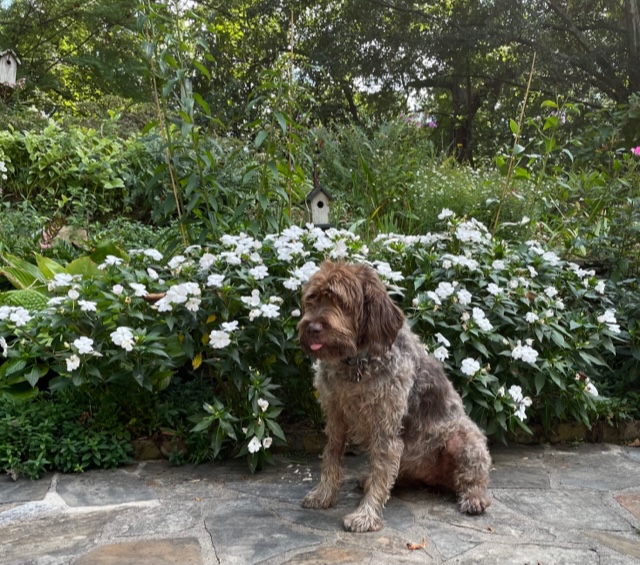
Like bridesmaids at a bachelorette party, my “Sunpatiens” (impatiens bred to thrive in the sunshine) have been drinking non-stop all summer as Atlanta has been blessed with ample rainfall. These beauties drank it all in, acting as it there was no tomorrow and no reckoning at the end of the party.

Which is now. Rain stopped abruptly about 10 days ago and while most of my sturdy native plants are doing fine and adapting well, these big, blousy beauties are looking a little peaked, By late afternoon as the still-hot sun takes it’s toll they look a little hung over, with droopy leaves and wilted blooms.

I really have little sympathy for them. I don’t mean to sound judgmental, but there’s a price to pay for non -stop drinking. Though these days, without knowing when it will rain again or not knowing if the next rain will be a torrential downpour or a passing drizzle, who can blame them for making the most of every drop?

But that’s one of the challenges of gardening – and growing – in a world where the climate is changing and extreme temperatures and rainfall are becoming the norm.

I don’t mind helping out in the short term, sort of like providing a halfway house while they adapt to drying out. But long term? These annual plants are simply not worth pouring good, clean precious water over. They contribute little, except as eye-candy. They do not attract pollinators, do not provide food for caterpillars or songbirds, don’t make a good habitat for much of anything and don’t, as some plants do, put carbon back into the soil. In my garden, each plant has to earn its keep and serve a purpose in the ecosystem. And, since sunpatiens are annuals, I’ll have to pull them up in few weeks anyway to make room for cool season plants.

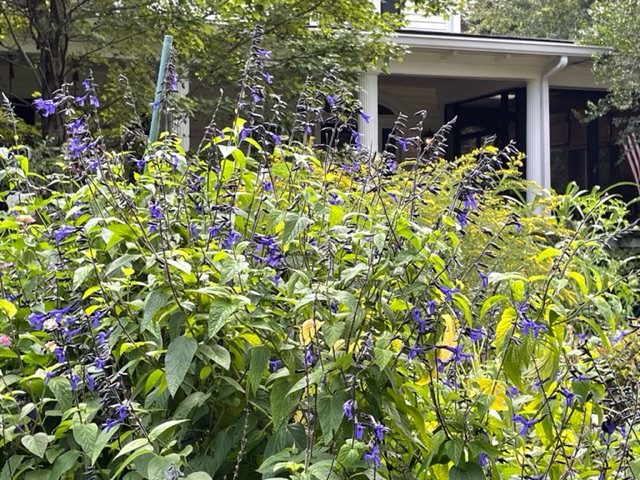
Blue and black salvia and “fireworks” goldenrod are thriving in the heat and asking for no water!

When I bought these new – fangled, sun – loving impatiens, I thought that they were about the healthiest looking plants I’d ever bought. Midsummer, I gave them a sprinkling of organic fertilizer and that, coupled with ample rainfall, resulted in plants that now stand more than three feet tall. So, it’s not their vigor or their beauty that I quarrel with, it’s the fact that they’re hanger-ons, requiring care, attention and lots of water without doing their share to create a healthy ecosystem.

The problem is, like a line of chorus girls, my sunpatiens create a gaudy border at the very front of my garden at the street. They set the stage for the rest of the garden and if they look wilted and unhappy it makes everything look neglected and sad. So, what to do? There’s no rain in the forecast, I don’t really want to waste water on them just to keep them alive for another couple of weeks but if I just dig them up, it will leave gaping holes in my front garden.

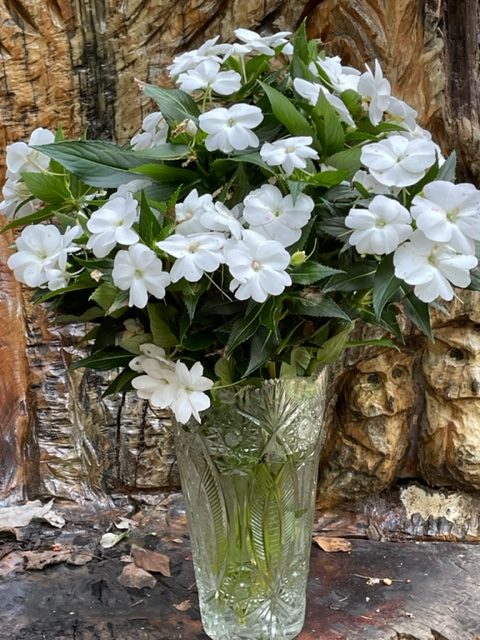
But, since I’m God in my own garden, I’m going to experiment. I’ve decided to cut back half of the stems with the hope that half the plant will need half the water, though I’m not sure that it works that way. But, it’s worth the experiment. One unexpected benefit of this was that I had armfuls of gorgeous white blossoms to bring indoors. I’d never considered impatiens as cut flowers before but they have lasted pretty well and look gorgeous in a vase.

The important lesson for me, as a gardener, is to think ahead and to work with my environment more than to control it. More and more I’m putting in plants that take fewer and fewer resources. And, I am restricting my palette to include only plants that provide something important for the ecosystem in which they live. I’m including more perennials than annuals, more shrubs and trees than grass. I’m working with the soil so that my plants produce good, strong roots, which will help them withstand the extreme challenges of a changing climate.

I really have nothing against chorus girls and bridesmaids, I just think it important to remember that when the party’s over, there’s work to be done.

Moonvine

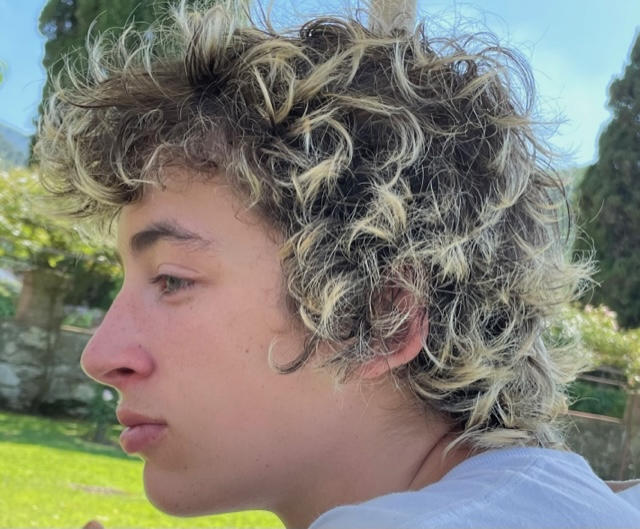
When my grandson, Rivers, told me that moonvine was his favorite flower, of course I fell all over myself to grow it for him. Now 15, Rivers is not the constant companion he was for me during the first decade of his life so I’m always looking for ways to engage – and please him. Moonvine? I’m on it.

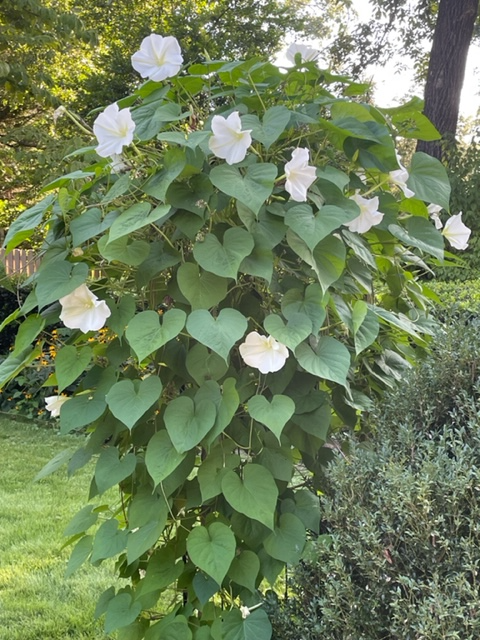
I started them from seeds last spring, carefully nicking each hard seed and soaking them overnight to maximize germination. Success! And a lot of it. I chose to put the vines on either side of the front walk where they get the maximum amount of sunlight. I knew that they would need support. Being of the frugal sort, I bought some thin poles to build a small, basic arbor for the vines that would eventually grow rather than buying an already made trellis.

I was pretty excited when the vines began growing vigorously by late June. Yay! They looked so happy and healthy. And robust. And strong and aggressive. And a little scary. The vines soon completely covered my homemade trellis so I had to go out and buy trellises after all. But no problem! It was worth it, Rivers was going to love this.

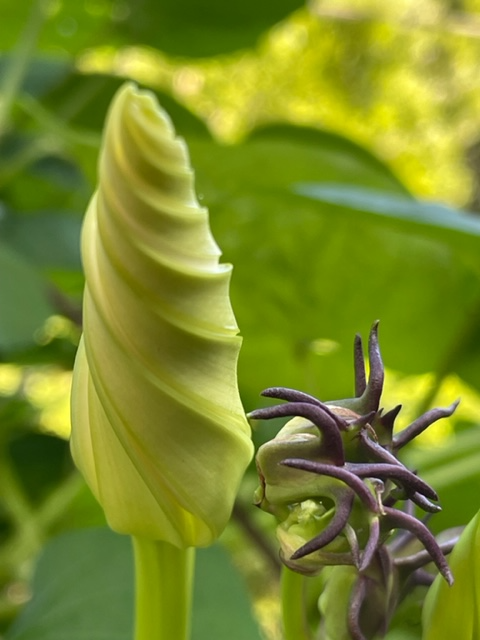
Another month and these, too were covered with vines with long tendrils waving in the air like snake heads. But by now I also started seeing buds and I envisioned sitting quietly with Rivers on an early evening, both of us watching in awe and wonder as the moon flower went from bud to open blossom in a matter of minutes. Maybe he’d even want to bring his girlfriend! Maybe he would want to have a moon vine party and invite all his friends!

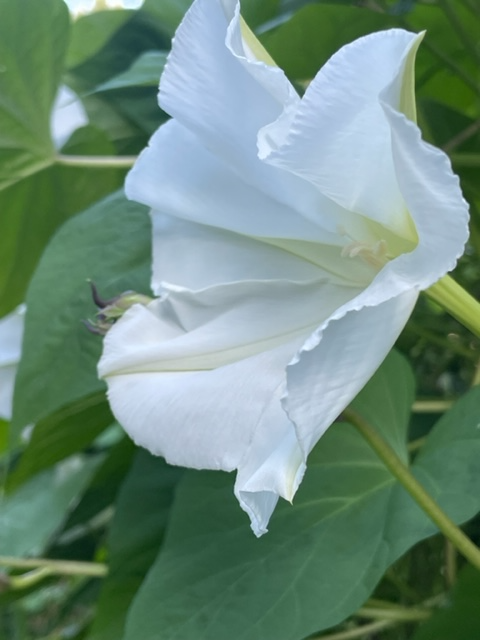
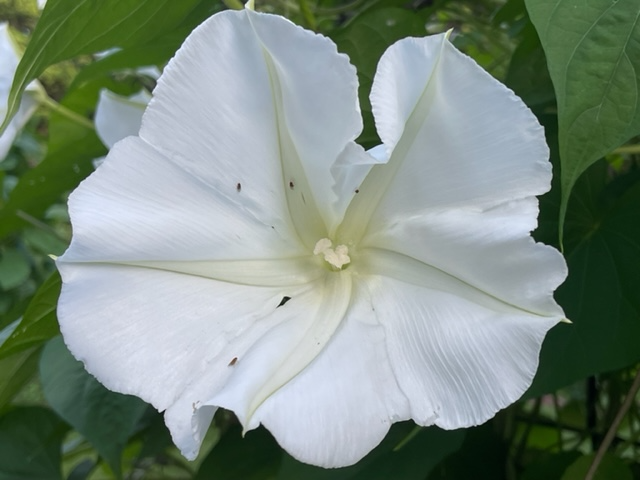
By early August I was thrilled to see the first blossoms. Five to six inches across when fully opened, they look like giant morning glory blooms, with good reason. They’re in the same genus and look very similar, only differing in the time of bloom.

I thought about calling Rivers but I knew if I waited that soon I would have a dozen or more blossoms putting on a show that would knock him off his feet and impress him so much he’d never forget it. So I waited. And waited and when finally I counted 15 buds that I thought would open that night, I called Rivers.

No answer.

So I texted Rivers.

“Rivs!!! The moonvine are ready!! Can you come see them tonight?”

Long, long, long wait then a text……..

“What’s a moon vine?”

WHAT??????? What’s a moonvine? No sitting in awe and wonder? No girlfriend? No moon vine party?????

After a long, long time, I finally texted back.

“Your favorite flower. Remember?”

No answer. I Sighed. And sighed again. But what did I expect? I’ve raised teenagers, I KNOW what they’re like.

I put down my phone and went outside to watch the magic all by myself. But, much to my awe and wonder, Rivers and his Mom were sitting in the front yard.

Rivers looks at me, “Where’ve you been? You better hurry. They’re about to open.”

I didn’t answer, just hugged him and sat down to watch the show. Teenagers! They’re just full of awe and wonder!

Late summer wildflowers

I have to admit even though I am passionate about all wildflowers, I tend to spring forward rather than fall back and my expertise about the native plants blooming in the late summer and early fall is a little rusty.

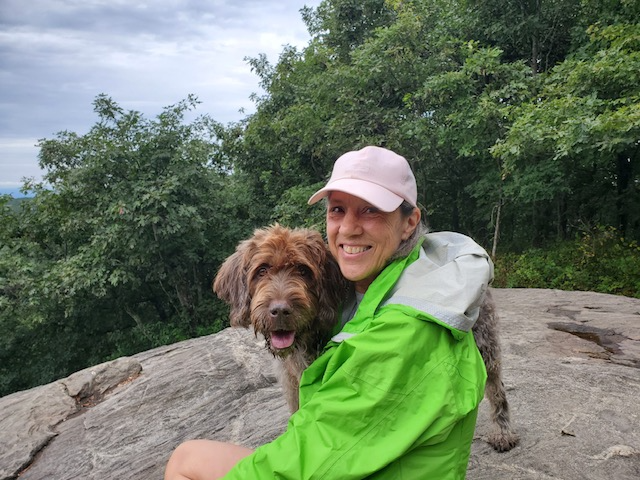
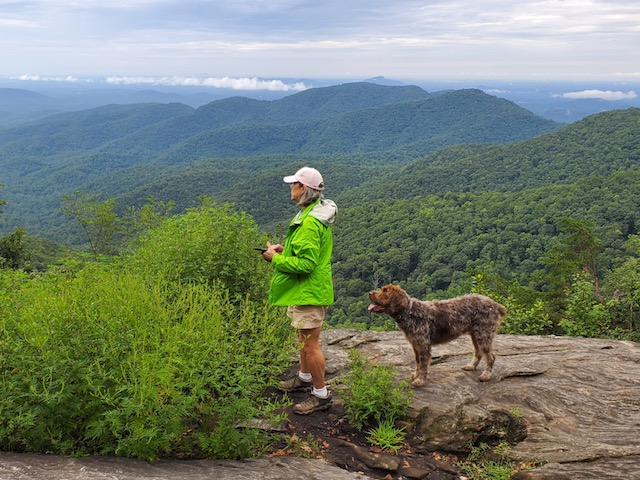
Me, looking for wildflowers. Sadie, watching me to make sure I don’t fall off the cliff!

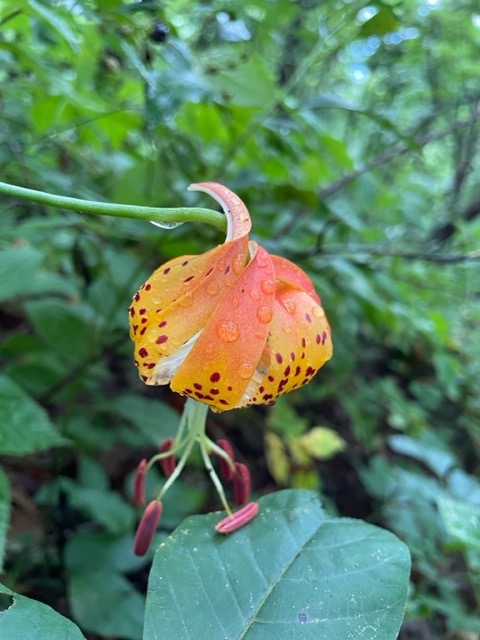
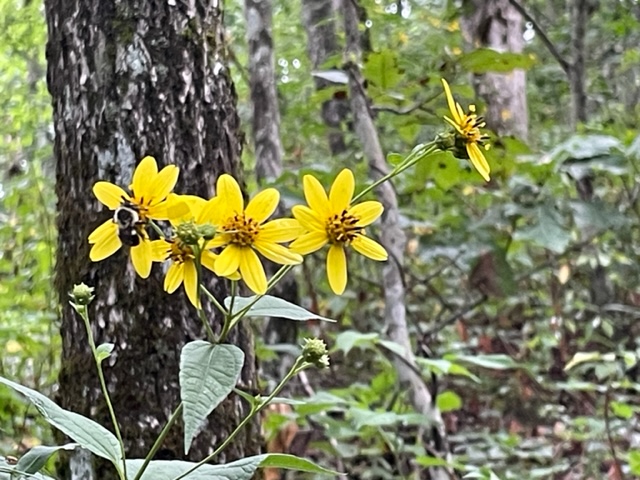
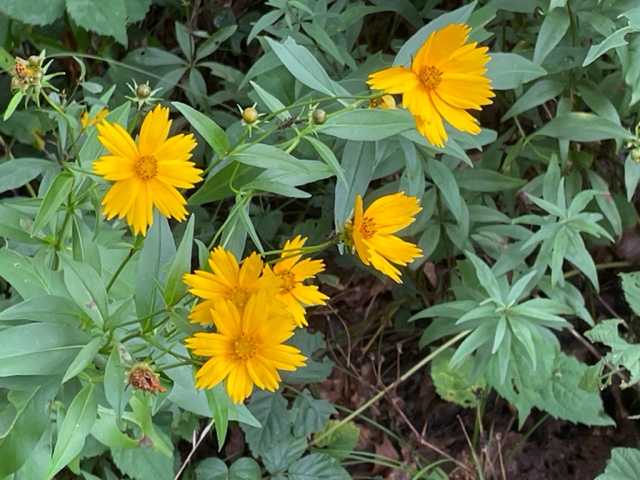
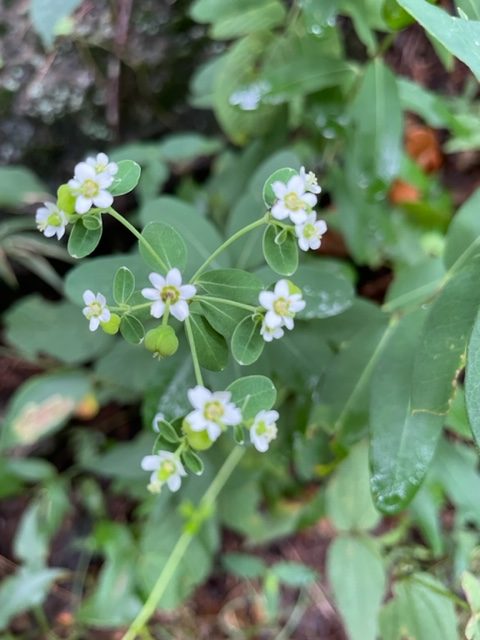
I can easily tell the big ones, the knock you off your feet roadside flowers such as Joe-Pye weed, Ironweed and goldenrods but not so much when it comes to the smaller, more subtle wildflowers blooming in the late summer woods. So when Jack and I went hiking on the Appalachian Trail near Woody’s Gap last week, I came home full of joy and praise about the wildflowers I had seen but also full of questions and uncertainty. Snakeroot or boneset? Lychnis or Silene? Tickseed or Swamp sunflower? So many questions!

But after consulting both books and friends, I think I came up with satisfactory identification for most of what I saw, some of which was so beautiful it literally stopped me in my tracks. These are a few of the many species we saw. Enjoy!

Turk’s cap lily
Tickseed Sunflower
Coreopsis
Flowering spurge
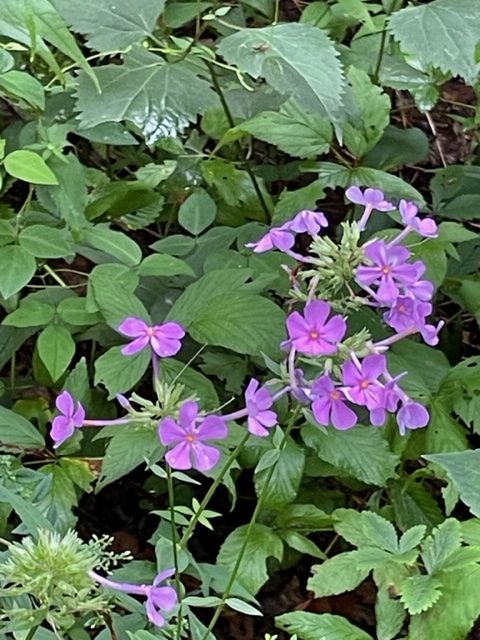
Phlox
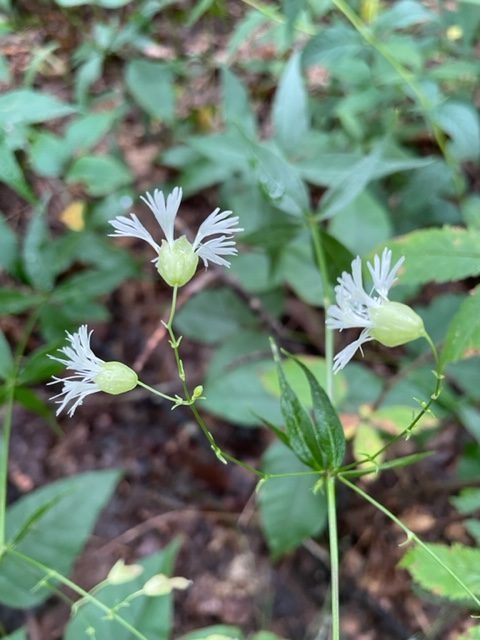
Starry campion

It was a grand day of hiking and flower hunting, cool enough for a jacket, even in Georgia in August. But, as usual, Jack and I probably didn’t have as much fun on the trail as Sadie did. She was in her element and ready to go back any time. Me too!

Pitcher Plants

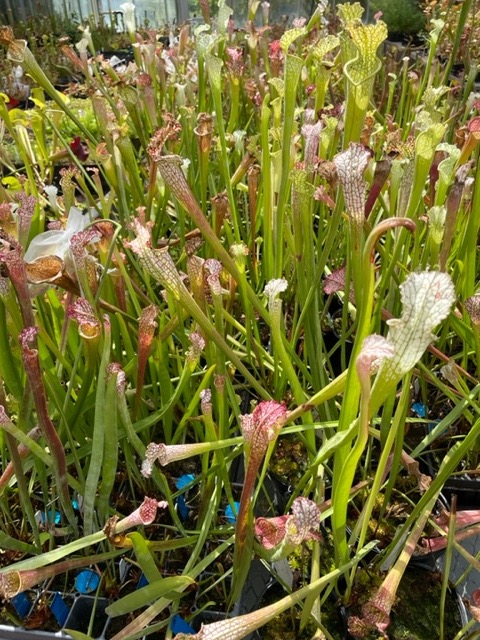
If you think that all carnivorous plants are the “vampires of the plant world,” you would be only partially right. Pitcher plants, the various species of the genus Sarracenia, are more flesh eating than blood sucking. They do indeed trap and eat their prey, but they do it in a way that seems completely benign – unless you happen to be the beetle or fly that actually ends up as lunch. Unlike plants such as the Venus fly trap which move fairly rapidly (at least for a plant!) pitcher plants don’t move but lure insects in with a sweet, delicious scent.

Over the eons, the pitcher plant has evolved many ways to insure that insects who actually land on the plant don’t escape. The lip is sticky and the slippery hairs inside the pitcher are pointed downward making the insect’s downfall almost insured. Once something falls into the rich mixture of liquid death at the base of the pitcher, all hope is gone as a combination of enzymes and acids begin immediately to dissolve the juicy parts of the insect, leaving only the exoskeleton as proof of its demise.

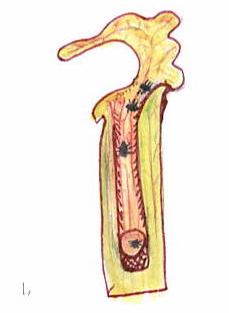
Cross section of the pitcher plant with (unfortunate) ants falling to their eventual death.

Though this is pretty unfortunate for the insect! it is a marvelous way for the pitcher plant, which makes its home in wetland areas, to supplement its nutrients. But even with this protein rich diet, pitcher plants are in trouble. It’s not vampire hunters but builders and developers who, over the decades, have drained, paved over and eliminated over 90 percent of the wetlands in the southeastern United States.

The result of this massive loss of habitat is that three Sarracenia species are listed on the federal endangered species list and several others appear on lists at the state level. This makes it a genus of great environmental concern. The fine scientists at the Atlanta Botanical Gardens are addressing this situation and have developed a Sarracenia Plant Collection which is accredited by the Plant Collection Network, a program of the American Public Gardens Association.

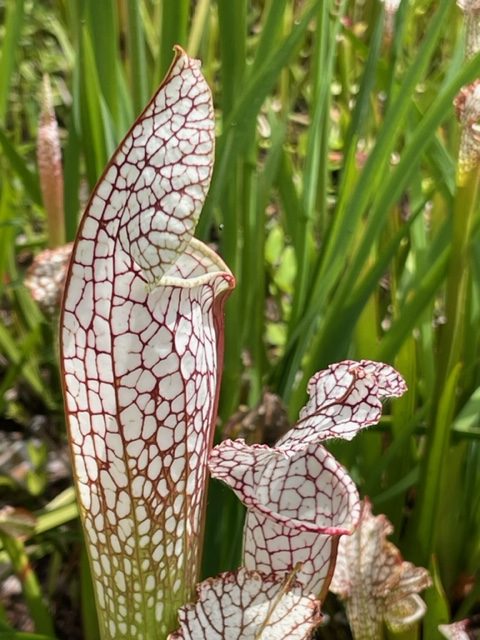
The well named “Parrot Pitcher”
Sarracenia leucophylla

The goal is to not only preserve and maintain species of Sarracenia but to conserve the genetic variability within each species. Look at it this way. If there was only one human couple left on earth, they could, gradually, repopulate the earth but the inevitable inbreeding would result in a loss of vigor and adaptability for those people (remember the European kings?) If, though, there were 20 couples left, the crossbreeding would result (in a lot more fun) and a much healthier and more vigorous population.

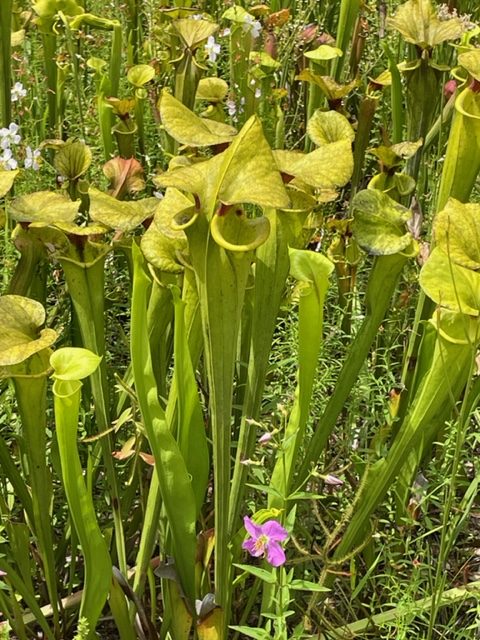
Sarracenia flava, the yellow pitcher plant

The same is true for plants. If we save the seed of just one Sarracenia (or hemlock or orchid or whatever) we can save the species but for how long? Inbreeding would cause weak and depressed plants and the eventual demise of the species. Scientists call this a population bottleneck. All of this is occurring at a time when climate change is challenging plants to be more adaptable than ever before.

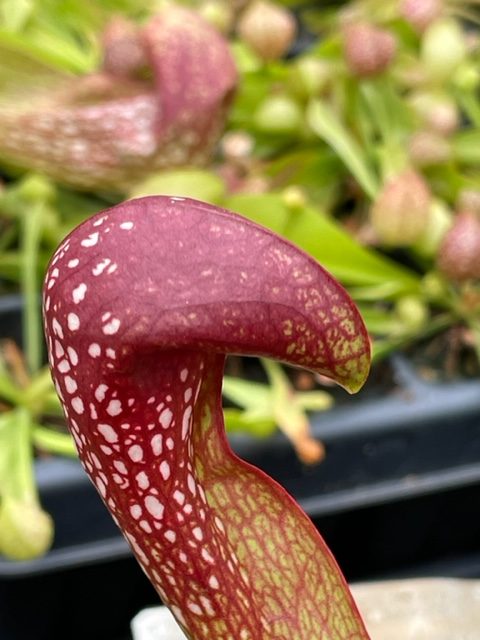
Sarracenia purpurea

To do what they can to protect the genetic diversity of Sarracenia species, ABG scientists are undertaking the massive job of collecting multiple seeds from 50 different individuals within each species and propagating them from various sites in the wild. How lucky we are that these dedicated men and women are working tirelessly to insure that nature will not just exist in our future but that it will be vigorous, strong and vibrant. I am forever grateful for their contributions. Their work gives me hope.