Pots and weeds

I used to be opposed to container gardening, being of the mindset that if God wanted us to garden in pots, She wouldn’t have given us the big green earth. Or something like that. But I finally discovered the magic of gardening in a contained space, having the whole world in a single pot. And, generally speaking, there are no weeds! a particularly welcomed aspect of gardening during these hot, summer months.
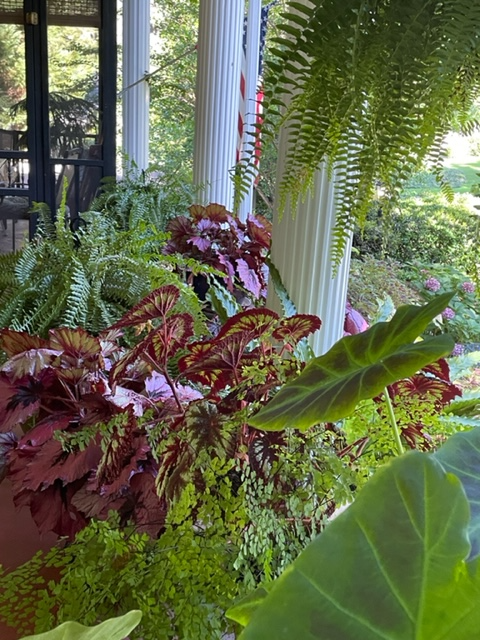
I now have quite an array of potted plants on my front porch. And I have quickly discovered that success breeds more work and expense because the bigger the potted plants grow, the more often you have to divide them, meaning new pots, new potting soil and finding new space in which to put them.
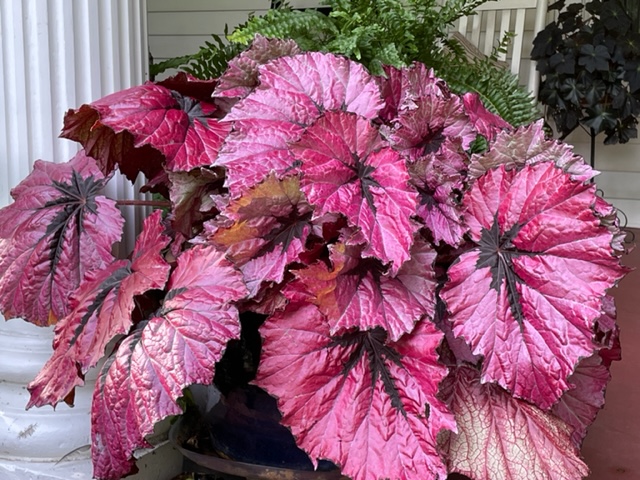
I shouldn’t complain, though, because my potted begonias – which I managed to keep alive during the cold winter months by rolling them in and out of the greenhouse so often we were all dizzy – have been spectacular with leaves that measure literally ten inches across.
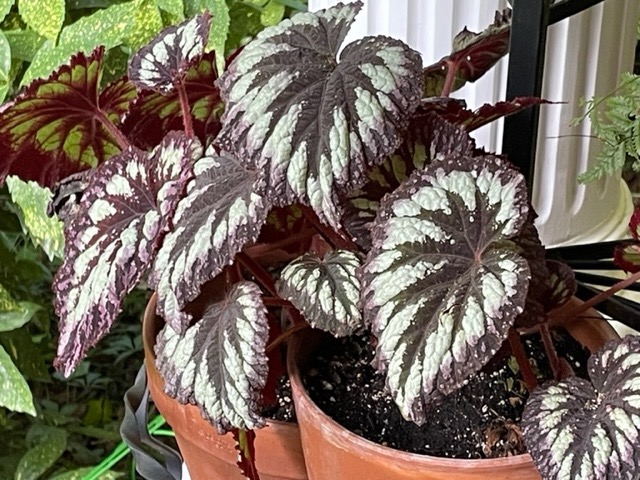
Over the years I have divided this begonia so often that all my friends and family have small pots of it.

It has been such fun to choose colors and textures that complement and contrast with one another. This year, I chose red spotted caladiums and a gorgeous small leaved dark red and green coleus for the smaller pots and then have done really, really well.
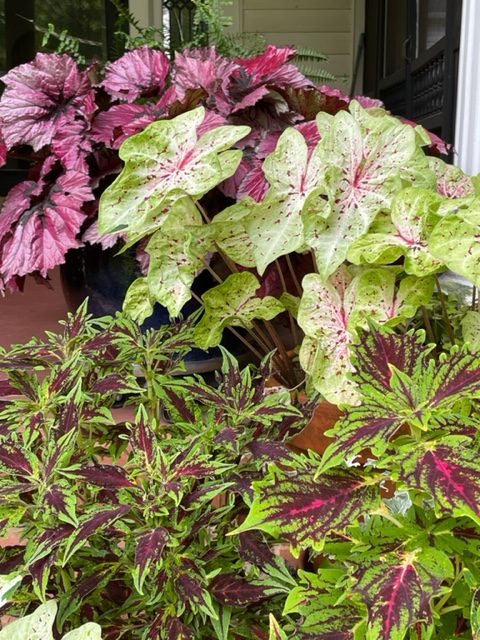
When I was choosing the annuals for the small pots, I had to return the first selection to the nursery. When they asked the reason for the return, I told them it was simply not the right shade of red. They looked at me as if I was nuts but I have to live with this and look at it every day and life is too short to have clashing colors at your doorstep.
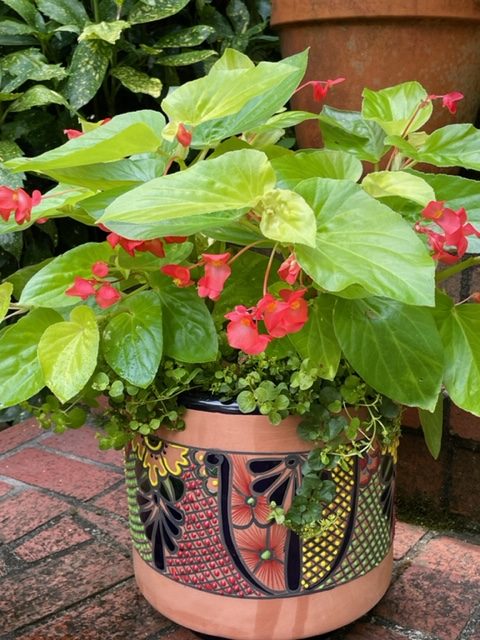
Now that the plants are established and take little time or attention (other than keeping them watered) I have turned my energy towards finding beautiful pots and what fun that is! This apricot angel wing begonia (which I have to keep separate from their pinkish red cousins!) looks stunning in this painted pot. Now, I’m wondering if I can’t paint my own pots, or do some raised plaster stenciling, or maybe buy a potter’s wheel and learn to throw my own pot!!!! Ahh, so many things to do.

Hope you’re having a happy summer.

Isola Bella

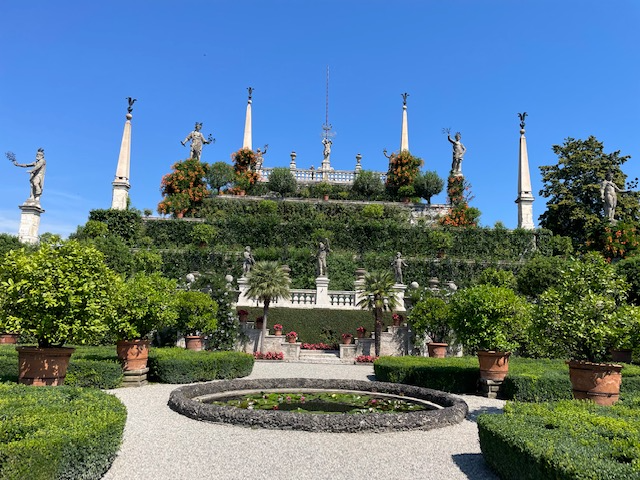
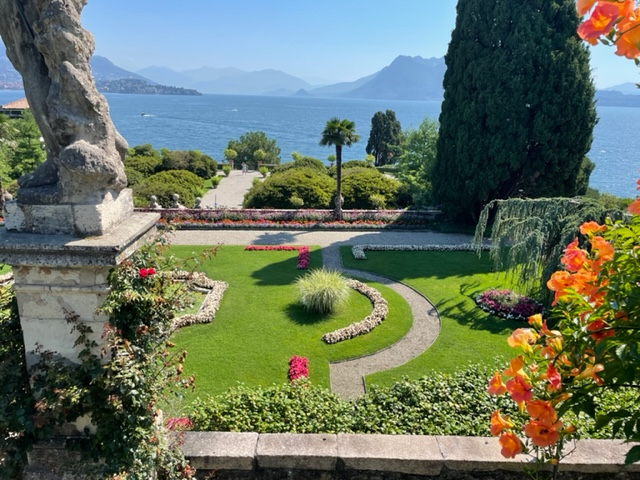
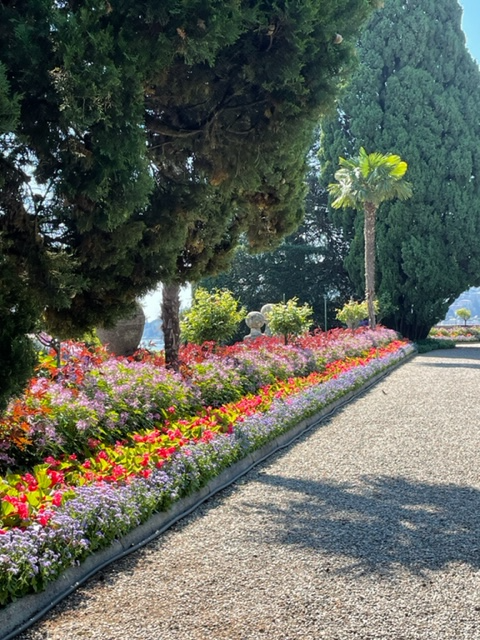
During a recent trip to Italy, Jack and I were lucky to be able to visit one of the great gardens of the world – the Baroque palace and gardens of Isola Bella. This “beautiful island” is in Lake Maggiore, only 400 meters from the mainland town of Stresa.

To get there, you line up with many other tourists to take a short ferry ride over to the island. The entire island is only 49 acres and holds not only a small village but also the palace and the gardens. We wandered quickly through the village – mostly souvenir shops and restaurants now – and then I sprinted through the palace to get to the gardens.

The palace and gardens were started in 1632 and were a gift from Carlos Borromeo III for his wife, Isabella d’adda. Construction was halted mid century when a plague devastated the Milan province. Years later, sons and nephews (including the Cardinal Giberto III) resumed the work, which was completed nearly 100 years after it was begun.

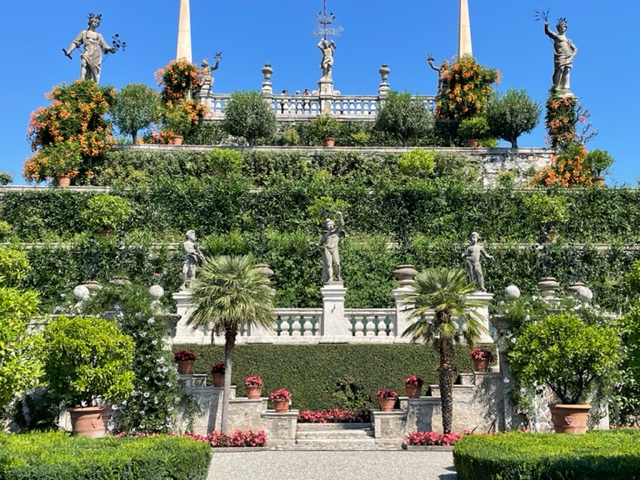
But of course a garden – any garden – is never finished and Isola Bella is no exception. The gardens are comprised of a pyramid shape 37 meters high (soil had to be shipped to the island) and ten overlapping terraces. Ponds, fountains, grottoes, and a lot of statuary complement the abundance of plants.

Carlos III was a patron of the arts and a scholar. Statues representing art and beauty are a tribute to him.

Perhaps the most outstanding single specimen is the huge camphor (Cinnamonum camphora) that was planted in 1819. Today the massive tree is braced and wired in an attempt to prolong its life as long as possible.

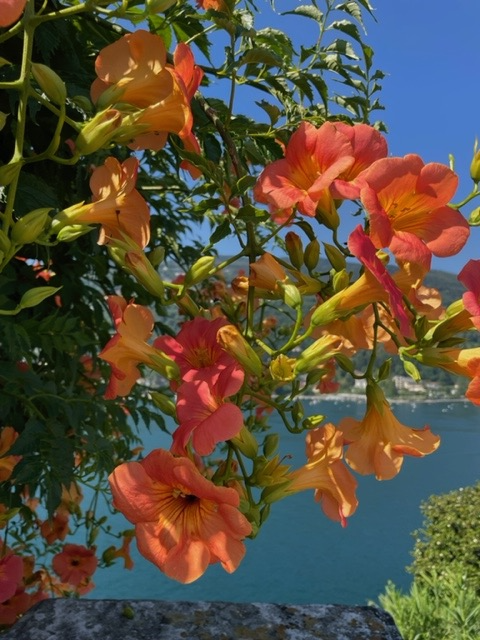
Pedestals on the highest terraces are softened with huge baskets of Chinese trumpet vine. The moderate climate of the island makes these perennial vines, with stems as big as tree trunks.

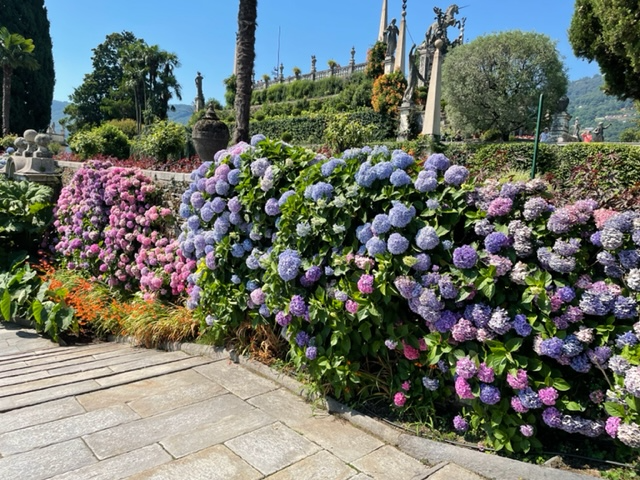
We were there during peak hydrangea season. The blossoms were so numerous the shrubs looked like giant bedding plants. Just beautiful!!

Though I loved seeing Isola Bella, the size and grandeur of this garden make it a little overwhelming. It’s hard to call my little plot of ground a “garden” after seeing Isola Bella – but I was happy to see it again, because truly there’s no place like home.

Exuberant Gardens

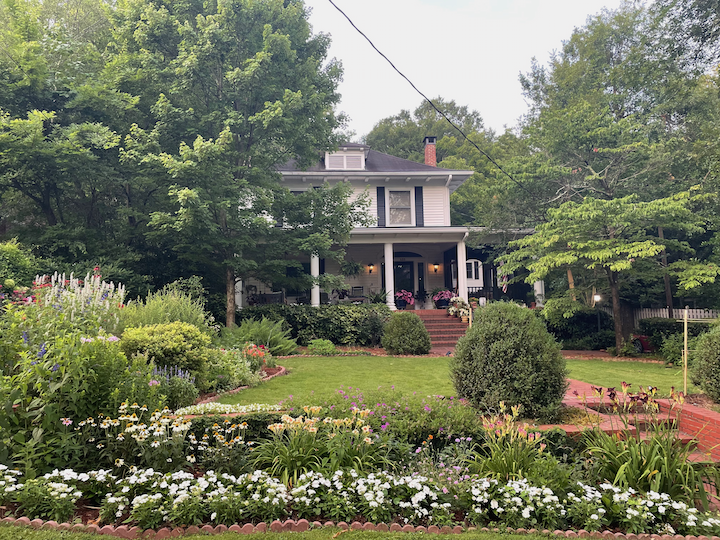
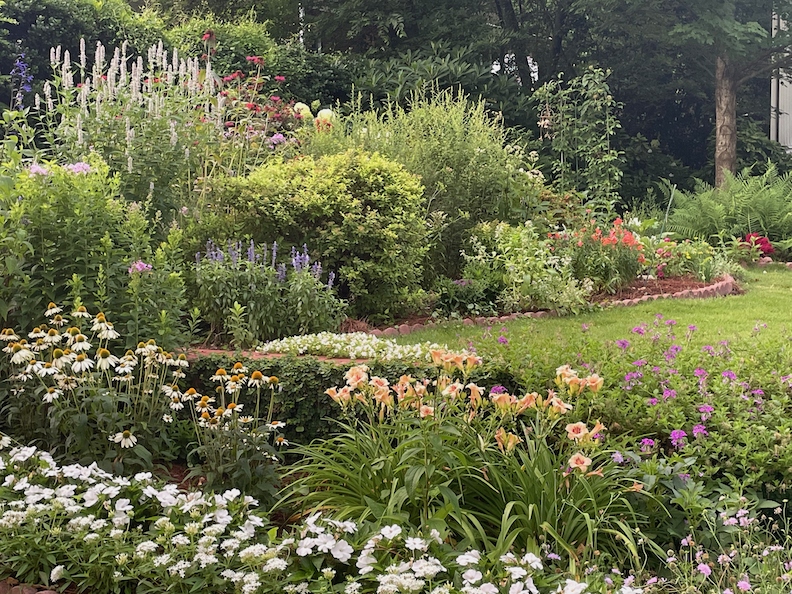
I have progressed from being a “helicopter gardener,” obsessively watching over my “babies,” to feeling as if I’m trying to hold back a roomful of third graders right before recess. My garden – both front and back, sun and shade – is growing by leaps and bounds with such exuberance, it’s hard to keep things under control.

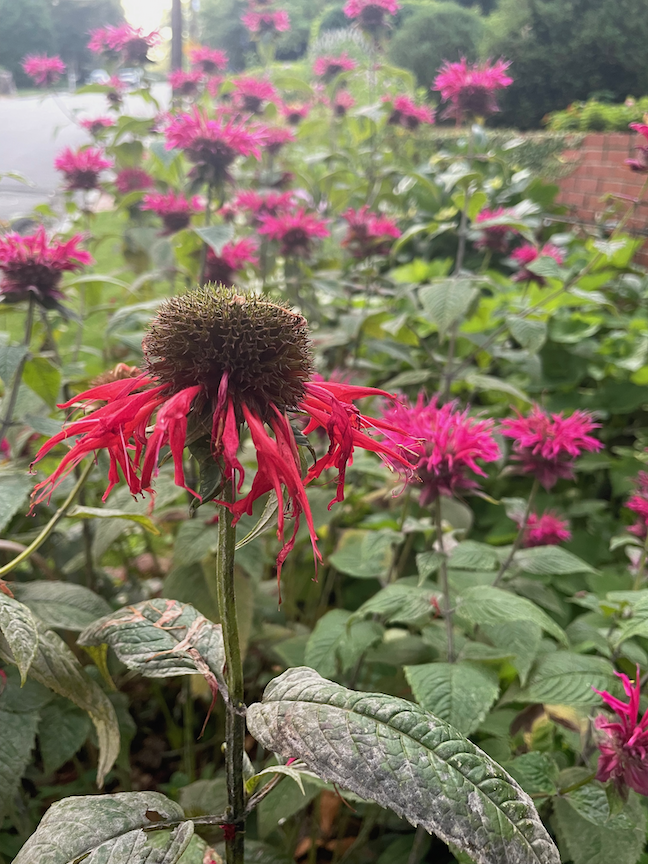
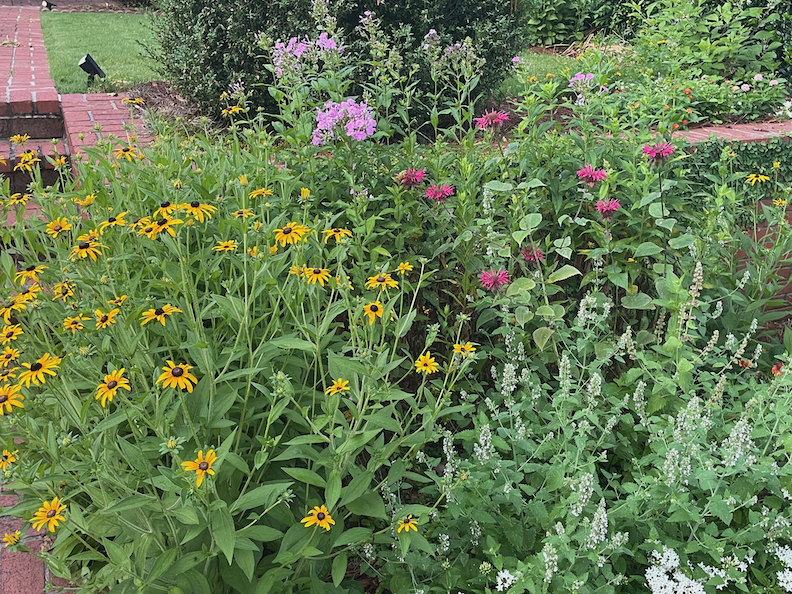
The herbs and perennials in the sunny front are glorious. Bee balm has hit its peak and is gradually beginning to go to seed but hyssop, standing almost 5 feet tall, is still full of blooms and attracts bees like a magnet.

Summer annuals that began life in the garden as tiny seedlings are now full and robust. Zinnia, pentas, “sun”patiens, cockscomb and lantana are bright and healthy, in spite of the high temperatures we suffered through this past week. The low growing calibrochoa, which looks like a small petunia, has formed a mat of white blossoms. Astoundingly, some of the snapdragons I put in last fall are still looking good and have not wilted in the heat.

But it’s the ever changing parade of perennials that I find the most interesting and the most fun. Not everything blooms at once, of course, but that’s the joy of it. As the bee balm begins to fade, pink phlox are just behind it, ready to take over.

Day lilies have been blooming heavily for several weeks now and should continue for a while longer. Gaillardias are on their way out but cultivars of the native blue salvia and purple coneflowers are still looking good. Native black eyed Susans have been hit hard (again this year!) by a small black bug but it’s struggling through. The cultivars seemingly unfazed by the bug, are just beginning to bloom.

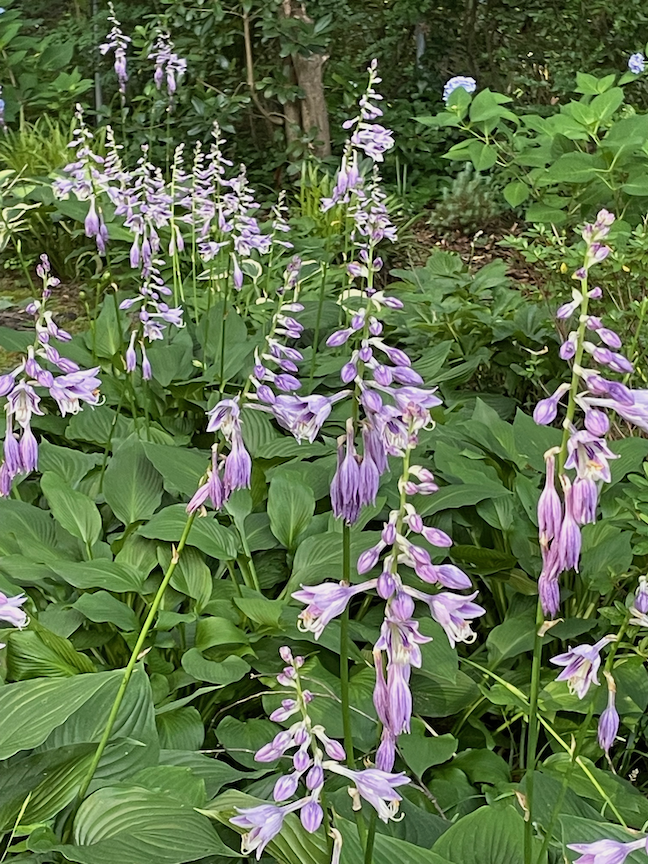
In the back, pink phlox and the purple blooms of hostas blend and contrast with the blue hydrangeas, making quite a show. Japanese aster, which doesn’t bloom as heavily in the shade as in the sun, provides a sprinkling of white through the woody borders. White impatiens are grouped strategically and help to brighten dark corners.

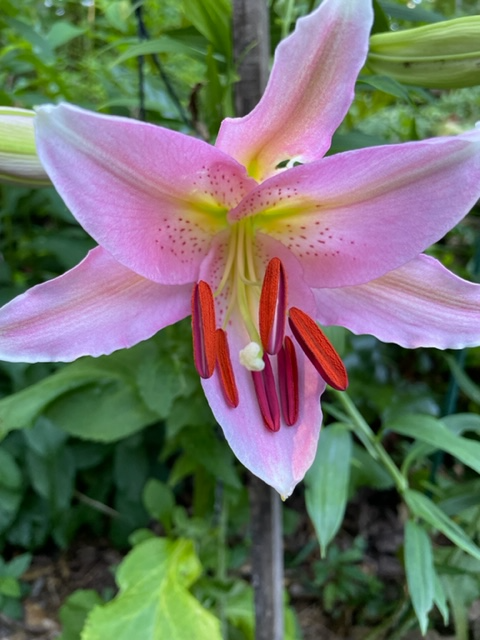
And today, the first Asiatic lily began to bloom, It will be three weeks of breathtaking beauty as these tall, stately plants offer their annual gift of exquisite bloom. As always, I find the garden to be a great lesson in non-attachment. For I know that no matter how much I love a lily or a rose or an aster or whatever, I can’t hold on to it. Beauty, as life, is always changing.

Bathing Beauties

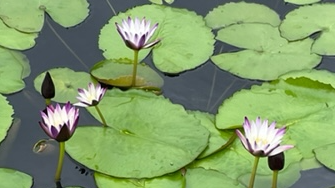
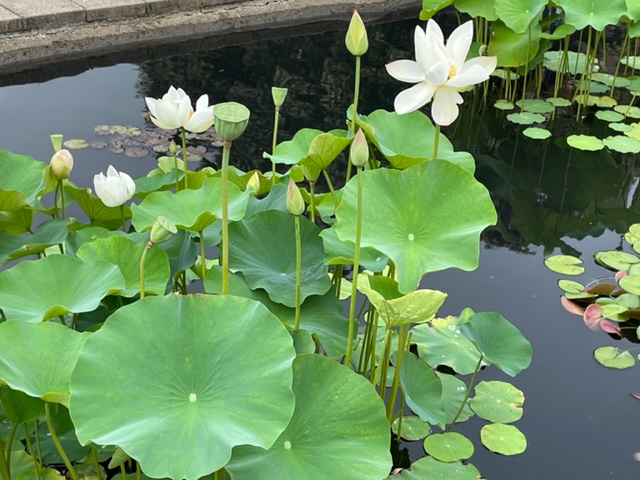
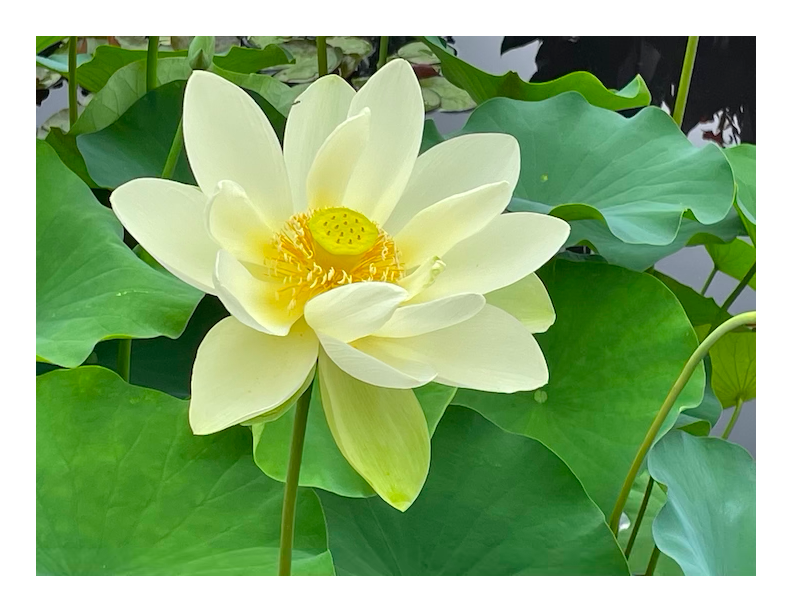
A recent visit to the Atlanta Botanical Gardens found me in open – mouthed wonder in front of a pond where both water lilies and lotus were in full and brilliant bloom. It was great to see them growing side by side because though they share many of the same characteristics, there are also many distinctive differences between these two bathing beauties.

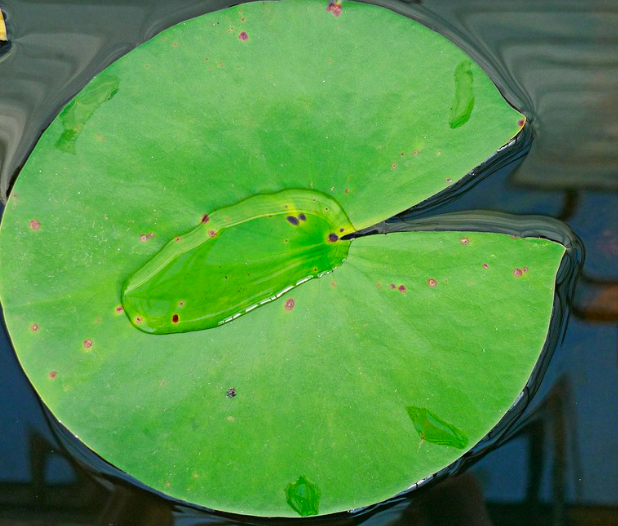
Water lily leaves lie directly on the water, or sometimes slightly below the surface, and have a deep slit where the stem attaches.

The American water lily Nymphaea odorata has leaves that float directly on the water. In the wild, the rhizomes can root in up to 8 feet of water in a pond or small lake. The abundance – and potential trouble – of this species varies with location. Though considered an invasive weed in California and Washington state, it is considered threatened in Connecticut. Don’t confuse our native water lily with many other harmful and invasive water plants that clog small bodies of water.

The American water lily was considered an important food source by native Americans. All parts are edible – seeds, flowers, buds and rhizomes. The seeds were roasted and eaten like popcorn.

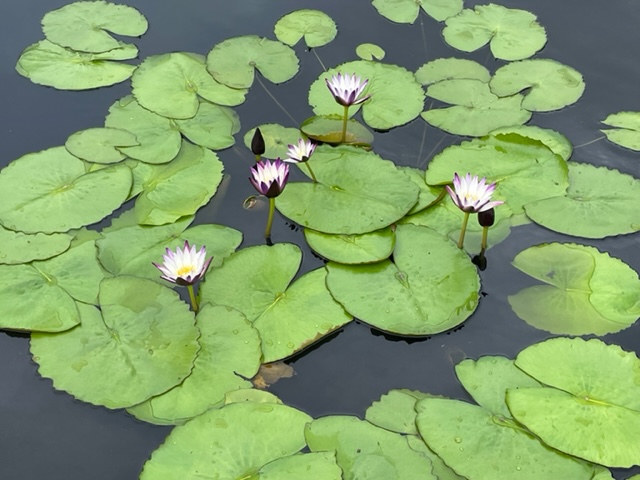
Tropical water lilies, generally treated as annuals, have blossoms that are on short stems.

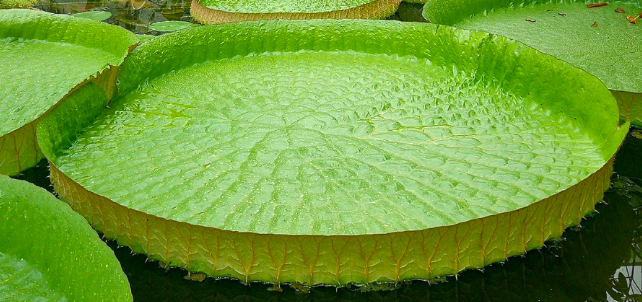
The leaves of giant water lilies of South America are so strong that they can support the weight of a small child.

Giant water lilies and their HUGE leaves.

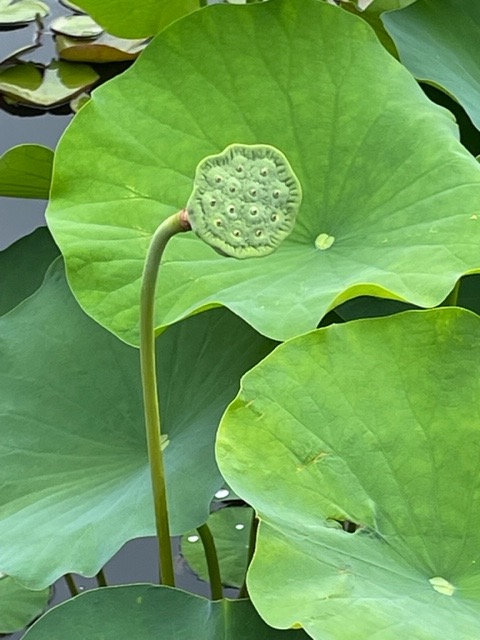
Perhaps even more beautiful is the lotus. Differing from the water lily, the leaves and flowers of lotus are held above the water surface from 6 inches to 3 feet tall. Worldwide, there are only two species of lotus, the American lotus and the sacred lotus of Asia.

Both species produce seeds that are amazingly long lived. Seeds of American lotus have stayed viable for over 200 years – but seeds of the Asian species have germinated after a thousand years. The “lotus” effect was discovered by scientists who studied the remarkable capacity of the lotus leaf to shed water. When water hits the surface of the leaf, it immediately clumps into droplets, taking with it any available dirt or mud. The droplets roll off, leaving the surface clean and dry.

When dried, lotus pods make a wonderful addition to a flower arrangement.

Scientists in Australia found that the Asian lotus plants maintained an even temperature between 86 and 95 degrees, even when outside temperatures dropped into the low 50s.

Because the beautiful, pristine blossoms of lotus grow out of the mud and muck of a pond, the lotus has come to symbolize purity, transformation and enlightenment.

Nothing but a hound dog

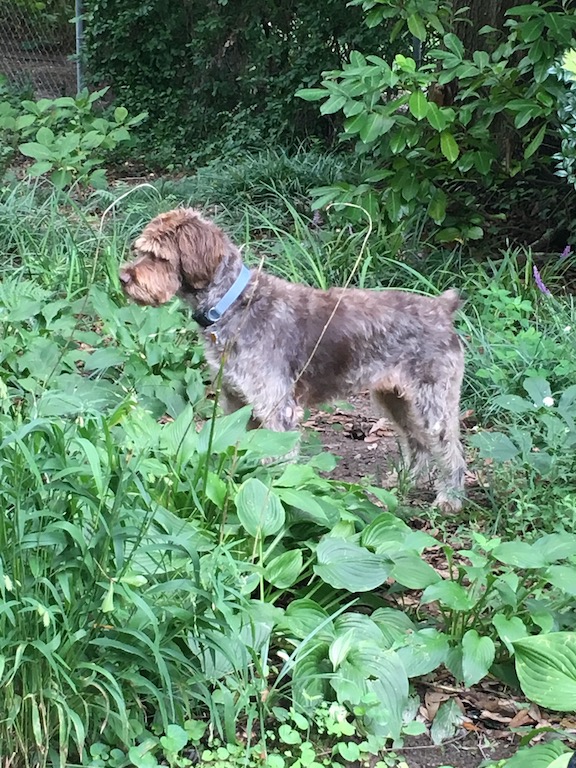
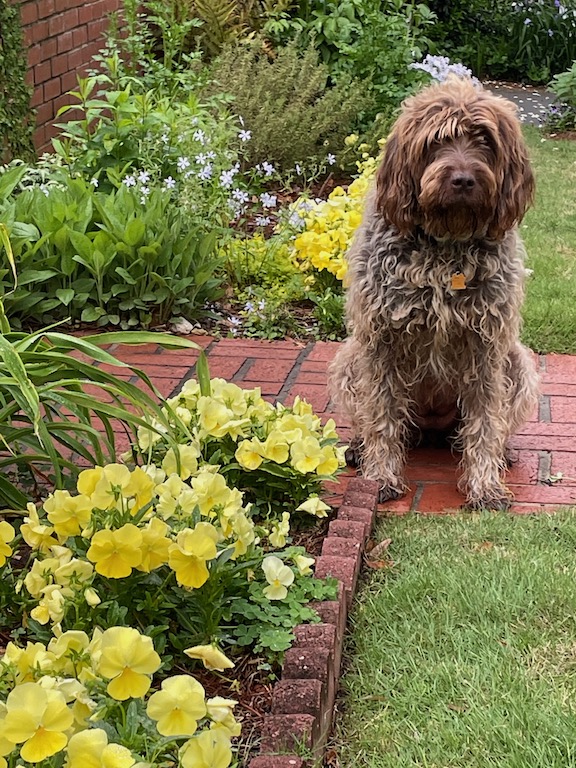
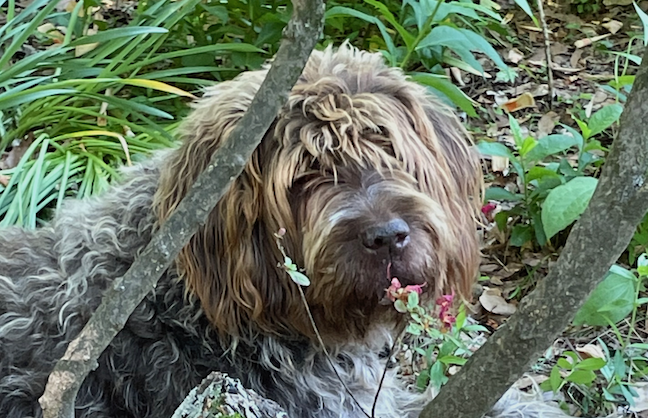
Every once in a while Sadie, best-dog-ever, asks to write the blog. This week it’s her turn.

Greetings from the Garden and a big “Woof” to my human Mom for letting me write this week.

Before I left the litter, my real Mom, the one who birthed me, gave me some words of wisdom. “Walk softly but carry a big stick,” she said, and it’s been advice that has made my life much easier since I live in a garden where walking softly is absolutely necessary. Generally, my adopted-Human-Mom and I get along really well because of this.

But doggone it, every once in a while I slip back into my baser, animal instincts and then I am definitely in the dog house. Case in point: You know that my Human-Mom invited thousands of people to see our garden (oh the smells they left behind!!). I wish I had been here, think of the puppyrazzi! But my humans and I left for the weekend.

When we got back, Human-Mom said that someone had left a dog chewy toy just for me. Generally I’m into instant gratification and would start chewing right away but I was still trying to sniff out scents from thousands of people (I have to say, some smelled better than others!) so I decided to save my toy and to bury it for later.

Oh boy. Big mistake. Human-Mom stood holding an (admittedly) shredded plant saying something about Jack in church. Puzzled, I looked around but Jack was inside reading the newspaper. I sat. And waited. And then she said, “You tore up my one and only Jack-in-the-pulpit plant!” Oh good grief. I looked at the thousands of flowers that I hadn’t dug up and thought, get over it. But, being well trained, I put on a sad puppy face and went to make amends.

She, of course, did get over it and tossed the thing on the compost pile. Who knows? Maybe it will grow there.

Before. It wasn’t even colored or anything.

It’s quiet in the garden now, with all the people gone but I kind of like it this way. As we head into the dog days of summer, I’m going to catch up on some much needed sleep. I hate to admit it but I’m getting on in life. I’ll be 12 (in people) years this fall. And that’s ……..oh don’t even count in dog years.

So, I’m off for some serious – and hopefully undisturbed – napping. As my Mom used to say, just let sleeping dogs lie. It’s been a busy spring with lots of excitement and I guess I should feel pretty special, being a part of it all. But really? at the end of the day, I’m nothing but a hound dog.

Clematis, a little clingy but gorgeous

A long time ago, back when I was not a gardener but just a youngster waiting to discover the magical world of gardening, I heard a friend of my mother’s telling her how to grow clematis. She said, “put its feet in the shade and its head in the sun.”

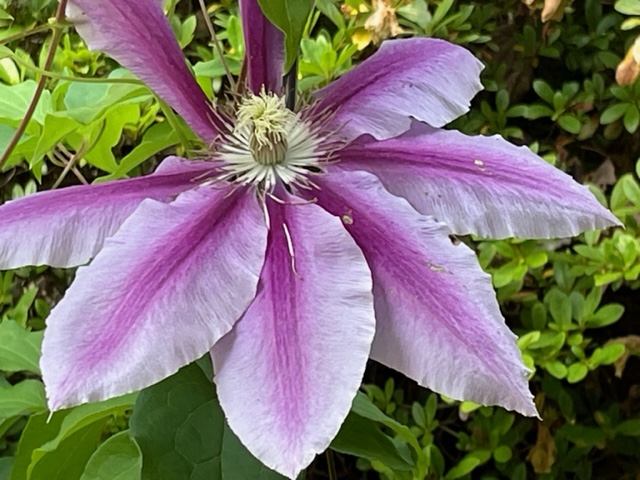
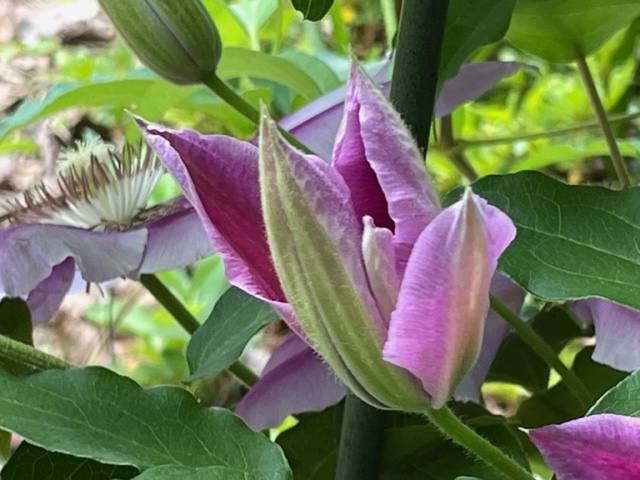
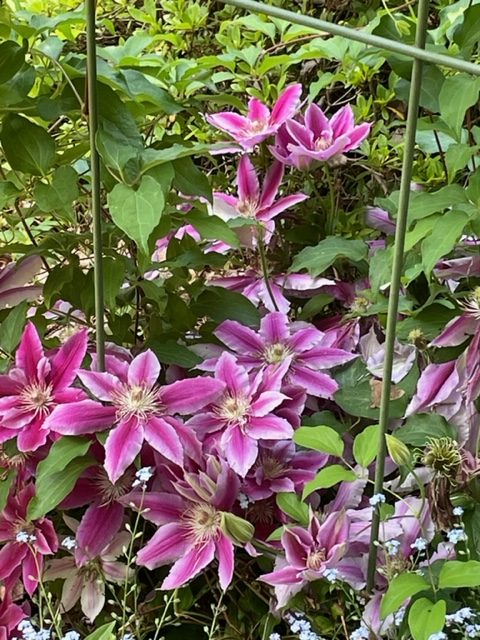
I found the mental image highly amusing and remembered this woman’s advice for decades before I actually grew my own clematis. A couple of years ago I planted the common but oh-so-beautiful Clematis jackmannia, carefully placing it where I could put a two inch layer of mulch around the roots to provide the “shade” and where its “head” would receive full sun. It’s taken a couple of years but this combination of sun and shade has proven to provide just the right growing conditions for this gorgeous vine and this year I had a multitude soft pink blossoms.

Worldwide, there are over 300 different species of Clematis, 11 of which are native to the United States. The ubiquitous and invasive Clematis ternifolia, sweet autumn clematis with its profusion of small white flowers is not a native. It is such an aggressive grower that it has been included in the Invasive Plant Atlas for the United States.

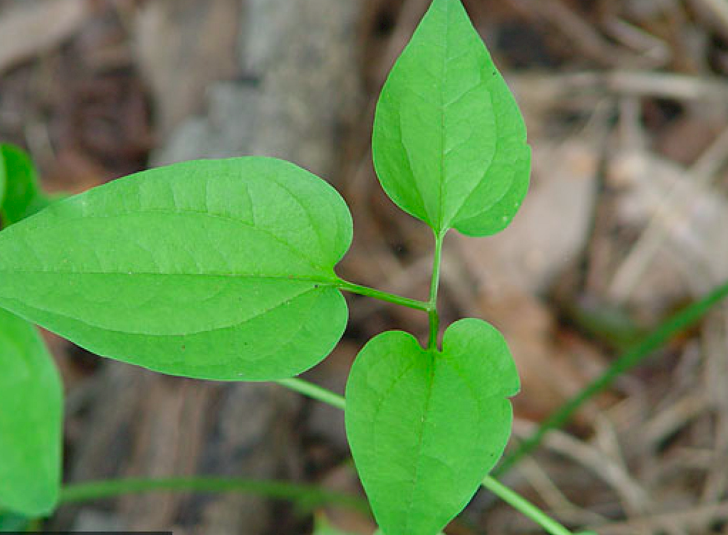
Sweet autumn clematis has rounded leaves.
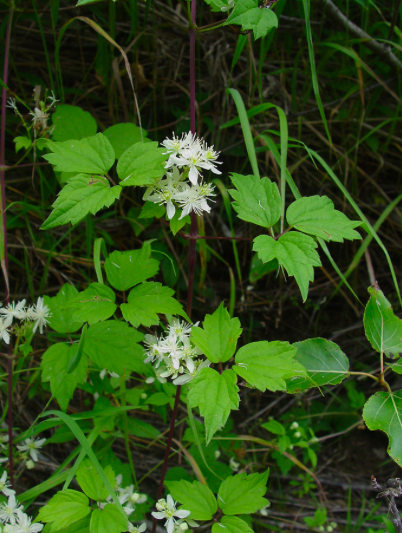
Native clematis has leaves with toothed edges.

A similar, but native and non-aggressive plant is Clematis virginiana, Virgin’s bower. This also produces a multitude of small white blossoms in late summer but is a welcomed addition to the garden.

C. vitalba, native to Great Britain, grew in the hedgerows during the time of Roman occupation and was called traveler’s joy because its sweet fragrance delighted travelers walking down the roads.

In addition to their specific light needs, most garden clematis also needs support. An arbor or fence will do the trick, giving the plant a place to twine and grow.

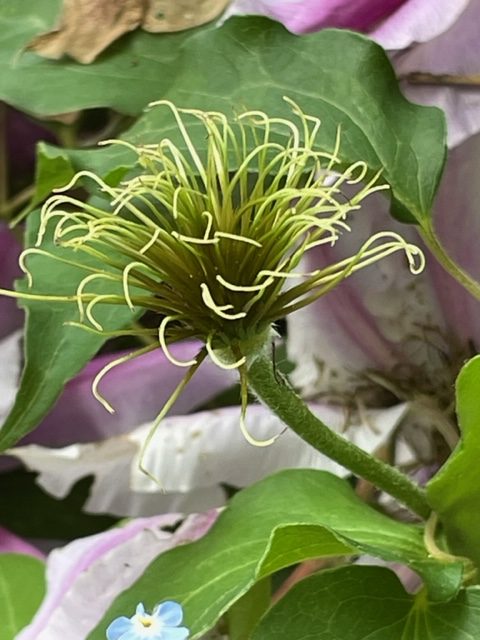
The seed heads, which develop soon after flowering are unusual balls of thread-like parts that I find almost as attractive as the blooms. If you decide to collect seeds to plant, be patient! It sometimes takes up to three years for these seeds to germinate and another couple of years to grow into a plant big enough to bloom.

According to the language of flowers, clematis is a symbol of mental beauty and, in case you were wondering, the correct pronunciation is KLEM-uh-tus!

Tangled up in blue

I sometimes dream that I would love a garden that was a sea of blue. With a few lavender and an occasional white blossom thrown in for good measure, I think it would be stunning. Of course for me, this is just a pipe dream.

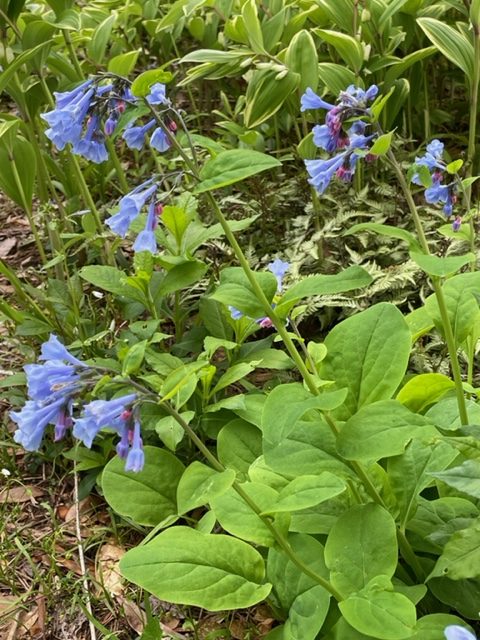
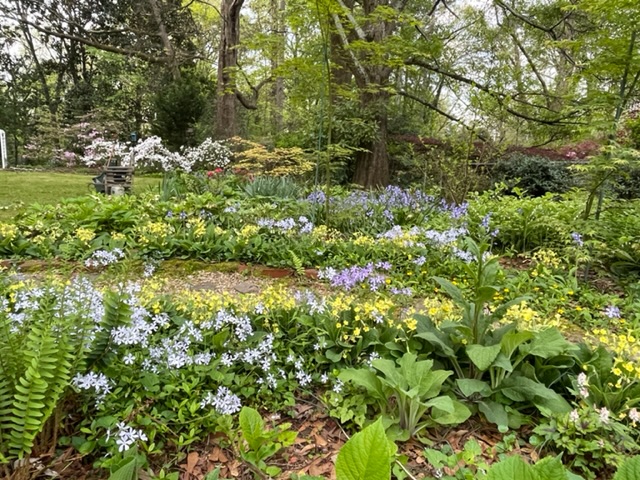
Many of the flowers in my early spring garden are blue.

My garden is primarily perennials, meaning that I have learned to love the “one I got.” And the “one I got” is definitely not all blue. Though my early spring shade garden has an impressive number of blue blossoms from phlox, Virginia bluebells, scilla and forget-me-nots, the front sunny garden, in full glory, will be striped with every color of the rainbow, from red to violet and everything in between.

Virginia bluebells

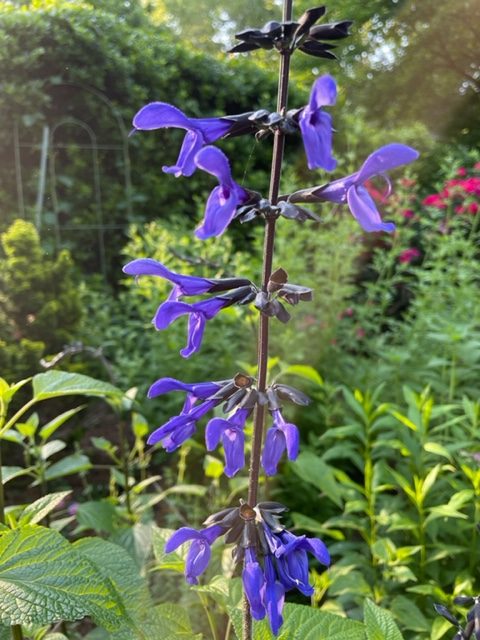
I’m not singing the blues. I do have pockets of indigo, violet and true blue flowers that make me very happy. One of my favorite plants in the garden, because it is such a pollinator magnet, is the indigo “Black and Blue” salvia. I have to keep it on a leash, though, otherwise it outgrows its allotted space and smothers smaller neighbors.

“Black and Blue Salvia”

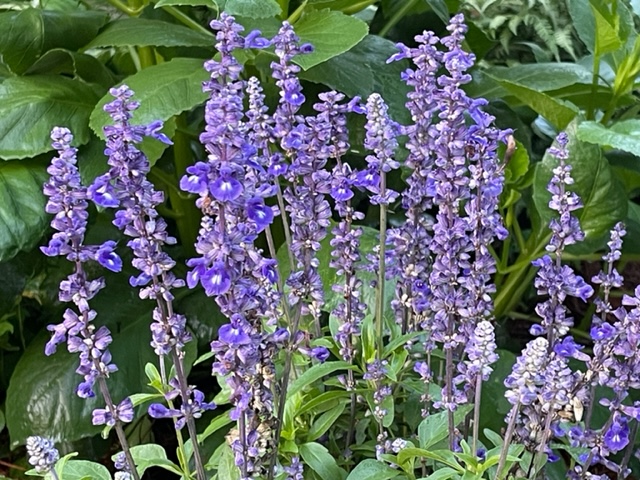
The smaller mealy blue sage is, in many ways, more satisfactory. It is easier to control and provides stalks of gorgeous blue flowers throughout the summer. Though more purple than blue, Pincushion flower has been in full bloom since early April and will continue to provide its spikes pinkish -blue flowers for another few weeks.
Mealy blue sage

A true-blue plant that I’d not grown before is borage. Each star shaped blossom is sky blue and gorgeous. I started this from seed back in February and it has done remarkably well. However, it’s one of those plants that you have to appreciate each individual blossom because it definitely is not a heavy bloomer. It’s an annual and probably has made its one and only appearance in my garden.
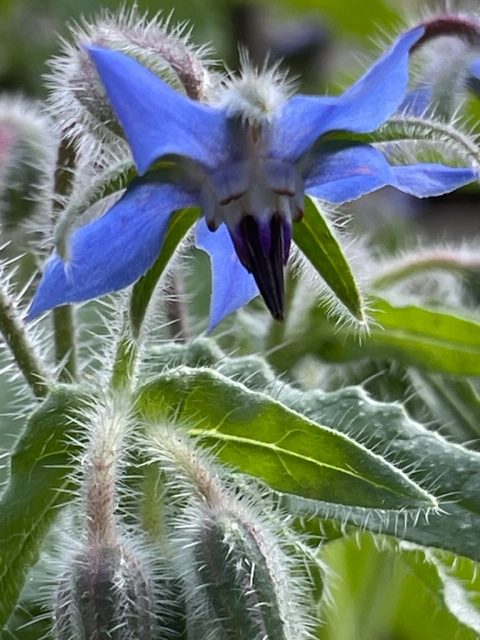
Borage

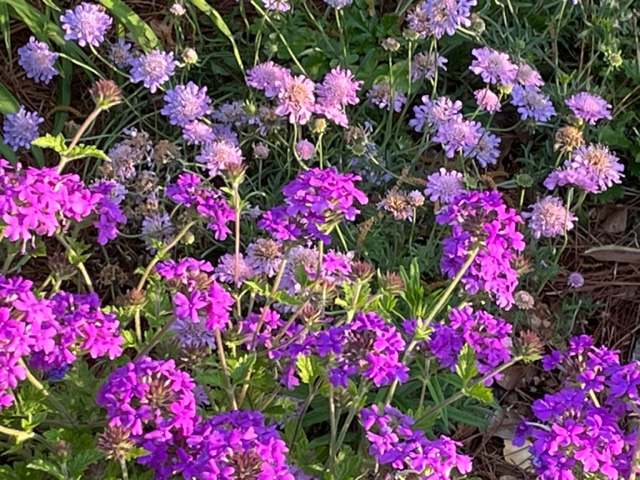
Definitely purple-not-blue, homestead purple verbena has stunned the garden with its neon flowers since late February. It is a sprawling, heavily flowered, low growing plant, often seen growing and blooming on roadsides. Frankly, it’s not my favorite. I have found the color a little jarring and the plant a little coarse for my taste. After its peak bloom, I’ll move it to the back and replace it with a white variety.

Homestead purple verbena with pincushion flowers

Because I love blue flowers so much, I was interested to read that there is actually no true blue pigment in flowers. The blossoms that appear blue actually contain red pigments called anthocyanins that look blue with different pH levels.

A box full of (loud!) baby bluebirds.

Though I appreciate all my flowers for the job they do offering pollen and nectar, beauty and fragrance, I especially appreciate the blue ones. With blue bird babies chirping in the back and waves of blue flowers in the front, I just love being tangled up in blue.

All over but the shouting

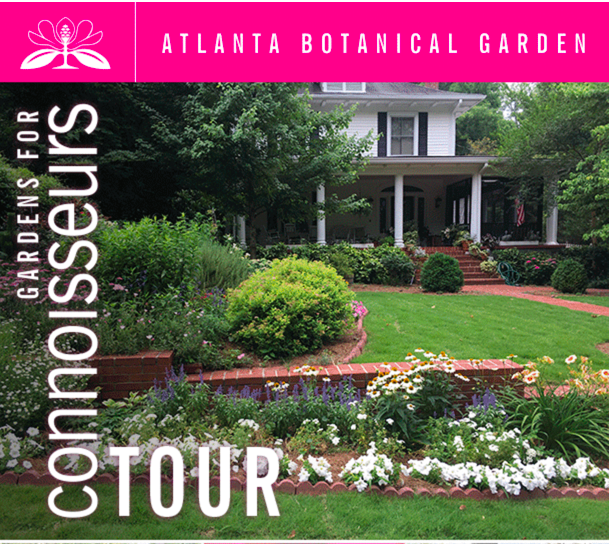
I feel like it’s the morning after. With good reason! Over the weekend my garden was part of the Atlanta Botanical Garden’s Connoisseur’s Tour and almost 2400 people came through to see this space.
In spite of weeks of my suffering through apprehension about the weather, worry that storms would destroy the garden or a freak late frost would kill all the blooms, Mother Nature smiled on Mother’s Day weekend and the weather was perfect.

It’s a little different to see the garden through the eyes of a stranger. Over the past months, I have literally walked hundreds of miles in this space and am intimately familiar with each part of the garden, But even so, any garden is a living, growing thing and mine seems to change daily.
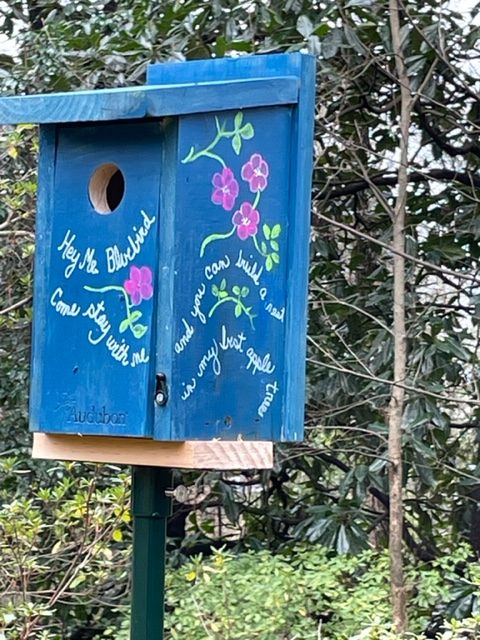
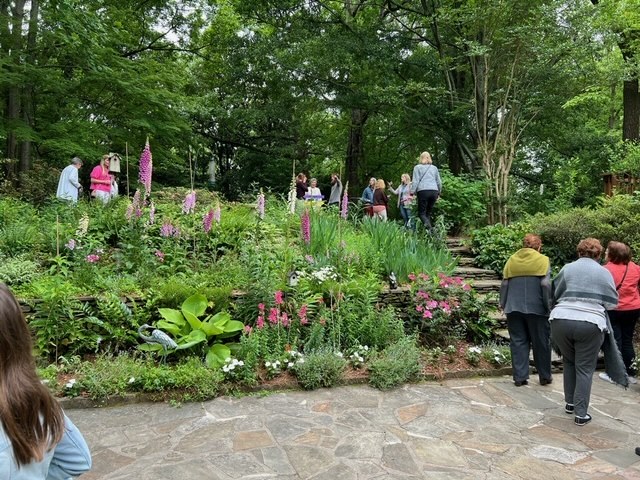
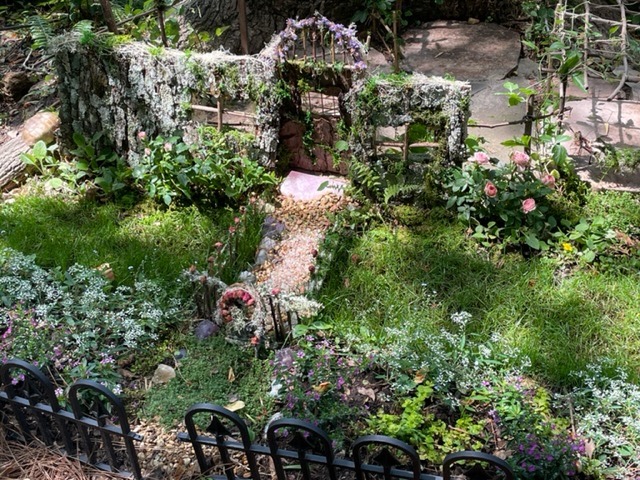
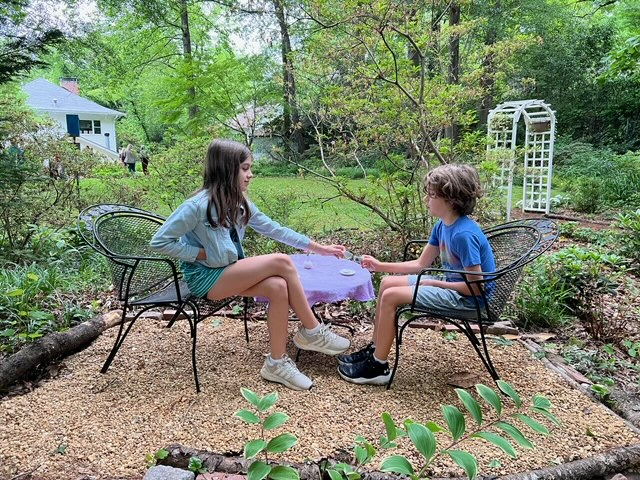
The fairy house and gardens were a big hit, especially with the kids who came.

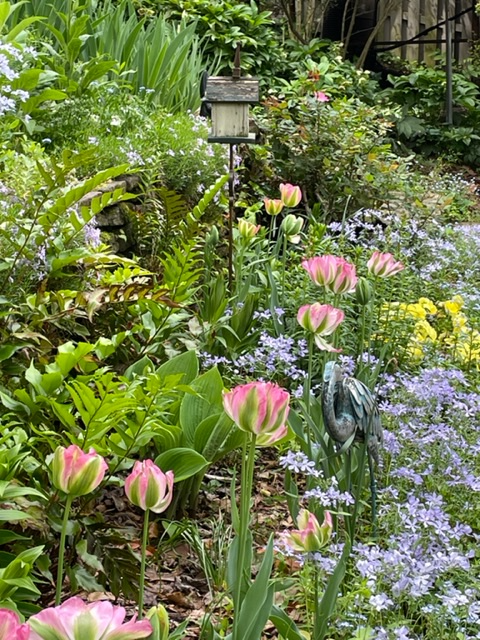
If visitors had come three weeks ago it would have been all blue phlox and soft pink tulips. Three weeks before that it was a sea of blue scilla and snowdrops. And before that? The hardy, indomitable Lenten rose. Three weeks from now? You’ll have to come and find out but I’m guessing that it will be bright from blooms of summer phlox, bee balm, Japanese aster, salvia and Black-eyed Susans.

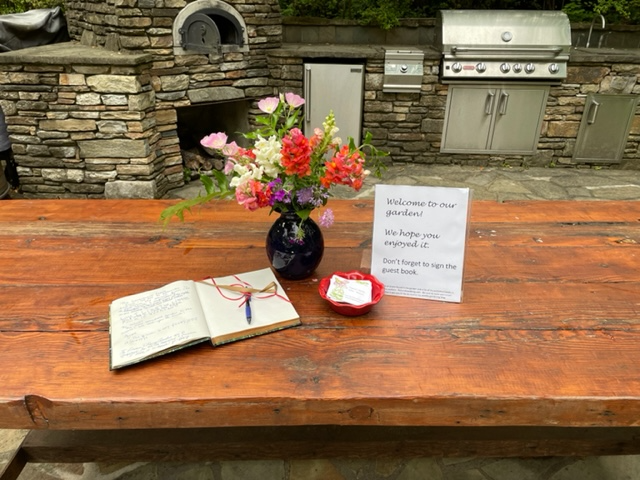
I was pleased that hundreds of people signed the guest book. My favorite comment came from a 5 year old girl who said “I love your garden. I wish I had it.”

A garden is so much more than a pretty face – it’s more like an ongoing symphony with its own rhythms and dynamics. Sometimes one section will carry the melody, only to pass it on to a different section later on. Sometimes it is quiet with a soft, steady beat, at other times loud, clanging cymbals and still other times the simple melody of a few beautiful flowers.

Of course, you can plan for and plant a garden with all annuals that will look much the same for the entire growing season. And all those bright blooms would be pretty. But for me part of the magic of the garden is the ebb and flow of bloom, the mystery of the slow growth of the trees, the spread of the perennials.

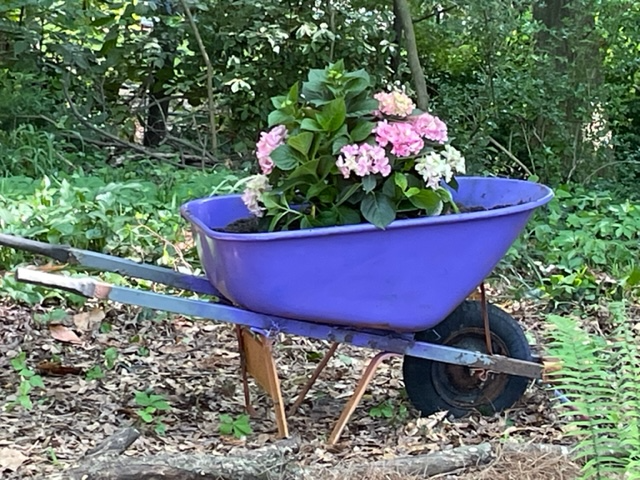
I did indulge in some “instant garden” spots, such as this gorgeous hydrangea in my purple wheel barrow.

There were other gardens on this tour, I am sure, that were exquisitely designed, planted and immaculately maintained. My garden is not one of those. It is far from “perfect” but fortunately, “perfect” is in the eye of the beholder and when I behold my garden I see not only what is in bloom today but the seeds of yesterday’s flowers and the buds of tomorrow’s blooms and it all makes me happy. It makes me want to run outside every morning to see what has changed and to sit every evening, in a quiet spot, listening to the birds sing a lullaby to put me and my garden to sleep.

When I look back on 2021 – 2022, I will not think first of Covid, or Ukraine, or abortion rights or the economy. I will think first of the garden and of the exquisite joy I experienced putting my hands in the dirt every day and then sharing this space with so many wonderful people.

Sprucing up the garden

My mother used to say if you really wanted to get your house clean – invite company! The same is true of a garden. If you want to spruce it up and make it look beautiful, invite over some people to see it. A lot of people.

So I did! In two weeks my garden will be on display through the Atlanta Botanical Garden’s Connoisseur’s Garden Tour (for information and tickets go to https://atlantabg.org/events-exhibitions/gardens-for-connoisseurs-tour/).

It’s extraordinary what 6 hours a day of gardening will do to a place. My granddaughter seemed incredulous and asked what I did out there all day? Gosh, where to begin? There’s the digging and the soil amending, the planting and pruning, the feeding and watering, the moving and moving back. To say nothing of the dreaming, planning, fussing and cajoling that goes on.

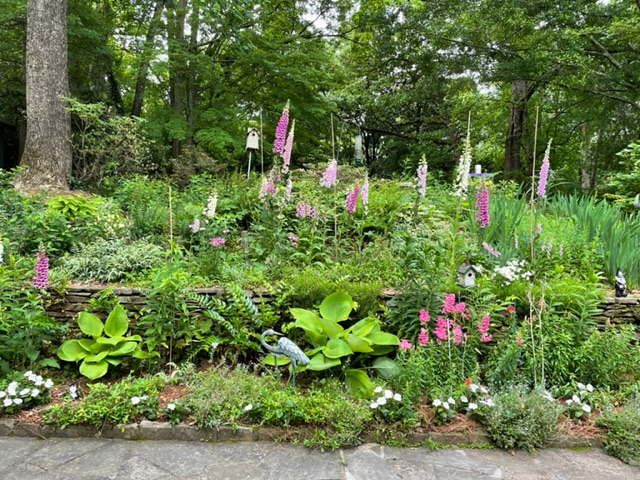
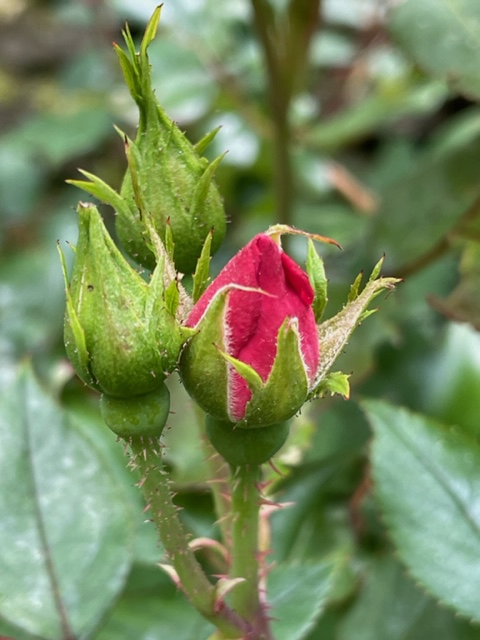
Amazingly enough and of course, knock on wood, thing are budded up and should open into graceful bloom at just the right time. I have big fat iris buds, pointy rose buds, the knobby promise of astilbe, and stalks of foxgloves that are just beginning to open at the base. An unusually cool spring has postponed the demise of the blue phlox and forget-me-nots, though the azaleas are mostly gone.

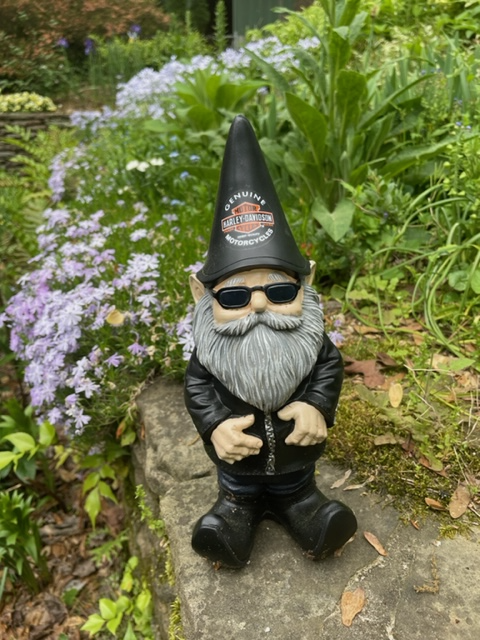
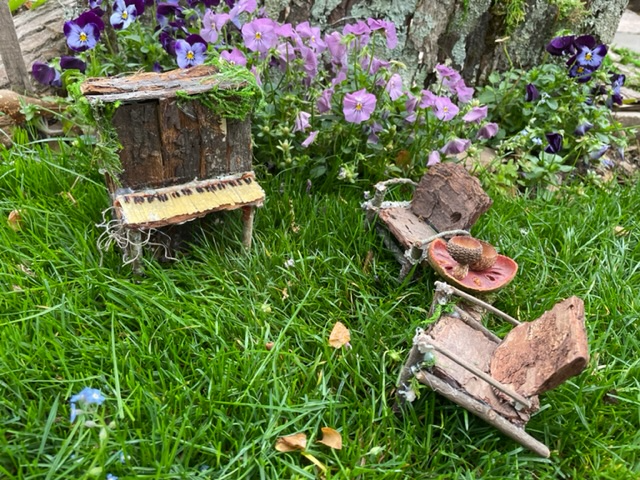
I have had a fairy god-mother working hard for me, as well she should! I have created a magical and wonderful home for her complete with formal garden and crystal lined walkways. I doubt she’ll have much time to sit and play her tiny piano – or gather friends for badminton – for there is much work left to be done. She and Mother Nature and I (The Mighty Triumvirate) will be busy up until the very last moment. Of course we do have the help of our friendly garden gnome as well.

It’s been an interesting experience, practically living in my garden for the past six months. I am acutely aware of the weather, and of my vulnerability. I watch the life cycle of the plants, particularly when they bloom and how long the flowers last. And, I am intimately familiar with every square foot of this space over which the Triumvirate reigns.

I have fallen deeply and completely in love with this small part of the earth that I call home. What a joy, what an honor to help things grow and bloom. And what high hopes I have that come Mother’s Day weekend my garden will be lush and full and colorful. But of course, Mother Nature has the final say on that.

I hope that you will all come and enjoy the garden May 8 and 9. It’s going to be glorious. And maybe, just maybe, the fairies will be playing a little music.

This bud’s for you

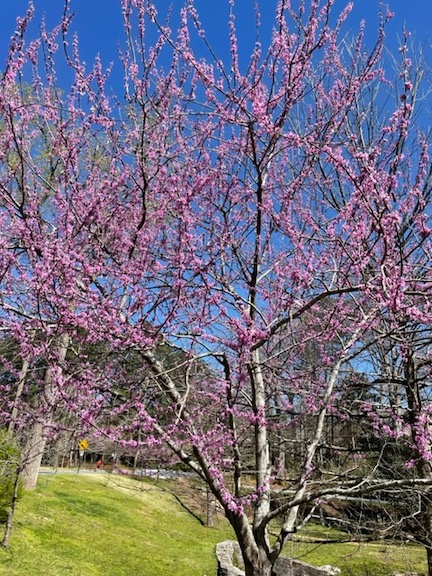
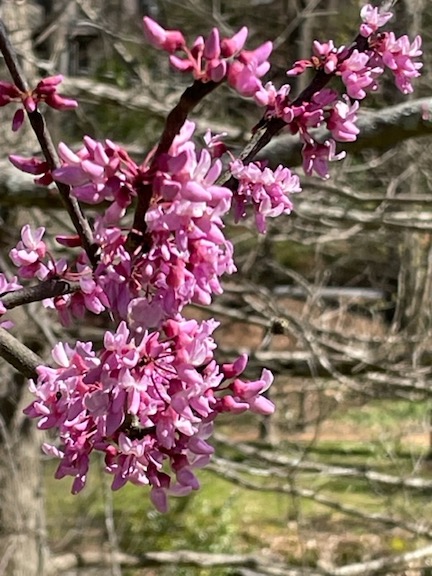
One of the most beautiful trees in bloom in early spring is the incomparable Eastern Redbud. With its magenta flowers lining the branches, it stands out like a beacon in the forest. Most other trees still without leaves or flowers, look naked in comparison.

Though Eastern Redbud, Cercis canadensis is a native tree, horticulturists have “borrowed” it to bring into the landscape. The species is gorgeous but the cultivars, which display even brighter blossoms or more intensely colored leaves may even be more beautiful.

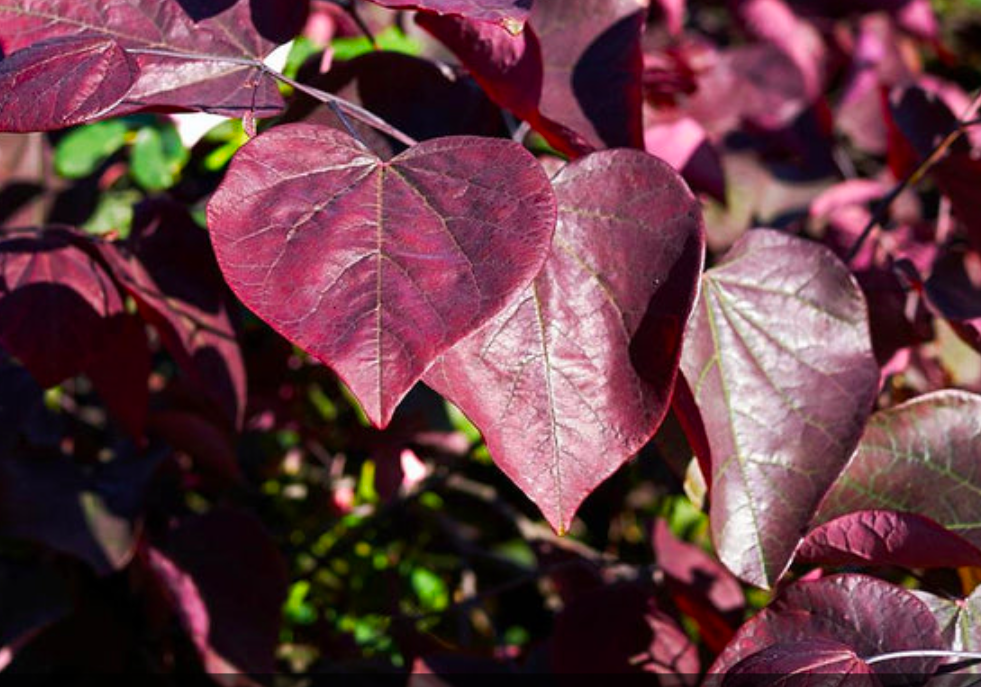
The cultivar ‘Forest Pansy’ not only has a great name, it also sports stunning, deep red heart shaped leaves.

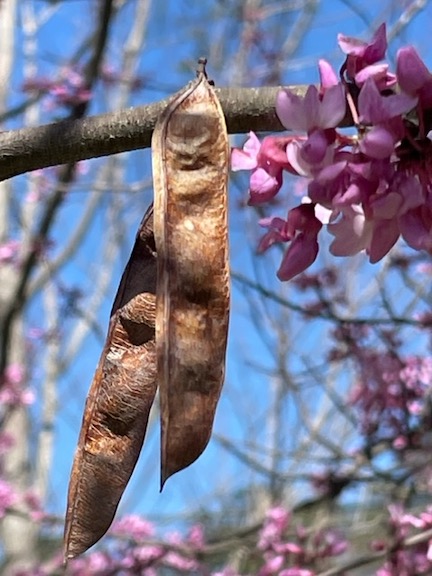
Redbuds display a unique flowering characteristic. The small flowers grow directly on the trunk and large branches, a trait called cauliflory. This trait is displayed by over one hundred trees, mostly from rain forest ecosystems. Both flowers and fruit develop directly on the sturdy parts of the tree, providing pollinators a stable platform from which to do their job. Redbud is pollinated by blueberry and carpenter bees. It provides food for nineteen species of caterpillars, leafhoppers and beetles.

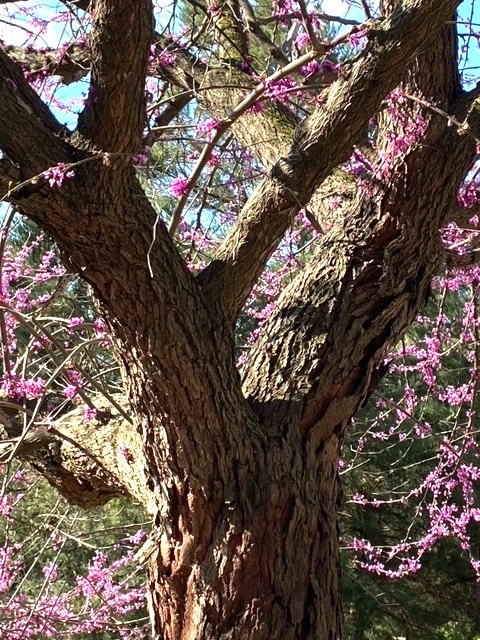
The deeply furrowed bark of a mature redbud is beautiful in itself. Photo credit: Elizabeth Smith

Not only are the blossoms beautiful to look at, they are also tasty to eat. Try them raw in salads or roasted for an unusual taste treat. Just be certain that they tree has not been sprayed with chemicals of any kind. The flat seed pods, which appear in August and September persist throughout the year. Folk healers used the bark to treat diarrhea and as a remedy for leukemia. The new green twigs were used by Native Americans to season wild game and in Appalachia the tree was referred to as “Spicewood Tree.”

Legend says that Judas Iscariot hanged himself from the redbud tree after he betrayed Jesus and for this reason, the tree is sometimes called Judas tree. But in other parts of the world, more cheerful names are used, including “love tree.”

No matter what you call it, this native tree brings a bright spot of color to the woods in early spring and should be welcomed in all our landscapes.