Helicopter Gardening

I always thought that “helicopter parenting” where the Mom and Dad obsessively hover over their children, was a little ridiculous. Especially now that my children are fully grown, it’s easy to hand out advice about raising kids. Don’t hover! Give them room! Let them fail! Let them fight their own battles! and so on.

It’s a little ironic, then, that I have turned into a “helicopter gardener.” First thing every morning I take my cup of coffee out to the garden to look around.
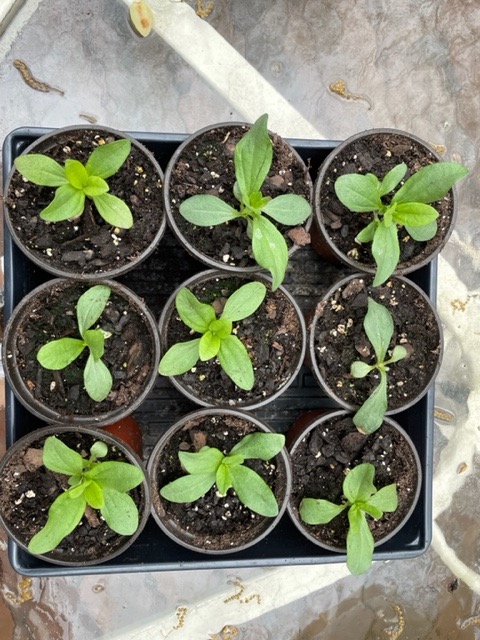
My first stop is to the nursery to check on the baby seedlings.

It’s not exactly like I’m checking up on them after a night out in the world, but …..well, okay, it’s exactly that. But they’re so young! and vulnerable! And there are such dangerous things out there – cold weather, voles, squirrels, heavy footed visitors, over enthusiastic weed eaters! Sadie!! (though my dog and I have a pretty good understanding about her need to step lightly amongst the plants.)

“Twinkle Toes” Sadie

I just need to reassure myself that all my plants have survived another night and that they are strong and healthy. I don’t worry about them running off, by nature plants are not very mobile, but I am concerned about their falling in with the wrong crowd. I don’t mean to sound rude, but some of those plants out there are nothing but weeds. I do my best to relocate them – usually to the compost pile – to give MY babies every opportunity to grow and thrive.

I have done a lot of weeding this year, spending many winter hours digging and pulling up unwanted guests. It occurred to me the other day, though, that in my efforts to remove the weeds, I was also stepping all over things that were trying to emerge – hostas, Solomon’s seal, new ferns…..I can’t tell you how many times I said “Oh shoot! (or worse) as I heard the telltale crunch of a newly emerged hosta stalk underneath my feet.
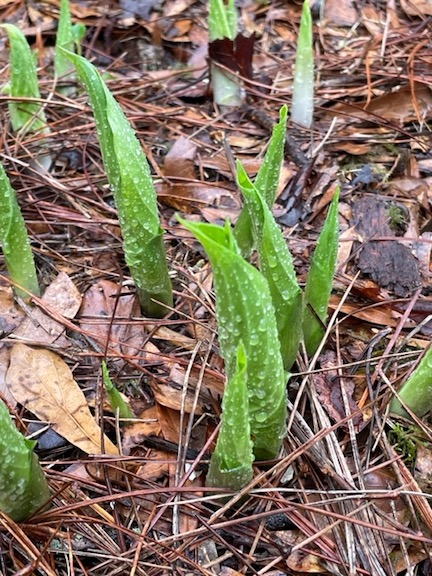
Baby hostas

I know I am sometimes overanxious in the garden, which really doesn’t do anyone any good – neither the plants or myself. Like when I dig up a seed to see if it’s starting to germinate – comparable to waking up a baby to see if he’s really asleep.
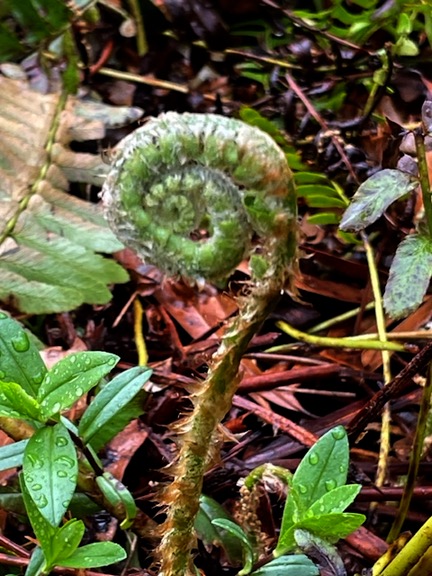
My excuse, like every helicopter parent, is that I just love my plants and flowers and want them to be the best that they can be. Sometimes I wonder if I’m pushing too hard though. Is it really necessary and good for the long term health of a plant to exhibit peak performance every year? Nooooo, not every year, just this year!
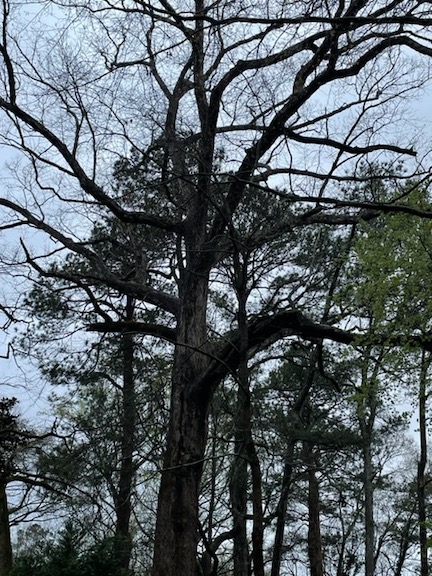
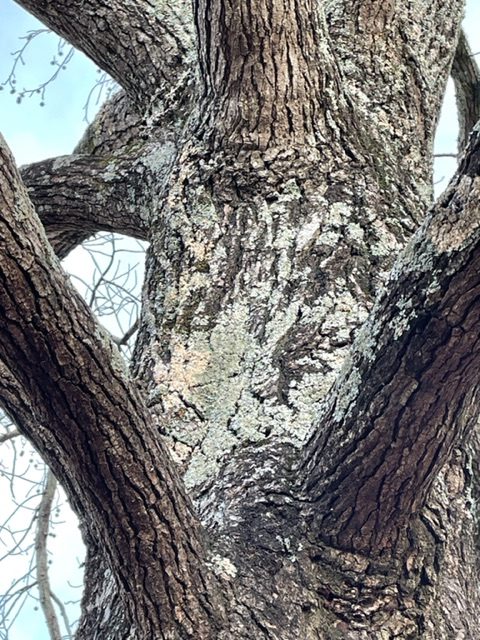
I’m as concerned about the old folks as I am the babies. This 200 year old oak in the back has seen some rough years.

When I’m out in the garden, it’s as if I want to pour my heart and soul into them so that they thrive and bloom. I want to warm them when it’s cold, dry them when it’s wet, coddle and baby them until they are robust. It is extremely gratifying to raise healthy plants.

I know I can’t protect them from everything – after all, I co-parent with Mother Nature and she definitely has her own ideas about how things should be done. She obviously thinks we should just let things take her course.

Probably the plants heave a sigh of relief when I finally land the copter and quit hovering, leaving them alone to go inside and do my human thing. But before I go, I pause at the door and turn to take one long last look around the garden in the gathering darkness, then turn my eyes skyward as I offer up a silent prayer of supplication for the health and happiness of every single plant and every single person that I love.
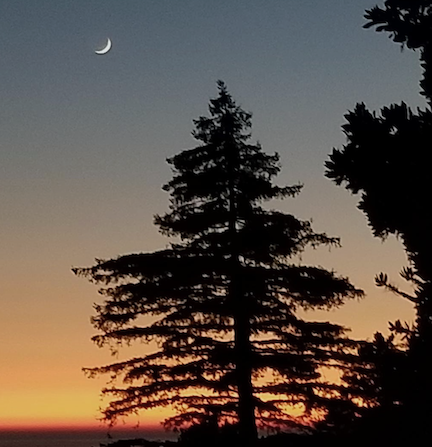
Six degrees of separation

Saturday

I woke this morning with a heavy heart. I’m pretty sure that tonight is going to be the end of a budding azalea season. The temperatures are predicted to plummet to the low twenties. Numbers like that are not, in themselves, cause for alarm, but for the past several weeks, we’ve had abundant sunshine, ample rain and temperatures routinely reaching the mid-seventies.

The result? A gorgeous mid – March landscape with everything budded up and many things, including pansies, spring bulbs and some azaleas already beginning to bloom. I envisioned a long and glorious spring gardening season – until The National Weather Service sent out their dire prediction for the weekend.

I hope they’re wrong, even by a few degrees, because the difference between freezing – and a few degrees above – will be the difference between things thriving in the garden – or not.

I wasn’t too worried about the pansies, which I know to be quite frost tolerant.

Monday

Unfortunately, a lot of things seem to have fallen into the “or not” category. Our thermometer registered 26 degrees on Sunday morning – six degrees below freezing and cold enough to do some significant damage to early blooms and the tender young growth of perennials and shrubs.

Ummm, brown isn’t my favorite color in the garden. Even though the lower blossoms still look pink they, too, were frozen and will soon drop.

I’m not too concerned about the long term health of my plants, most of the permanent plants have good strong root systems and I’m confident this will only be a temporary set back. The frozen blooms and buds of the early blooming azaleas will simply shrivel and fall off. The tender new growth of many hydrangeas may have been killed back, resulting in reduced blooming this year. Interestingly enough, the new growth on the native Oak-leaf hydrangea seems unaffected.

Though new growth on most of my hydrangeas froze, the new leaves of this native oak-leaf seem just fine.

Diminished bloom from my beautiful shrubs is the price I pay for partnering with Nature. For me, it’s only aesthetics. For farmers and orchard owners, the price, literally, will be much steeper. Peaches are a 240 million dollar crop in Georgia and if freezing temperatures reached these orchards, the impact will be huge.

The spring bulbs such as grape hyacinth (above) and Scilla (below) seemed unfazed by the low temperatures.

I want to place the blame on something and climate change seems a likely candidate but really, our temperatures have not been unusually high this winter, and mid-March is definitely within the time frame that we could expect frost. It was just unfortunate timing – the sudden cold sending shock waves through the garden. But it’s all part of gardening and I just have to accept the fact that when I garden, I am not in control.

All I can do is provide a happy place for my plants, tend to them like a mother hen and to make every breath one of gratitude for the gift of my garden, no matter what the temperature is.

Snowflakes – not Snowdrops!

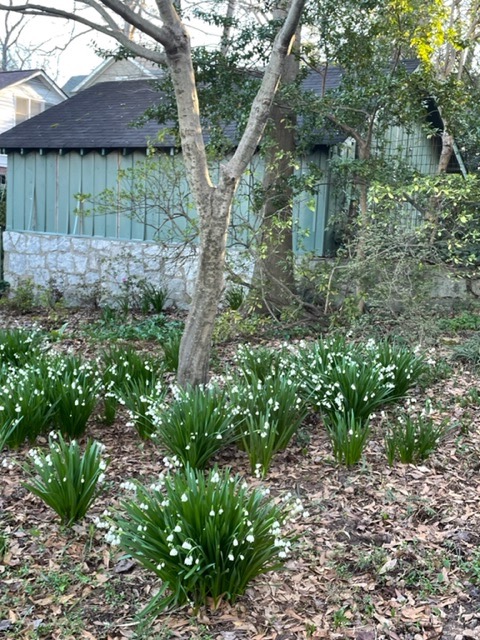
While much of the country is still under a blanket of real snow, my Georgia backyard is blanketed with a different kind of snowflake. Bulbs, planted years ago by an unknown but much appreciated gardener, have now spread prolifically under my favorite maple tree.

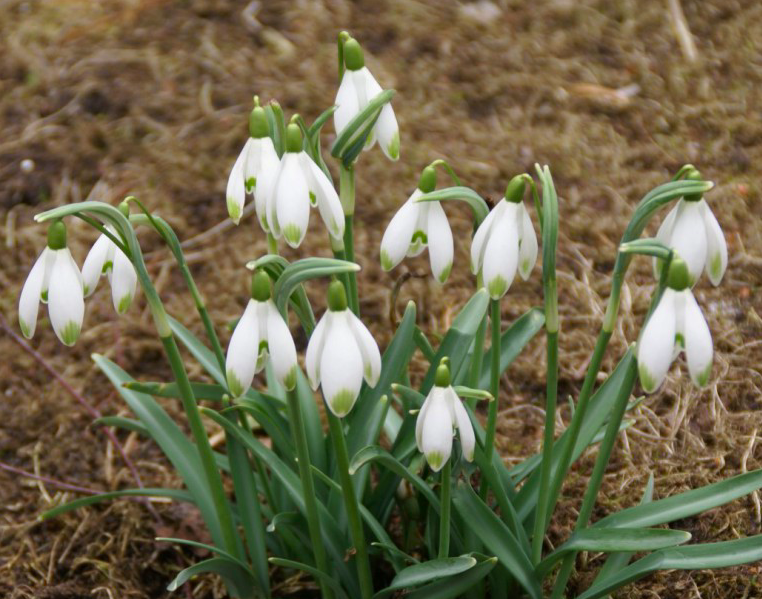
I had always thought they were called ‘Snowdrops’ but a quick visit to the Internet convinced me that my flowers were not Galanthus, or common Snowdrops, which has only a single flower per stem. Definitely not the case here. A bit more digging, so to speak, convinced me that my plant must be SnowFLAKE, not snowdrop, genus name Leucojum.

Although VERY similar, the blossoms of my plant. the flowers of SnowDROP occur one to a stem.

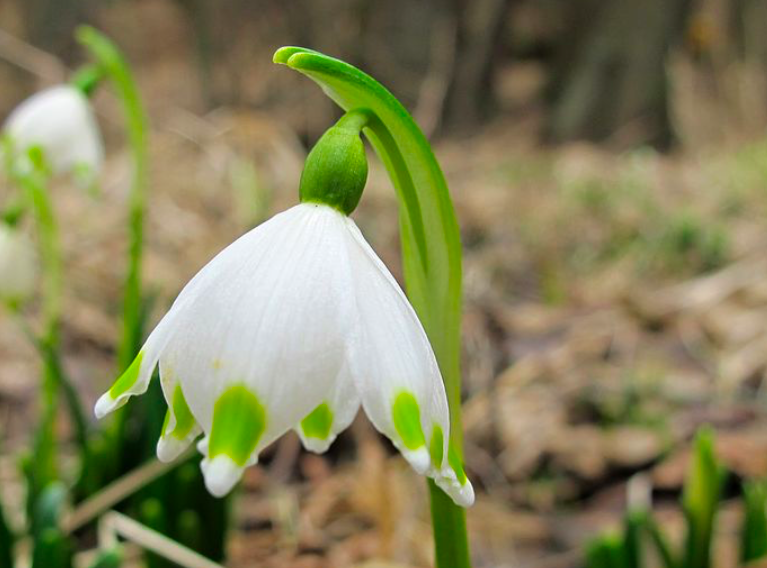
Since my flowers bloom in late winter and early spring, of course I thought they were the spring blooming species, ‘vernum.’ But MY flowers occur 5 – 6 per stem, not one or two.

Leucojum vernum

At this point you may be saying, oh what difference does it make? But by now, I had dug in my heels and was determined to figure it out.

Comparing more photographs, I realized that my flowers looked more like a different species – L. aestivum. But wait! ‘aestivum’ means relating to summer and the plant descriptions indicated that these bulbs bloomed in summer, not early spring.

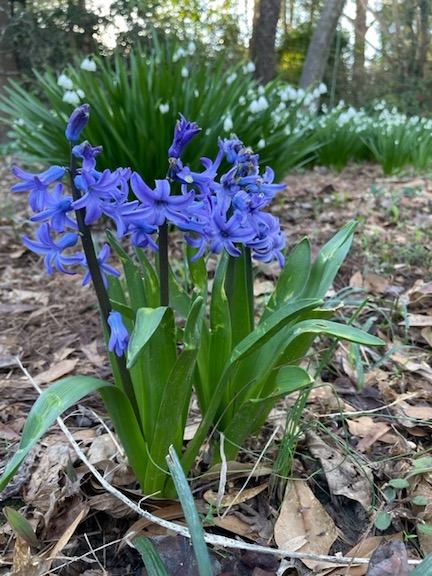
Whatever their name is, they look beautiful with the early purple hyacinth.

Argh. But a little more research convinced me that indeed, my flowering bulbs have to be Leucojum aestivum, even though they are blooming earlier than the description indicates. There are possible reasons for this – global warming and a changing climate, a protected spot, a more southern climate, a well established root system??

To finish out the mornings’ slightly obsessive search for identification, I further determined that my bulbs must be the cultivar, ‘Gravetye Giant,’ named after a manor house in West Sussex.

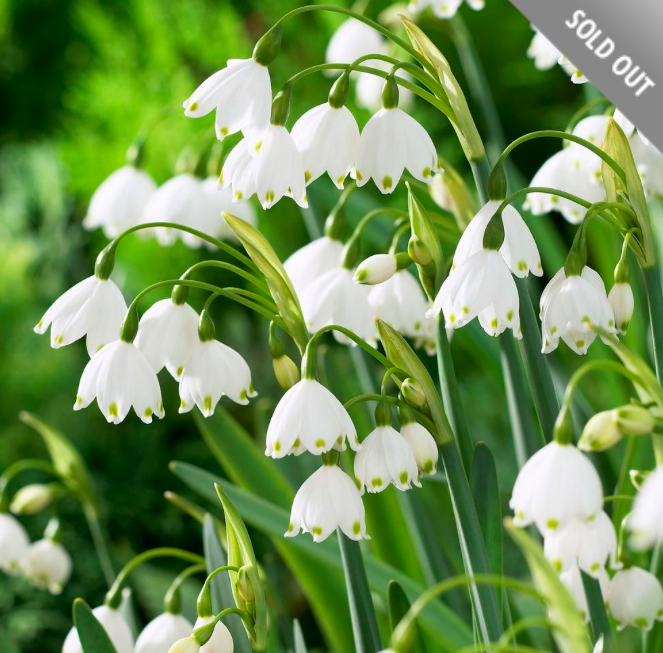
White Flower Farm’s photo of ‘Gravetye Giant’
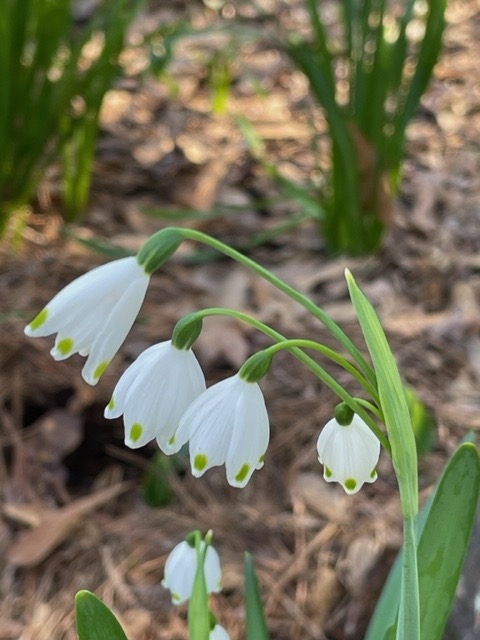
My Snowflakes

I know full well that it doesn’t make a bit of difference but I’m grateful for a life in which I can spend a couple of hours in idle pursuit of an intellectual curiosity. In my research, I read that this is native to Ukraine. I know that people there have neither time nor energy right now to notice if these – or any flowers – are blooming this spring, It is my fervent prayer that soon, very soon, life will become easier again and that the Ukrainians can once again appreciate something as simple as a wild Snowflake. Heartfelt prayers for all Ukranians.

Late Winter Blues? I think not

If you’re feeling blue as winter lingers and spring seems a long ways off, go outside and take a look around – especially if you live in a mild climate like we do. When I went into the garden yesterday to scrounge around for some flowers for a bouquet, I was surprised at how much was already in bloom. And, to make it even better, these are things that are supposed to bloom in late winter, not plants that are confused and stressed by untimely warm weather.

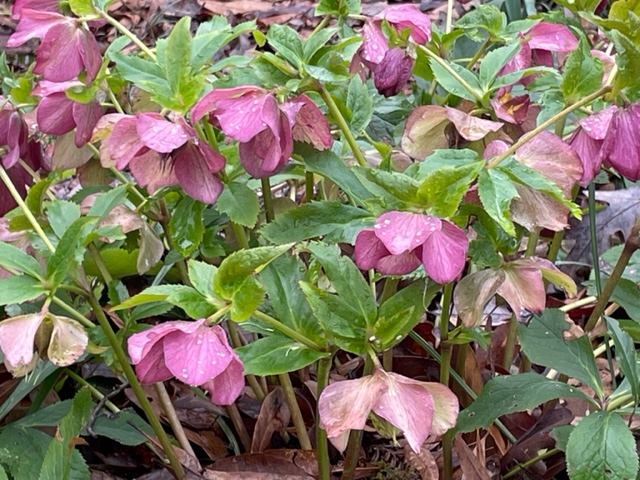
Of course the most abundant flowers in my garden in late February are the Hellebores or Lenten roses. These begin blooming in January, putting forth gorgeous white, pink and mauve nodding flowers. If you’ve read this blog before you know that I have a love / hate relationship with my lenten rose, depending on the season. This is the “love” season. Last summer, though, I was so annoyed with them for crowding out other plants, I dug up buckets of them and dumped them on the compost pile.

Since then, I have created a new large planting area in the way back under my 200 year old oak tree. I’ve worked diligently to pull out ivy and mondo grass, privet and vinca to make nice new beds, empty of any vegetation. But, then I had to decide what to plant. A quick trip to the local nursery convinced me I’d go broke trying to buy enough plants to fill the new space.

So, feeling just a little sheepish, I went back to the compost pile to see if maybe I could salvage some of the discarded lenten roses. And there they were, valiantly struggling to come up among the leaves and weeds and other yard trash. Some were even blooming and I didn’t know whether to be impressed or scared of their dogged determination to live.

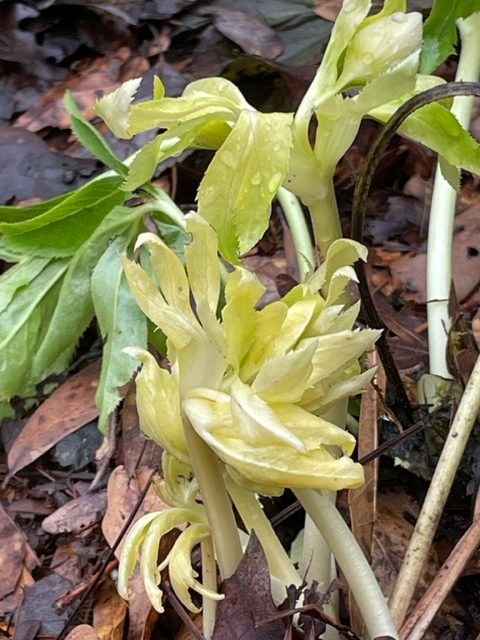
At the moment they look a little ragged, to say the least. Many of the stems and leaves, buried under refuse, are white with just a tinge of green. Many of the leaf stems are long and leggy. But with a whispered apology, I pulled them all out and replanted them in their new beds. We’ll see if they will forgive me.

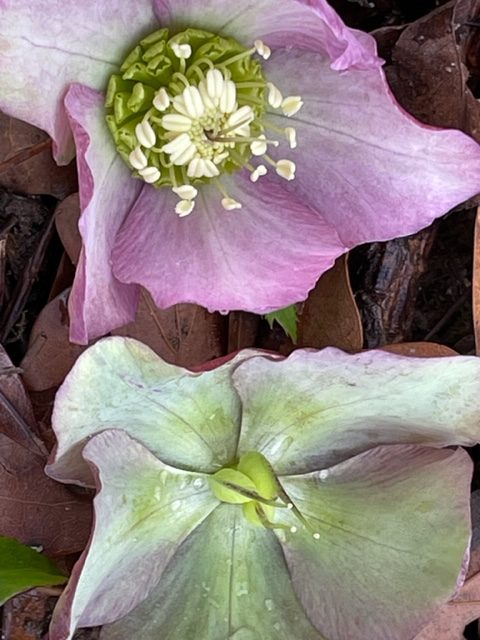
The lower blossom has already set seeds and will last longer as a cut flower.
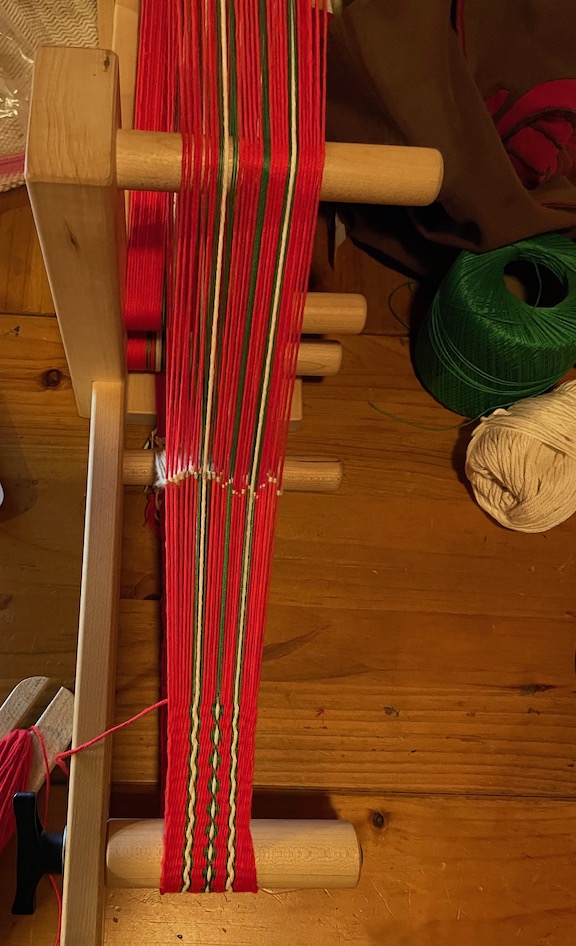
It’s sometimes frustrating to use even the healthiest of lenten roses as cut flowers because they tend to wilt and droop when brought inside. If you cut blossoms that have already set seed, though, they are much more likely to stay fresh looking.

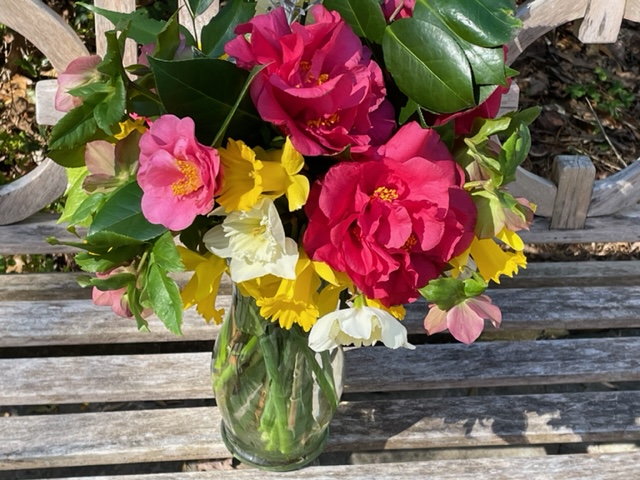
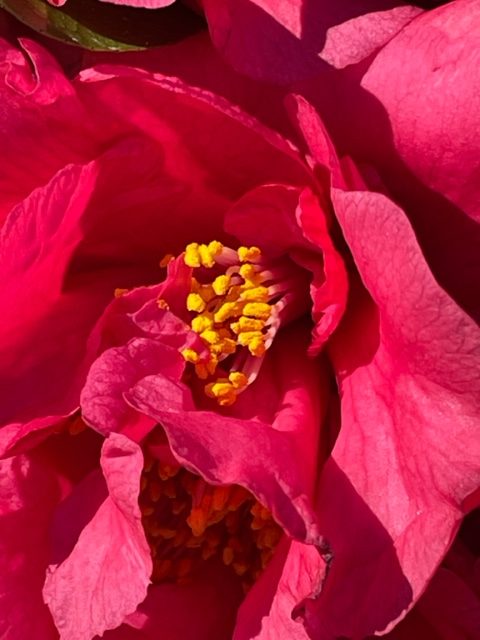
A multitude of bulbs offered additional blossoms for my bouquet, mostly daffodils but also some early snowdrops. And my beloved camellia, as beautiful as a rose, provided a focal point for the arrangement.

It makes me incredibly happy to be able to gather flowers from the yard on a cold February day. All that gorgeous pink and yellow helps chase away the winter blues. And, if in the summer I happen to say disparaging things about Lenten Rose, please remind me of this late winter “love season” when I pulled them out of the trash pile and heaped praises on their little nodding heads!

I’m lichen it

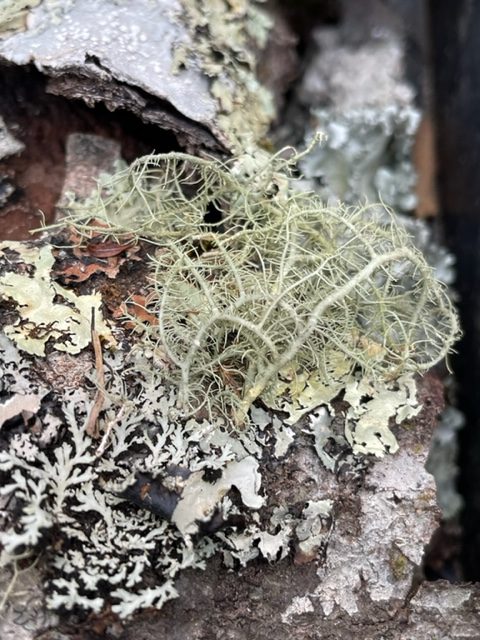
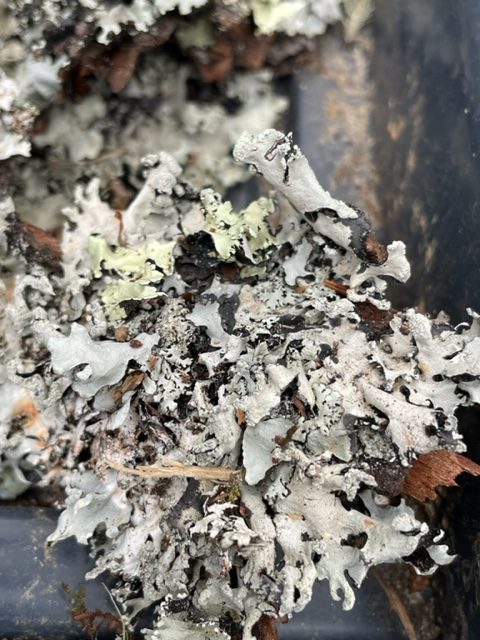
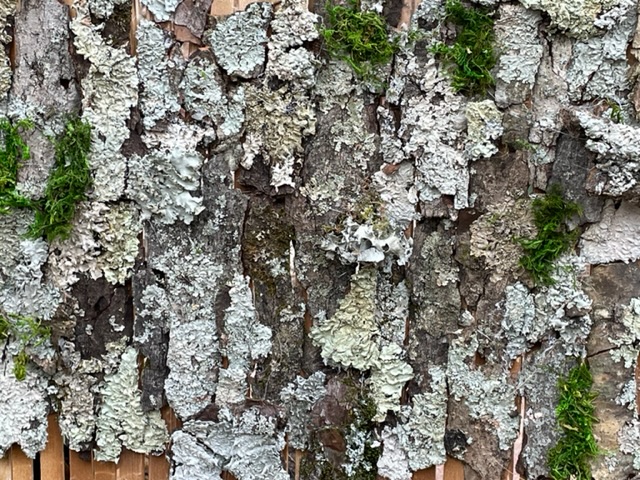
I have become an expert of the use of lichen as a building material not, I may hasten to add, an expert in identification. Since there are over 3600 different lichen species in North America (that have been identified so far) identification to the species level is a bit of a challenge.

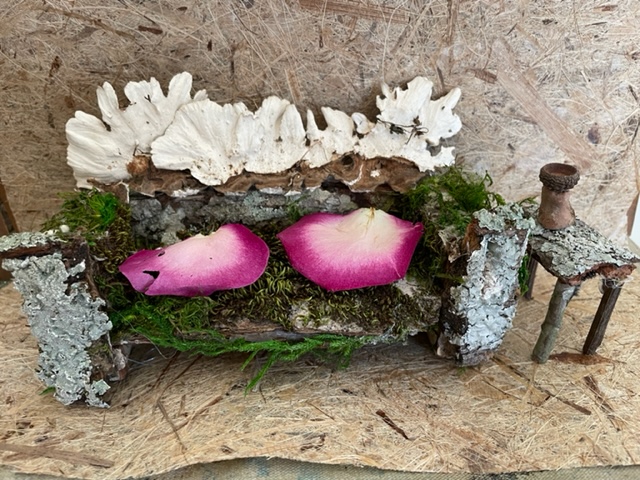
No, as part of my ongoing enthusiasm for creating a fairy home and garden to be displayed on a garden tour this spring, I have become both fascinated and appreciative of the gorgeous lichens that grow in our southern woods. And, luckily for me – and the fairies!- lichen provides a fabulous building material for walls and furniture.

This beautiful little fairy sofa and end table would just not be the same without the lichen.

Lichen is actually a combination of two different organisms, a fungus and an algae. In this symbiotic relationship, the fungus provides structure and shape and fruiting bodies to the algae. In return, the algae photosynthesizes and provides food for the fungus. It is a beautiful co-dependent relationship.

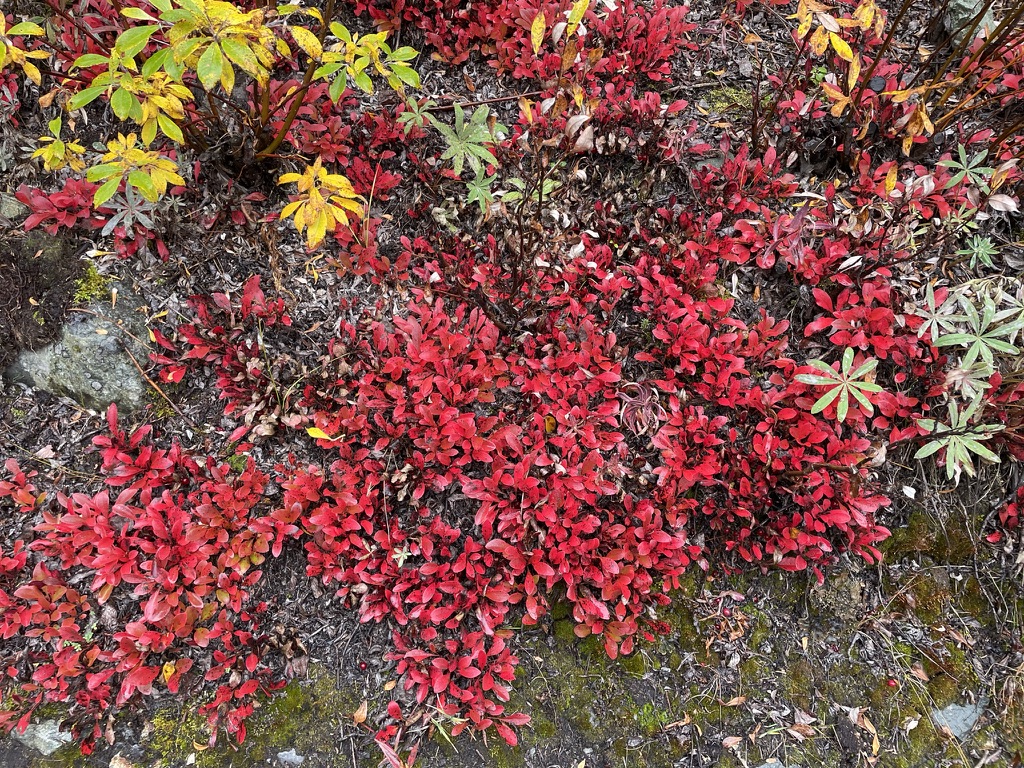
Lichens are astonishingly diverse, capable of living in environments as extreme as both the Sonoran desert and the Alaskan alpine tundra.

The tundra in fall is astonishingly colorful from red lichen.

Some lichens are flat and cling desperately to rocks and boulders. Others are more three dimensional, growing on bark and branches and this is what I look for.

It’s pretty easy to pick up lichen covered bark but finding just the right size and structure takes a bit of time. The most useful pieces are large, thin and a gorgeous green-grey color. This often comes from oak branches – lichen on the bark of the main trunk is simply too thick and unwieldy to be of much use.

The outside walls of the fairy house are covered with lichen and “caulked” with moss.

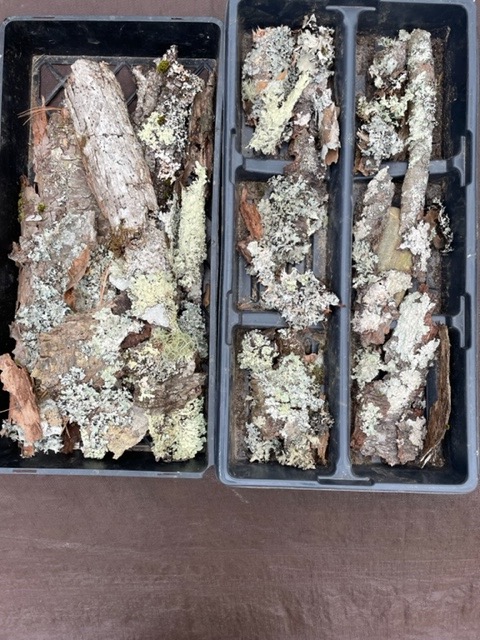
When I had picked up most of the lichen covered bark in my own backyard, I turned to my friend for help. She and her husband live on a large farm in the north Georgia mountains and I knew that her woodland paradise would yield a lot of lichen. She agreed to help and I invited them to dinner as a “thank you.” She quipped that she didn’t know anyone else who traded food for lichen. I think I got the better end of the deal.

A treasure trove of lichen covered bark!!

I know that soon my fairy phase will pass and I’ll move on to bigger things – like my garden. In a few weeks warm weather will begin to return and the fairies will have to fend for themselves for a while. But in the meantime, I’m loving the lichen.

White tulips for a winter day

I don’t grow tulips. Our climate, in the sunny South, dictates that they be treated as annuals rather than a more permanent garden fixture as they are in other parts of the country and the world. And, I am a jealous guardian of my garden spaces – and my gardening time and energy. I think that although they are undeniably beautiful for a few weeks, they don’t offer any benefits to pollinators and they are just not worth the resources that they require.

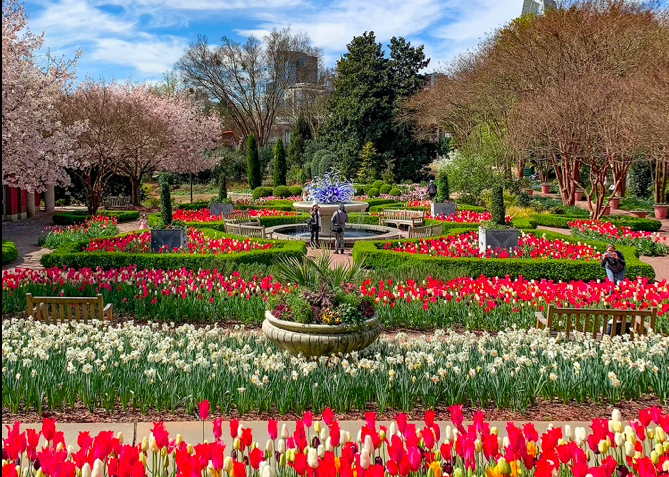
I’ll leave it to the Atlanta Botanical Gardens to create stunning displays of fabulous tulips. Photo credit Atlanta Botanical Gardens.

Instead, they are my store – bought guilty pleasure. Guilty because I know that buying florist’s flowers is not an environmentally sustainable practice. Though the $5 billion dollar cut flower industry in the U.S. helps provide jobs for workers in Columbia and Ecuador where these flowers were most probably grown, the environmental impact is huge. Grown with pesticides and shipped thousands of miles, tulips are an aesthetic pleasure that I rarely indulge in.

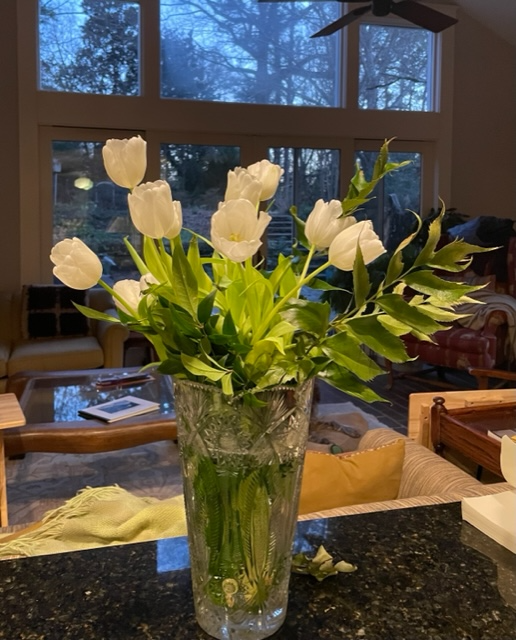
But on this cold winter day, with guests coming for dinner, I am grateful for the sheer beauty of these simple blossoms. They lift my spirit and are, as my Mama used to say, a “tide-me-over” until my own garden flowers can provide arrangements for the table.

Though I could have chosen any number of different colors, I love the simplicity and quiet beauty of white. They’re the zen of flowers – quiet and calming. Every time I walked into the room, I was struck with the miracle of beauty, which serves little ecological purpose except to remind us humans that life and nature are a gift.

The Netherlands has always been the tulip capital of the world. Photo credit Flowers.com

Tulips have always had that effect on people. Easily recognized tulip designs on pottery shards date back 4,000 years ago. Archeologists tell us that they were probably one of the first plants cultivated solely for their beauty. In the 17th century explorers took tulip seeds and bulbs from their native Turkey to the Netherlands were the tulip industry developed astronomically quickly. By the middle of the 17th century, “tulip mania” was in full swing and rare tulip bulbs were more valuable than gold.

There are no tulips native to North America, but that doesn’t keep us from growing these gorgeous flowers in tremendous numbers, particularly in cold regions where they come back year after year. There are a huge number of cultivars and varieties, from fringed to streaked to speckled. But for me, a vase of simple white tulips on a winters day brings the greatest pleasure.

Fighting the white rooted monster

When I moved to my home nineteen years ago, the garden looked quite different from the way it looks now. A large, grassy area was surrounded by some shrubs and lots and lots of English ivy.

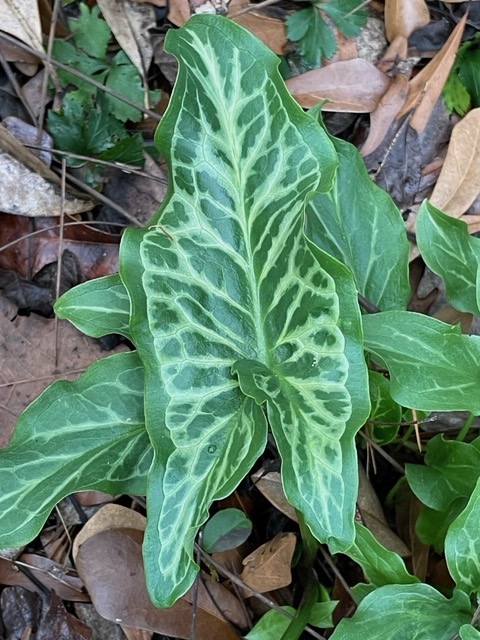
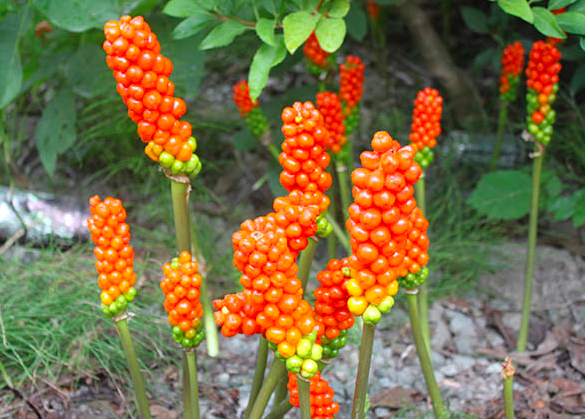
As I began pulling out the ivy, I discovered many plants that had survived its strangle hold. Among these was Arum, a beautiful mottled green leaf that put out an interesting white spathe in spring and a terminal cluster of red berries in late summer. Obviously planted by some other gardener years ago, I was pleased and fascinated by this glossy leafed beauty. I carefully nurtured it, clearing away ivy and weeds to give it a good place to grow. And, I joyfully shared my bounty with friends, singing the praises of this beauty. (I’m sorry. I’m sorry!)

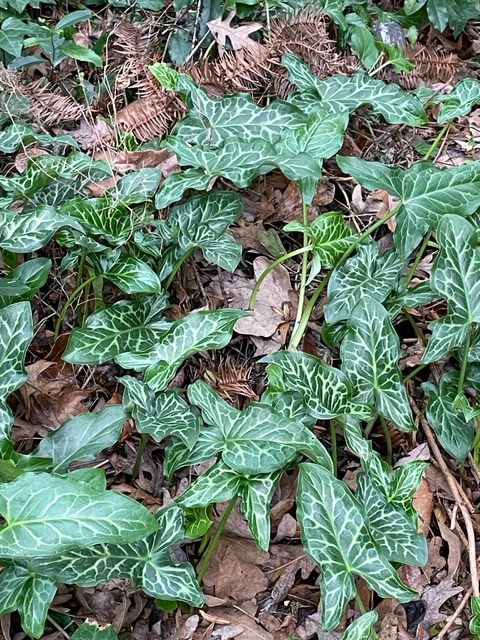
That was then. What I didn’t realize at that time was that arum, native to Europe and Asia, can become an incredibly invasive and persistent pest that is dastardly difficult to get rid of. It took about 17 years but one day I walked out and realized that things were out of control. I had a field of arum underneath my Mom’s maple tree and it was choking out everything else so I got to work.

First I just pulled at it by hand but the stems broke off at ground level. I reasoned that without leaves, the plant would soon die. Not so. Next I chopped at it with a hoe, reasoning that if the small corms were damaged they would not survive. Not so, they just multiplied.

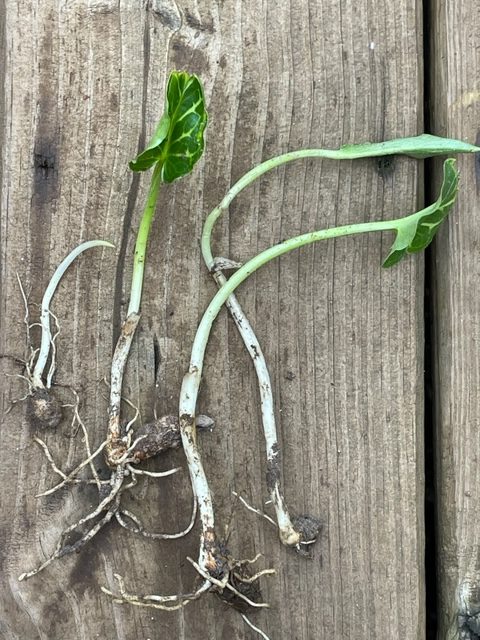
The biggest problem is that the Arum corm is found about four inches deep and if you don’t dig down to get the entire bulb, the plant is just going to grow and multiply. You can’t just pull it up by hand, you have to dig. And, if you put your hard-earned bulbs and leaves in a compost pile, they’ll simply root and you have to start over again. In comparison, English ivy is easy to control.

To make matters worse, this plant euphemistically called Italian Lords and Ladies, is also poisonous, making it useless to wildlife and uncomfortable for gardener’s to touch. So as you’re digging and cursing to get rid to this royal pain in the neck, be sure to wear gloves.

I have to admit to being slightly obsessed with this white rooted monster. Even if I believed in using chemicals in the garden, which I vehemently do not, herbicides seem to have little effect. It just has to be dug and eliminated by hand. Whenever it’s not freezing cold or pouring down rain, I go out and dig up a few bulbs and place them in a plastic trash bag. I’m making progress but I’m far from being Arum – free.

Arum plants that sprouted from a pile of yard waste.

You might ask why I don’t just leave them – they are attractive and really, what harm are they doing? And this is my answer: Any invasive plant reduces diversity in the landscape. And diversity leads to balance and balance leads to a healthy ecosystem. And health and balance are my primary gardening goals.

So, I’m staging a rebellion to overthrow the “Lords and Ladies” in my garden. Viva le jardin!

Looking ahead

Cartoonist: J.M. Nieto

It’s easy to get bogged own with all that’s going on because everything does seem “so messed up” but if you plan for great things, like flowers, then you’ll get them!

I’ve already spent a lot of time in my garden this winter because this is a special garden year for me. On Mother’s Day weekend, my garden will be on tour for the Atlanta Botanical Garden’s Connoisseur’s Garden tour. Yay! and Yikes! It’s one thing to invite other gardeners over to see your garden, they have an understanding that a garden is always a work in progress. It’s something altogether different to invite the general public, who only expects beauty and perfection. Though I consider my garden beautiful, it’s all in the eye of the beholder and it has never seen perfection.

Only loyal Sadie thinks that my garden is “perfect!”

All to say that I’m both excited and apprehensive about this gardening year. The plants, though, are quickly soothing my apprehensions as they are already showing signs of robust growth.

The only plant that is actually blooming in my garden right now is the old standby Lenten Rose. Every summer I swear I’m going to take it all out – it’s aggressive and takes up way too much space in my garden. But, every January, when I see these beautiful white and mauve flowers blooming in the pale winter sunlight, I’m grateful for them.

The crinkly new leaves of primrose

For most things, winter is a time of dormancy and rest but in my garden, there are plants whose natural cycle includes new growth during the cold, dark months of January and February. These are not plants whose growth is confused by January temperatures in the 70s. but who normally begin to put out new leaves during this time period. The rate of growth may be different due to unseasonably warm temperatures but I can only hope they are not overextending themselves.

Rosettes of red Columbine leaves

English primrose, grape hyacinths, blue phlox and Eastern red Columbine are all putting out healthy new leaves, getting ready for what I hope will be an outstanding gardening year.

I have to admit that when I look at my back yard right now, it looks a little “messed up.” Most of what I see are brown leaves and dry stalks, but when I look closer, I see the flowers coming up. So, perhaps we all just need to take a breath and look for the flowers in ’22. And, when in doubt, plant more flowers!

Hopefully, by May my garden will once again be brimming with flowers.

I look forward to seeing you all in my garden in May!

Laura

P.S. My friend, Donna Claus, who owns the wonderful wilderness lodge we visited this past September is also looking toward the coming year. Even when her thermometer broke at negative 45 degrees this week, she began making plans for summer. She asked me to post the following and if you have any ideas or suggestions, please let me know:

Wanted:  someone who loves food, gardening and wilderness adventure!   A small, upscale  Alaskan wilderness lodge is looking for a chef / gardener to grow vegetables (and edible flowers!) in a greenhouse and to prepare delicious, fresh food for a small number of guests (6 – 8) each week.  The lodge is deep in the wilderness, accessible only by plane, and offers the opportunity of a lifetime for just the right person.  A monthly salary, lodging and possible child care is included, May – September.  Perfect for an adventurous individual, couple or small family.

One of “those” projects

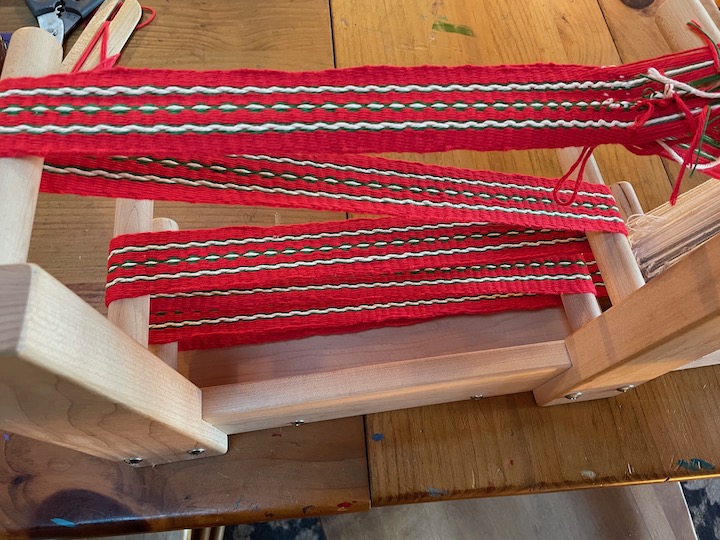
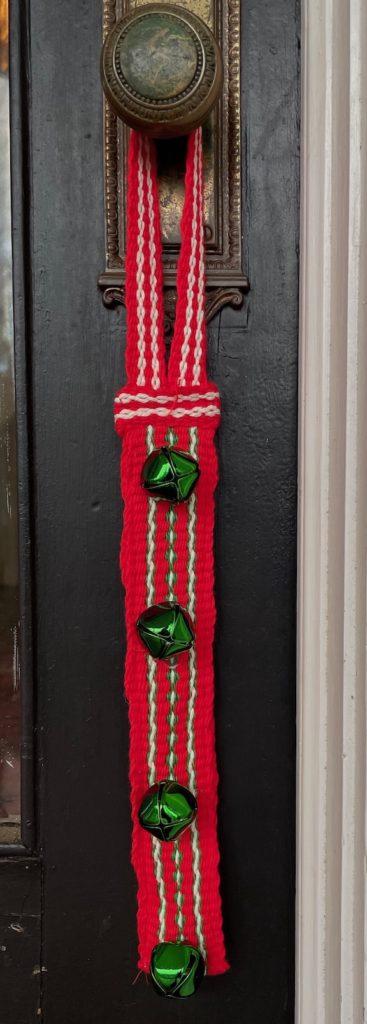
It was early November, the time of the year that I launch into my most complicated and ambitious projects. Rooting around in my bin of yarns, I found red and white yarn and decided that I should get some green yarn and hand weave bands, sew jingle bells on them and make bell pulls for all my friends for Christmas.

Armed with the enthusiasm of the crafter and the knowledge that I had plenty of time (about 7 weeks!) I went to the crafts store, found just the right shade of bright green and bought (what I thought was) just enough for my project.

At home, I quickly warped my little inkle loom and set to work. BUT, there was one strand out of place on the loom. One. Weaving is an exacting craft and one strand over the bottom bar instead of under it meant I could not go forward. I spent a couple of hours trying to fix it but finally gave up, tossed out that bunch of yarn and started over.

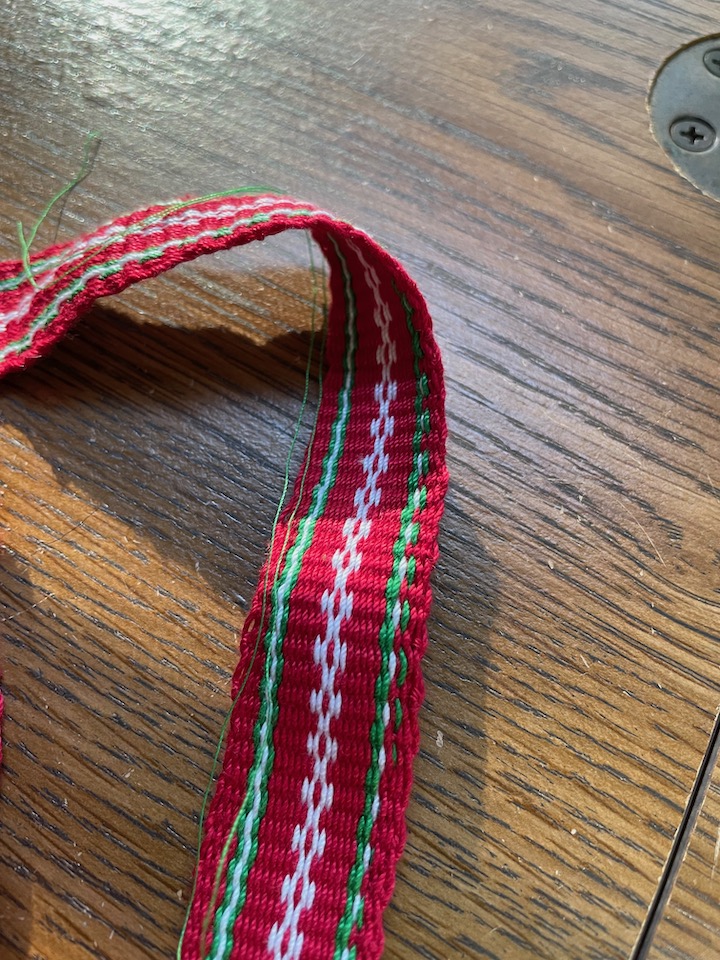
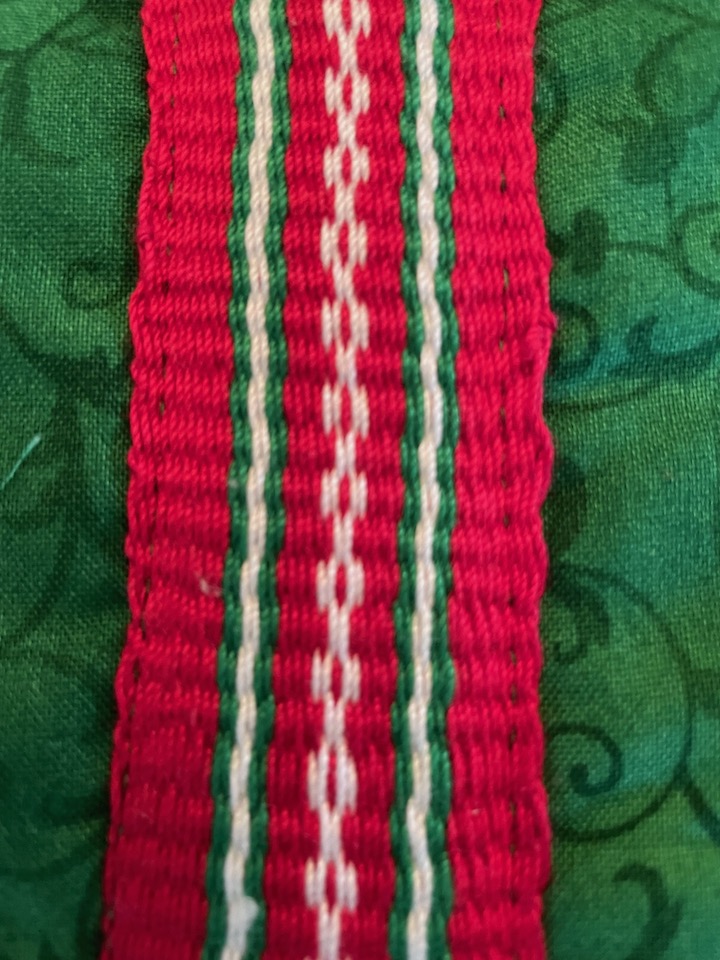
Still humming “It’s beginning to look a lot like Christmas” I reworked the loom correctly and began to weave and the results were enough to make the angels smile. 57 inches of a long, beautiful Christmasy band. The only problem was, it was way too narrow for a bell pull. I sat looking at it a long time and finally inspiration struck! I could use it as the center of a decorative table runner, not remembering, of course that my dining room table is 60 inches long, not 57.

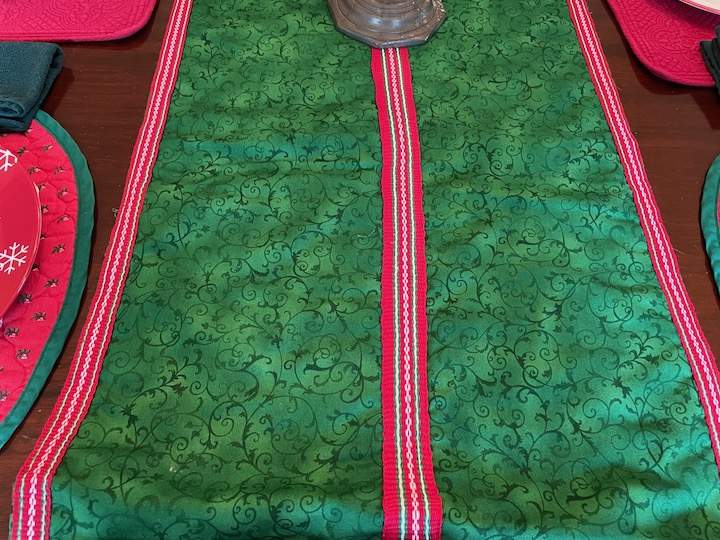
By this time it’s after Thanksgiving and the rest of Christmas is looming but, undeterred, I went back to the store and bought stunning green fabric the length of my Christmas band and set to work making a quilted Christmas table runner, which only took a few more hours. I sewed my beautiful band down the center and, bouncing into the dining room, humming “It’s a jolly, holly Christmas” I unfurled it down the length of the table. Almost. It just wasn’t long enough. And, worse, the single band just looked skimpy with the fabric. Frowny face.

What to do, what to do. I had too much time invested to give up. I tried adding fabric to the end but that didn’t work, so I decided just to leave it short and put placemats over each end. Then I decided that really, I needed additional bands on both edges. Back to the store to buy more green yarn, which they didn’t have but I found three stores later. Muttering “Blue Christmas” I went back to the loom, which I warped correctly the first time! and began weaving. My loom only can make 57 inches at a time, so I had to do everything twice to get bands for both edges, which I did by December 15th.

With the theme from “The Grinch” running through my head, I sewed the bands on the edges of the stupid, short table runner and stuck it on the table. I didn’t even turn around to see how it looked. Whose idea was this anyway?

Okay, I’m actually really pleased (finally) with how it looks.

But then, what was I going to give to my friends? December 21, I go back to the store, get red, white and green yarn, go back to my little loom, make SURE I warped enough yarn to make a nice wide band and began to weave again. Success! By Christmas Eve I had woven a long enough band to cut and make four beautiful bell pulls. Oh but who knew jingle bells were part of the supply chain problem? After going to several very crowded stores, I finally found a wreath of bells, which I cut apart and sewed bells on the bands. Done! before midnight.

Some projects simply go together more smoothly than others but I’ve found that crafting is much like childbirth, once you’re actually through it, you look at the end product and sort of forget about the pain of getting there, So, I know that come next November, I will probably have another idea for another project and start the whole process over again. Only, I don’t think it will be weaving! Maybe a three story gingerbread house with caramel sugar windows you can actually SEE through. Can’t wait!!!!

A White Christmas – Georgia style

My sister and I just returned from Oregon where we were visiting family. It snowed just enough to look beautiful and feel festive without being enough to interrupt travel. We left right before storms brought inches of snow with the promise and threat of much, much more.

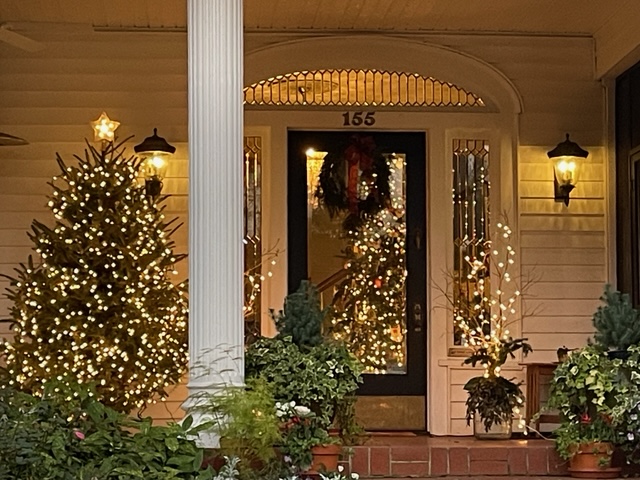
So, here we are snuggled back into our homes in Georgia, where the temperatures are predicted to be 70 on Christmas Day and I know that the only white Christmas I’ll enjoy will be from the white lights and the absolutely beautiful white flowers I brought into the house for decoration.

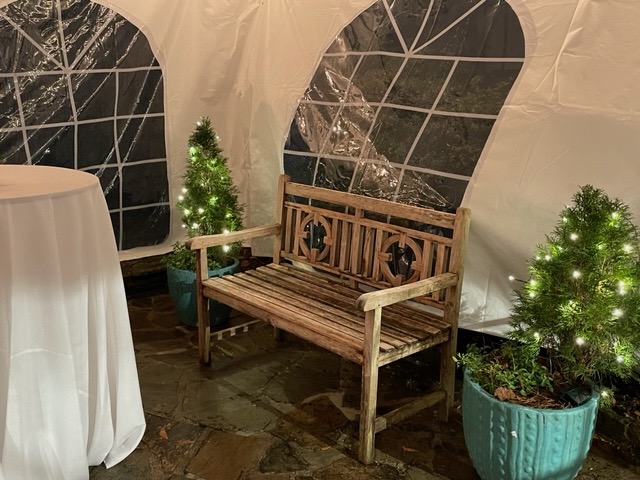
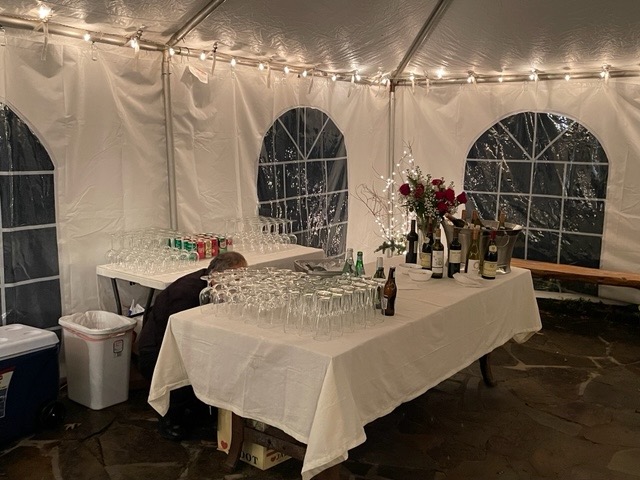
Jack and I have entertained a lot this holiday season and, to do it as safely as possible, we rented a tent that covered the back patio, essentially making an extension of the house. At first the tent people said a 20′ x 30′ tent wouldn’t fit into the space but I had been out there with a tape measure a dozen times and I knew if they placed it “just so” it would fit! With quiet and gentle (?!) persuasion, I encouraged them to keep trying and it finally fit, more or less perfectly.

A tent is an awkward space to decorate but with lights strung around the top and on the small trees in planters, it looked festive. I picked up large branches, put them in large glass containers and put more lights on them to brighten up the corners.

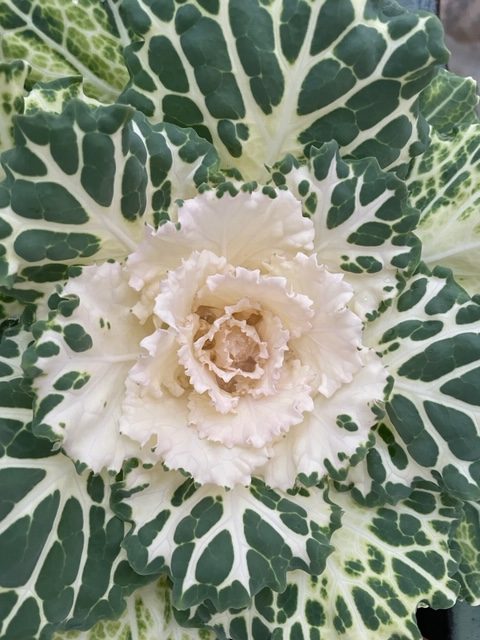
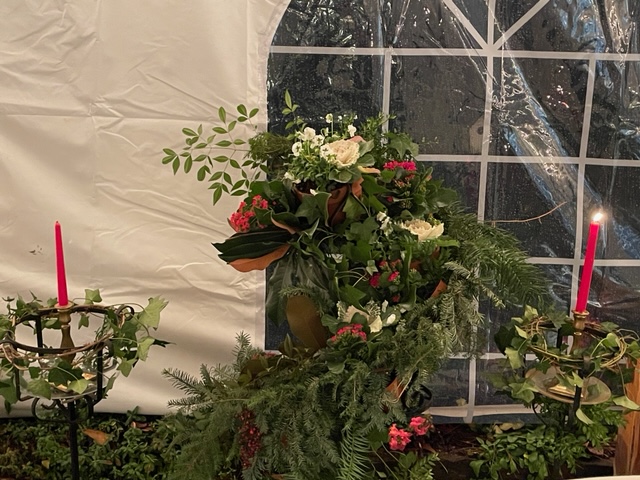
But of course, it was the flowers, both inside and out that provided the finishing touch. I covered an old iron spiral plant stand with greenery and put pots of flowering cabbage and white violas on it and accented the whole thing with small pots of red kalanchoe.

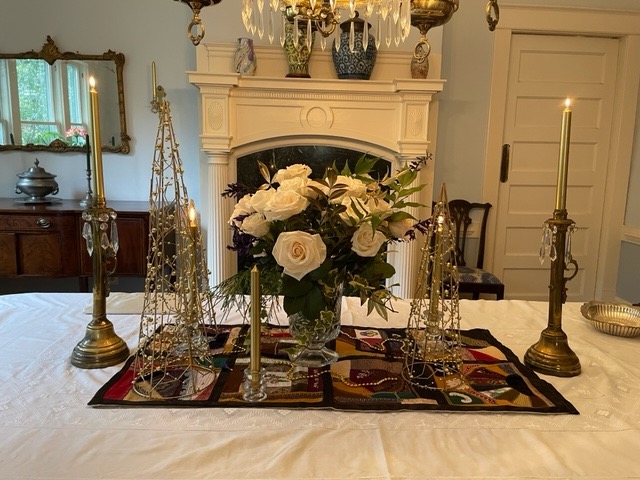
Inside the house, on the buffet table, I opted for a more sophisticated look and put two dozen white roses beside gold candles and gold wire trees. The look was elegant and beautiful.

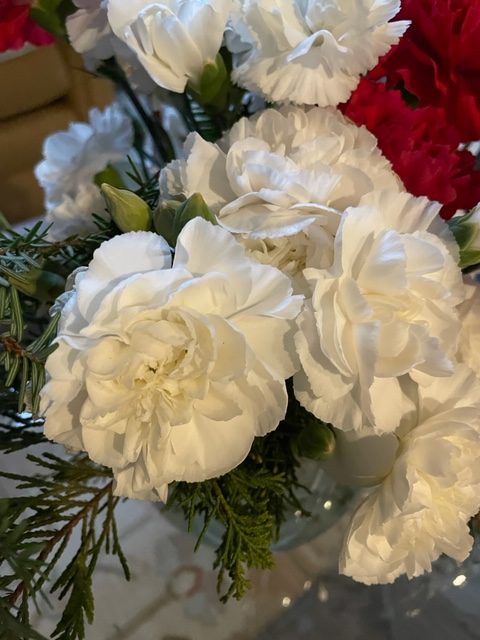
Not all white is the same color, of course. Most white flowers are either tinged with pink or yellow or green. Carnations, with their stark white ruffled petals are the exception. For whatever reason, bright red flowers of all types were in short supply locally so I use the ones I could get sparingly and as accents.

I love all the colors of Christmas but perhaps most of all I appreciate the cool, quiet elegance of white, perhaps because it’s the closest I’ll get to celebrating a white Christmas.

I hope that you and your loved ones have a wonderful and safe holiday season. Thank you, as always, for reading this blog. I love writing it. Happy holidays!